Develop full-body mobility and core strength with these stretching exercises from world-renowned PT Luke Worthington…
An effective training programme should cover all five measurable health and wellbeing components: strength, work capacity (cardio fitness), mobility, body composition and emotional wellbeing. Stretching exercises fall under the banner of mobility, and this is a component you can’t afford to ignore if you want to get the best results from your workouts.
So, why are stretches so important? Maintaining the ability to move through a full range of motion will not only reduce your risk of injury, but also ensure you’re maximising both muscle and strength progressions.
Both sets of stretches – beginner-focused and those featured here – are designed to stabilise the core and loosen the glutes, hip flexors, adductors, upper back and ankles. These are all areas commonly associated with stiffness. Equally, they’re all areas that will improve strength training performance if you can move them efficiently.
How to get started with these stretching exercises
The best stretching exercises can be performed as a standalone session, or as a dynamic warm-up before strength training.
If performing as a standalone session, aim to work through them as a continuous circuit – with 4 complete circuits your target. Or, if performing these stretches as a dynamic warm-up, the intent should be to move swiftly from one exercise to the next, therefore helping to elevate the heart rate as you mobilise your whole body.
These stretches are a little more technically demanding than our stretching exercises for beginners, so they require more body awareness to perform.
Best stretching exercises
- Pigeon Stretch (for hips and lower body)
- Spiderman Stretch (for hips and lower body)
- Half-Kneeling Adductor Dip Stretch (for hips and lower body)
- Ankle Hip Lift (for ankles and hips)
- Caveman Squat (for hips and spine)
- Thread the Needle (for shoulders and back)
- Bird Dog (for back and core)
- Supine Twist (for spine and core)
Keep reading for full instructions on how to perform these stretches.
Get kitted out for your stretching session with the best exercise mats
Try the Sundried Jute Yoga Mat
BUY IT NOW:
$33 / £27, sundried.com
Stretches for lower body
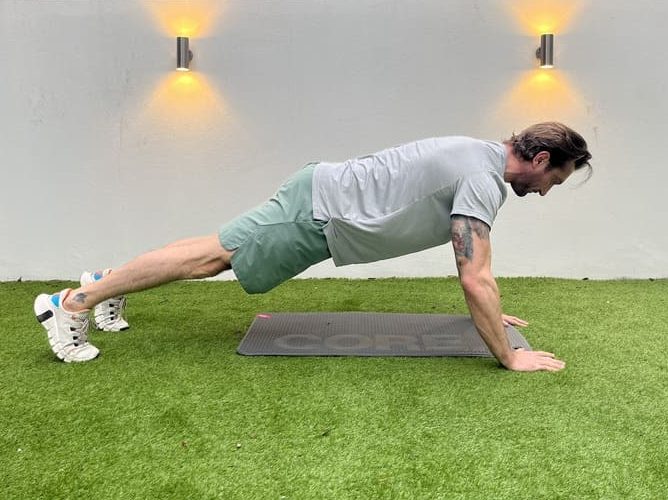
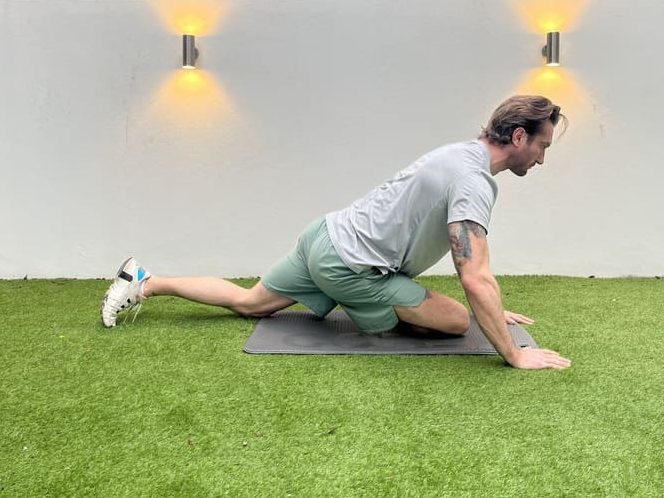
Pigeon Stretch
Hold: 30-60 secs each side
Benefits of the pigeon stretch: Stretches out the hip flexors, glutes and lower back.
How to do the pigeon stretch:
- Lie on a mat, with one leg bent and flat in front of you and the other leg stretched out straight behind you.
- Once stable, bring the weight of your body down on your front leg and try to keep your hips square.
- Relax there and breath into the stretch.
- Once you’ve hit 30 secs or more, slowly bring yourself back up and repeat on the other side.
PT pointers:
- Aim to get the knee and ankle both to the floor at the same time, with the shin as close as you can manage to being at 90 degrees to your body line.
- Also, be sure to keep bracing the core to prevent extension of the lower back.
If you’re looking for more stretches, why not also try these daily mobility stretches for men
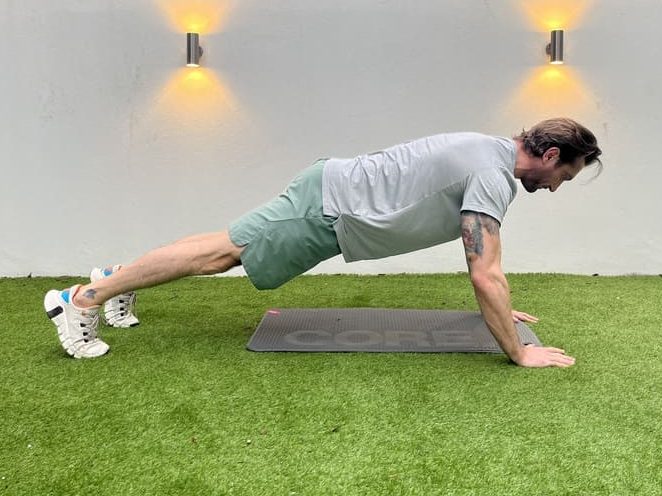
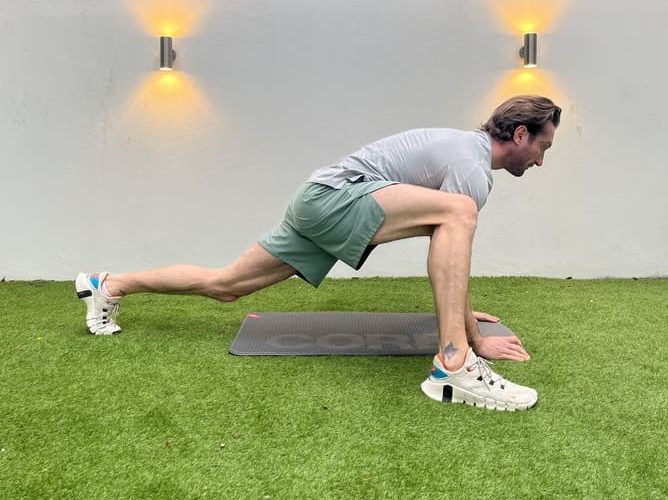
Spiderman Stretch
Reps: 6 each side
Benefits of the Spiderman stretch: Improves hip and hamstring flexibility.
How to do the Spiderman stretch:
- From a push-up position, bring one foot forward so it reaches the outside of the hand on the same side.
- Lower the hip to increase the stretch.
- Hold for 10-15 seconds each side.
PT pointers:
- The knee on the stepping foot should just brush against the outside of your shoulder on the same side.
- Try to keep the back knee raised from the floor to allow a greater range at the hip.
If any of these stretching exercises feel too intense, support yourself with one of the best yoga blocks
Check out the URBNFit Yoga Block
BUY IT NOW:
$14.94 / amazon.com
£10.39 / amazon.co.uk
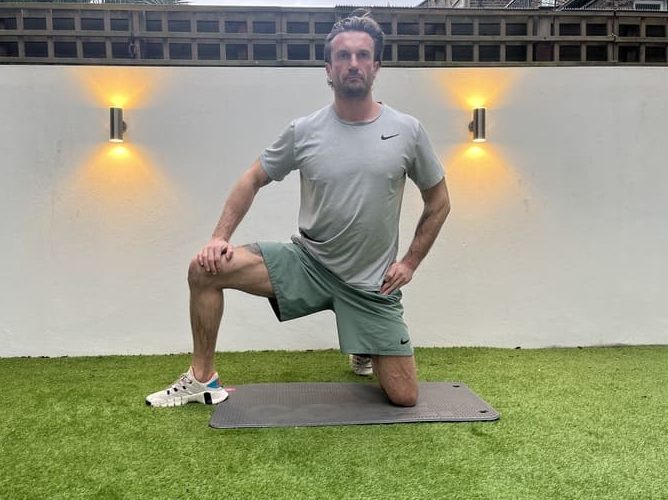
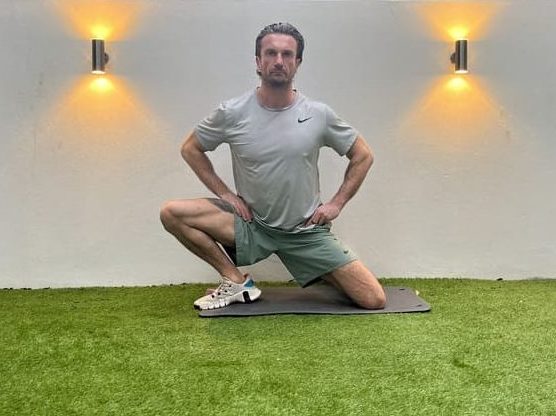
Half-Kneeling Adductor Dip Stretch
Reps: 8 each side
Benefits of the adductor dip stretch: The groin area (adductors) is a dense area of muscle. For that reason, it’s often a source of injury and tightness. This is an excellent movement that will loosen everything up and help prevent injury.
How to do the adductor dip stretch:
- Assume a half kneeling position.
- From here, ‘dip’ your non-kneeling leg down to the side until you feel a good stretch.
- Hold for a count, then return to half kneeling.
- Repeat for 8 reps on one side, then switch.
PT pointers:
- Aim for 90° angles at both knees, with the weight centred over the knee on the floor.
- Also, keep the torso as upright as possible as you dip – this ensures length in the adductors.
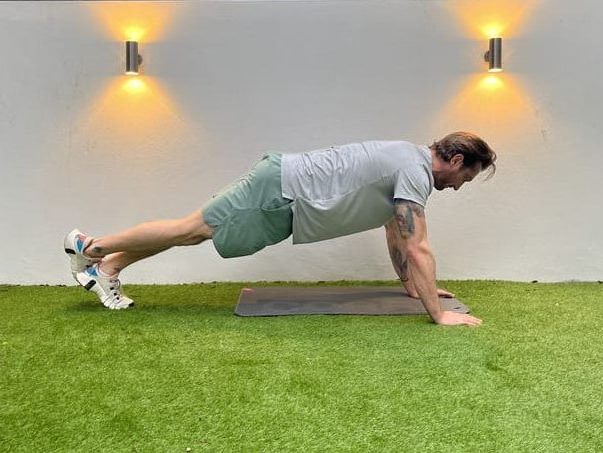
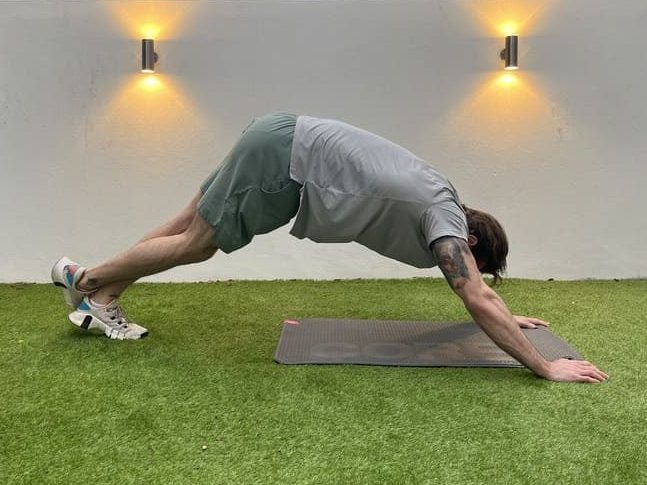
Ankle Hip Lift
Reps: 10 each side
Benefits of the ankle hip lift: Improves ankle mobility, which is essential for effective squatting.
How to do the ankle hip lift:
- Assume a push-up position.
- Now lift one foot and place it over the heel of the other.
- Now push your hips back – as if getting into a downward dog – press your grounded ankle towards the floor as far as it will go.
- Return to the starting position, then repeat for a total of 10 reps.
PT pointers:
- Use the weight of the non-working leg to assist with pressing the heel to the floor as you lift your hips.
- Ensure the core stays braced to avoid extension of the lower back.
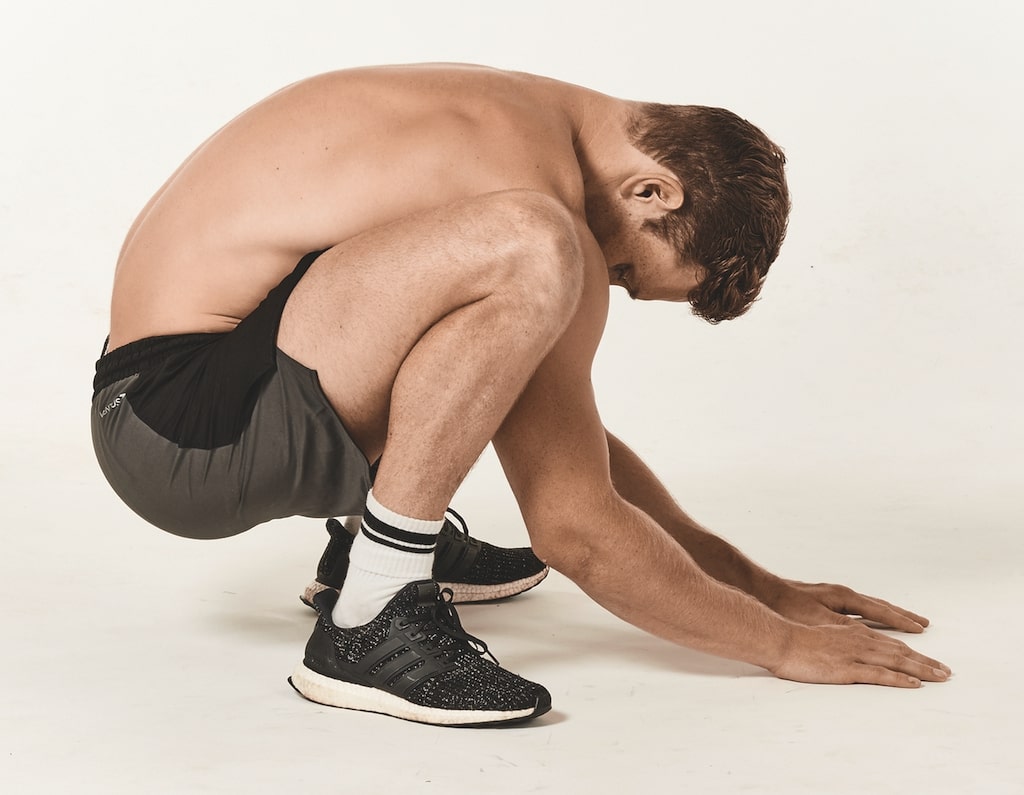
Caveman squat stretch
Hold: 45-60 secs
Benefits of the caveman squat stretch: Stretches out the spine while encouraging a deep squat, opening up the hips.
How to do the caveman squat stretch:
- With your feet shoulder-width apart, toes turned out slightly and feet completely flat on the floor (heels down), squat down to the ground as deep as you can go.
- Keep your weight even in your feet and tuck your chin into your chest.
- If you can’t do this because your calves and hips are too tight, grab a bench and use this as an anchor instead.
PT pointers:
- If you lack the ankle and/or hip mobility to get into a deep squat (with heels on floor) as pictured, hold onto a stable object in front of you to begin with.
- As your ankle and hip mobility improves, gradually support yourself less and less with the object in front.
Stretches for upper body
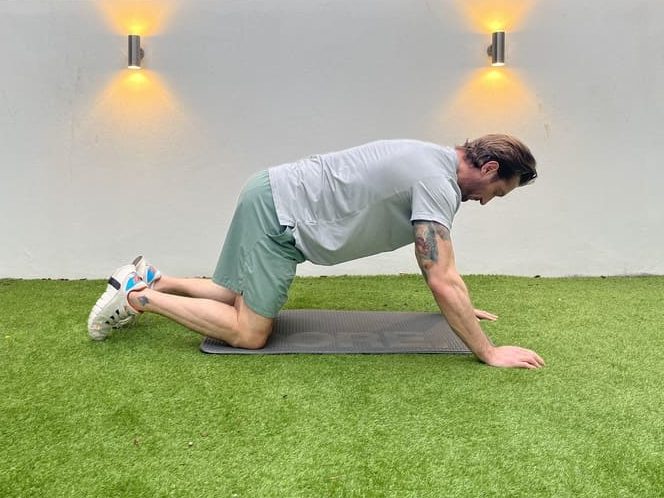
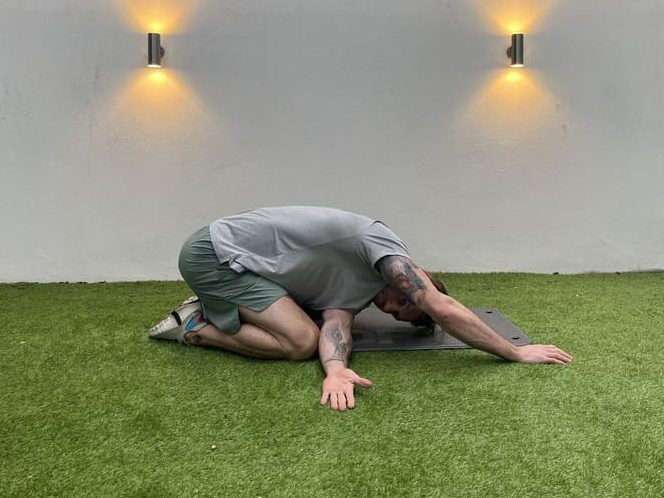
Thread the Needle
Reps: 8 each side
Benefits of thread the needle: Releases tension across the entire upper body, while improving thoracic mobility.
How to do thread the needle:
- Begin on your hands and knees in ‘tabletop pose’.
- Slide your left arm underneath your right arm with your palm facing up.
- Let your left shoulder come all the way down to the mat. Rest your left ear and cheek on the mat, then gaze toward your right.
- Relax your lower back.
- Hold for a count, then return to the start and repeat for a total of 8 reps.
PT pointers:
- Ensure you rock the hips back on to your heels before initiating the rotation. This keeps the movement in the upper back.
- The gaze should follow the fingertips of the moving arm, so you should end up looking under your armpit.
Supplement your stretches with the Amazon Basics High Density Foam Roller
BUY IT NOW:
$12.05 / amazon.com
£18.88 / amazon.co.uk
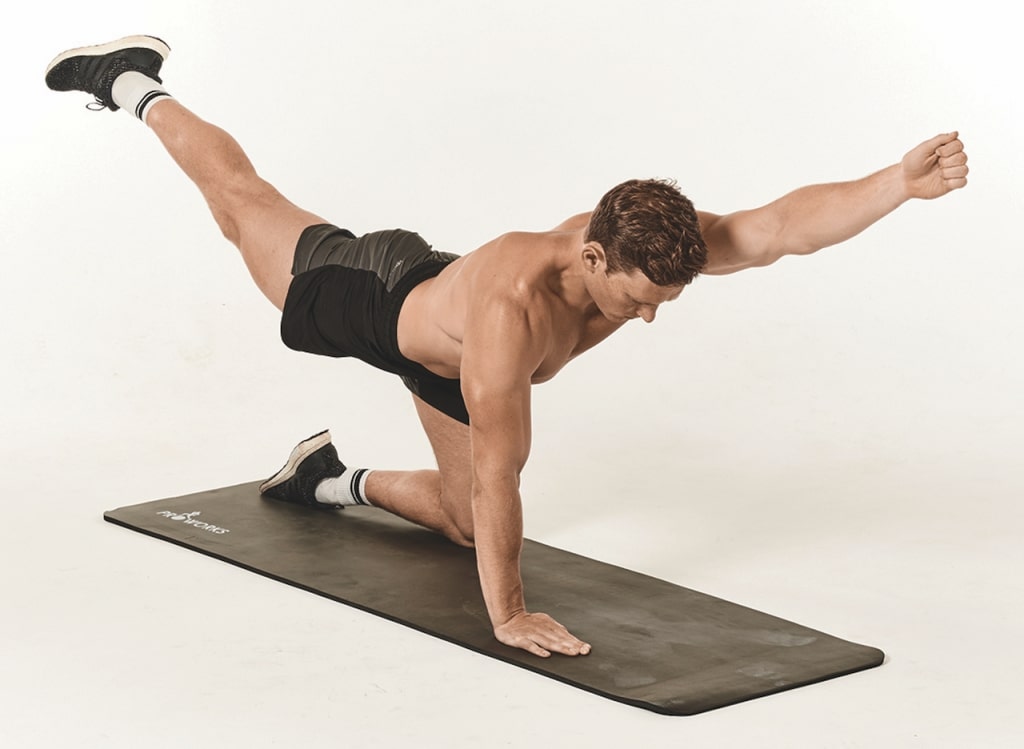
Bird Dog
Reps: 10 each side
Benefits of the bird dog: Relieves lower back pain, while improving core and spinal stability.
How to do the bird dog:
- Assume an ‘all fours’ position on the floor. Lift one hand and the opposite knee off the ground slightly.
- Touch your elbow and knee underneath you and then explosively donkey kick the heel backwards and punch the arm out in front.
- Slowly connect them underneath you again and repeat the process for the desired reps.
- Change sides.
PT pointers:
- The aim of this pose to stay as stable as possible. Keep your hips still and avoid sideways rotation.
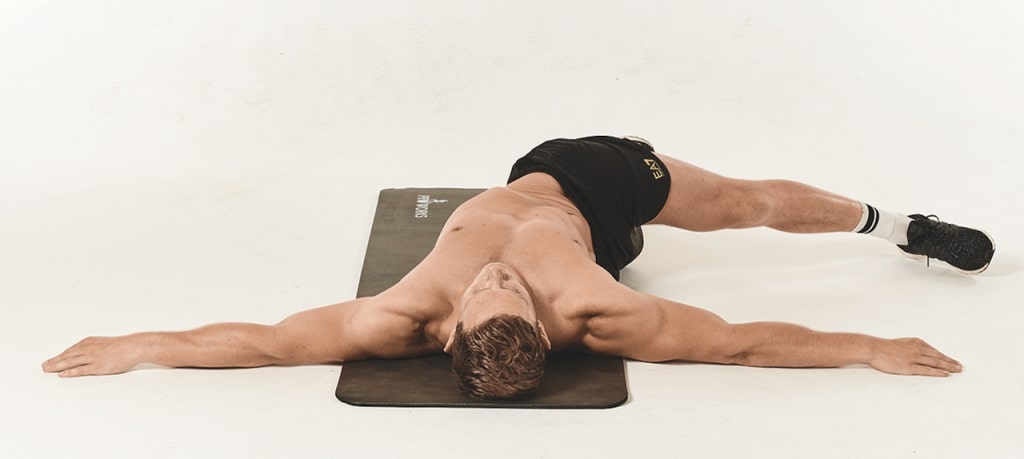
Supine Twist
Reps: 20 each side
Benefits of the supine twist: Improves spinal flexibility, loosens the lower back, lengthens external hip rotators and aids digestion.
How to do the supine twist:
- Lie flat with your arms out to your side (palms down). Lift one leg in the air, keeping it reasonably straight, then drop your leg across your body and down to the ground.
- Keeping the opposite shoulder as close to the ground as you can, return the leg to the start position and do the same with the other leg. That’s 2 reps.
PT pointers:
- Do not force your knee towards the floor. Bring it over only as far as your mobility allows.
- Keep your shoulders glued to the floor, even if it means your knee can’t reach very far to the side.
Related content:
The post 8 Best Stretching Exercises To Reduce Risk Of Injury appeared first on MensFitness.