US Approves Gigantic Satellite Mirror That Will Illuminate the Earth at Night
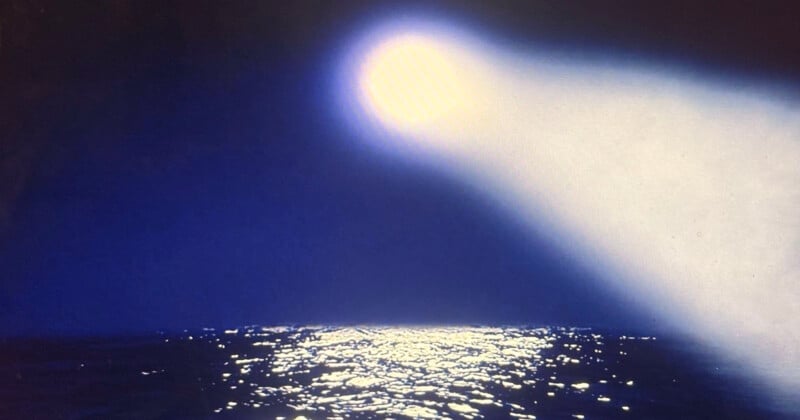
Picture this: you’re photographing in the middle of the night, it’s dark, and you desperately need light. So, you whip out your phone, open an app, pay some money, and boom, night becomes day thanks to a satellite in the sky that is now reflecting sunlight to your location like a bright full Moon.
If this sounds like a dystopian future that will never come, then you’re dead wrong. The United States government has just approved Reflect Orbital’s application to launch a mirror satellite into orbit called Eärendil-1.
There has been much opposition and criticism of the decision by the Federal Communications Commission (FCC) to greenlight the Californian company’s ambitious project — not least by astronomers who already fret about satellites obstructing humanity’s view of the Universe.
“It’s terrifying to me that one country can change the night sky for everybody in the world,” Samantha Lawler, an astronomer at the University of Regina in Saskatchewan, Canada, tells The New York Times. “I need access to dark skies in order to do my research. If you’ve got giant mirrors shining down, then we’ve lost that.”
About the same size as a bedside table, the Eärendil-1 will orbit Earth about 400 miles from the surface. There, it will unfurl a square mirror that’s almost 60 feet wide. The mirror would then bounce sunlight toward a specified location and illuminate a circular patch about three miles wide.
Co-founder of Reflect Orbital, Ben Nowack, says the company plans to charge $5,000 for an hour’s use of one mirror, so long as the customer has committed to using 1,000 hours annually.
$5 million per year is almost certainly outside of most photographers’ budgets. A more likely customer is solar farms, which obviously stop generating electricity at night. There’s also the prospect of using the artificial light in emergencies. However, that could be difficult to coordinate as well as being expensive.
The FCC has so far approved just one of these satellites, but Reflect Orbital has plans to launch 1,000 even larger satellites — 180 feet wide that can reflect the same amount of light as 100 full Moons.
However, biologists warn of the dangers of such technology. “The proposed scale of orbital deployment would represent a significant alteration of the natural night-time light environment at a planetary scale,” biologists from Europe, the U.S., Japan, and Canada tell The Guardian.
The biology community says that altering the light-dark cycle could upset circadian rhythms that regulate sleep in humans and animals, as well as interrupting animal migration, plant cycles, and even phytoplankton in the sea that are vital to life.