Ordinary labor dispute or something more?
Hyundai claims humanoid robot plan is not part of talks with striking workers
Union previously warned automaker that any robot deployment must be negotiated.
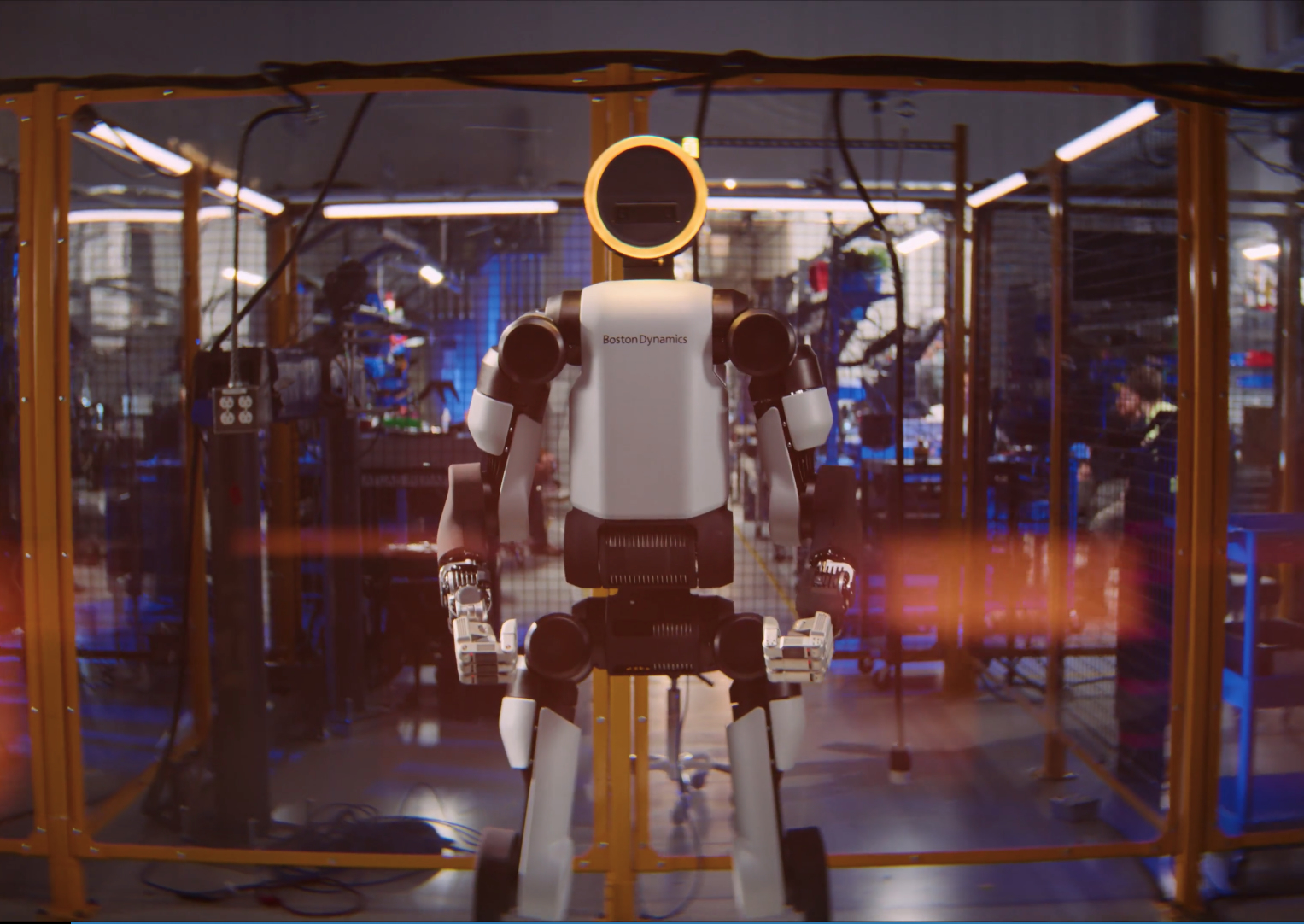
Hyundai Motor Company’s plan to put humanoid robots to work by 2028 is not part of current negotiations with striking South Korean autoworkers, according to the company.
The automaker is disputing news reports that partial labor strikes by the Hyundai Motor union at the world’s largest automotive plant in South Korea were spurred by concerns about the company’s planned deployment of humanoid robots in the United States starting in 2028. A company statement shared with Ars describes the union’s demands as focusing on compensation-related issues such as wage increases, bonuses, and an extension of workers’ retirement age.
“Potential deployment of robots in Korean production facilities is not part of the current labor-management discussions,” according to the Hyundai statement. “Hyundai Motor Company remains committed to constructive engagement with the union and to reaching an agreement that supports the long-term interests of both employees and the company.”
Hyundai emphasized that its current plan only covers the initial deployment of the Atlas humanoid robot at Metaplant America, an electric vehicle factory near Savannah, Georgia, starting in 2028. “Decisions about future Atlas deployment at other facilities will be made thoughtfully, in accordance with local operational needs, and in dialogue with the employees and workforce representatives at those sites,” the company stated.
However, The Wall Street Journal described the Hyundai Motor union as making “unprecedented demands seeking to enshrine job protections in the era of robots and AI,” and characterized certain compensation demands as hedging against potential reductions in work hours caused by AI adoption and robotic automation.
The union previously warned Hyundai Motor Company about the need for negotiations after the automaker unveiled the production model of the Atlas humanoid robot at the Consumer Electronics Show in Las Vegas in January. The Atlas robot was developed by the US company Boston Dynamics, which has become a wholly owned Hyundai subsidiary.
“Remember that without labor-management agreement, not a single robot using new technology will be allowed to enter the workplace,” the union told Hyundai in an internal letter reported by Reuters.
Hyundai management and the labor union are currently reviewing a proposed wage reform that would “provide factory workers with greater income stability even after the carmaker’s planned deployment of humanoid robots,” The Korea Times reported. But experts cautioned that the wage overhaul, which would convert hourly pay for overtime and night-shift allowances into fixed wages, could come at the expense of company productivity.
The Hyundai Motor union is a branch of the Korean Metal Workers’ Union. Ars has reached out to the Korean Metal Workers’ Union and the Korean Confederation of Trade Unions—a national trade union center—for comment on the current labor strike and negotiations.
The broader wave of labor negotiations over robots
South Korea has seen a wave of union groups seeking negotiations with company management since a new labor law took effect in March 2026, according to Tech Policy Press. The so-called “yellow envelope law” expands labor rights for subcontracted workers and limits employers’ capability to claim damages from unions because of labor strikes.
The yellow envelope law may also “slow the transition to robot labor” because it recognizes management decisions that significantly impact working conditions as being subject to collective bargaining and action, The Korea Times reported. That means large-scale automation efforts using robots need to be negotiated with human workers under the law, labor experts told the South Korean newspaper.
The Korean Confederation of Trade Unions also established a joint consultative body with the South Korean government to discuss labor issues, including AI-driven automation and robotics in February 2026. “In this time of major transition, whether these developments become a disaster that forces insecurity and sacrifice onto workers or an opportunity to improve quality of life will largely depend on the government’s choices and policy direction,” the organization said in a statement reported by The Korea Times.
The US workers at Hyundai’s Metaplant factory in Georgia—which will be the first facility to use Atlas robots—are not unionized. But United Auto Workers (UAW), the union representing about 400,000 autoworkers across the US, Canada, and Puerto Rico, has made efforts to organize the Metaplant workers.
The US autoworkers union has already pushed back against deployment of specialized industrial robots. During the UAW Constitutional Convention held in Detroit in June 2026, Shawn Fain, president of United Auto Workers, also warned against “the threat of humanoid robotics and mass automation” undermining worker employment and compensation.
It still remains to be seen if humanoid robots will prove to be the autonomous general-purpose robots that many companies are betting on. Ars previously talked to robotic company founders and executives about the challenges of realizing this vision.