Sony FX5 Has a New Sensor, Open Gate, Internal RAW, and So Much More
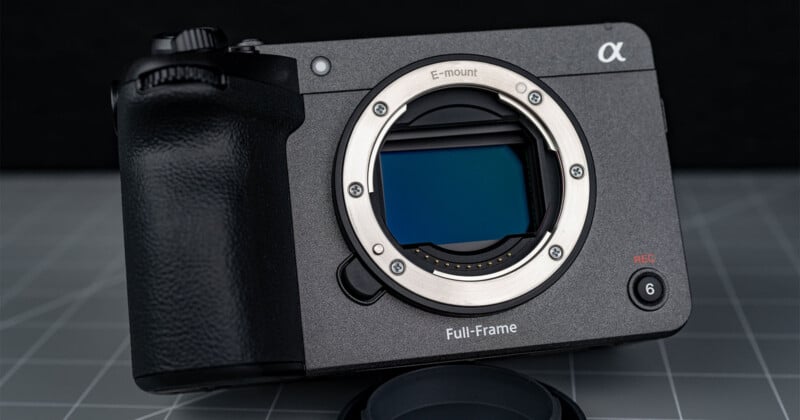
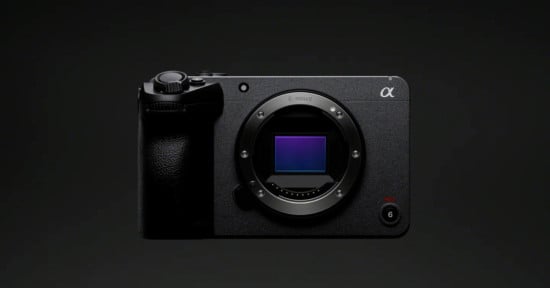
The Sony FX5 is here and could be Sony’s most important cinema camera in a very long time. The new camera has a brand-new image sensor, Sony’s latest processor, and an array of new features that directly answer user requests.
The new Sony FX5 combines the compact, lightweight form factor of the Sony FX3 with some of the features and performance of the FX6, while also introducing entirely new concepts to the Sony FX Series.
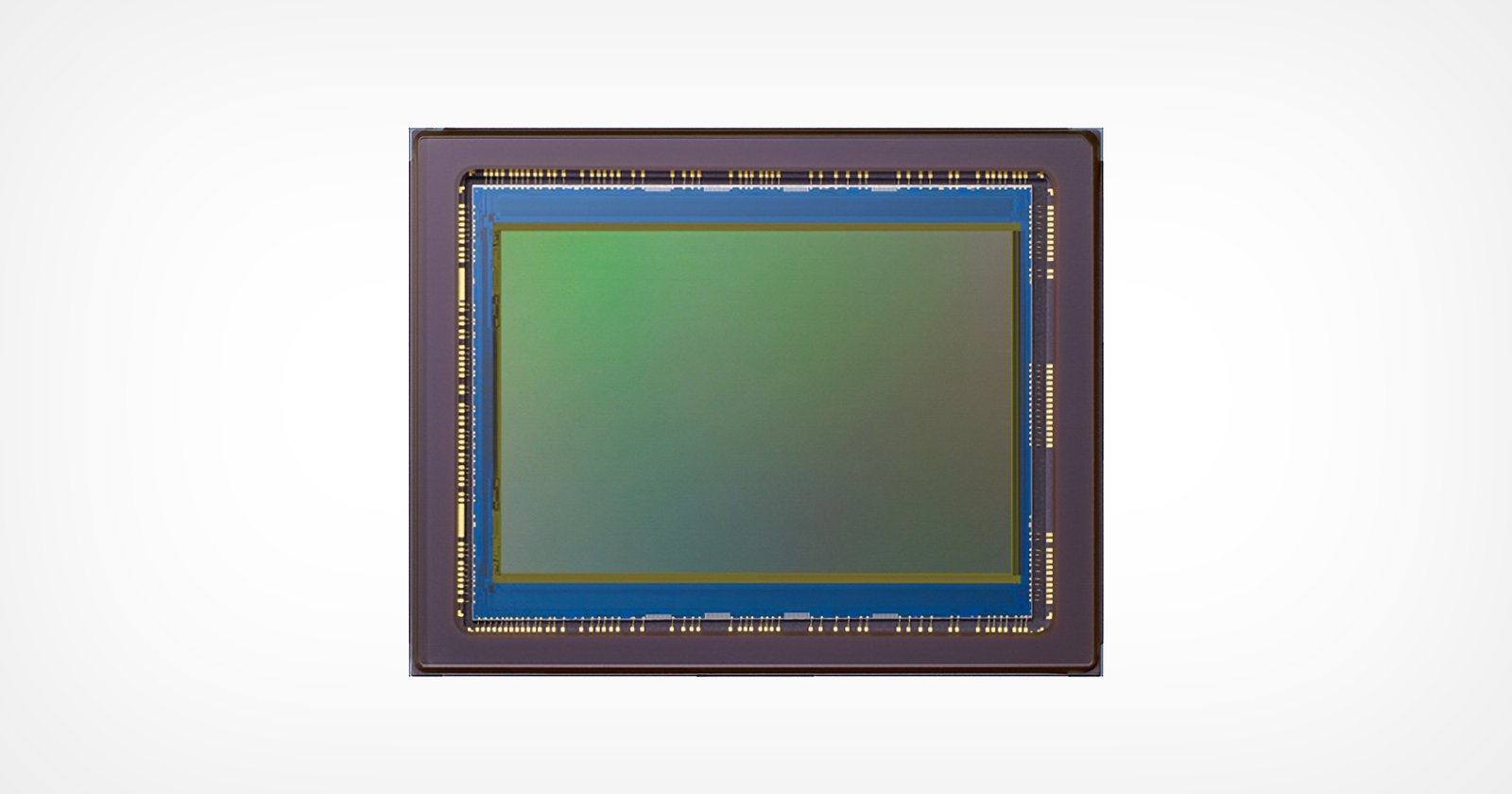
Sony FX5 Introduces a Brand-New 16.6MP Stacked Sensor
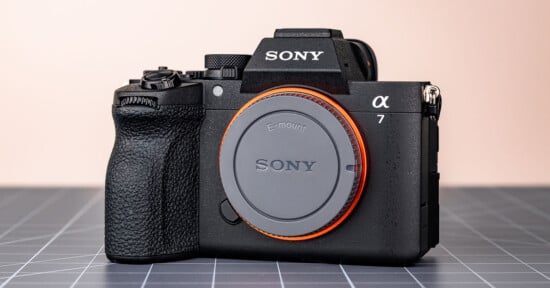
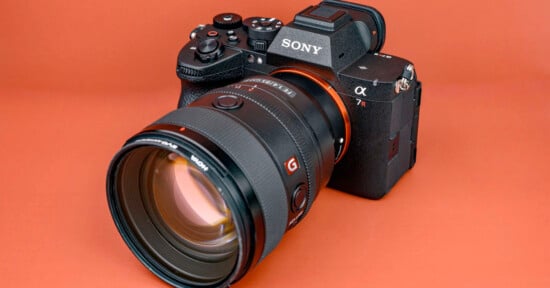
At the heart of the FX5’s promising capabilities is a brand-new 16.6-megapixel fully stacked full-frame Exmor RS image sensor. An interesting tidbit here is that if you multiply the FX5’s pixel count by four, it adds up to the same total megapixels as the a7R VI’s new 66.8-megapixel image sensor. PetaPixel‘s Jordan Drake discusses this “coincidence” in greater detail in his hands-on first impressions.
This new sensor, up from 12 megapixels in the FX3 and FX6, enables higher resolution 5K video recording. Further, thanks in part to Sony’s newest Bionz XR2 image processor, which debuted in the Sony a7 V late last year, the FX5 has many new video features, many of which users have been clamoring for for years. Sony argues that the new 16.6-megapixel sensor delivers the FX Series’ best balance of resolution and speed to date.
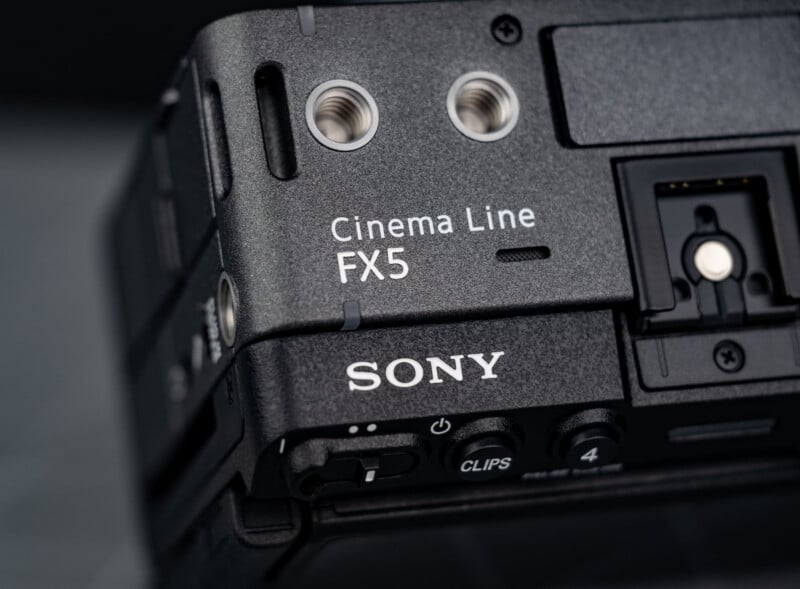
Bionz XR2 Processor Enables Highly-Requested Features Like Open Gate and Internal RAW
The new processor added a dedicated AI processing unit that promises improved autofocus performance and subject tracking, like with the Bionz XR2-powered a7 V and newer a7R VI, but it also enables significantly improved video performance. All-new to the Sony FX Series in the FX5 are Open Gate (3:2) recording, internal X-OCN RAW recording, three base ISO, and Dual Gain recording that promises up to 16 stops of dynamic range.
Regarding internal RAW, this relies upon the X-OCN file type. This stands for E(x)tended tonal range (O)riginal (C)amera (N)egative. While that’s a mouthful, what it promises is 16-bit linear RAW recording with 280 trillion colors. This Sony-developed RAW codec offers 1,000 times more color data than a 12-bit RAW file. It is a fairly lightweight RAW file, although the FX5 does require VPG400-validated cards for guaranteed performance.
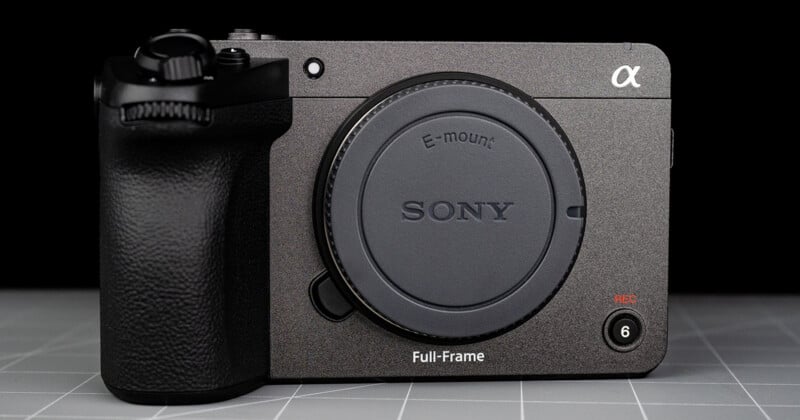
Open Gate and internal RAW recording are certainly the highlight additions here, but it’s also worth noting that the FX5 also brings 4.5Kp120 and 5Kp60 recording to the FX family for the first time. The FX5 also introduces a new user interface to the FX Series, including false color, waveform, and vector scope monitoring assists. These assists join existing zebra, peaking, and histogram monitoring tools.
With the addition of Open Gate recording, anamorphic lenses are much more usable on the FX5 than on Sony’s other FX Series cameras. As such, the FX5 has anamorphic desqueeze.
The camera’s three base ISO settings are also worth discussing in greater detail. The FX5’s three base ISO settings are at 800, 4000, and 12800. As Sony explains, these promise cleaner shadows, wider exposure latitude, and improved clarity compared to prior dual base ISO cameras.
The camera’s Dual Gain function promises the best overall dynamic range, although this incurs a readout speed penalty. As always, image quality must be balanced against performance, although as Sony’s recent Alpha cameras like the a7 V and a7R VI have demonstrated, the company is very proficient at extracting the best-possible dynamic range from its image sensors.
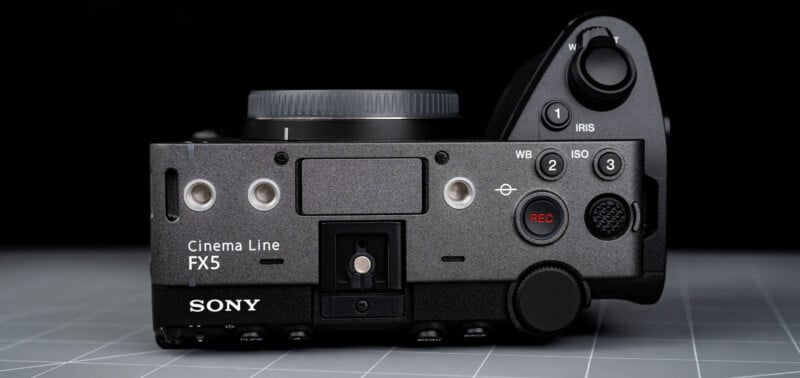
FX3 Form Factor With New Tricks
There are plenty of other improvements on offer, including better Dynamic Active Mode stabilization, a better in-body image stabilization (IBIS) system, the aforementioned AI-based subject recognition, better low-light autofocus, Clear Image Zoom, and more tally lamps.
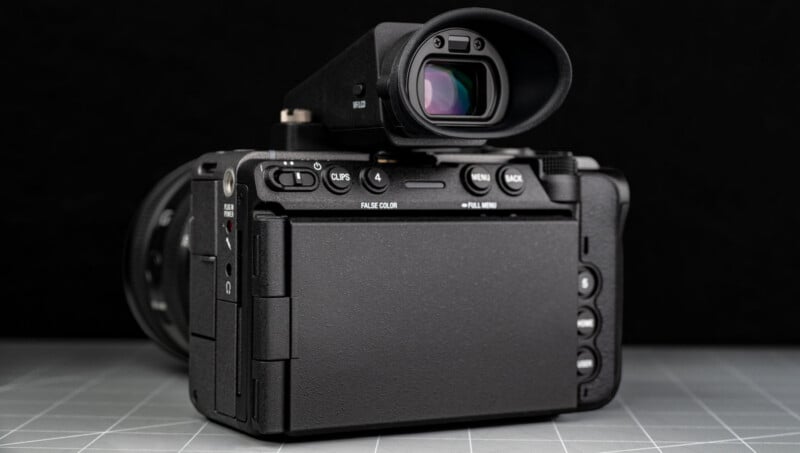
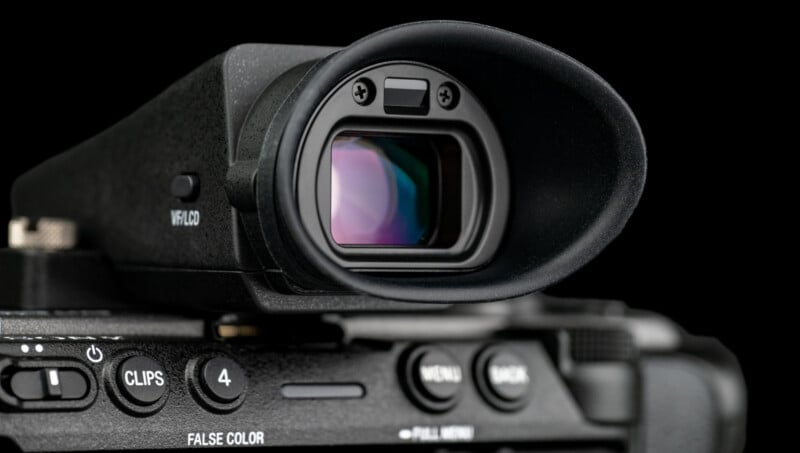
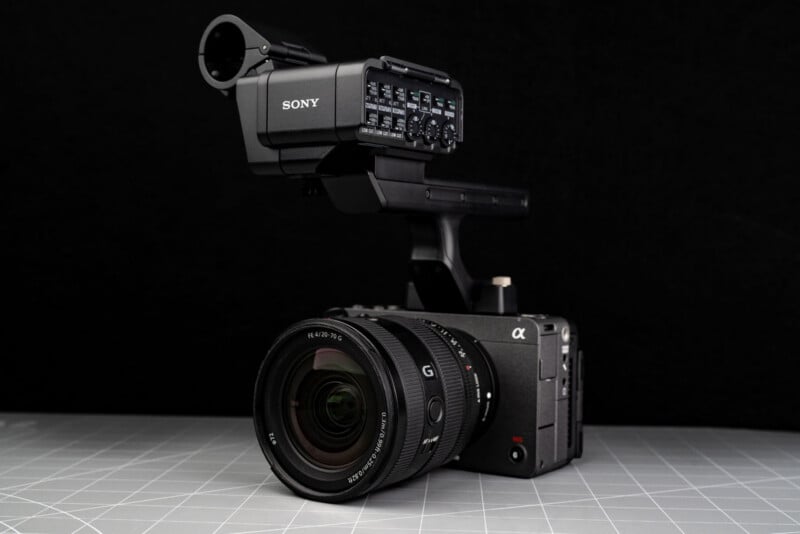
The Sony FX5 embraces the compact form factor of the FX3, but makes some notable changes to the formula to make it more usable for a wider range of video users and filmmakers. Among the biggest changes is the introduction of a brand-new detachable electronic viewfinder (EVF).
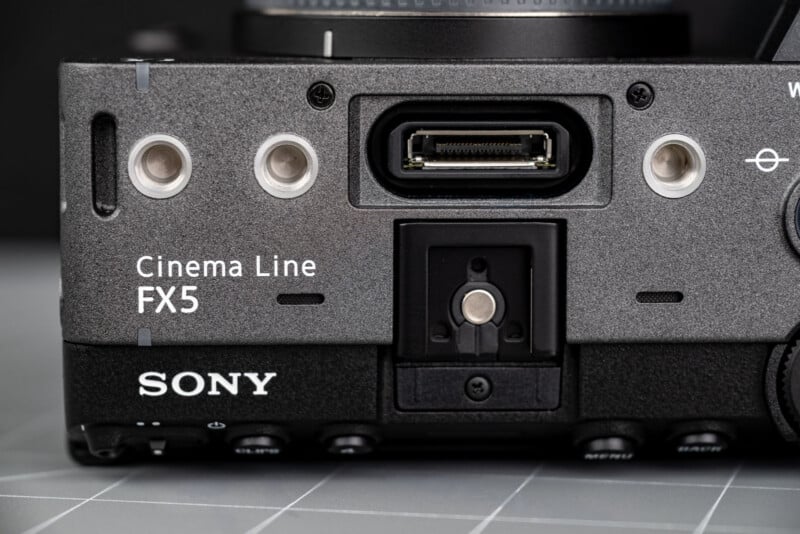
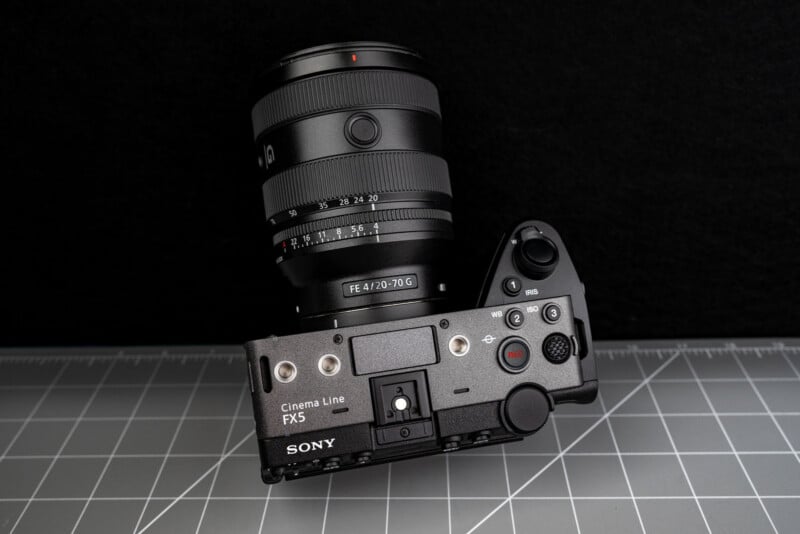
The removable OLED EVF has 3.68 million dots, 2,500-nit brightness, high frame rate support, and a wide color gamut. It attaches to the FX5 via a dedicated port on top of the camera, which unfortunately blocks direct access to the Multi Interface shoe. The FX5 supports 32-bit audio recording via XLR through the hot shoe, but using the EVF disables that ability. By the way, Sony’s new XLR handle for the FX5 does not ship with the camera, unlike what Canon does with its C50 cinema camera.
The Sony FX5 has a pair of dual UHS-II SD and CFexpress Type A card slots. It also has separate ports for a mic and headphones, two USB Type-C ports, a full-size HDMI Type A port, an Ethernet port, multiple 1/4-20 screw holes, and built-in WiFi and Bluetooth. The WiFi is tri-band, meaning it supports 6GHz in addition to the 2.4GHz and 5GHz wavelengths the FX3 and FX6 support. Sony notes that the FX5 works wirelessly with its Monitor and Control smartphone app, letting users attach a compatible Xperia smartphone to the top of the camera to use as an external monitor.
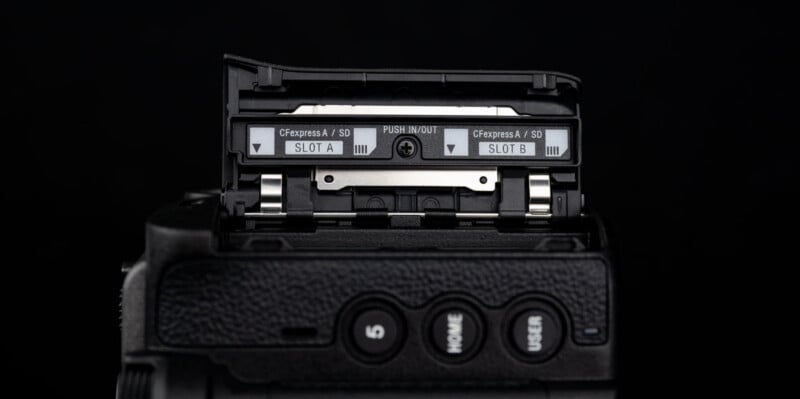
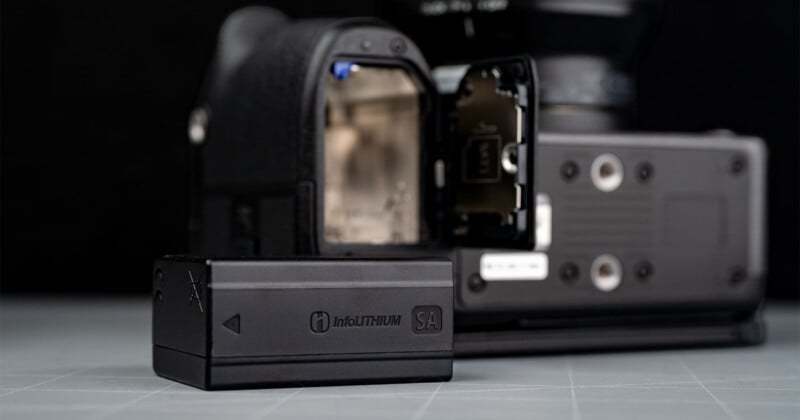
The FX5 also uses Sony’s newest NPSA100 battery, which it introduced a couple of months ago in the new Sony a7R VI. The battery delivers 130 minutes of recording, up from 113 minutes on the FX3A.
As for controls, the FX5 inherits the Multi-Function Dial from Sony’s expensive, flagship Venice 2 cinema camera. This can be used to quickly adjust controls through rotation and navigate menus thanks to its click function. It’s like a powered-up version of the command dial seen in Sony Alpha cameras and other FX models. The FX5 has six assignable function buttons and an array of new workflow-friendly buttons.
The FX5 has a new 3.5-inch rear display with a 16:9 aspect ratio. It sports Sony’s tried-and-true four-axis articulating design. While Sony has not shared its exact resolution, the company notes that it offers a significantly larger viewable area than the FX3’s 3-inch panel. The utility of this new screen is further enhanced by Sony moving to a Venice-inspired user interface, rather than the Alpha-style one on the FX3.
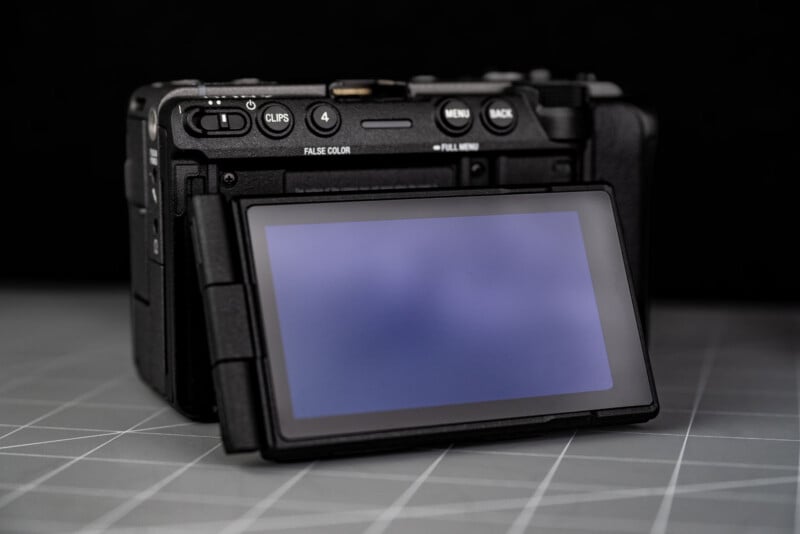
Despite all these changes, the camera is just about the same size as the FX3, and the FX5 weighs only about five percent more. The camera is 5.2 x 3.1 x 3.4 inches (132 x 79 x 87 millimeters) and weighs 1.62 pounds (734 grams).
Like the FX3 and unlike the FX6, the new Sony FX5 does not include a built-in electronic neutral density (ND) filter.
Even More Is Coming to the FX5 Via Post-Launch Support
As many new features as the FX5 will have at launch, Sony is already thinking ahead. Sony says that in firmware version 2.0 (or later), the FX5 will get various new functionality, including 4Kp240 recording in X-OCN, Open Gate 3:2 in XAVC-I, a user interface optimized for vertical shooting, and the option to grab still frames from video clips. Sony expects firmware 2.0 to arrive in August 2027.
Pricing and Availability
The Sony FX5 will be available in mid-August for $4,999. A kit with the XLR handle will also be available for $5,499. Preorders start now.
The optional electronic viewfinder’s price is not yet available, and that’s also true for a new optional timecode cable.
Image creditsProduct photos by Erin Thomson for PetaPixel