Photographer Captures Rare Shot of Venus and the ISS Together in One Frame
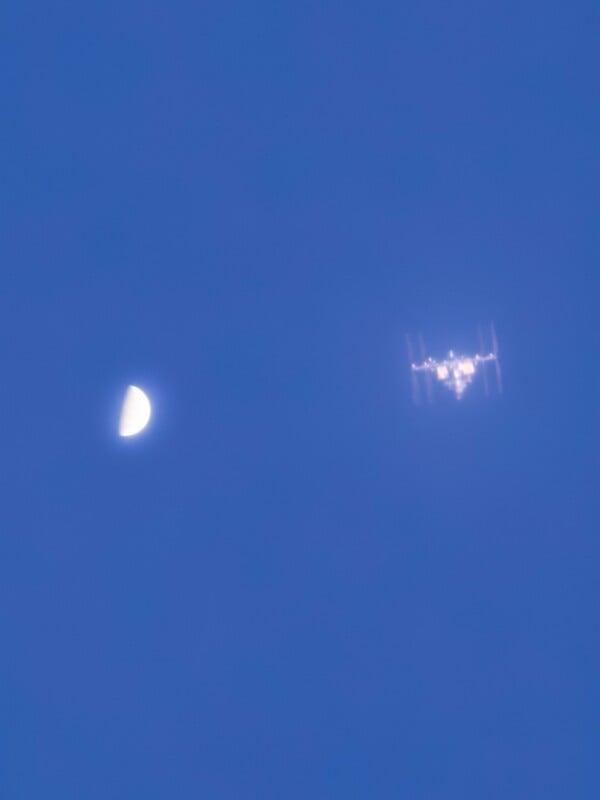
Photographer AJ Smadi has captured the second-ever photograph of the International Space Station (ISS) and Venus in the same frame — he also captured the first one.
Smadi captured the cosmic alignment last Saturday at 6:38 p.m. from a park in Edmonds, Washington, north of Seattle.
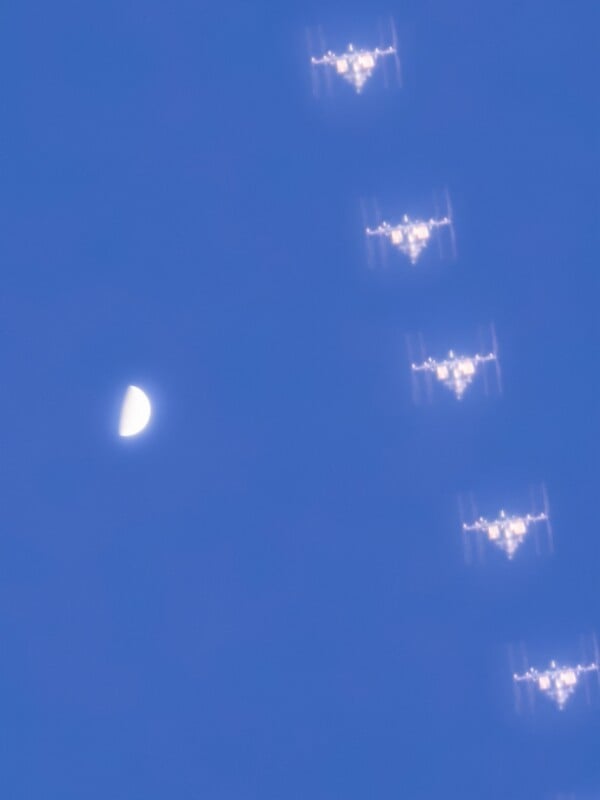
“Like the Moon, Venus has phases, and recently emerged from behind the Sun from its full phase, now sitting at just over half illuminated,” Smadi tells PetaPixel.
Despite the two objects looking similar in size, the 135 million-kilometer (84 million-mile) distance between them makes for a trick of perspective. In reality, Venus is roughly the same size as Earth, while the ISS is roughly the width of a football stadium.
To execute the photograph, Smadi had to plan his shot meticulously. An alignment of Venus and the ISS from the Earth’s perspective is a rare event, so Smadi had to plan his vantage point in advance — measured down to the exact meter.
“The ISS travels at a mind-boggling 7.5 kilometers per second, making it very hard to photograph,” Smadi explains.
“Thankfully, by shooting at just 1/150 of a second exposure, I got 10 frames in my uncompressed video, and stacked them to reveal as much detail as possible.”
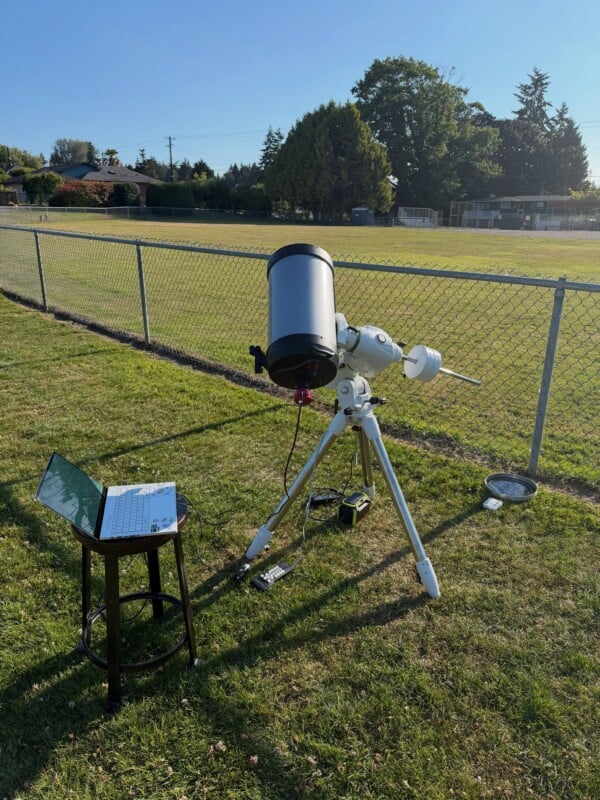
Smadi used a 9.25-inch Celestron Schmidt-Cassegrain Telescope that has a focal length of 2,350mm. The camera was a ZWO ASI662MC that uses Sony’s IMX662 sensor. He also used a UV/IR filter to block out ultraviolet and infrared light.
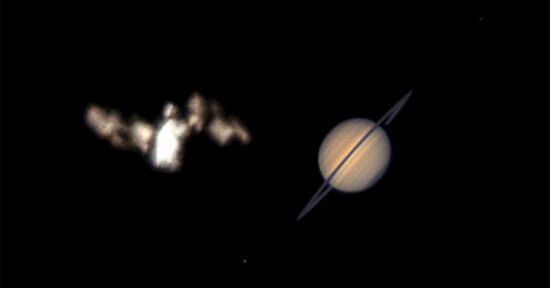
Smadi has lined up the ISS and another planet, Saturn, before. Saturn is much further away than Venus, roughly 1.39 billion kilometers (863.7 million miles).
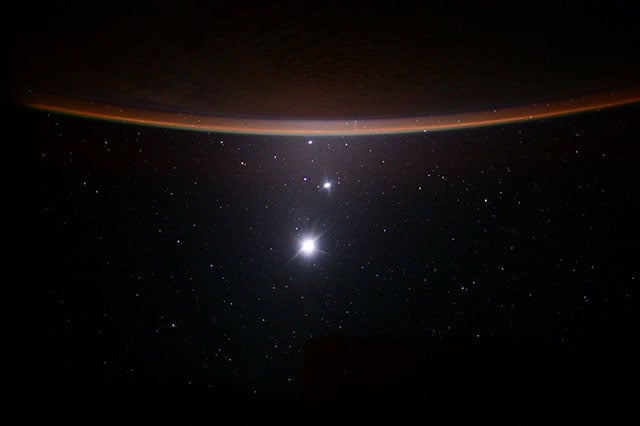
Smadi has also captured the ISS from Earth in impressive detail. Despite the spacecraft orbiting 250 miles above Earth, he was able to get a decent view of it.
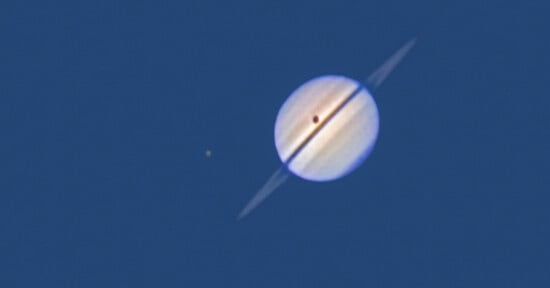
Smadi has captured objects and events happening deep in the solar system before, including an eclipse that happened on Saturn.
More of Smadi’s work can be found on his Instagram and Reddit.
Image creditsAJ Smadi.