right laptop, wrong time
Framework Laptop 13 Pro review: Much better battery, much worse price
Framework’s latest modular laptop trades one set of problems for another.
Credit:
Andrew Cunningham
Credit:
Andrew Cunningham
I’ve liked the Framework Laptop 13 since the first time I used it, partly because I just think the idea of a repairable and upgradeable laptop is cool and partly because it’s not Yet Another Ultraportable Trying To Be A MacBook Air Clone. But the design has always had real shortcomings—the most noticeable and serious being its mediocre battery life.
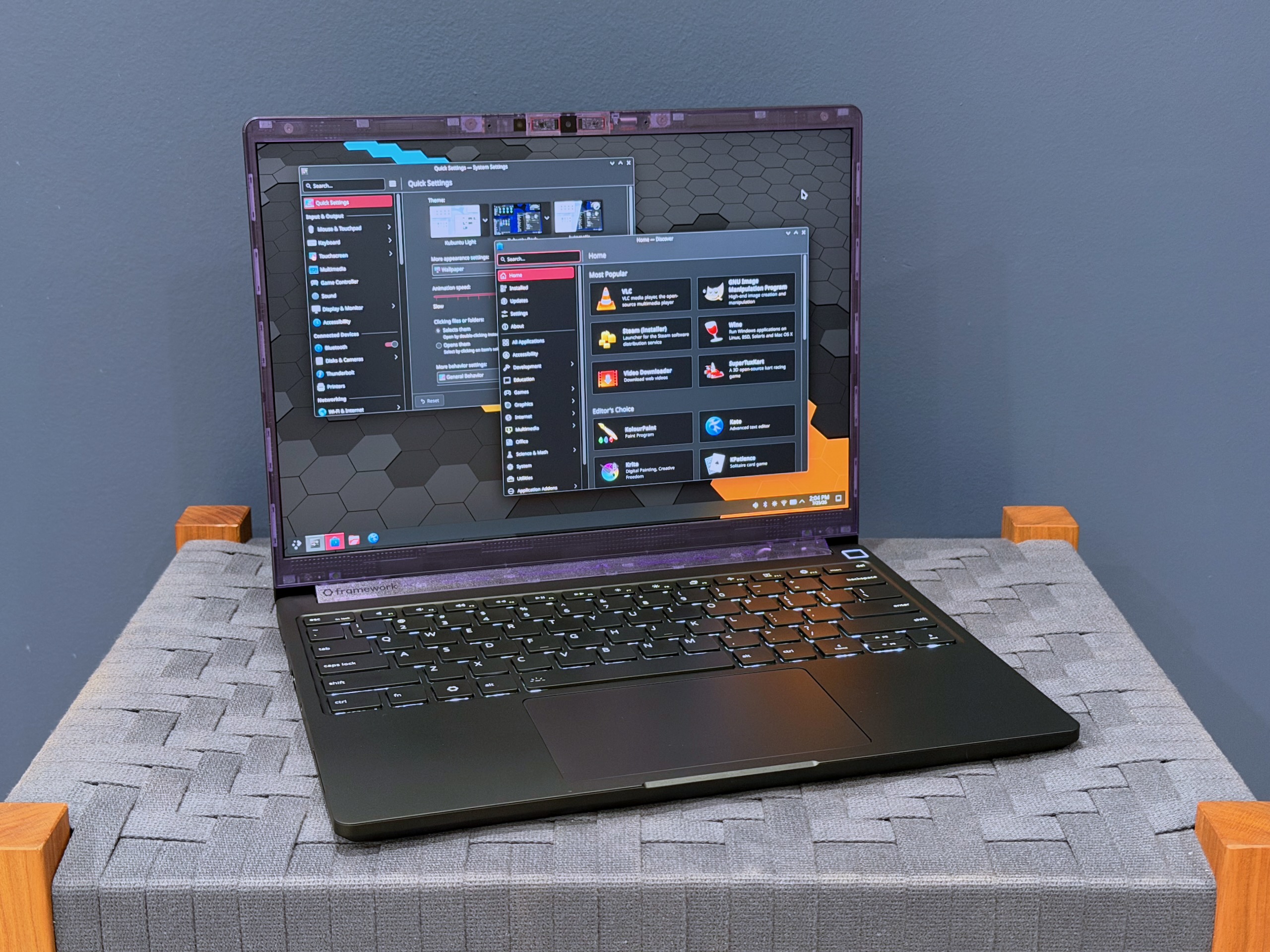
Enter the Framework Laptop 13 Pro. While all previous Laptop 13 refreshes have tinkered around the edges with the original design (a tweaked lid design here, new hinges or new speakers there), the Laptop 13 Pro is as close as we’ve gotten to a second-generation revision for the original design.
This means that it breaks backward compatibility for some (but not all) Laptop 13 components, most notably the bottom case, the keyboard and trackpad, and the original 55 WHr and 61 WHr battery designs. But by allowing itself to make larger changes to the design, Framework has made major strides in battery life and general fit and finish.
The result is Framework’s nicest-looking, nicest-feeling, most polished laptop design. It’s also possible for existing Laptop 13 users to get some or all of its benefits by retrofitting their laptops with new parts. That’s good because the Laptop 13 Pro is also quite expensive, even by 2026’s ridiculous standards for consumer tech—no model costs less than $1,500, and you’d spend nearly $3,000 to get the version I was sent for review.
Design changes
Andrew Cunningham
Andrew Cunningham
Andrew Cunningham
Andrew Cunningham
Andrew Cunningham
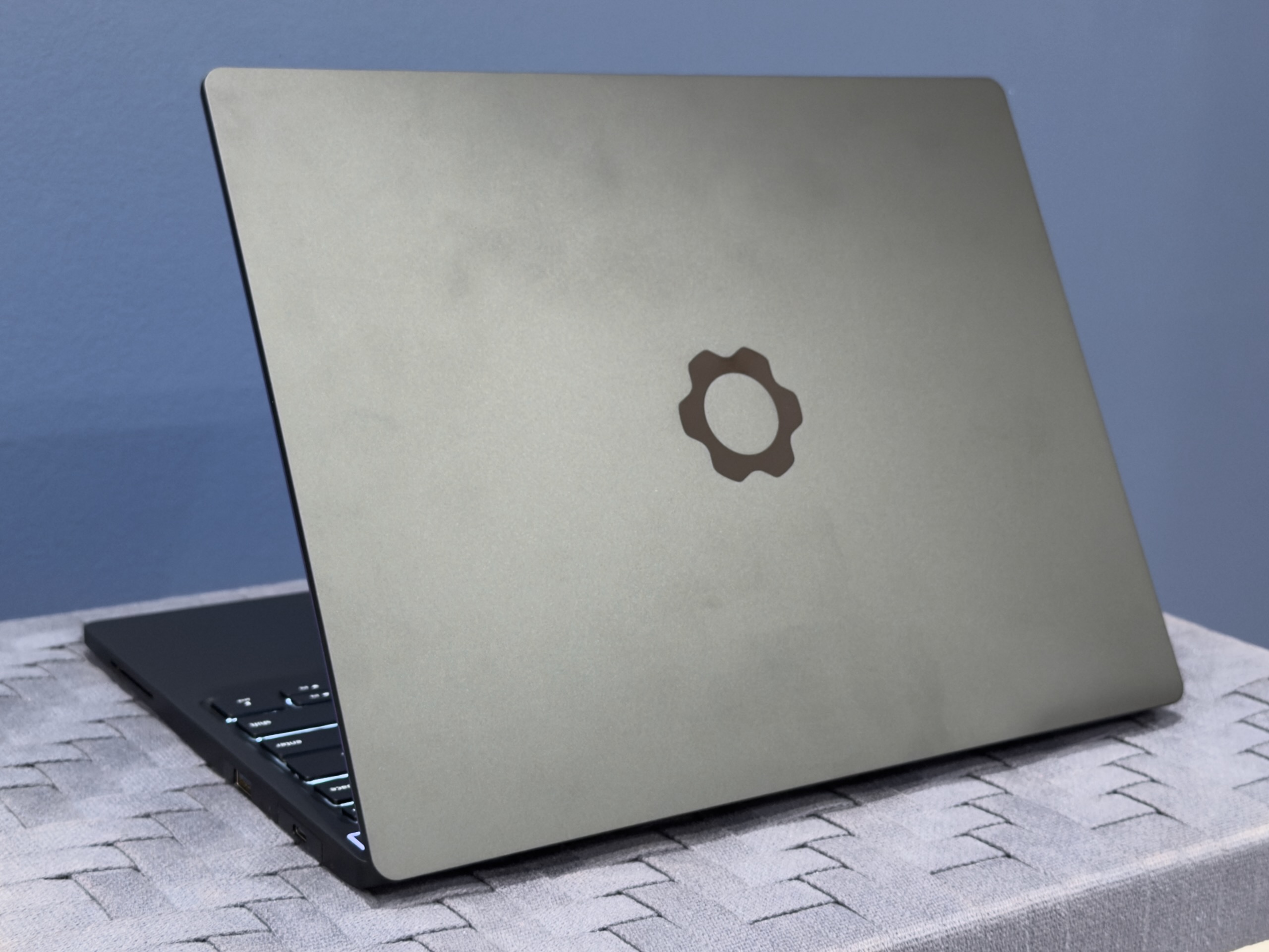
The first thing you’ll notice about the Laptop 13 Pro is that it has traded in Framework’s traditional, more industrial-looking silver for an anodized dark gray “graphite” finish. On the “dark-finished aluminum” spectrum, it’s about as dark as Apple’s Midnight finish but without the same bluish tint; it does attract fingerprints in a similar way, though. Framework is offering Laptop 13 Pro parts in the original aluminum finish, but they are primarily intended for original Framework Laptop owners who are buying upgrades.
Framework says that the Laptop 13 Pro is its first to be “fully machined out of extruded blocks of 6063 aluminum,” and as a result, the device’s body feels slightly more solid and substantial than the original version.
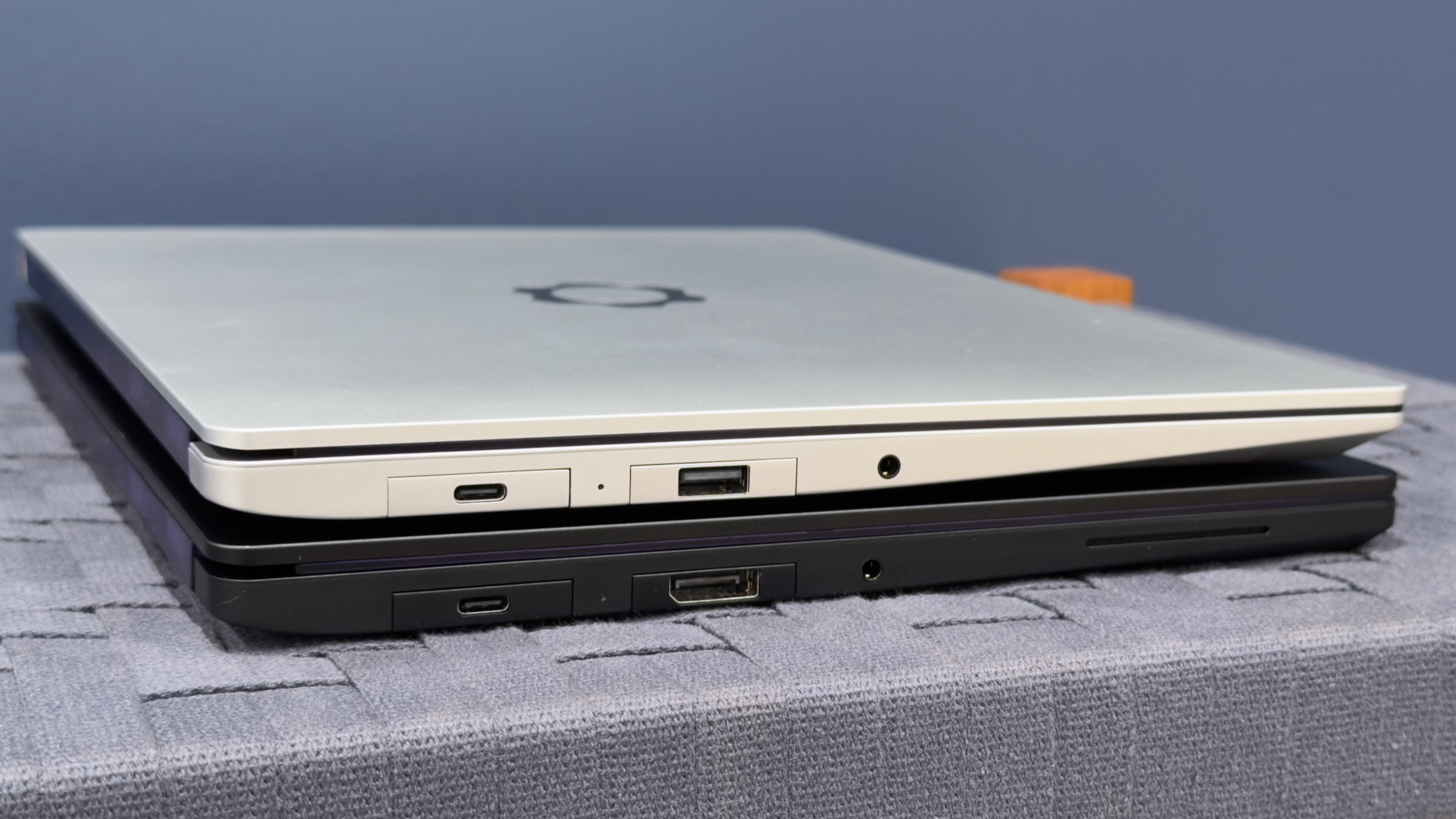
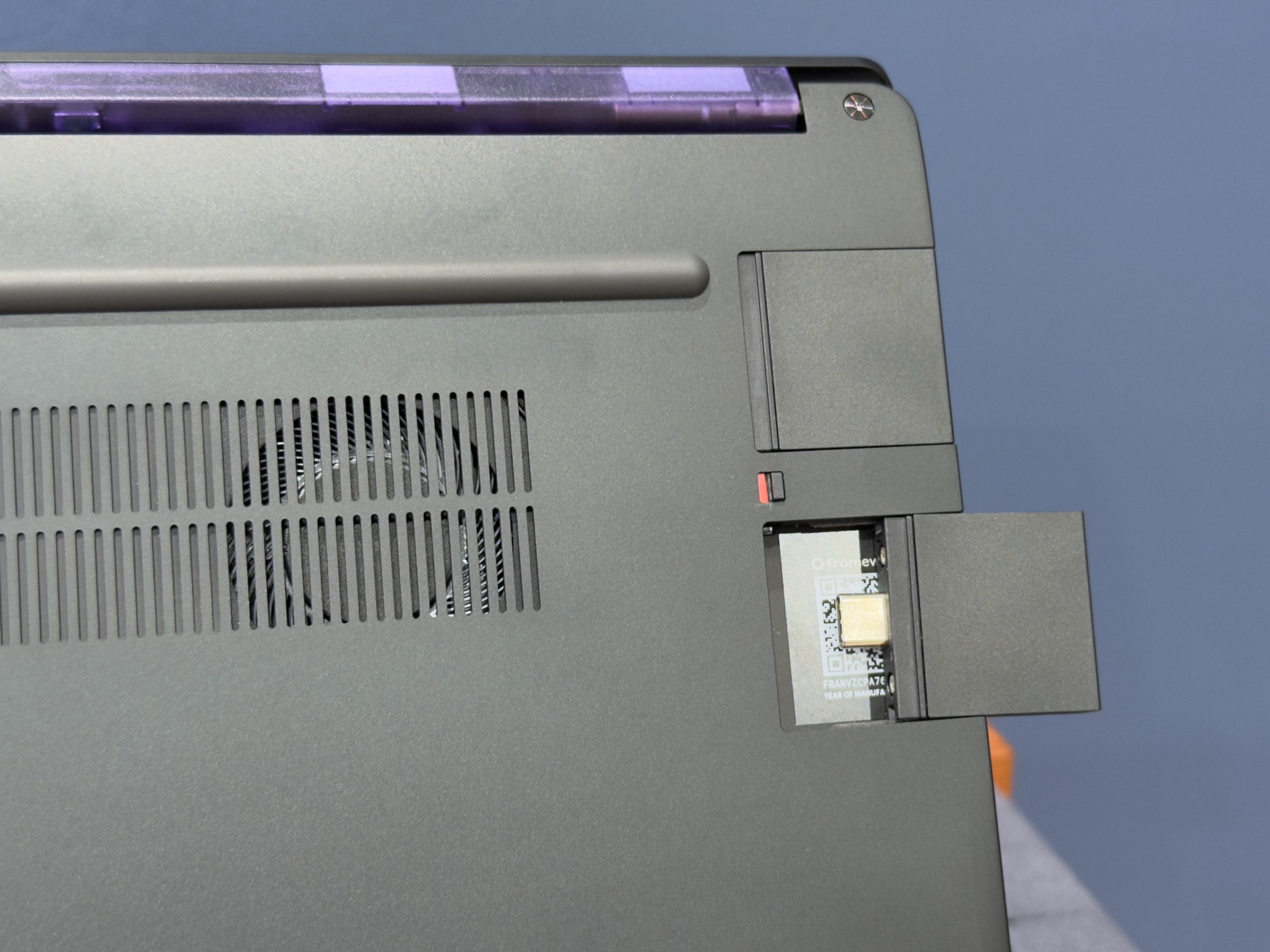
The redesigned bottom case allowed Framework to fit in a bigger battery than older Laptop 13 models—74 WHr, up from 61 WHr in previous models and 55 WHr in the first couple generations. The release mechanism for the expansion modules has also been changed. The original Laptop 13 had buttons that had to be continually pressed as you pried the expansion modules out; the Laptop 13 Pro uses the same kind of on/off retention switches Framework uses in the Laptop 16 and Laptop 12.
Andrew Cunningham
Credit:
Andrew Cunningham
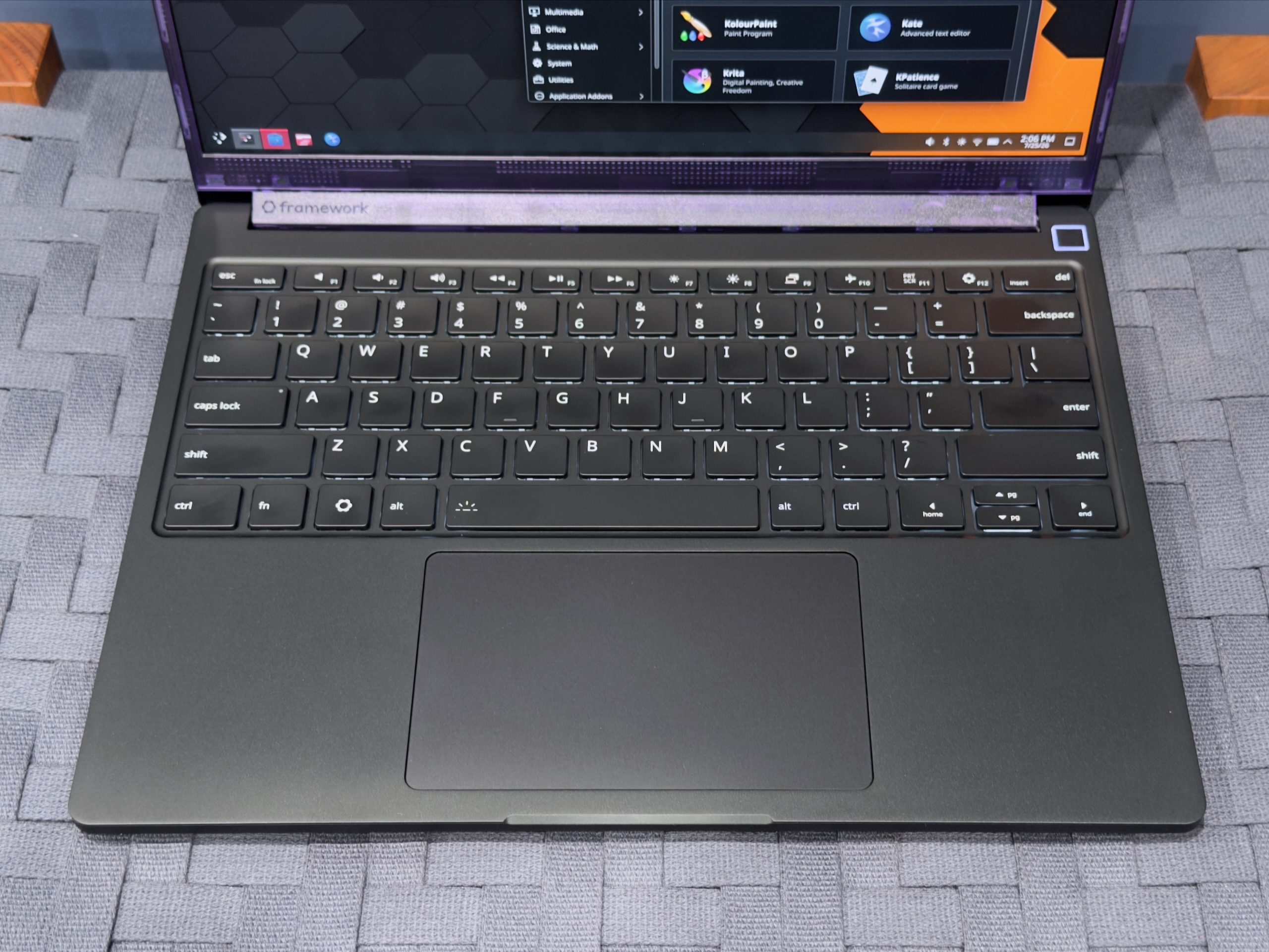
The keyboard’s look and feel hasn’t changed much from previous generations, but it now comes in versions with either lavender or orange/gray keycap highlights. The trackpad changes more noticeably; in part to make room for the bigger battery, Framework has shifted from a trackpad with a physical clicking mechanism to a haptic trackpad that uses vibrations to simulate clicking. It’s a change Apple made in most of its laptops a decade or so ago, and the situation is similar here: it’s different, and it’s not quite as tactile as a “real” click. But with the firmness turned all the way up, it’s close enough, and it’s nice to get the same response no matter where you click on the trackpad.
The final change of note is to the screen, which keeps the same size (13.5 inches), resolution (2,880×1,920), aspect ratio (3:2), refresh rate (30 to 120 Hz), and panel type (IPS) but also includes touch support. This is Framework’s first touchscreen display, but even if you don’t care about touch support, you might like the other quality-of-life improvements: a 700 nit “typical brightness,” a 1,800:1 contrast ratio, and an updated anti-glare coating.
Those are all marginal but noticeable improvements over the previous-generation display, and if you’re still using a glossy or matte 2,256×1,504 screen from early Framework Laptop 13 iterations, this new screen will be an especially noticeable upgrade. But it’s still not an OLED display, and it’s still missing complete coverage of the DCI-P3 color gamut, to name a couple of more advanced features that remain absent. And the display quality still isn’t perfect; I noticed minor light bleed across the top of my review unit’s display when it was showing something dark.
(One less-noticeable screen change: the top corners of the new screen are actual 90-degree angles again, rather than little curves. The curves on the older display were a side effect of a display panel Framework used that was originally designed for another company. The corners never really bothered me that much, and I hesitate to call this an “upgrade” in and of itself. But the rounded corners didn’t line up with Framework’s bezels, and Windows and Linux have never respected the tiny little dead zones that they create, so, sure, fine.)
In the end, this is still the Framework Laptop 13. But it’s probably as close to a design overhaul as you can get while still maintaining compatibility with a critical mass of important parts (the board, screen, and expansion port modules chief among them).
“The MacBook Pro for Linux users”
Framework is positioning the Laptop 13 Pro as a “MacBook Pro for Linux users,” and Ubuntu 24.04 LTS is available for the first time as a preinstalled OS for the laptop’s prebuilt edition.
The Laptop 13 Pro still supports Windows 11 just fine, of course, and for the sake of consistency, all of my performance and battery benchmarks were done in Windows 11 25H2.
But aside from the ability to have Linux preinstalled, there’s actually nothing special about the Laptop 13 Pro’s Linux support. That’s because Framework has officially supported Ubuntu and Fedora on all of its laptops, including previous Laptop 13 models. After a couple of bumpy years during which Linux users who wanted BIOS updates would need to figure out how to temporarily install Windows first, Framework’s BIOS updates are available for easy download and installation through LVFS (the Ryzen 7040 version of the Framework Laptop that I run Kubuntu 26.04 on, for example, grabbed its Laptop 13 Pro-supporting BIOS update through the same updater as all other apps and system components).
Apart from Ubuntu 24.04, Framework says that Ubuntu 26.04 LTS and Fedora 44 are officially supported and should work out of the box, while CachyOS, Bazzite, Arch, and NixOS 26.05 are all “compatible community supported distributions” that will generally work fine with a little extra tweaking. Any distribution you run should include at least Linux kernel version 6.19 to ensure working support for Intel’s Core Ultra Series 3 chips and the rest of Framework’s hardware; kernel 7.0 or higher is recommended.
The agony and the ecstasy of LPCAMM memory modules
Andrew Cunningham
Andrew Cunningham
Andrew Cunningham
Andrew Cunningham
Andrew Cunningham
Andrew Cunningham
Andrew Cunningham
Andrew Cunningham
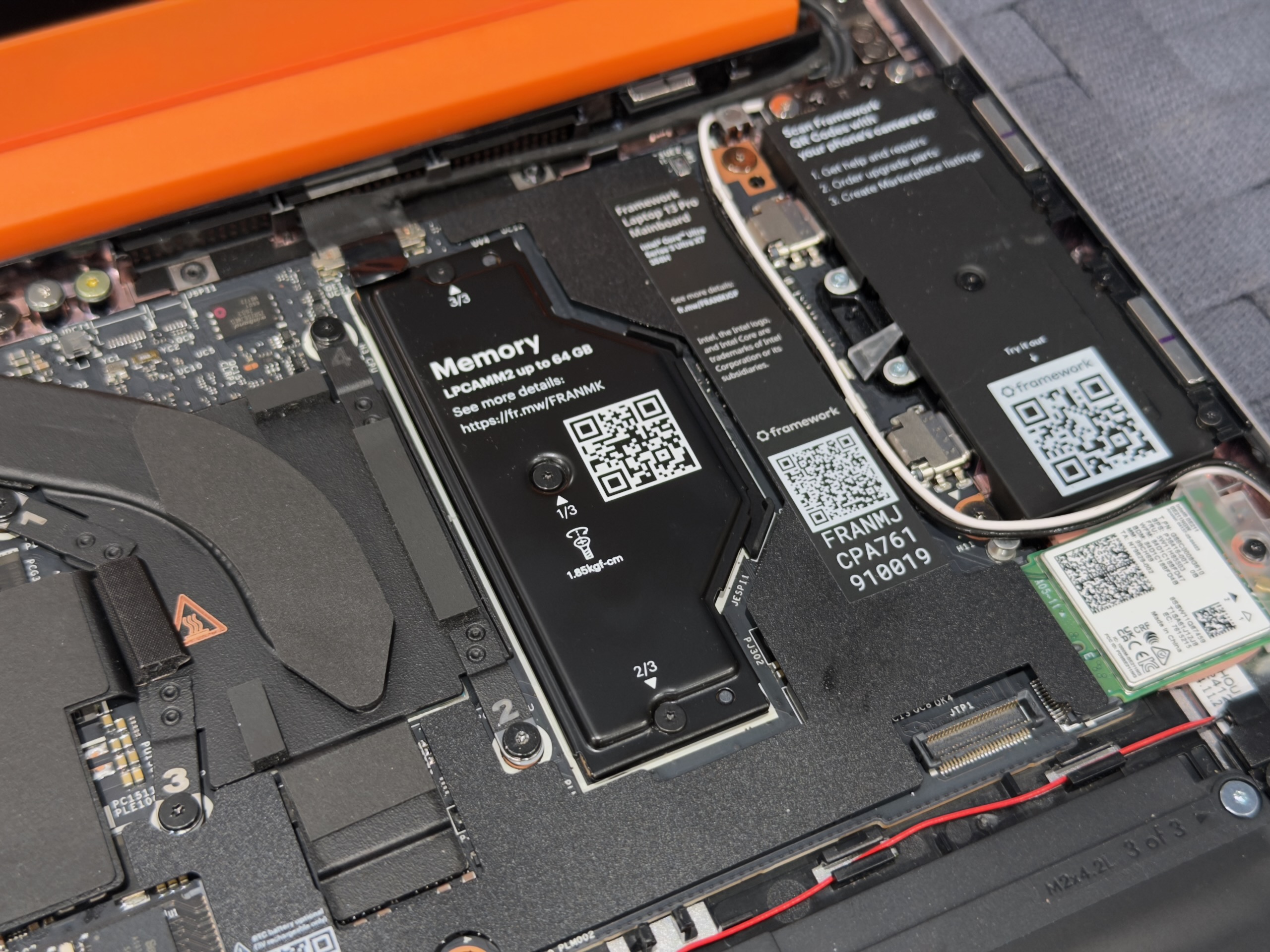
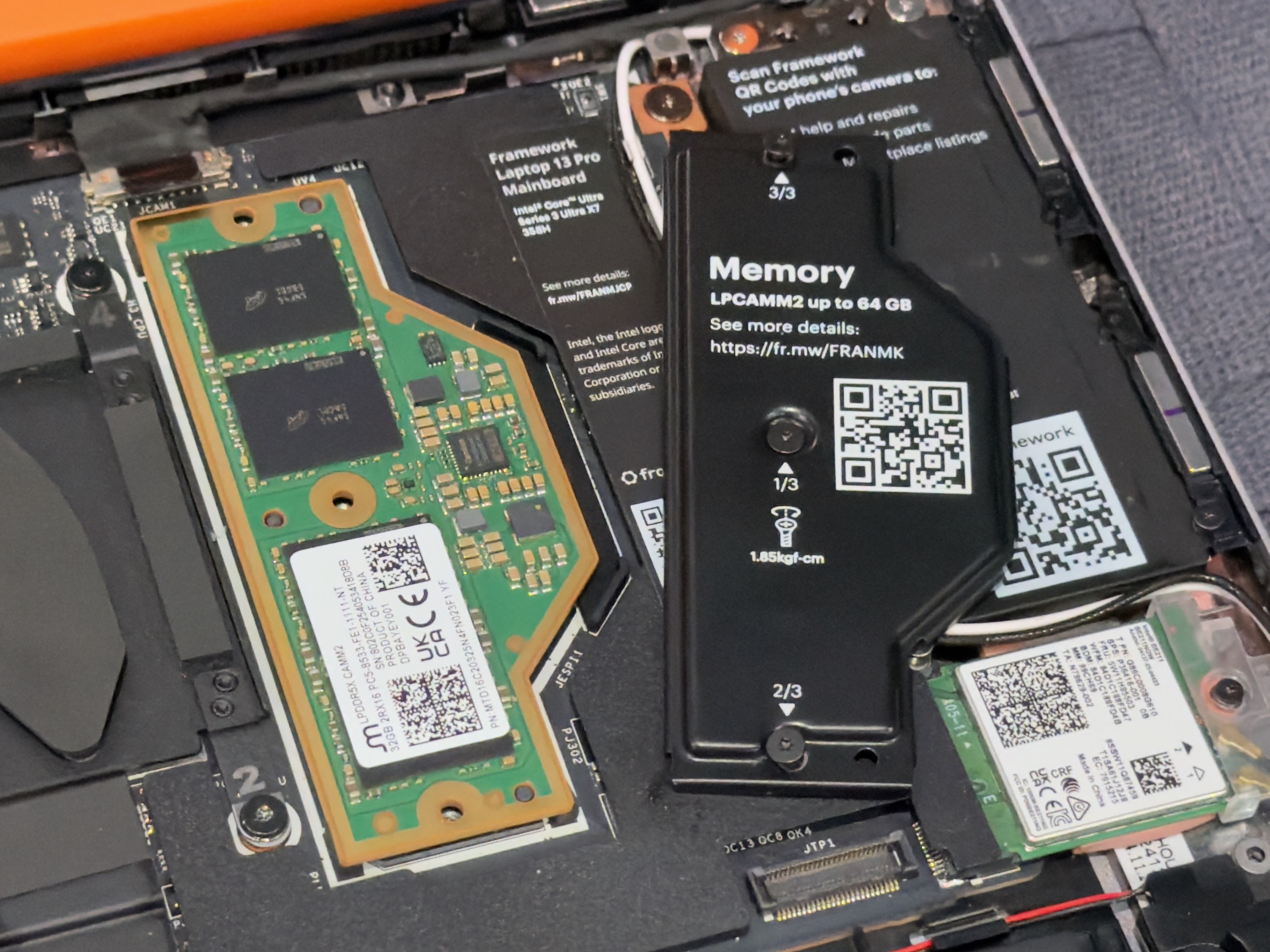
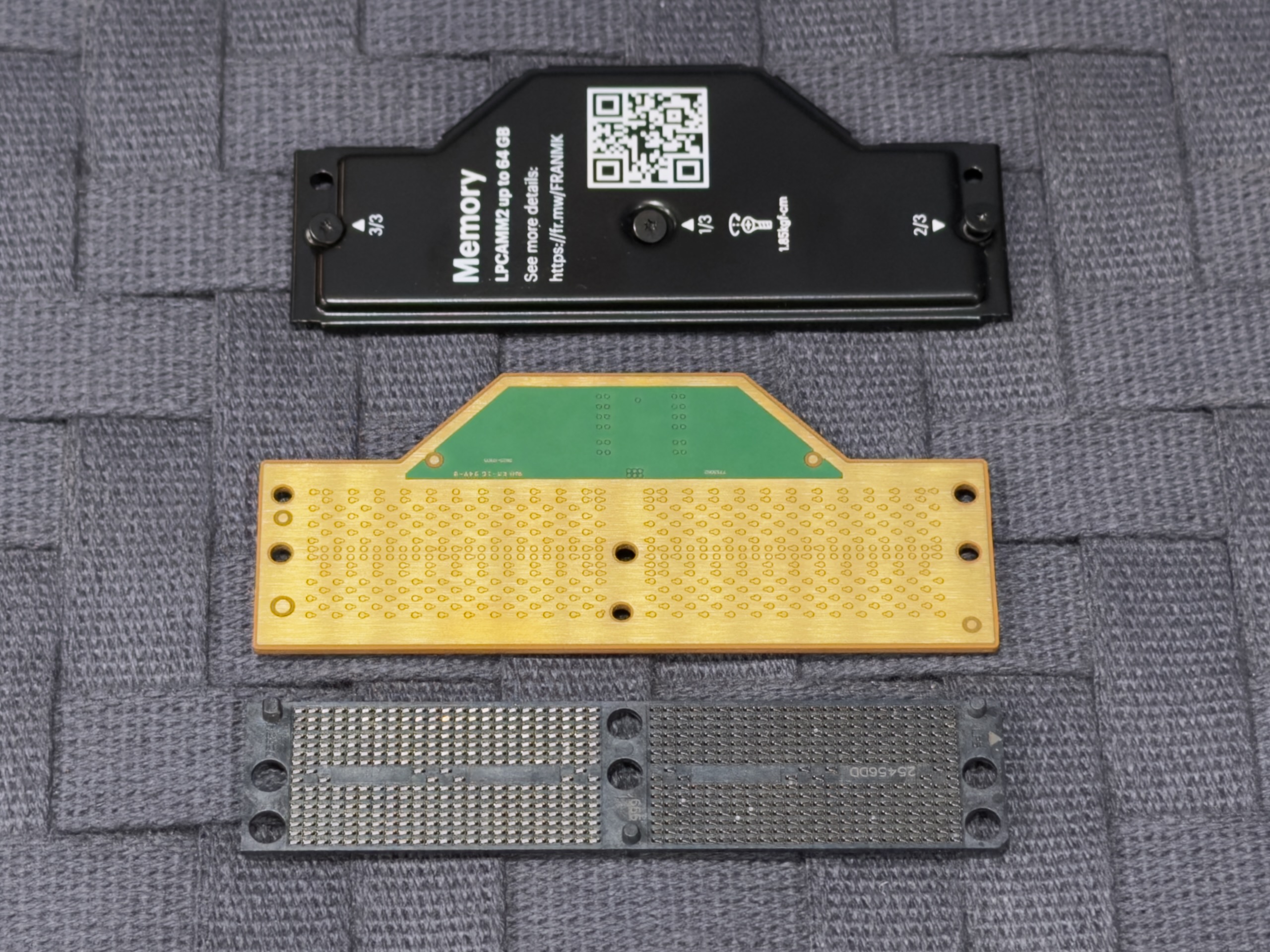
Another major design change is internal. After a few generations of boards that used DDR5 SO-DIMMs, the Core Ultra Series 3 board has switched to LPDDR5X memory in the LPCAMM2 form factor.
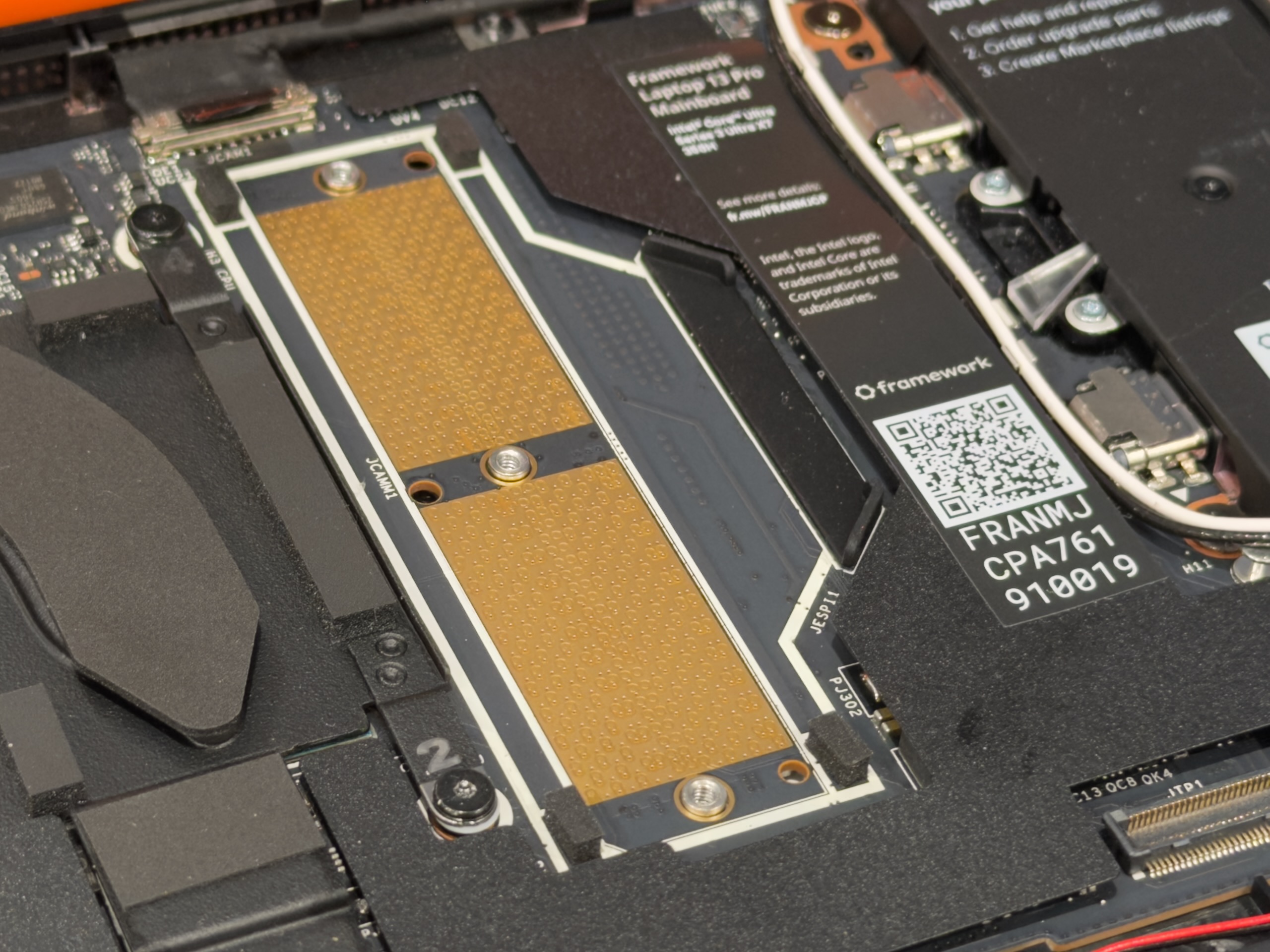
If you haven’t heard of LPCAMM2 before, here are the basics: CAMM stands for Compression-Attached Memory Module. Where SO-DIMMs have copper contacts across the bottom edge that go into a slot, CAMM has copper contacts spread across one entire side. The RAM and a small piece of aluminum are both held in place with screws that press the RAM module’s copper contacts down against contacts on the motherboard; the metal piece works as both a heat spreader and shielding that protects the rest of the components from electromagnetic interference. (Framework’s blog says the shielding contributes to a major improvement in wireless performance for the Laptop 13 Pro). The Laptop 13 Pro uses just a single LPCAMM2 module; there’s no need to use matched pairs of RAM modules to get dual-channel memory speeds, as you have to do with DDR4 or DDR5 DIMMs and SO-DIMMs.
The shift to LPCAMM2 comes with real benefits; the “LP” in both LPCAMM2 and LPDDR5X stands for “low-power,” making the RAM change one of several factors contributing to improved battery life in the Laptop 13 Pro. LPDDR5X also supports higher memory speeds than regular DDR5 SO-DIMMs do (though it’s still apparently easier to support faster speeds with soldered-down, non-upgradeable memory).
But moving to LPCAMM2 was also something of a necessity for Framework. The company doesn’t seem to want to ship a laptop with non-upgradeable memory, as it had to use in the Framework Desktop (Framework didn’t ship a Core Ultra Series 2 laptop at all, possibly because the most suitable processors from that chip family used RAM that was integrated into the CPU package). But it also had to use LPDDR5X to ship the higher-end Core Ultra Series 3 processors and their fully enabled Intel Arc integrated GPUs. Unlike the past Intel and AMD generations Framework has used, regular DDR5 isn’t even supported. That makes LPCAMM2 the only real option, bleeding edge though it is.
Framework isn’t the first laptop manufacturer to use LPCAMM2. Both Dell and Lenovo have experimented with the modules in a couple of laptops so far. But it’s rare, and in the short term, that rarity makes it harder to buy, both for end users and for Framework itself. Framework has been increasing prices for various components all year as shortages of RAM and other components have dragged on, but its supplier recently doubled the prices Framework was paying for LPCAMM2 modules, an increase Framework will be passing on to most people who haven’t already put in their Laptop 13 Pro preorders.
So going with LPCAMM2 is double-edged: it is both technically beneficial and technically necessary, but it’s also singlehandedly driving up the price of an already pretty expensive boutique-y laptop. It’s not Framework’s fault, but it is Framework’s reality, and it’s too bad that such a high price will make this laptop’s improvements mostly theoretical, even to people who could pay the prices Framework was charging a couple of years ago.
Upgrading an older Laptop 13
Some Laptop 13 Pro parts break compatibility with the older Framework Laptop 13, but Framework did manage to preserve compatibility between many major components. That means older Laptop 13 models can benefit from newer Laptop 13 Pro parts—the same as any of the other upgraded boards Framework has released for the Laptop 13 over the years—and that the new Laptop Pro chassis can be built around older, cheaper Framework motherboards.
If you’re looking for an easy rule of thumb, treat the new 74 WHr battery, input cover with the haptic trackpad, and bottom case as a single upgrade. If you want the benefits of any of these components, you need to buy all of them. You can’t just put the new battery into an existing Framework Laptop 13, and you can’t use the new input cover with the old battery and bottom cover.
But motherboards, displays, and USB-C expansion cards are all interchangeable between the Laptop 13 and the Laptop 13 Pro. If you just want to buy a new Core Ultra Series 3 motherboard and put it in your existing Laptop 13, you can (along with a new CAMM memory module, of course). If you want to keep all of your current parts but upgrade to the new-and-improved touchscreen display panel, you can.
Here’s a non-comprehensive table listing the current prices for some of the upgrades for current Laptop 13 owners who want to benefit from some of the Laptop 13 Pro’s improvements without springing for a full-priced upgrade. Bear in mind that many of these parts are listed on Framework’s site but are either out of stock or have not yet been made available to purchase. Buyers can “register interest” in an all-in-one upgrade kit that includes a new battery, keyboard, and bottom case for an original Laptop 13, but it’s not available to buy yet, either.
| Part | Cost | Compatibility |
|---|---|---|
| Laptop 13 Pro 74 WHr battery | $89 | Laptop 13 Pro, Laptop 13 (with keyboard and bottom case upgrade) |
| Laptop 13 Pro Input Cover Kit (Silver/Graphite) | $179 | Laptop 13 Pro, Laptop 13 (with 74 WHr battery and bottom case upgrade) |
| Laptop 13 Pro Bottom Cover Kit (Silver, Graphite) | $169 | Laptop 13 Pro, Laptop 13 (with 74 WHr battery and keyboard upgrade) |
| Laptop 13 Pro Touchscreen Display Kit | $299 | Laptop 13 Pro, Laptop 13 |
| Panther Lake Core Ultra 5/Ultra X7 system board | $449/$899 | Laptop 13 Pro, Laptop 13 |
| 16GB/32GB/64GB LPCAMM2 RAM | $239/$800/$1,600 | Laptop 13 Pro |
I’ve tested various combinations of new and old components, with a particular interest in figuring out how much of the Laptop 13 Pro’s massively improved battery life can be chalked up to the larger battery and how much is only possible because of the new Core Ultra Series 3 motherboard.
It’s a mark of how far Framework has come in the last few years that this kind of testing is even possible. The last time the company bumped up its battery capacity, it was months (and months) before some motherboards got finalized BIOS updates that added compatibility for the new hardware. Now, all versions of the Framework Laptop 13 board, going all the way back to the original 11th-generation Intel Core board, already have updated firmware with the new hardware support locked and loaded. Update to the latest BIOS version before you make the move, and any Framework board can become Pro.
Performance and battery life
Framework uses Intel’s Core Ultra Series 3 chips (codenamed Panther Lake), which are Intel’s best laptop processors in quite a while. They offer a combination of CPU performance, GPU performance, and power efficiency that makes them a great all-around upgrade for any Intel-based Laptop 13 owner, though the Ryzen AI 300-series board does usually keep performance close-ish.
I tested the Core Ultra X7 358H version of the laptop. Framework lists a faster Core Ultx X9 388H version, but it’s a “limited batch” configuration that hasn’t actually been available to preorder for a while. That’s fine, though—the Core Ultra X7 358H has the same CPU and GPU core counts and is much faster than the Core Ultra 5 325 base model, so you aren’t missing out on much if you can’t get the X9 version.
Nothing about the Laptop 13’s performance is too surprising if you’ve already seen what Panther Lake is capable of, though Framework sets the X7 358H’s sustained power limits at a relatively tame 30 W (in Windows’ Best Performance preset mode) and 25 W (in Balanced mode). That means that in sustained CPU and GPU-heavy tasks like video encoding and gaming, the Laptop 13 Pro isn’t capable of the same heights as the Asus Zenbook UX8407, partly because it used the Core Ultra X9 chip but mostly because it had a higher sustained power limit of 55 W.
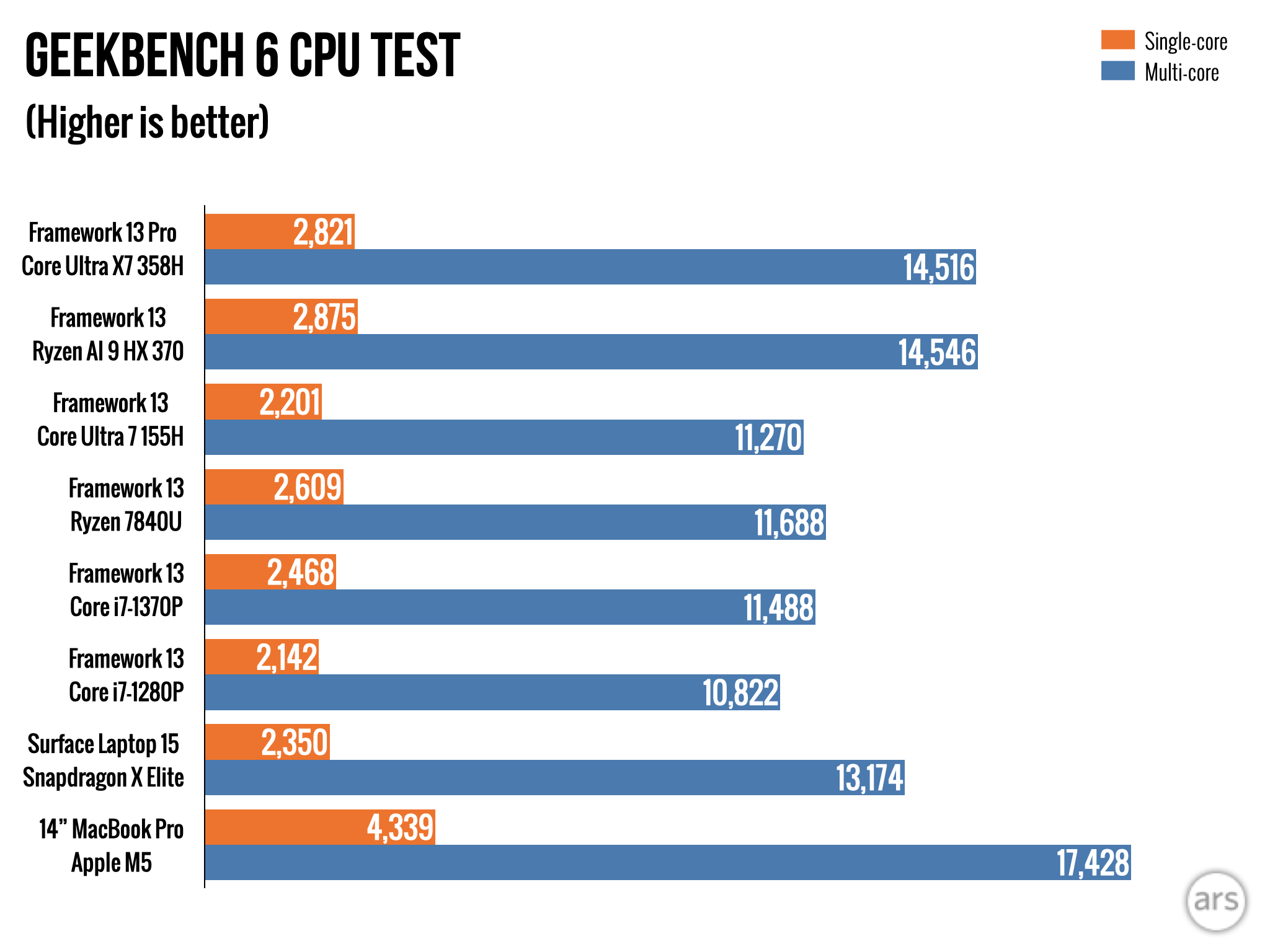
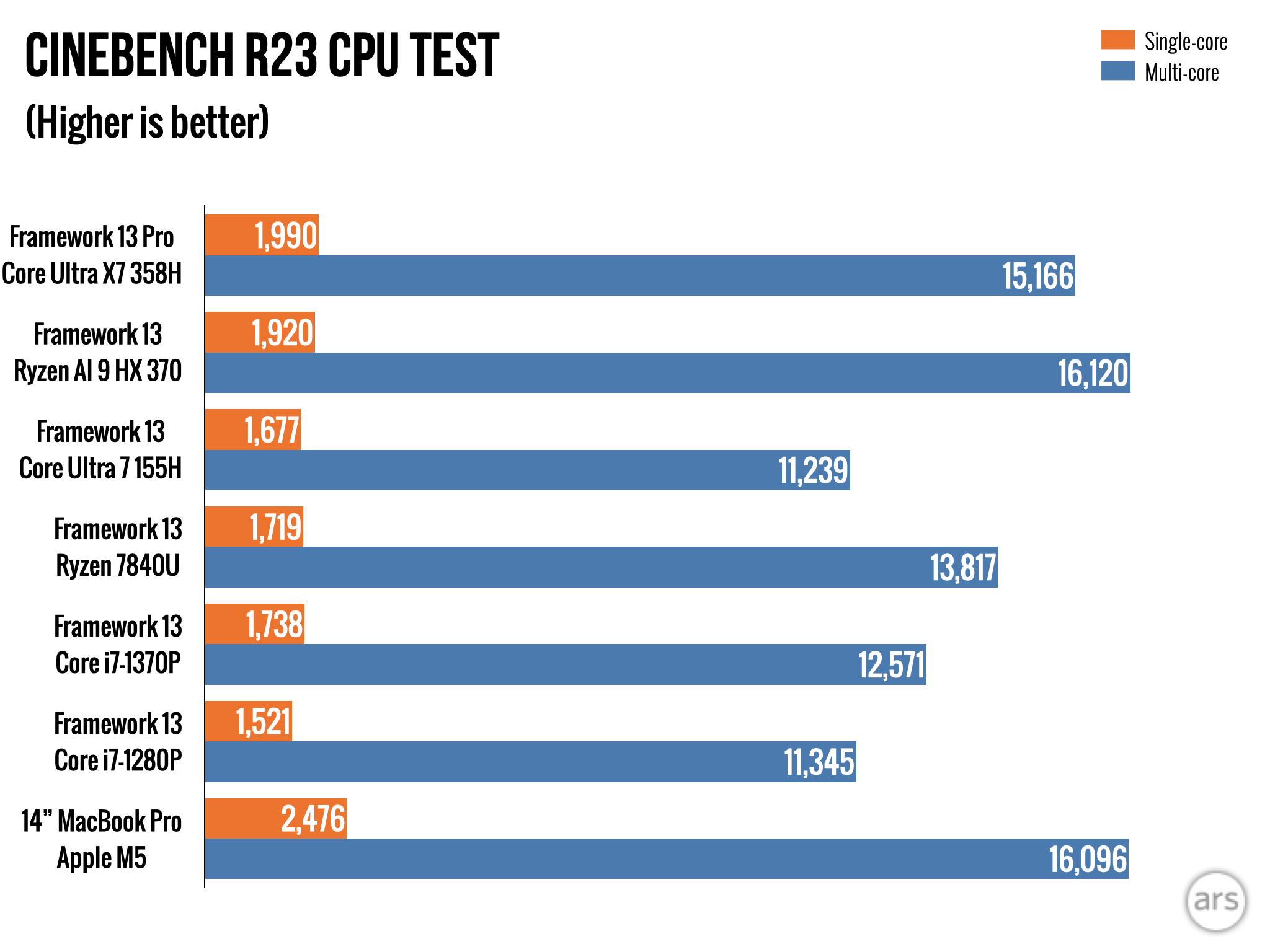
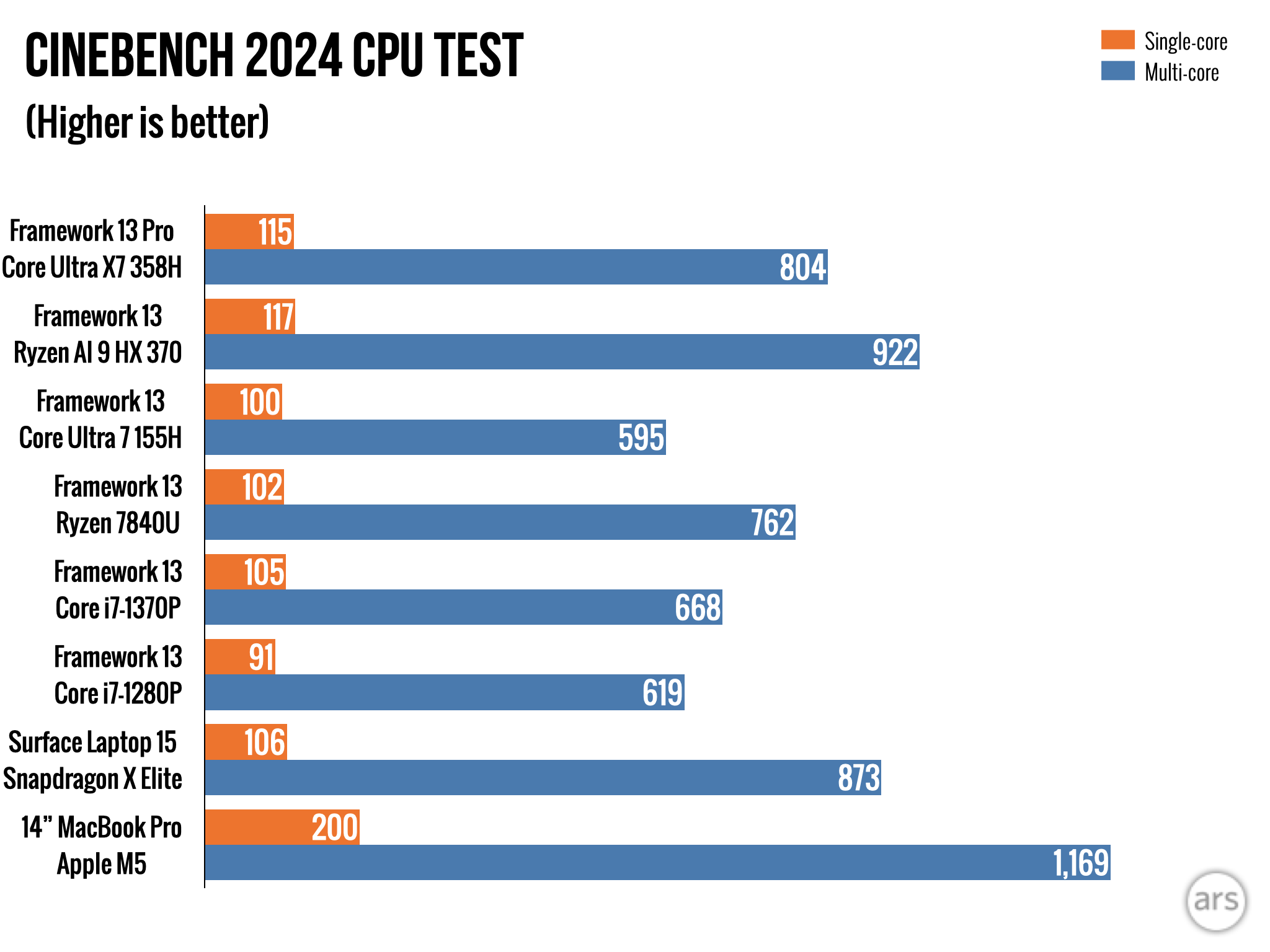
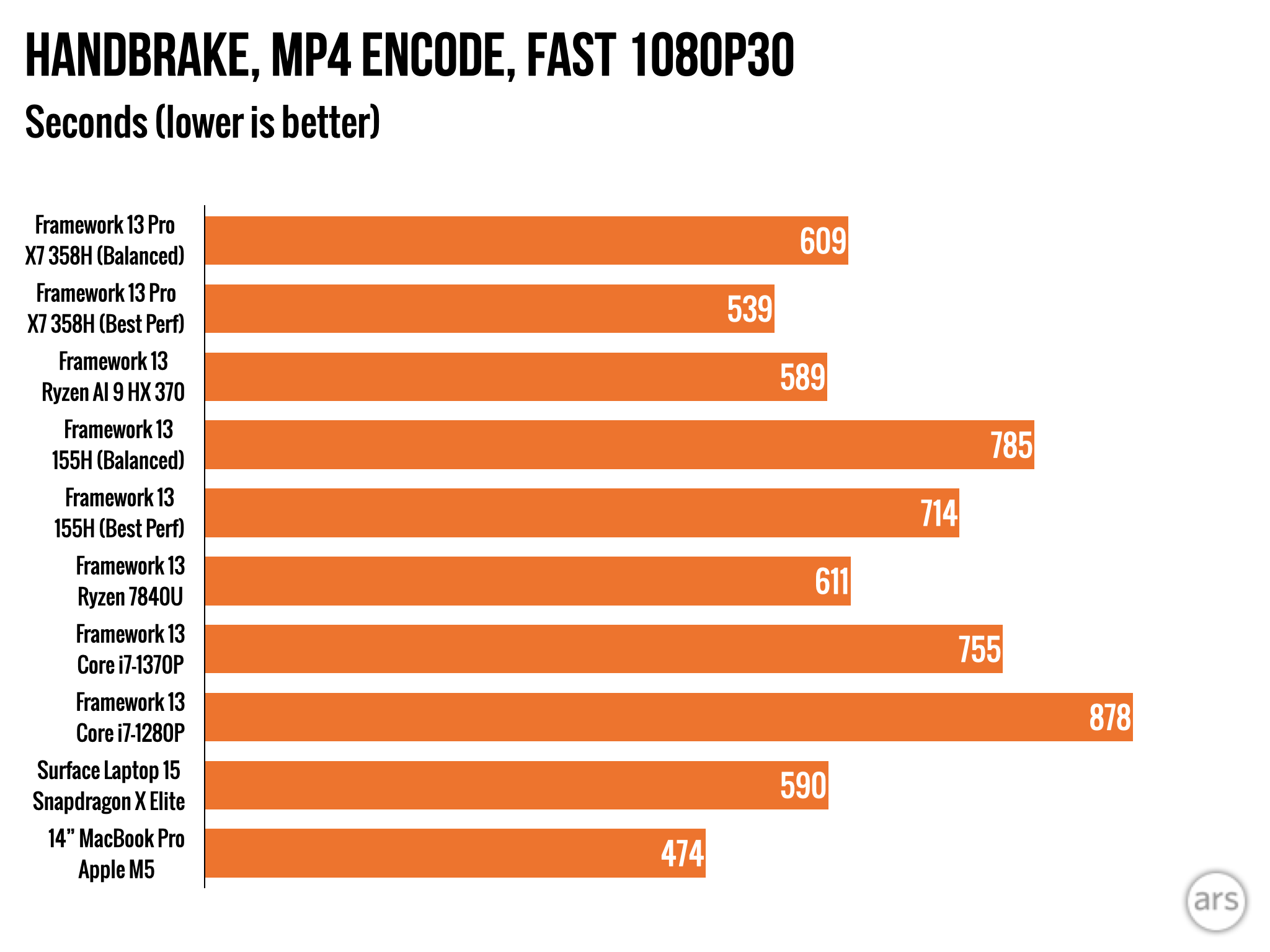
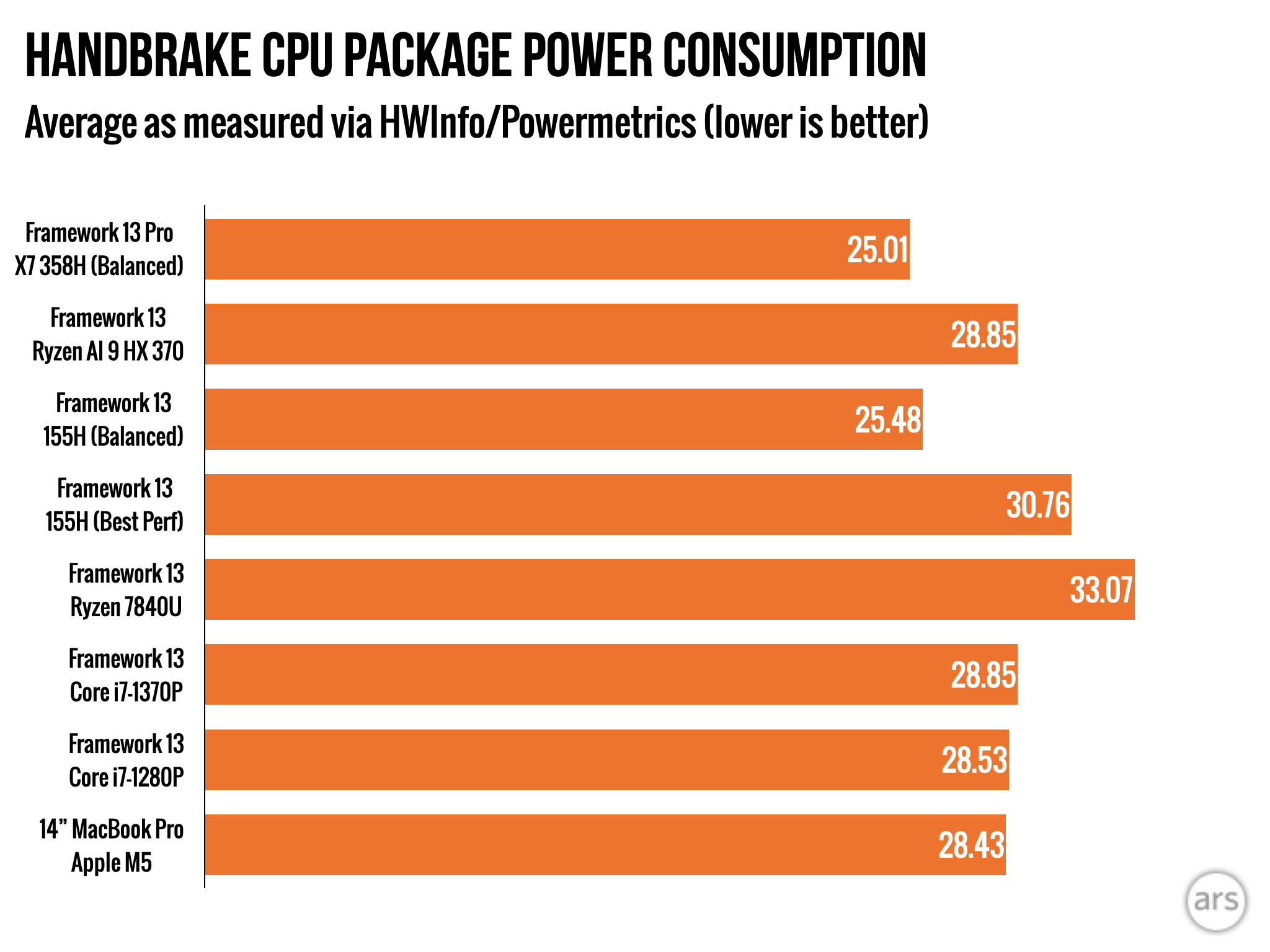
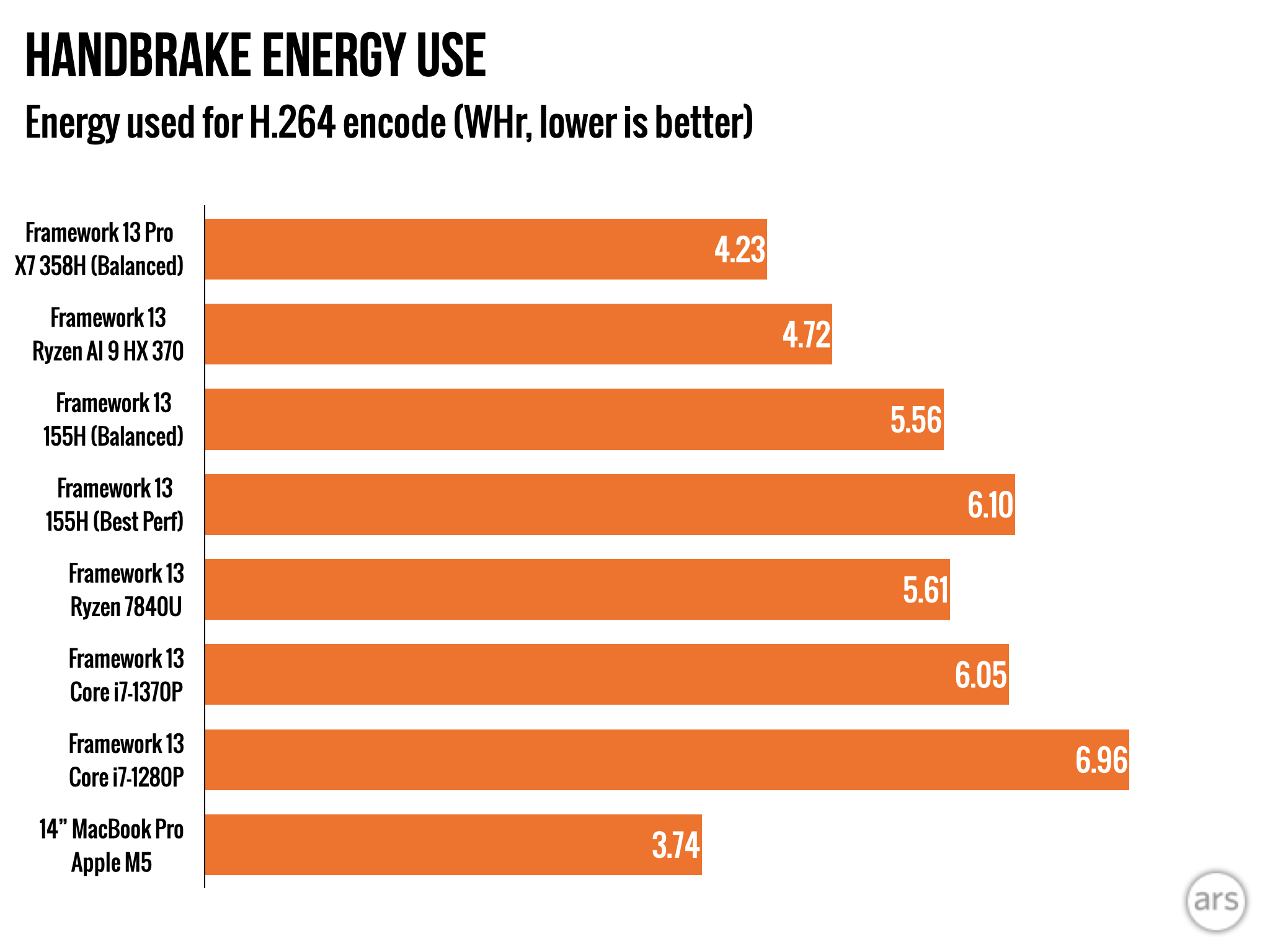
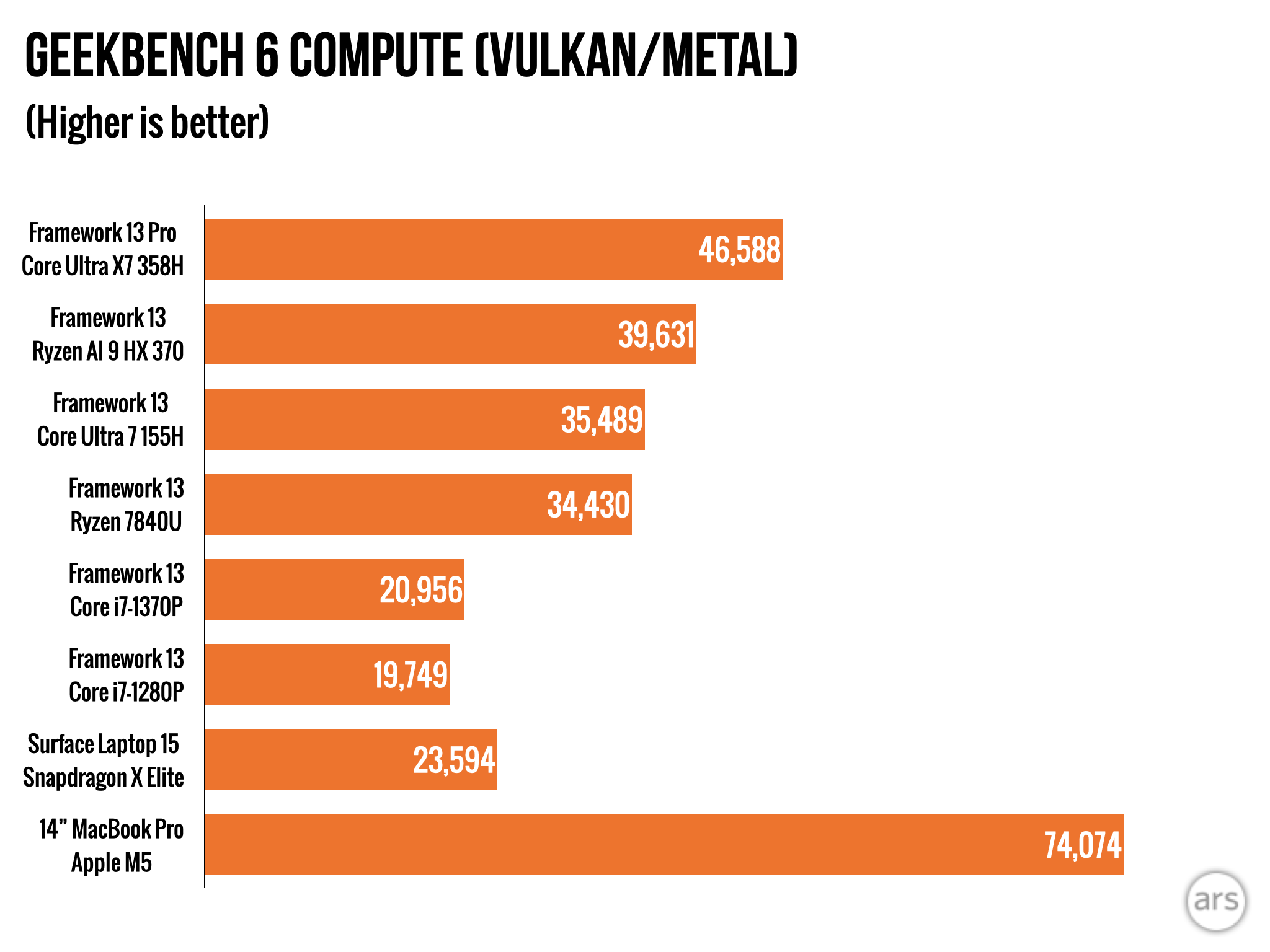
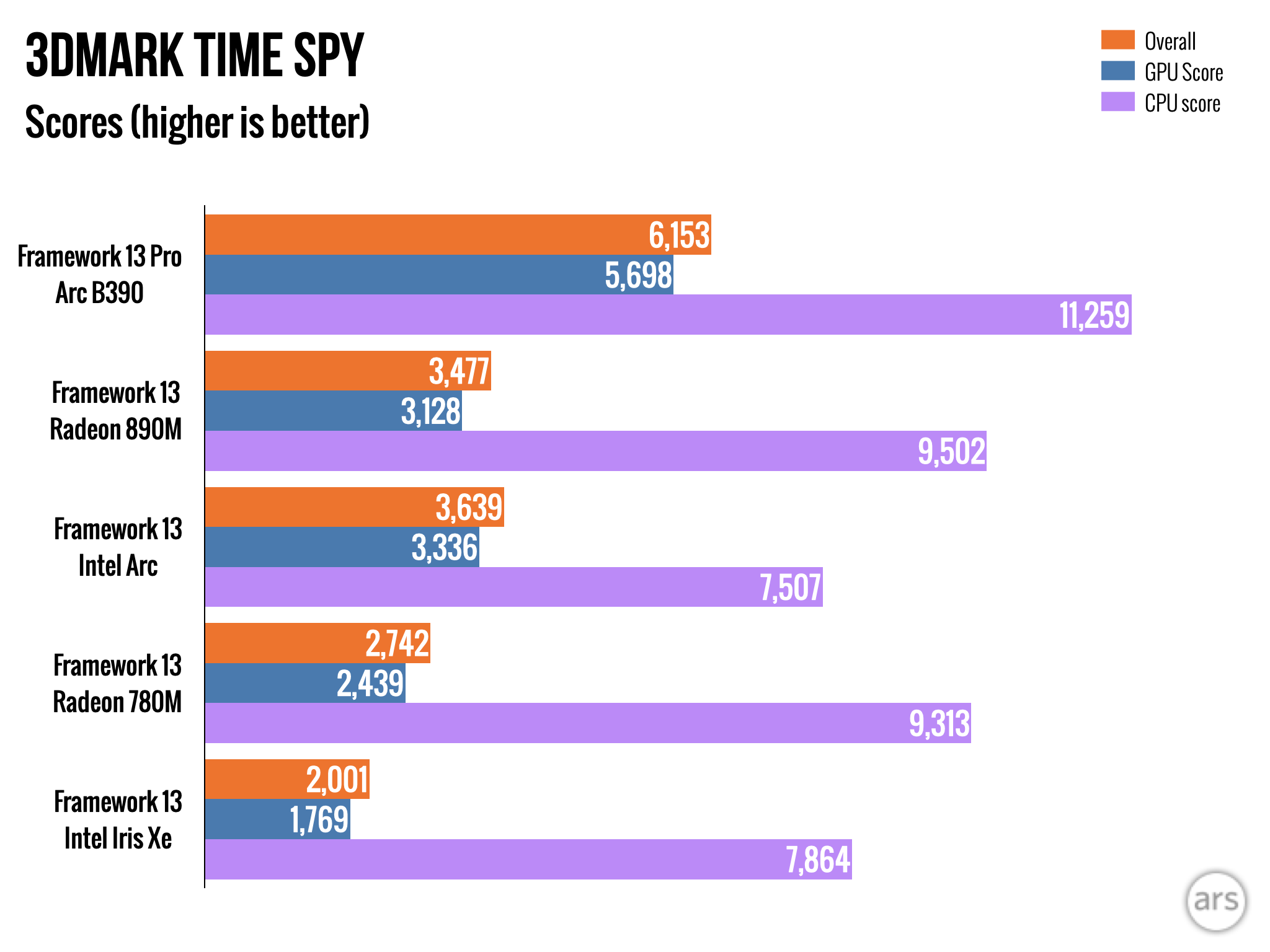
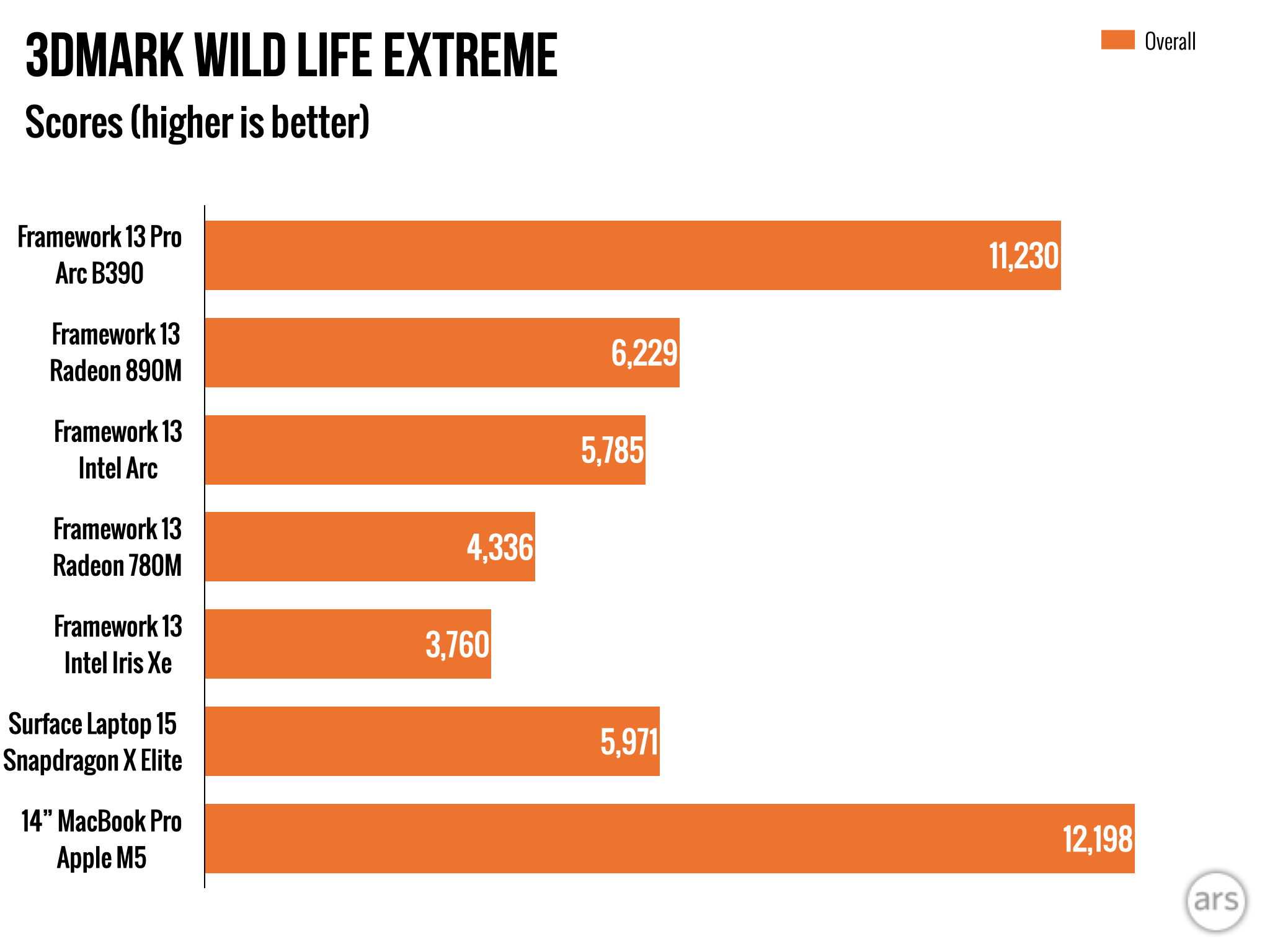
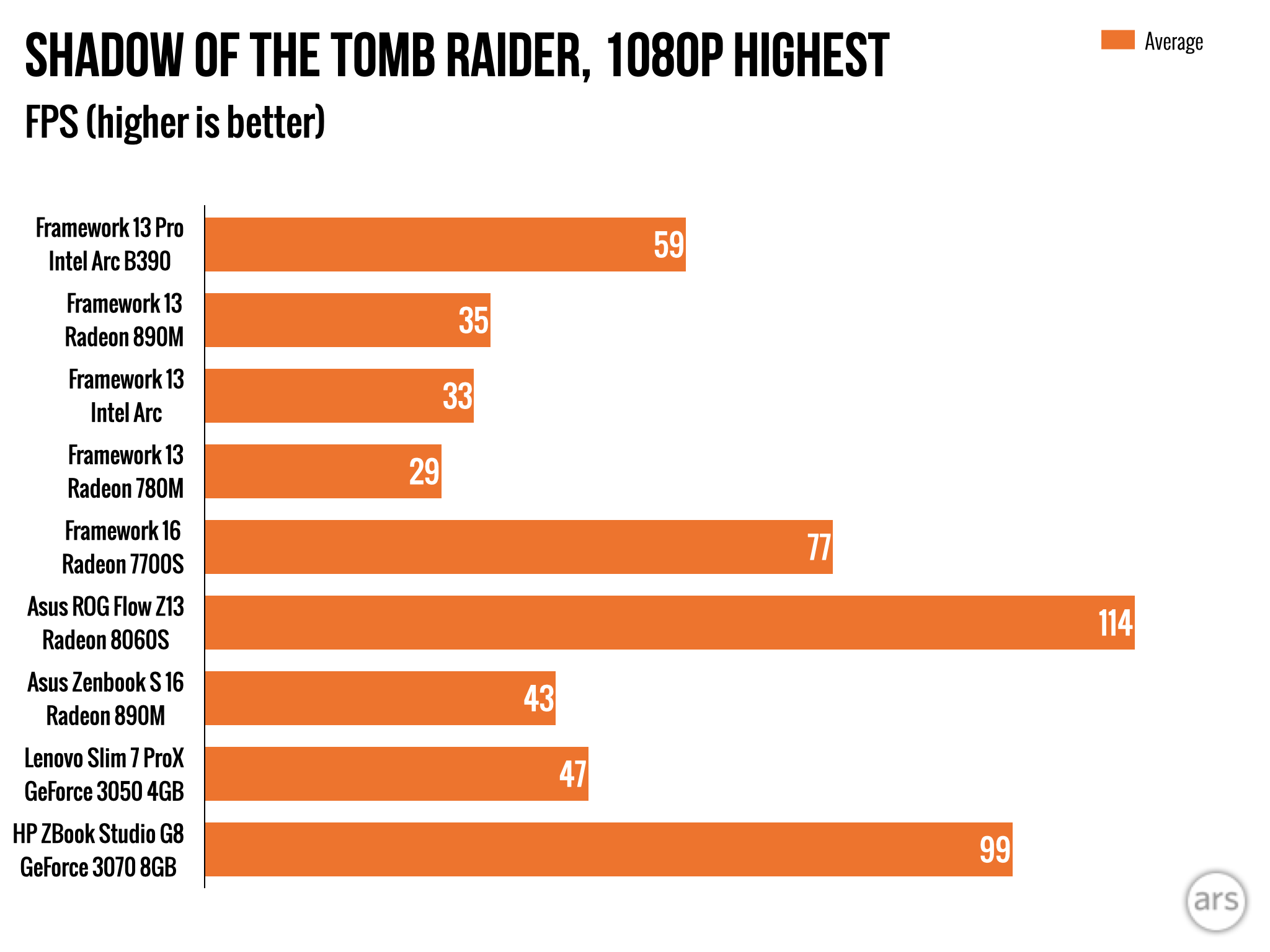
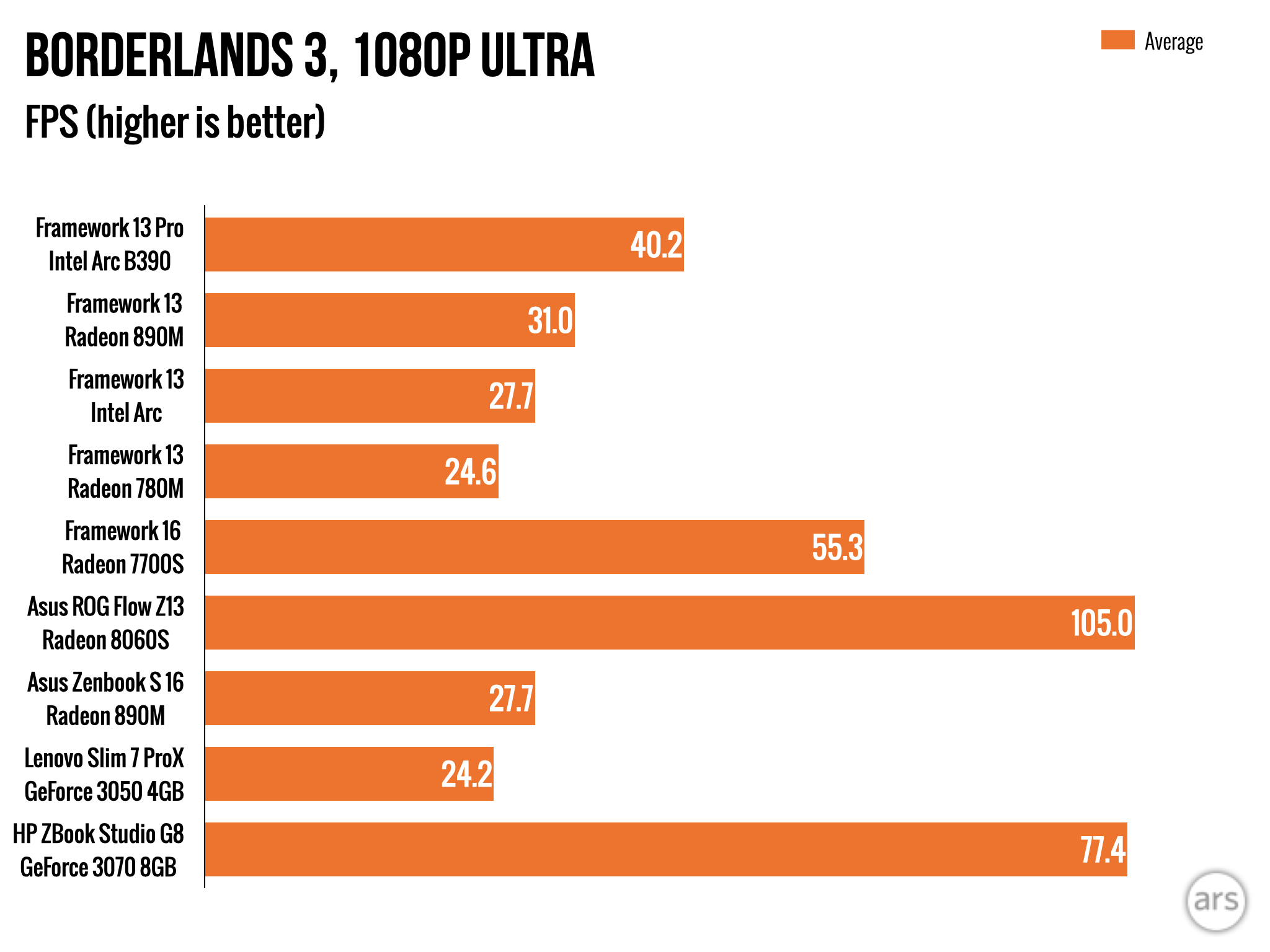
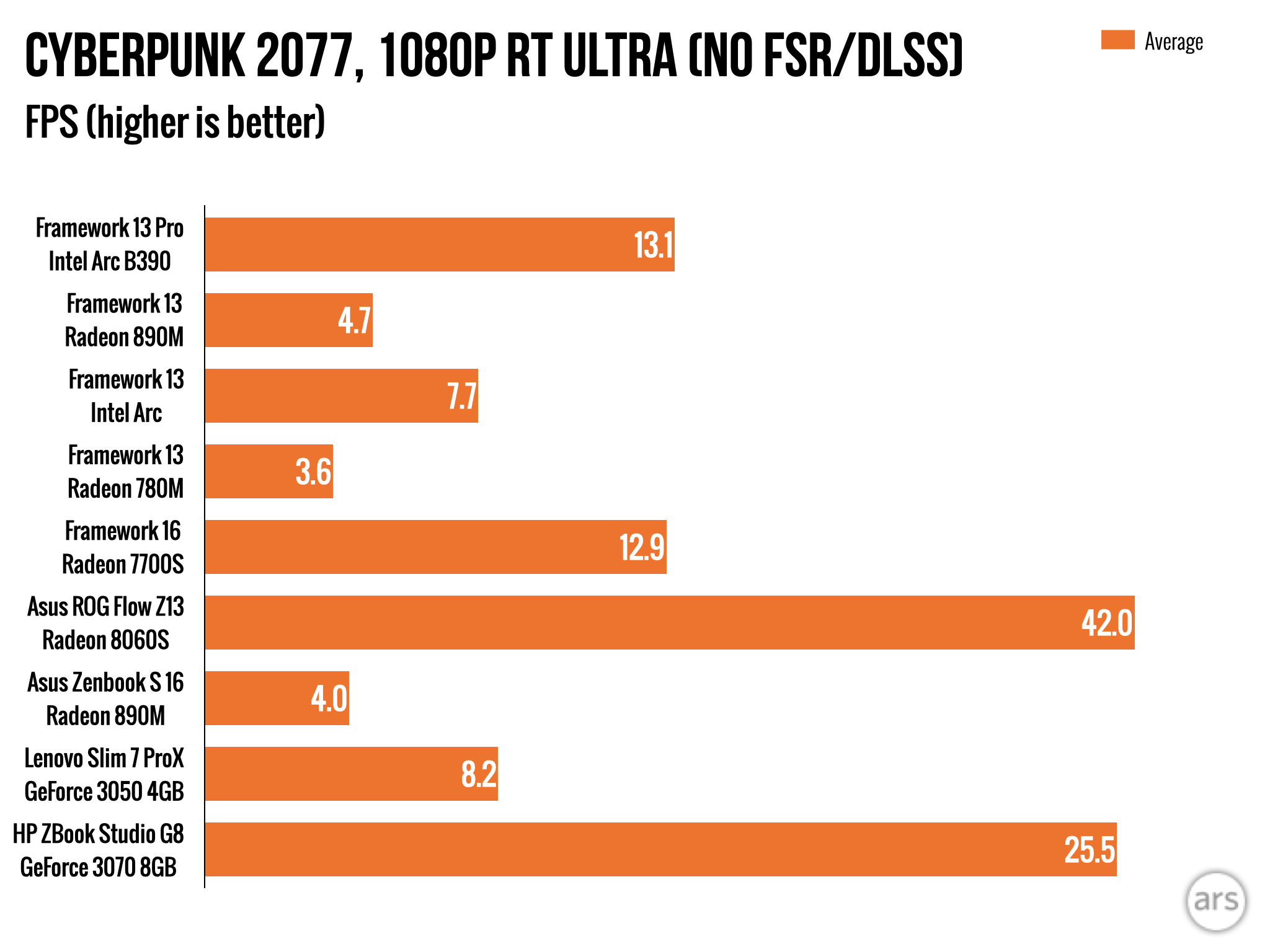
Where Panther Lake really helps the Laptop 13 Pro shine is in battery life. In the PCMark 10 Modern Office test with the screen brightness set to 200 nits, the Laptop 13 Pro and its 74 WHr battery lasted for just a hair over 18 hours, far more than any previous Framework Laptop 13 and finally long enough to decisively eliminate “mediocre-to-poor battery life” as the laptop’s biggest downside.
We also did some limited testing with other Framework parts to see how the 74 WHr battery would perform with older Framework boards and how the Core Ultra Series 3 board would perform if it were dropped into a current Framework Laptop 13 with a 61 WHr battery.
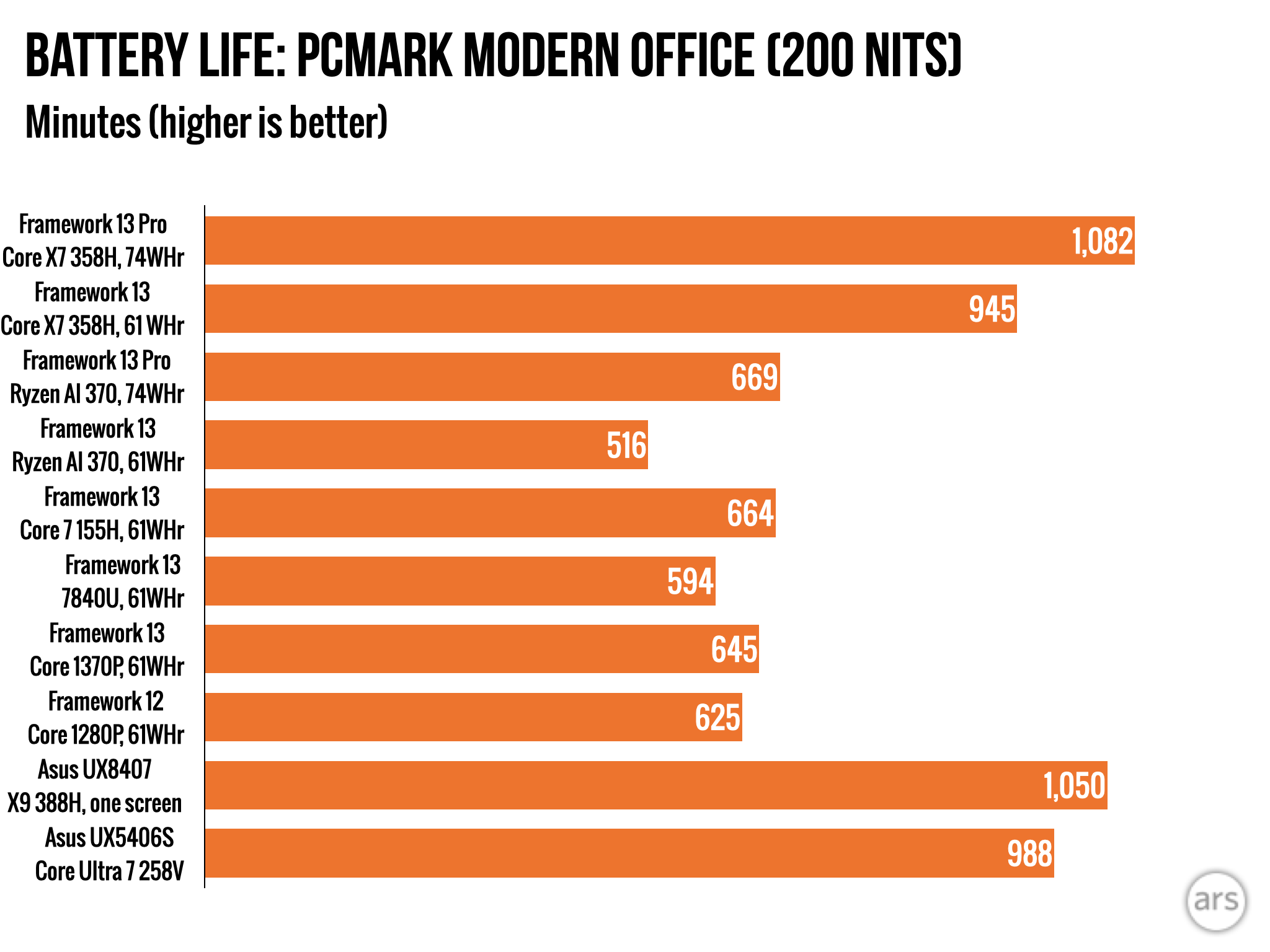
Maybe unsurprisingly, the vast majority of the Laptop 13 Pro’s battery life can be attributed to the Panther Lake chip and LPCAMM2 memory. Paired with the 61 WHr Framework battery, the board still managed to last for around 15 hours and 45 minutes. That means upgraders will get a substantial battery life boost from upgrading the board, even if they don’t spring for the new bottom case, keyboard cover, and 74 WHr battery combo.
When testing the Ryzen AI 300 version of the Framework Laptop board with the new 74 WHr battery, we got just over 11 hours of runtime, compared to around 8.5 hours with the 61 WHr battery. That’s a noticeable improvement, but it’s also essentially proportionate to the capacity increase. The upgrade is especially worth pursuing if you’re still using one of the old (and aging) 55 WHr Framework batteries, but it’s not as significant as the board upgrade.
The right refresh at the wrong time
The unfortunate truth is that this is simultaneously Framework’s best, most interesting board upgrade ever and also one that’s priced so high because of the RAM crisis and other component shortages that it’s often difficult to make any kind of purchase make sense. A 32GB stick of LPCAMM2 costs $800 from Framework’s site; one of is $700. Even by the standards of the RAM shortage, that’s a steep asking price.
For existing Framework Laptop owners looking for upgrades, some of the new parts are somewhat easier to justify, which is one thing Framework can boast that most laptop makers can’t. It still costs a few hundred dollars, but you can keep the specs you have now and benefit from a larger battery and a better-built bottom case for a fraction of the price of an all-new machine.
The good
- Typical Framework benefits: modular, repairable, upgradeable design; nice screen, keyboard, and trackpad; official support for both Linux and Windows.
- Great battery life that finally addresses one of the Framework Laptop 13’s biggest shortcomings.
- A nice balance of CPU and GPU performance.
- Improved build quality.
- Some part compatibility between this and the original Framework Laptop 13.
The bad
- Expensive.
- Battery, keyboard cover, and bottom case are incompatible with the original Laptop 13. If you want to upgrade any of them, you have to upgrade all of them.
- Customizable ports, but you still get only four of them.
The ugly
- Framework has switched to an exotic new upgradeable LPDDR5X RAM format just in time for those modules to become astronomically expensive.