Won’t someone please think of the children?
Google’s “privacy-preserving” age verification system is coming to the Play Store
Google’s new API relies on parents to set age ranges in Family Link.
Credit:
Getty Images | Kirill Kudryavtsev
Credit:
Getty Images | Kirill Kudryavtsev
Governments around the world are suddenly very keen on online age verification requirements. In some places, this takes the form of ID requirements to access adult content, but several US states have also focused on app stores. With these laws now going into effect, Google has announced an expansion of its beta Play Age Signals API, which it claims will allow developers to confirm user ages without impinging on privacy.
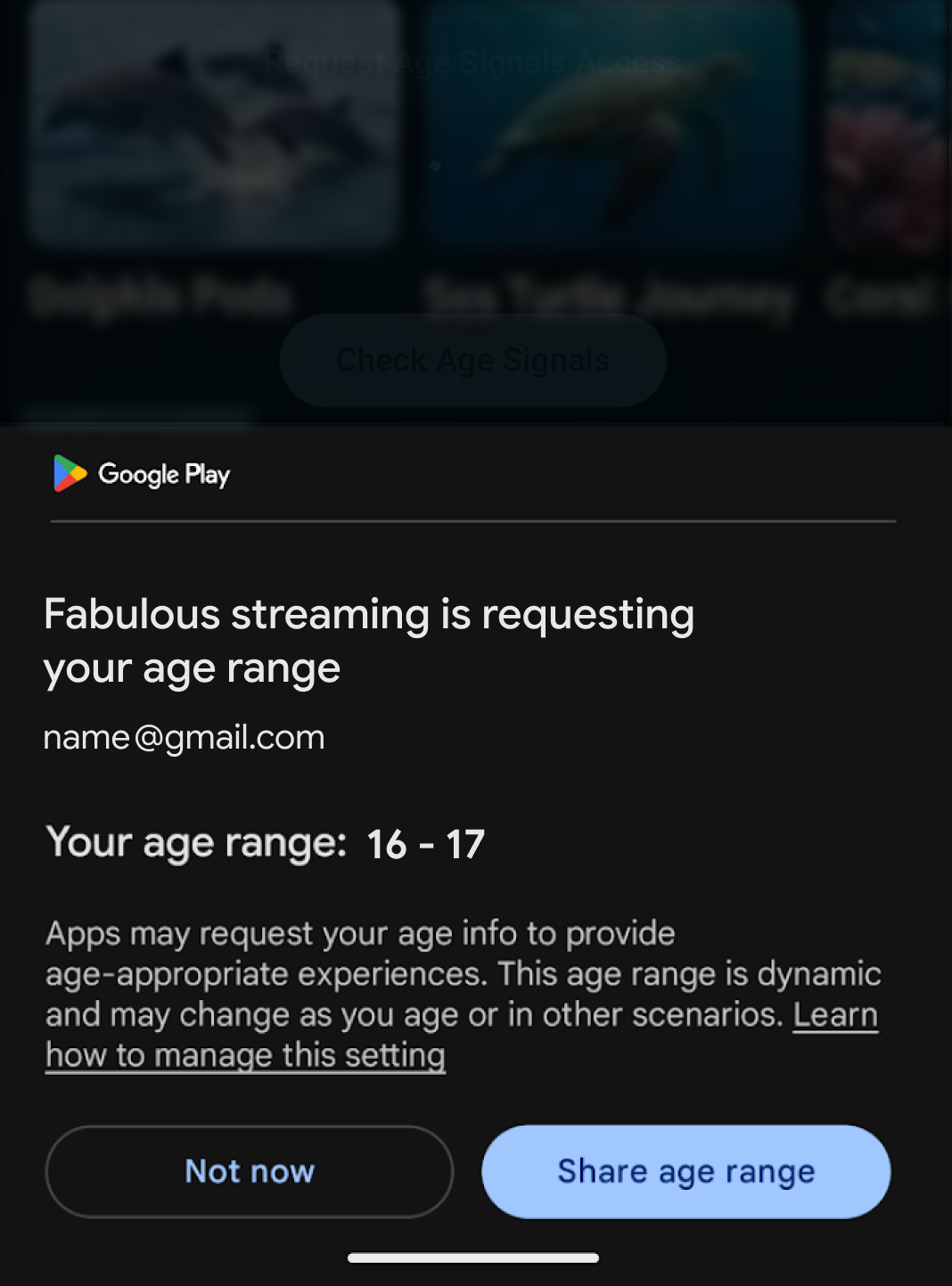
Google’s system doesn’t require an ID or selfie verification—it’s connected to the company’s existing Family Link app. The idea is that parents will set age ranges for their kids’ managed accounts. For example, you might set a range like 16–17, allowing apps to tailor experiences and content for teenagers.
Google notes that the ranges are dynamic and may change as young users get older. So a kid who’s 13 may be in the same app content bracket for a few years before hitting the next level. Parents have the option to set and share these ranges if they want that additional level of control over what their children can access in Google Play. However, it’s not mandatory for child accounts—it’s fully opt-in and can be turned off at any time.
Google began testing the Play Age Signals API late last year as it became apparent that multiple states were going to put the onus of age verification on app stores. The Computer & Communications Industry Association (CCIA), which lobbies on behalf of tech firms, has opposed these laws. However, the US Supreme Court recently paused a lower court injunction, allowing the Texas law to take effect. Louisiana and Utah also have similar laws going into effect.
Credit:
The Play Store API was initially only available as a test in Brazil, but Google says it’s now beginning its global rollout. Australia and Canada will be the next regions to get the new API, and Google says developers in all countries, including the US, will have access to the Age Signals API by the end of 2026.
This system won’t keep determined minors away from apps deemed too adult for them. Users must voluntarily share age data, and not all parents will bother setting this up. Kids can also just create alternative accounts and lie about their ages.
Still, this should take care of Google’s compliance in any jurisdiction that requires store-level age verification for apps. However, it’s up to developers to use the API. The Texas law does require that developers actively use age-gating features in app stores. The Play Store already has content ratings for apps, so it should be relatively simple for developers to translate that to reported age ranges.
Google and other companies will probably continue fighting laws that require them to be app gatekeepers, but that may be a lost cause if courts don’t accept the First Amendment argument against them.