DJI Osmo Pocket 4P Review: Can Lightning Strike Twice?
Few cameras have had the impact of the DJI Osmo Pocket 3, an incredibly popular handheld gimbal camera that was beloved by travelers, creators, and adventurers alike. The Pocket 4 was a pretty standard update, which is quite capable but didn’t set the world on fire like the Pocket 3. It seems DJI was holding back with the Pocket 4, because only a few months later and after one of the weirdest, most prolonged rollouts in camera history, we have the Pocket 4P.
While we found that it falls short of the promised 17 stops of dynamic range, the DJI Osmo Pocket 4P is shockingly capable with outstanding image quality… at least with the main camera.
Pros
- Incredibly impressive dynamic range on the main camera
- Responsive tracking and autofocus
- Detailed 4K slow motion video up to 240p
- Excellent audio options
- Telephoto lens adds creative options
Cons
- Cumbersome interface when using manual exposure
- Slow motion and low light-optimized footage cannot be recorded in log
- Proper metering requires mobile app
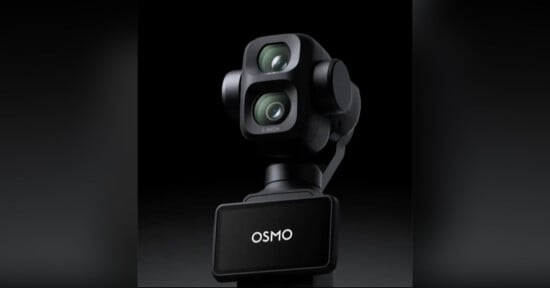
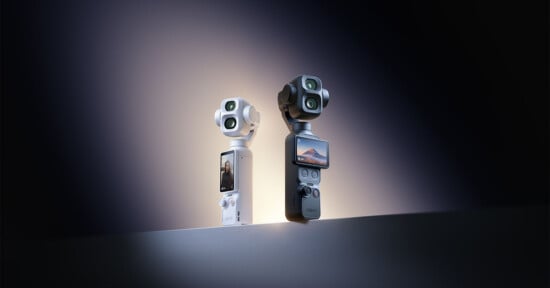
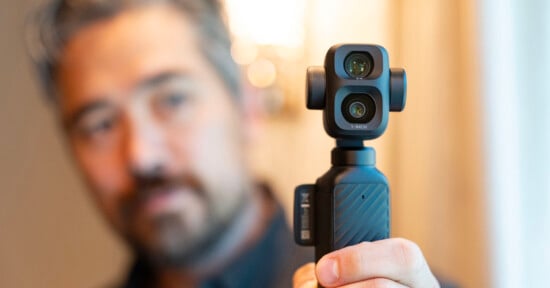
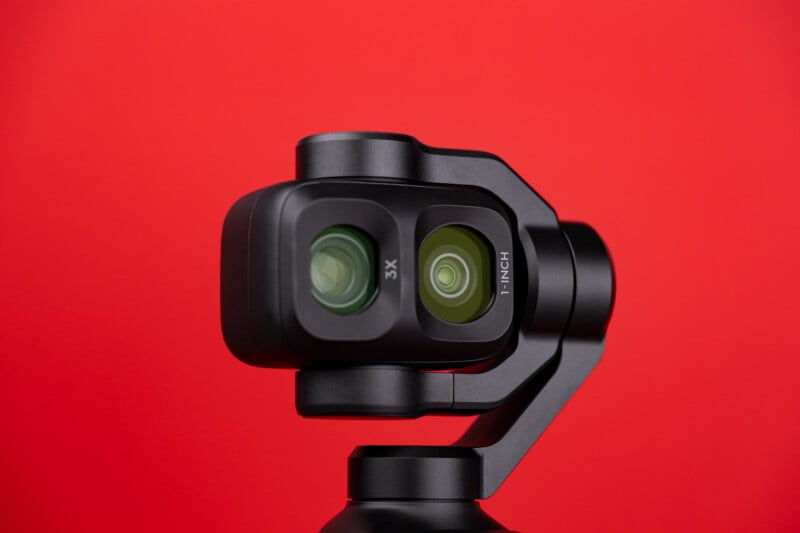
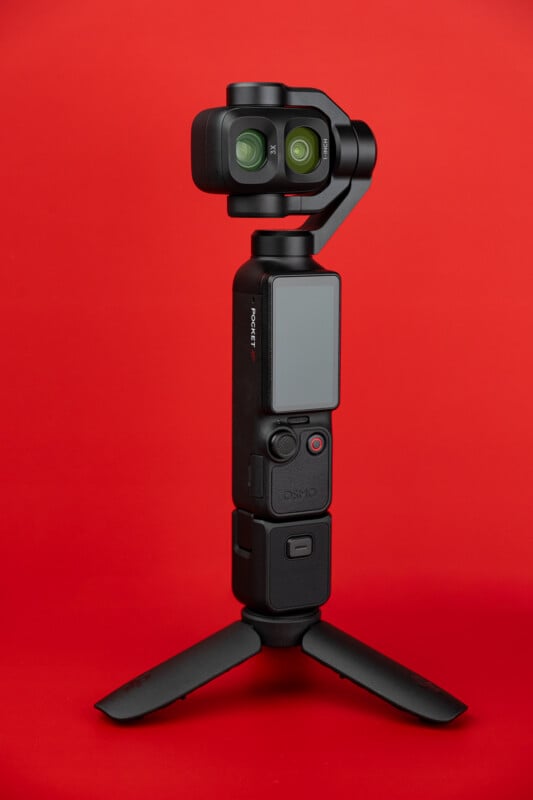
This new “Pro” model boasts the expected dual camera design, but also debuts some impressive new sensor technology.
Is this camera actually as revolutionary as weeks of breathless headlines and influencer videos would have you believe? I’ve had the Pocket 4P for over a month after being invited to a Toronto launch event, and I’m thrilled that I finally get to talk about it in detail.
DJI OSMO Pocket 4P: How It Shoots
Let’s start with the cameras, beginning with the main wide-angle lens. This gives you a 20mm full-frame equivalent field of view, and has the same f/2 aperture previously seen in the Pocket 4. This is a great focal length for vlogging or exploring an environment, and the relatively fast lens can give some shallow depth of field when focusing close up (f/5.6 full frame equivalent depth of field).
That’s all fairly expected, but what is exciting is the sensor behind this lens. It’s still a Type 1, 4:3 ratio sensor, but now utilizes LOFIC technology, which allows bright areas that would normally be clipped to be captured. It’s this technology that has led DJI to advertise an astounding 17 stops of dynamic range, a number which would be exceptional for a full-frame camera, and previously unthinkable for a Type 1 sensor which is 1/8 the size.

The new telephoto camera gets us a 60mm full-frame equivalent field of view and has a faster f/1.8 aperture. Unfortunately, this is paired with a smaller Type 1/1.28 sensor, giving it an f/6.3 equivalent aperture. This is still sufficient to give some shallow depth of field up close, but the lack of LOFIC technology in the sensor means the dynamic range is significantly worse than the main camera.
To make up for the difference in dynamic range, DJI has released a new D-Log 2 log curve specifically to take advantage of the main camera’s dynamic range. The telephoto camera can only use the original D-Log profile, which is still more flexible than the D-Log M profile in the Pocket 3, but nowhere near the range of D-Log 2.
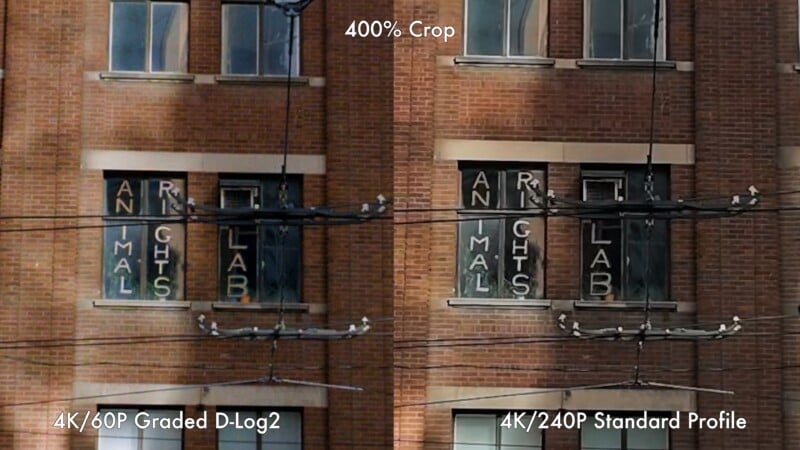
Either camera can capture 4K Log footage up to 60p. For faster frame rates, the slow motion mode must be selected, which disables the log profiles. The main camera can shoot up to 240p, while the telephoto camera maxes out at 200p. Frustratingly, if you are shooting 240p on the main camera, you cannot simply select the 3x icon in slow-motion mode, but must reduce the frame rate down to 200p, and the ability to zoom in will unlock.
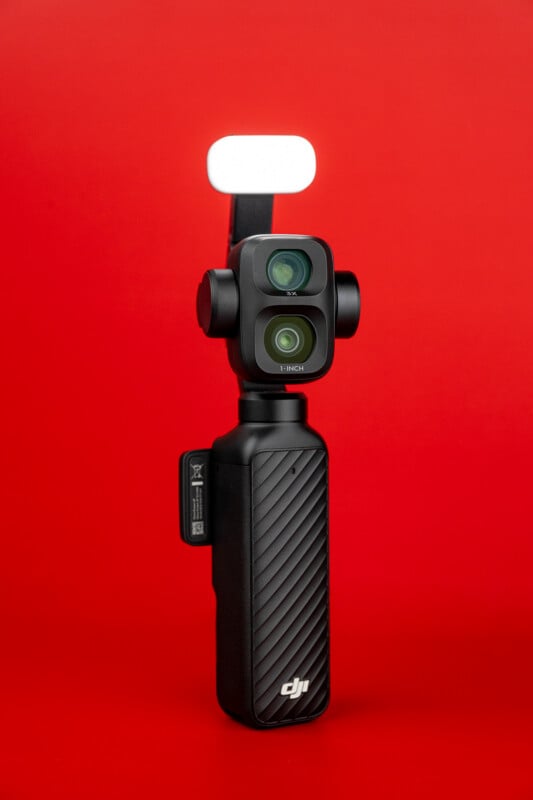
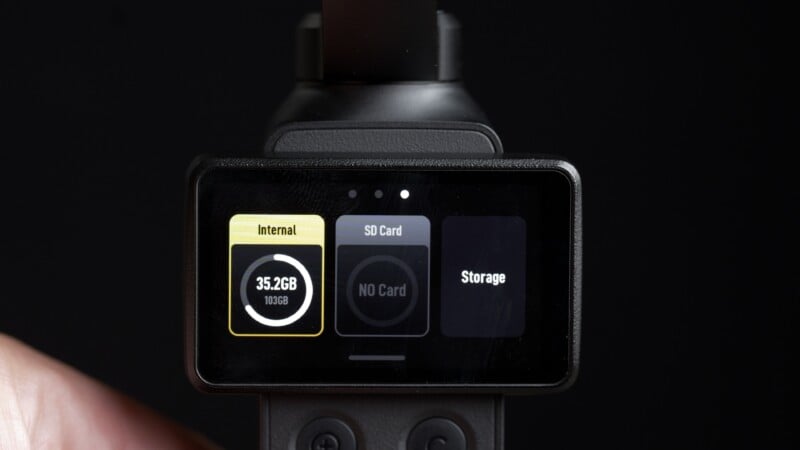
The rest of the Pocket 4P is very reminiscent of the Pocket 4. The compact body is easily pocketable, with an internal battery and storage (103GB). Memory can be further expanded through the microSD card slot. As well, the magnetic accessory holder for an LED light or microphones from the standard Pocket 4 returns, along with the welcome but limited custom buttons from the Pocket 4.
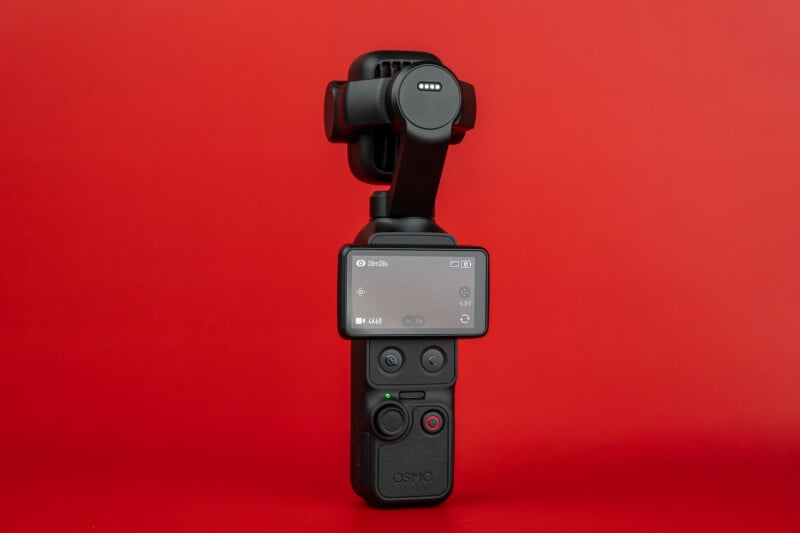
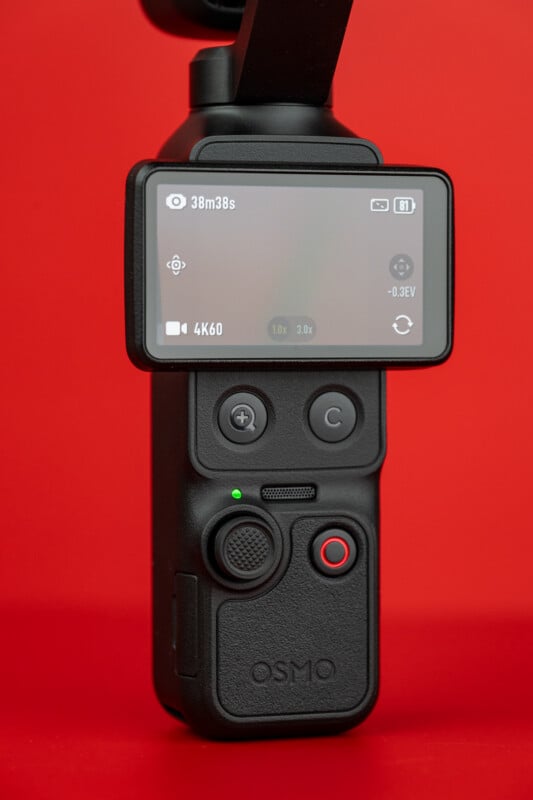
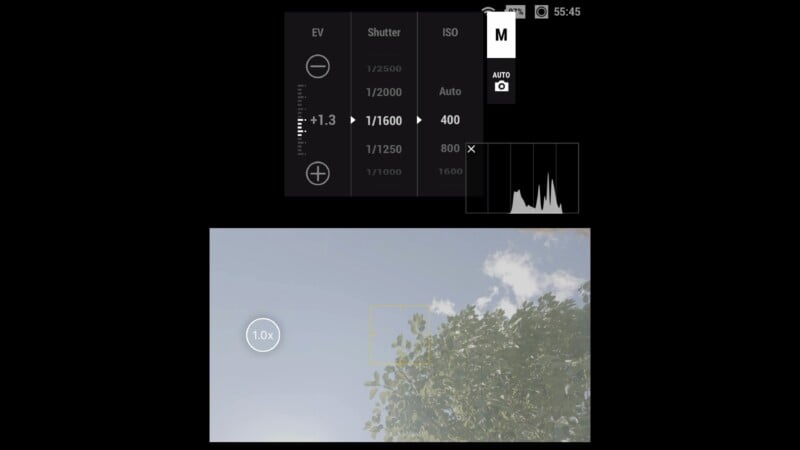
The camera is largely operated from the small two-inch touch LCD with just over half a million dots of resolution. It’s fairly bright, but both Senior Reviews Editor Chris Niccolls and I struggled regularly when trying to select smaller icons or manually adjust settings. As well, while there is an over/under exposure meter, there are no assist tools like a histogram or waveform for gauging proper exposure, especially critical when shooting a Log profile with such expansive dynamic range.
You can access a histogram when using the DJI Mimo app, but this is a clunky process. I’d really like to be able to set one of my custom buttons to display a full-screen histogram or waveform on the built-in LCD.
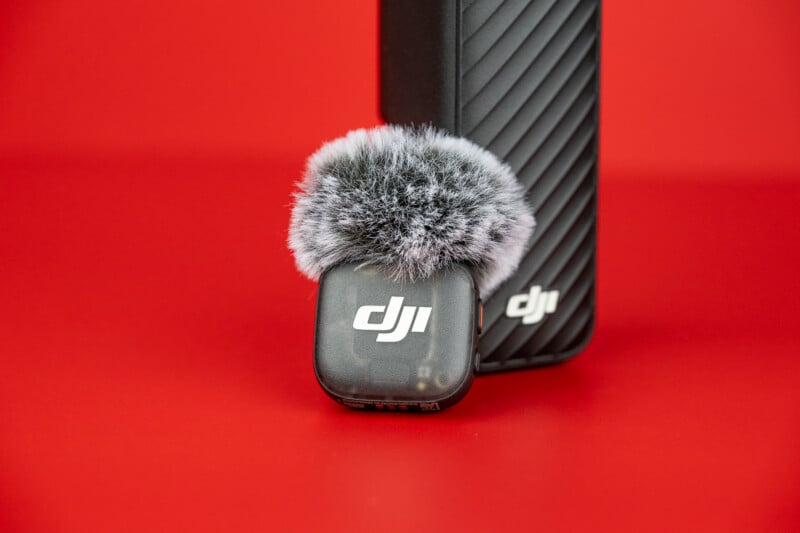
I also truly appreciated the ability to run two wireless mics directly into the camera wirelessly without a receiver. DJI has a kit with an included transmitter, which will be a great option for creators and presenters. The audio from the built-in mic is quite good as far as those typically go, but still suffers from tinniness and being susceptible to wind noise. That said, it will work in a pinch.
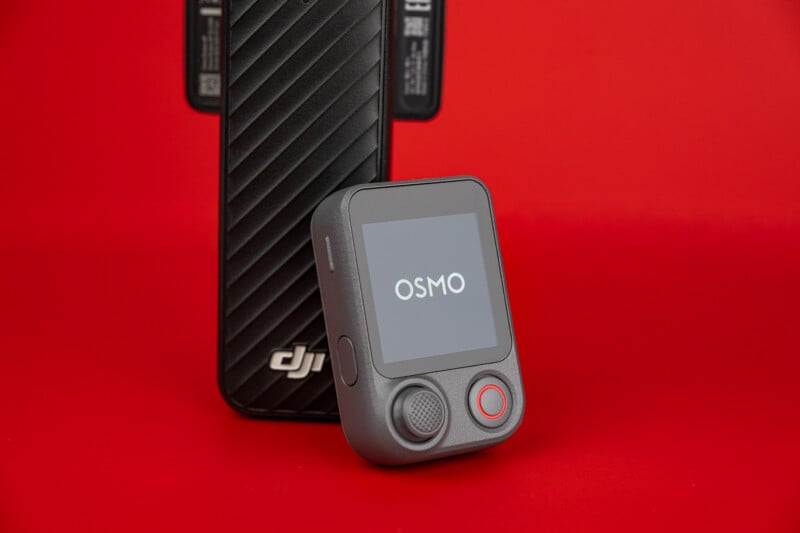
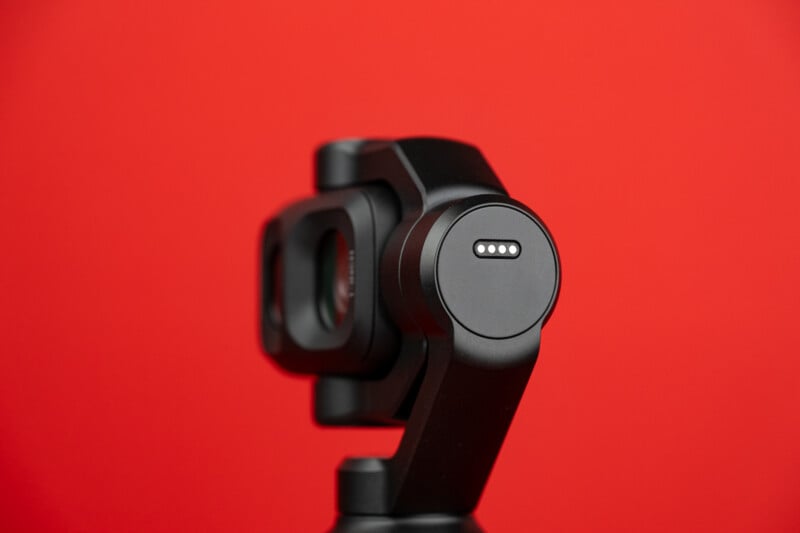
As with the last several OSMO models, the tracking and stabilization are VERY good. The autofocus is tied to the tracking algorithm, and I found it performed very well in nearly all my testing. The one limitation is that, like all smaller gimbals, this 3-axis system cannot stabilize vertical movement, which can lead to a bouncy frame when walking casually.
DJI OSMO Pocket 4P: Image Quality
Alright, let’s get into the headline-grabbing claim of the Pocket 4P: the advertised 17 stops of dynamic range with D-Log 2. For comparison, that is significantly more than the photographic dynamic range of a Hasselblad medium format camera and in line with the over $50,000 USD Arri Alexa 35. To test this, I used a camera with the best dynamic range I had available to me: the Panasonic S1 II.
In this camera’s Dynamic Range Boost mode, which reads both native gain sensitivities simultaneously, the S1 II delivers just over 15 stops of usable dynamic range. When I exposed both cameras so my highlights were just below the clipping point, noise levels were very similar with maybe a small edge to the Pocket 4P, though certainly not a two-stop advantage.
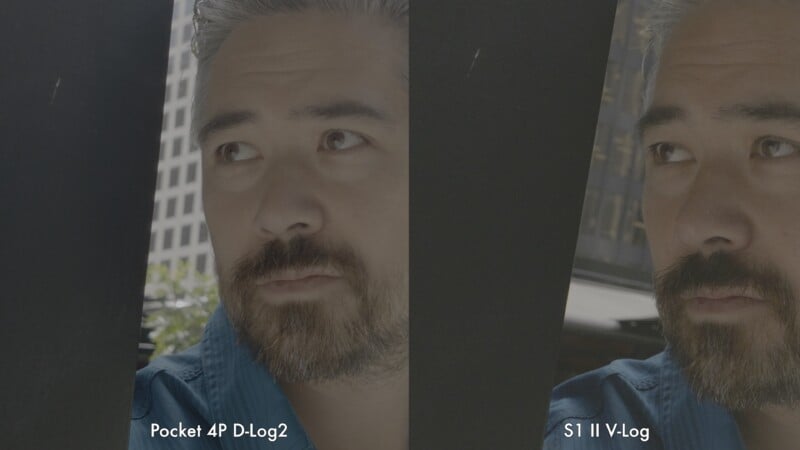
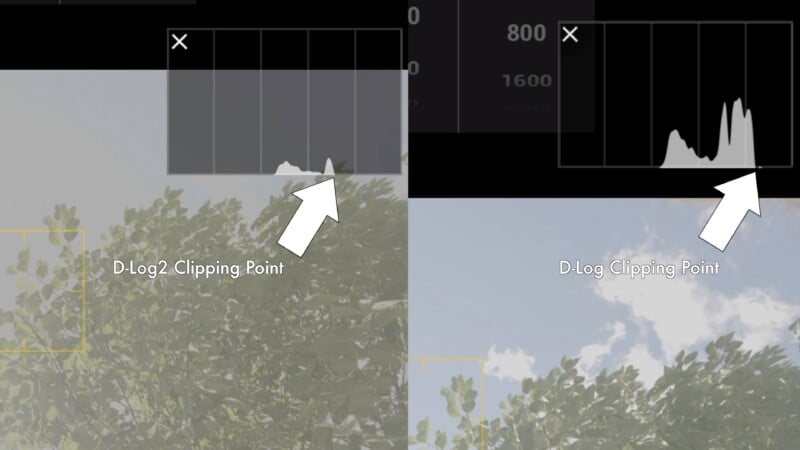
This is a truly impressive showing from such a small sensor, but I did not see the claimed 17 stops. That said, there is a huge amount of unused room in the D-Log2 profile when shot on the Pocket 4P, so this profile may well be optimized for future cameras which can fully capture that impressive 17 stops of information.
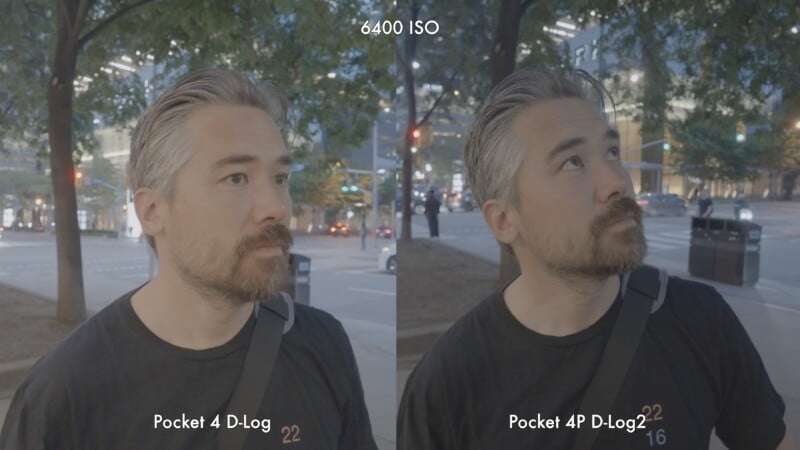
In terms of other aspects, the main camera impressed me with noticeably better low-light performance than the LOFIC-less Pocket 4, whether recording high ISO in Log or using the Low-Light Mode. As well, the slow-motion footage may be lacking the flexibility of Log recording, but it is very detailed.
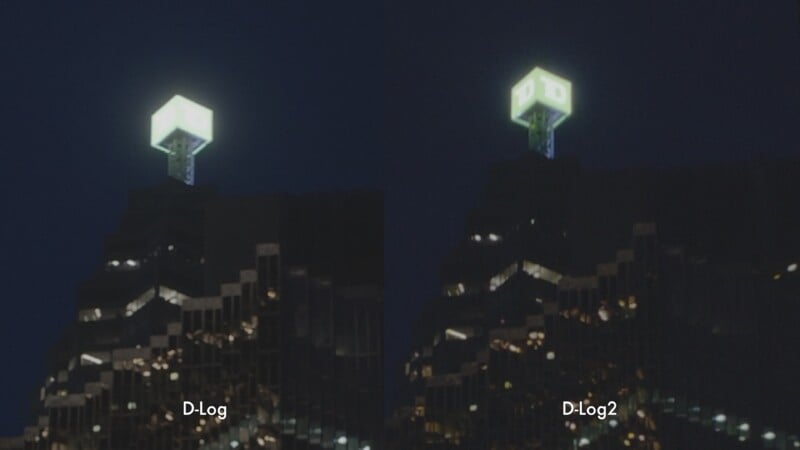
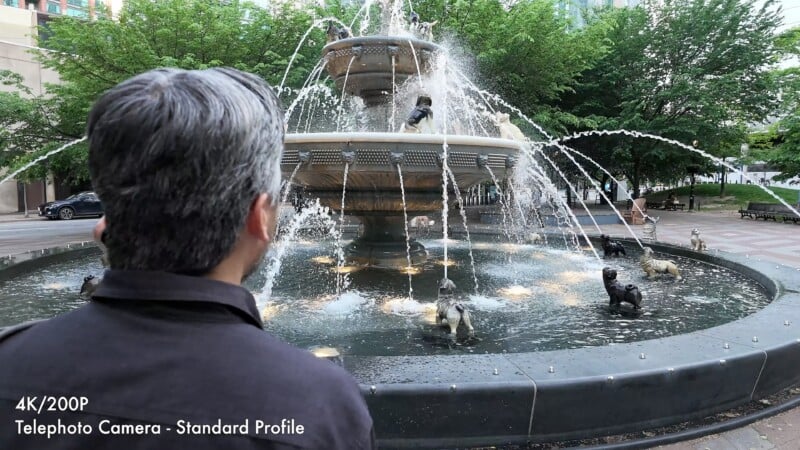
Moving on to the telephoto camera, this gave me an image much more reminiscent of the Pocket 3, but obviously with a much longer focal length. Highlights are much more prone to blowing out, and I did find some instances of what I call “wax-face,” where skin tones would lose smooth tonal gradations in high-contrast light. I would try to avoid cutting between D-Log2 footage from the main camera and D-Log footage from this telephoto camera, as the differences can be quite jarring.
DJI OSMO Pocket 4P: There Must Be A Catch
So we have best-in-class video quality with reliable stabilization tied to a very well-designed package. Seems like a rave review, right? Well, if you plan to leave the camera in standard profiles and use auto exposure, that’s certainly the case. However, both Chris Niccolls and I found the experience of using log profiles extremely frustrating, and you’ll need to use them to unlock the potential of this camera.
For starters, when recording D-Log 2 on the main camera, if the shooter wants to switch to the telephoto lens, the camera simply informs you that “10-Bit D-Log 2 only supports 1.0x zoom”. You then must switch your log profile back to the original D-Log, and the “3x” option will become available. Ideally, the camera would just switch to the more basic log profile and notify the user of the change, instead of requiring menu diving.
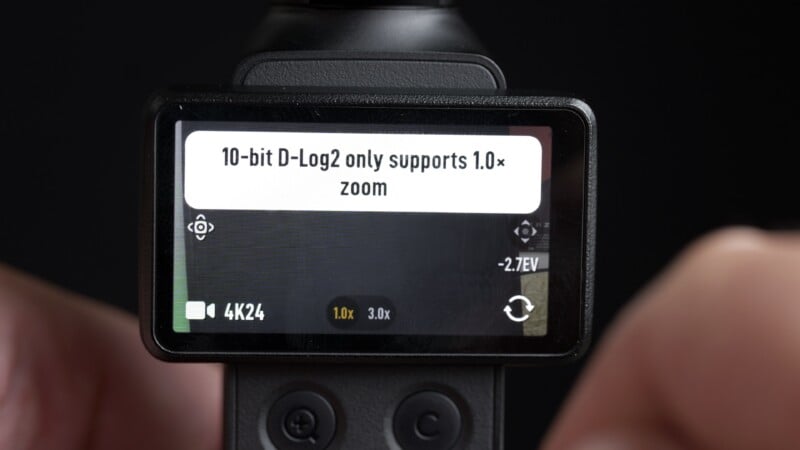
Furthermore, D-Log 2 and D-Log both have not only very different native base ISOs (100 for D-Log 2 and 400 for D-Log) but both also clip at very different places in the histogram. This meant that, when switching to the telephoto, I needed to not only first switch my profile, but then re-expose the image, a process made more tedious as I needed to fire up the mobile app in order to see my histogram. Then when switching back to the main camera and D-Log 2, the base ISO remains at 400, despite the lower native ISO of D-Log 2. Obviously, when switching between cameras in log mode, the camera should remember your previous exposure in each camera to avoid this.
As is, I eventually found myself only using the telephoto camera for tests, as the process of switching cameras using a log profile and properly exposing my images was too tedious to endure. The good news is this is a software issue, and can hopefully be fixed in future firmware. But for more skilled shooters who would benefit from the advantages of the impressive dynamic range, this means the telephoto camera may end up becoming a vestigial limb.
DJI OSMO Pocket 4P Is Fun and Frustrating
What DJI has been able to accomplish with their latest pocket gimbal camera is undoubtedly impressive, if not quite living up to the advertised 17 stops of dynamic range. However, having such excellent image quality in such a small package means this camera will surely be embraced not only by casual users but professional productions as well.
However, the interface limitations mean that the new telephoto lens will likely be enjoyed more by casual users who don’t know what dynamic range is, and will never touch the log profiles or manual controls. The same people who will never take advantage of the main camera’s potential. And that’s why I found this to be a confusing camera that’s hard for me to recommend to a wide audience.
Are There Alternatives?
If you live in the USA, you’ll have to look for alternatives, as DJI products including this are currently banned. The Xtra products are so similar that they appear to be rebranded DJI models, and the Muse 2 Pro appears to be a carbon copy of the Pocket 4P. That said, the FCC recently took action against Xtra, so the availability of the Muse series is up in the air.
The most direct competitor is the Insta360 Luna Ultra, which also features two cameras with the same focal length and a very similar design. It also features a wonderful removable remote/LCD/microphone which makes filming yourself a pleasure. Telephoto image quality is similar to the DJI, but the main camera is substantially less performant than DJI’s LOFIC-powered camera. I found the Luna Ultra to be more fun to use, but the potential image quality of the Pocket 4P is considerably higher.
The older Pocket 4 is also a good option if you can find one at a good price and don’t mind being limited to a single wide-angle camera, but I’d find the improved image quality in the 4P to be difficult to pass up.
Should You Buy It?
Yes. Despite some interface frustrations, the spectacular image quality from such a small device makes it absolutely worth keeping in your pocket, and most of my complaints could be fixed in firmware updates, should DJI choose to go that route.