Special Feature
Behind the Curtain at KEH: Countless Cameras and a World-Class Repair Center
The first time I visited Atlanta, Georgia, it was blisteringly hot, and I was there with Canon doing a review of the EOS 90D. Having now finished my second trip to Atlanta, it was still blisteringly hot, but I was able to spend much of the trip in the air-conditioned warehouse and retail front of KEH.
KEH, a company purpose-built around pre-owned gear since 1979, is one of the world’s largest pre-owned camera retailers and a long-time sponsor of the channel, but I had never been to the company’s headquarters. It’s one thing to peruse the website and purchase gear online, but it’s a whole other experience to see the entire operation in person.
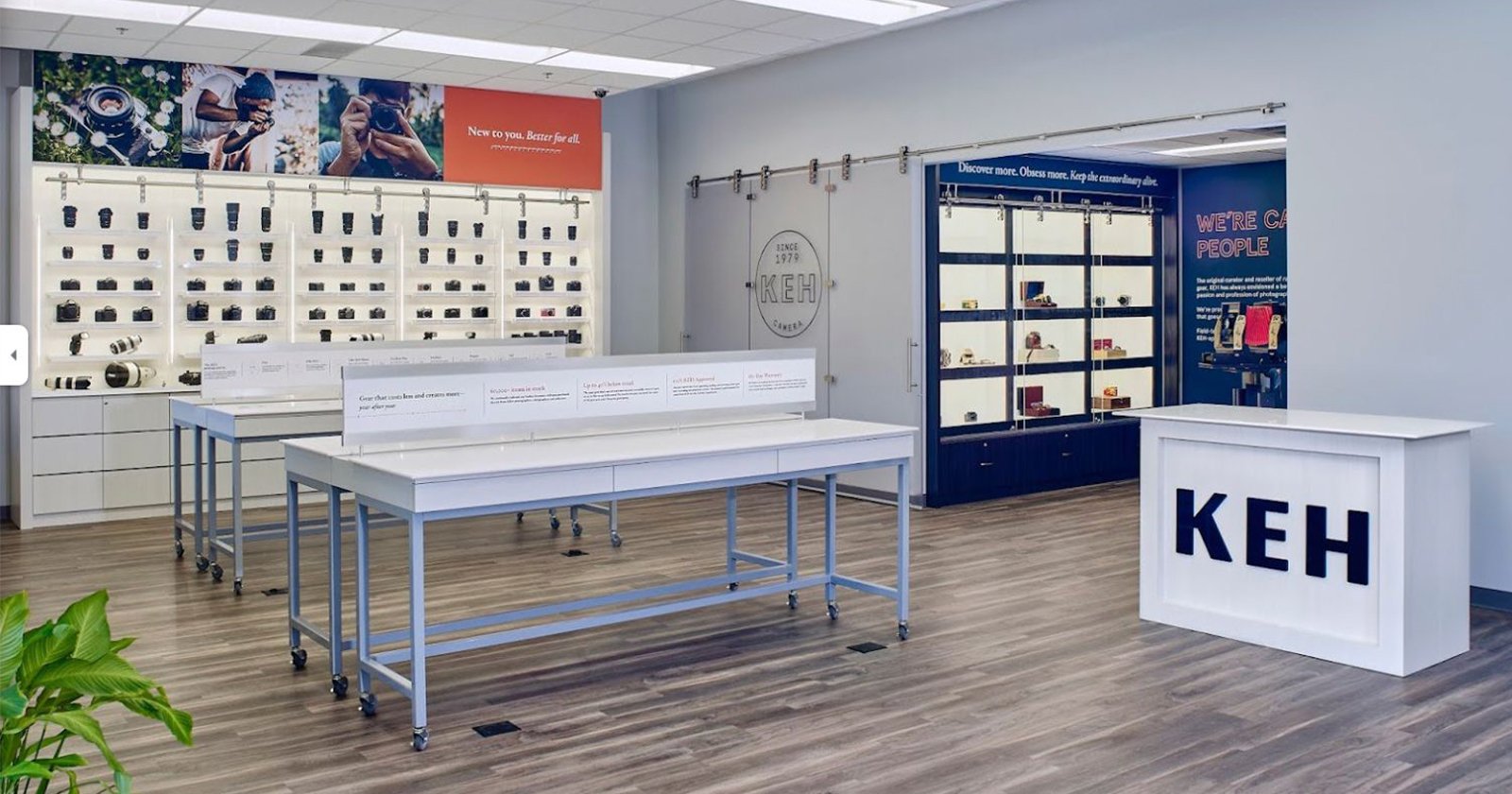
I didn’t expect to see a retail sales floor when I first entered the building, but there is a small yet bustling area open to the public where they can come and purchase either used or new camera gear. The walls are fully stocked not only with cameras, but with various 35mm film options, and plenty of tripods and accessories adorn the shelves. You can purchase new cameras from all the major brands, and there was even a mini Leica display towards the back of the shop. I couldn’t help but load up on some AGFA APX black-and-white film before heading into the office.
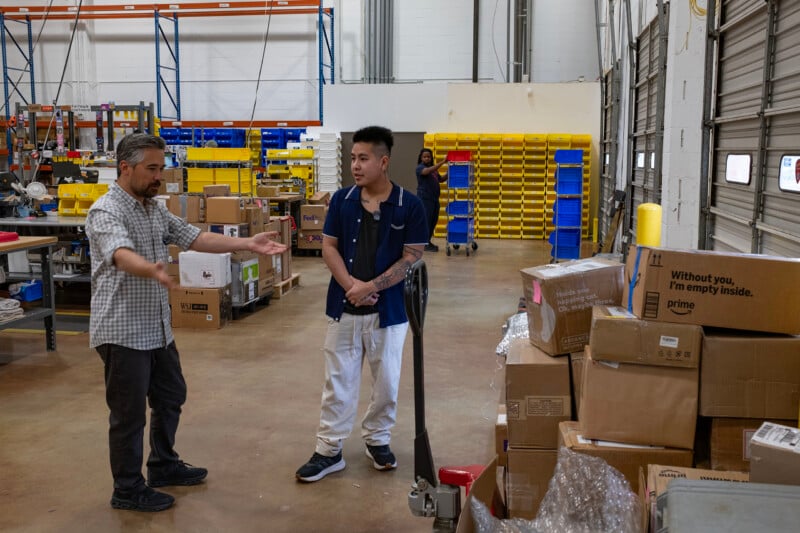
KEH brings in hundreds of used cameras and lenses every day, and just as many ship out the other side to start their second life with a new owner. That daily, endless cycle is a staggering volume of gear. This constant flow isn’t just passive, either; KEH proactively acquires the best equipment through nationwide buying events, online portals, and virtual assessments, ensuring photographers get immediate, top-dollar payouts and trade-in bonuses. In order to facilitate the purchasing, sorting, and marketing of so many pieces of equipment, you can imagine the amount of staff required to run such an operation.
I wandered the halls meeting all the people in the office who make things run so smoothly, and two things really impressed me about the setup, besides how friendly and accommodating everyone was.
Firstly, the office area had a really pleasant environment with hangout spaces to relax in, musical instruments to play, and cool lounge areas to meet with fellow staff and facilitate team-building events in. But what really blew me away was the countless photographs hanging on the walls created by all the staff that work for KEH. It was immediately obvious that everyone there is not only a highly talented creator, but that the company itself loves and promotes the art of photography. Chatting with the team, their genuine obsession with helping other creators was palpable. Because KEH is run by photographers for photographers, it felt less like a retail environment and more like talking to trusted advisors who want to make sure you walk away with exactly the right tool for your specific creative vision. As photographers themselves, they know just how important it is to get the right gear for the intended outcome.
One highlight of the visit involved getting access into the KEH Camera Vault which houses a collection of incredibly rare pieces of gear. There were more ALPA cameras than I had ever seen in one place, Rolleiflexes in many limited colors, and rare Leicas.
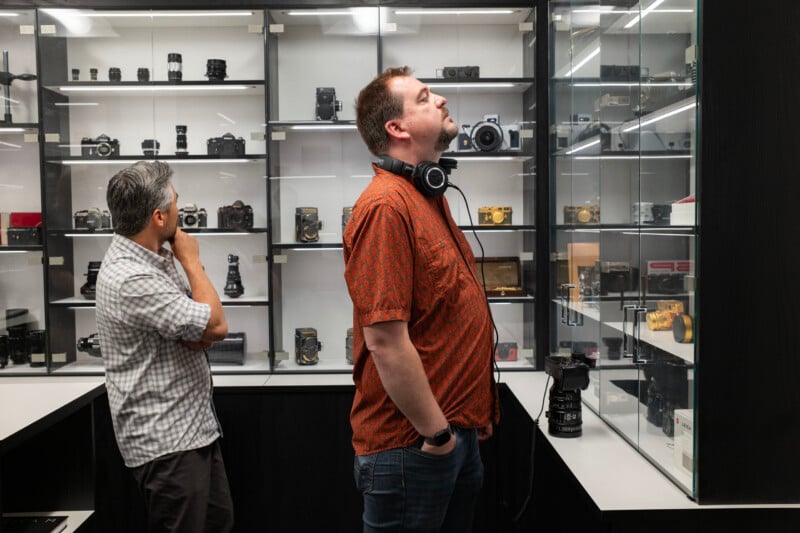
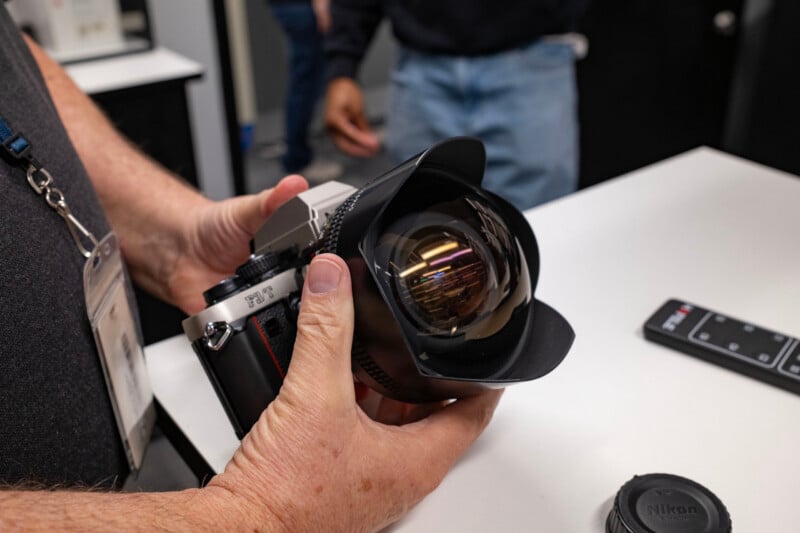
They even had an ultra-rare Nikkor 13mm f/5.6 commissioned for the NASA space program.
I was also entrusted with a Minolta TC-1 camera to wander around town with and take pictures with for a couple of days.
As fun as all the rare cameras were to see, we came to better understand the operation itself, so the next step was the inspection and grading area, where all the acquired gear from around the world starts its journey.
Tens of thousands of packages arrive weekly, which contain prospective products that clients are hoping to sell or trade-in. These items have to be sorted, identified, and graded, with KEH experts evaluating condition and value and cataloging any accessories. Considering how many versions, limited editions, and color variations exist in each individual series of lens or camera, the task is monumental to say the least. I immediately realized that the breadth of knowledge required to assess all of these items properly cannot be left to one individual, and an important pattern began to emerge. This knowledge base was absolutely collective, and it only worked by fostering a spirit of collaboration and mentorship.
“It’s a lot of knowledge. We, on any given day, are working with, like, 150 years of technology. It can take up to two years to create a technician to have all of the knowledge to work with everything that we see,” Cameron Baskin, Tech line Supervisor and Senior Technician at KEH says.
As I passed through the warehouse to the next area, there was a class taking place where new hires were being shown the process of identifying camera types and series. Veteran staff members were eagerly sharing their knowledge with people who may never have even seen analog equipment before, and every category of product from lens, to camera, to peripheral, was being shown. Through a door to the side another prime example of this collaborative process was also taking place.
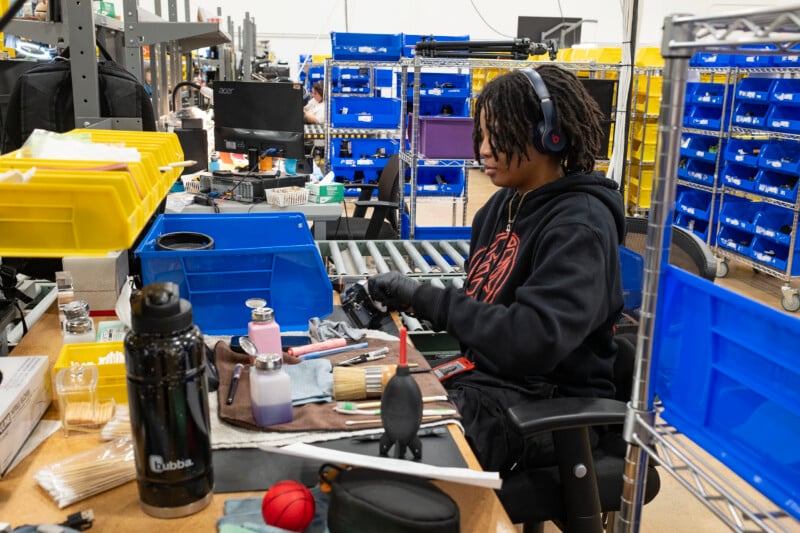
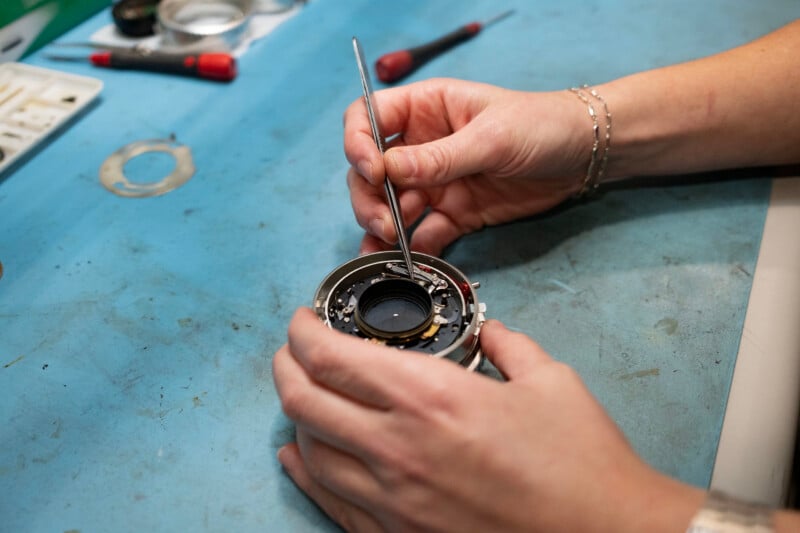
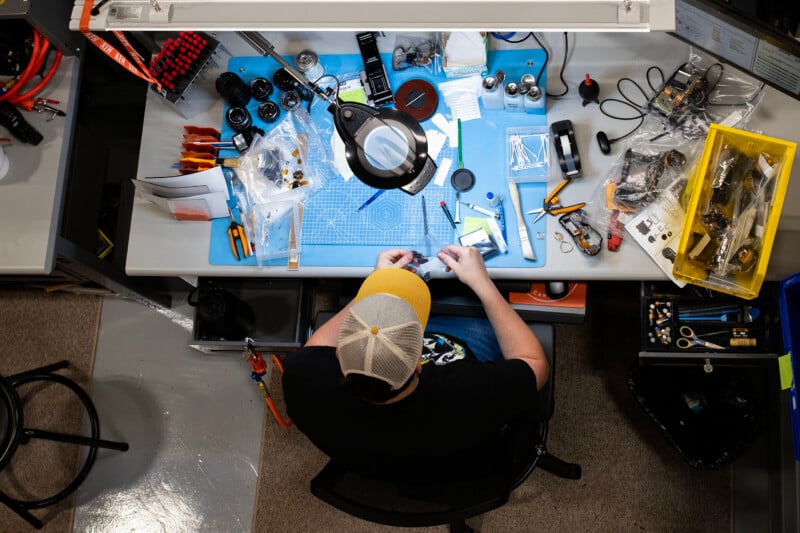
KEH has its own manufacturer-approved repair facilities and is able to service most any product you can think of. On one workbench, a Carl Zeiss Planar medium format lens and on another, a Fujifilm mirrorless camera.
The company is currently working to expand its capabilities and is looking at ways to source or fabricate parts so that it isn’t beholden to just what is out in the wild. KEH wants to turn parts availability from a weakness into a strength.
“So we are currently trying to partner with vendors who, for example, just sell springs,” Nick Cecchini, Repair Operations Manager at KEH, explains. “Can I find the two springs I need for these lenses? Can I start partnering with die cutters and start stamping out plastic nylon pieces to save pieces of gear? This is like the next step to where we’re no longer dependent. We are independently sourcing so that we are in control of our own destiny.”
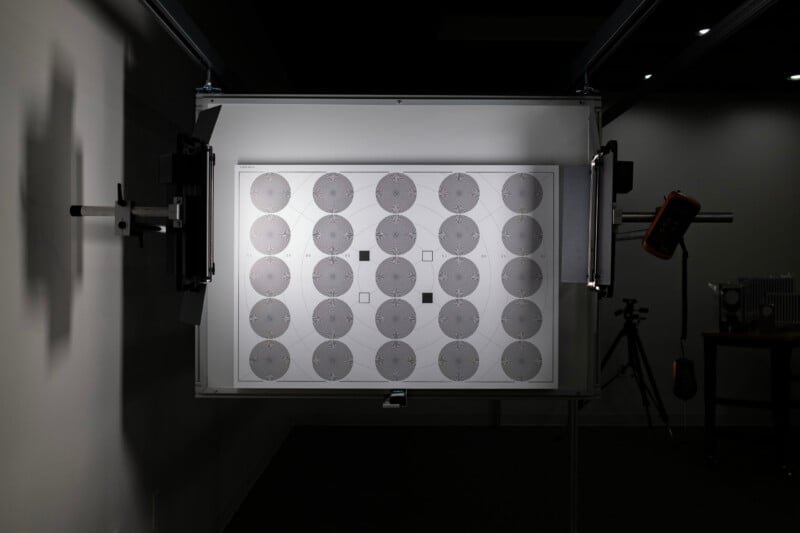
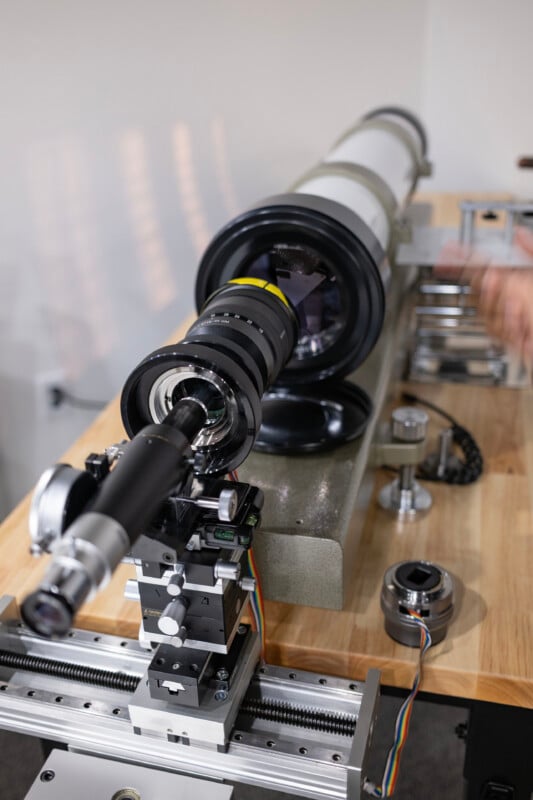
In the back of the repair facility, an optical lens-testing lab housed all the collimators and precision instruments to repair and recalibrate certain precision optics. This is not a well-known fact, but KEH is actually a Sony authorized repair facility, with all of the requisite equipment in-house to repair and calibrate cameras and lenses to the same specification they ship from directly from Sony, brand-new.
Row upon row of trays and drawers were filled with spare parts and broken gear to be salvaged. As a fan of vintage camera gear myself, it was truly uplifting to see very young technicians investing the time and knowledge to keep all ages of cameras and lenses out of the landfills, and in the camera bags of loving owners.
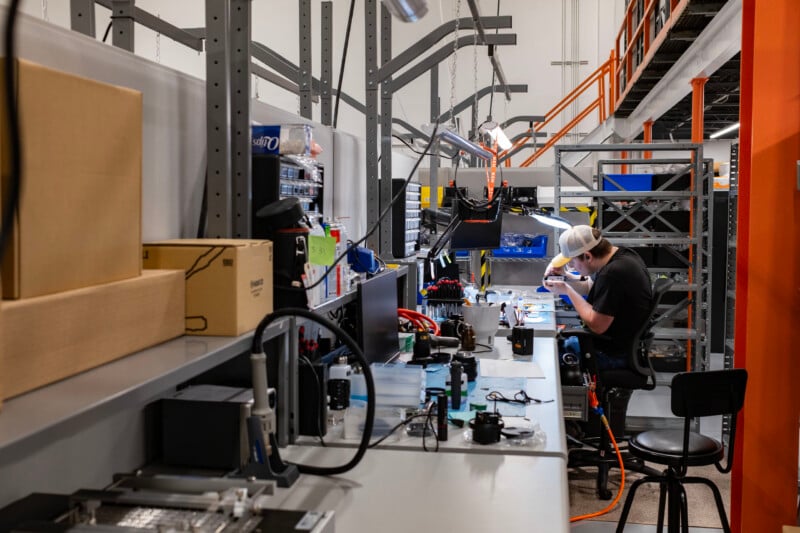
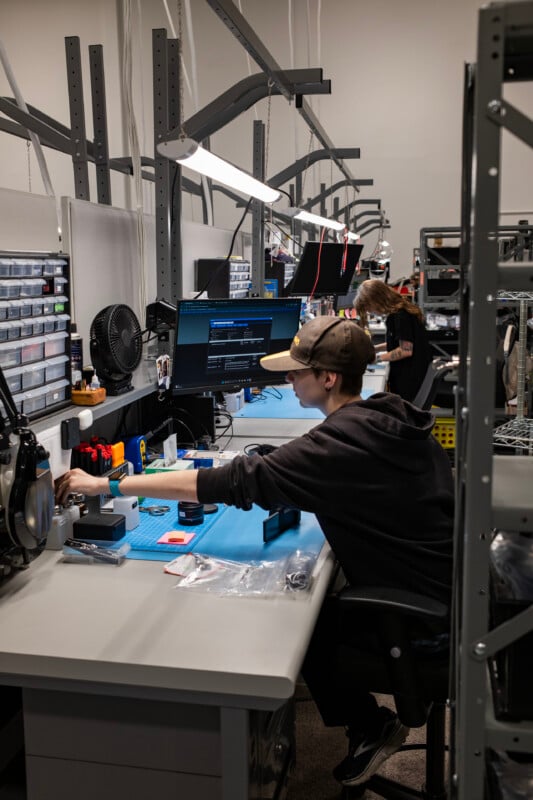
“Really, it’s all about being technical and wanting to do something with your hands, and wanting to learn something new every single day, because there’s so much to learn,” Zibby Olsen, Repair Supervisor at KEH, says. “There are so many different brands and types of things that we work on. So you kinda have to be in the mindset of wanting to know as much as possible.”
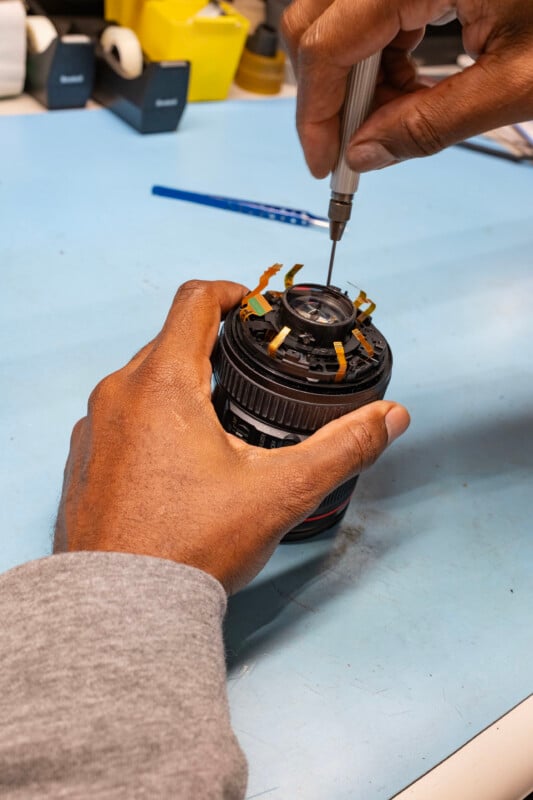
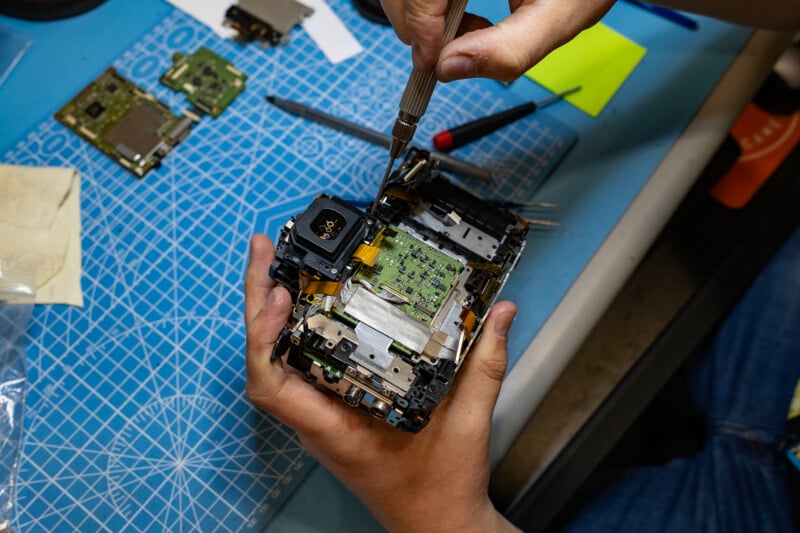
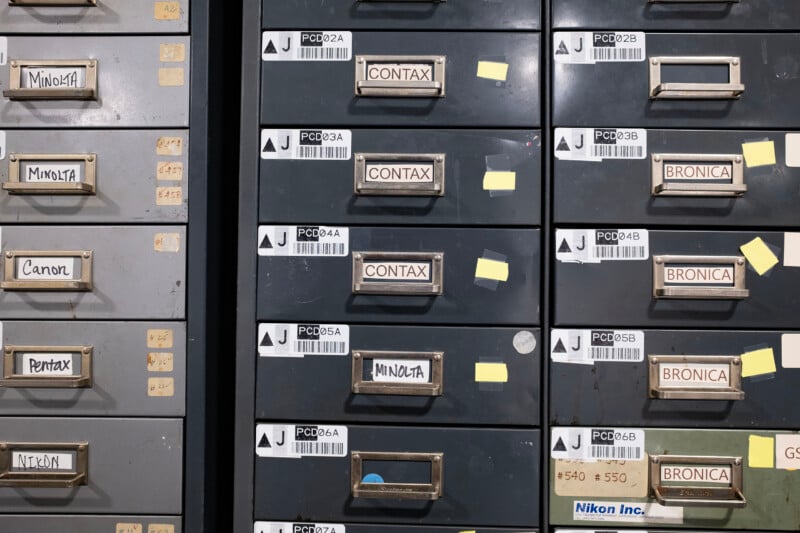
“Our entire mezzanine is about is utilizing gear that we have deemed beyond economical repair or beyond a repairable unit. And what we do is not throw it away because we are so focused on sustainability and keeping these units out of landfills. So what those units do is find a home here, and what we do as technicians is utilize the parts that are usable and put them in other pieces that need to be fixed,” she adds.
Seeing this rigorous, multi-point inspection and manufacturer-approved repair process firsthand made me realize exactly how KEH removes the gamble of buying used gear. Because of this meticulous backend work, every piece of equipment that eventually leaves the building can confidently be backed by a comprehensive warranty, offering peace of mind at a fraction of the price of buying new.
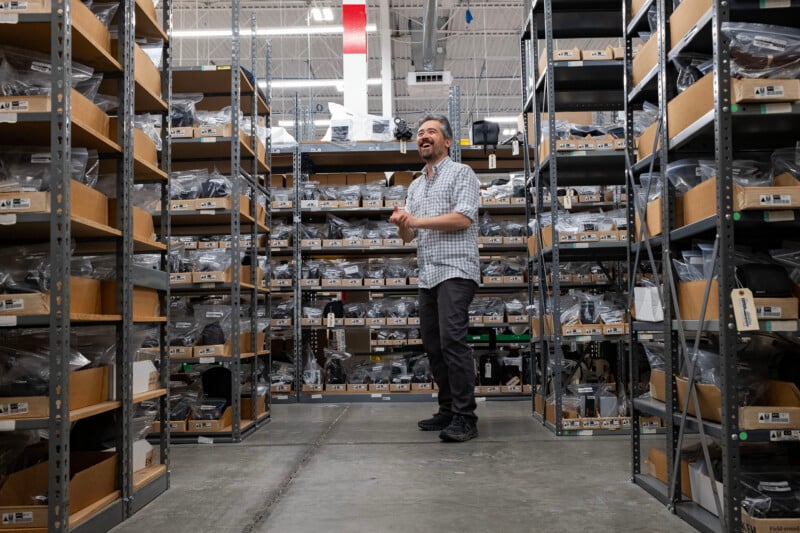
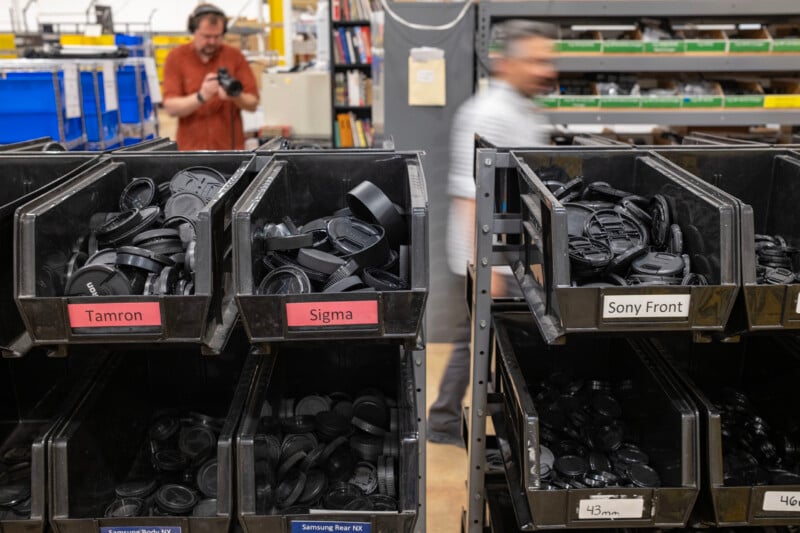
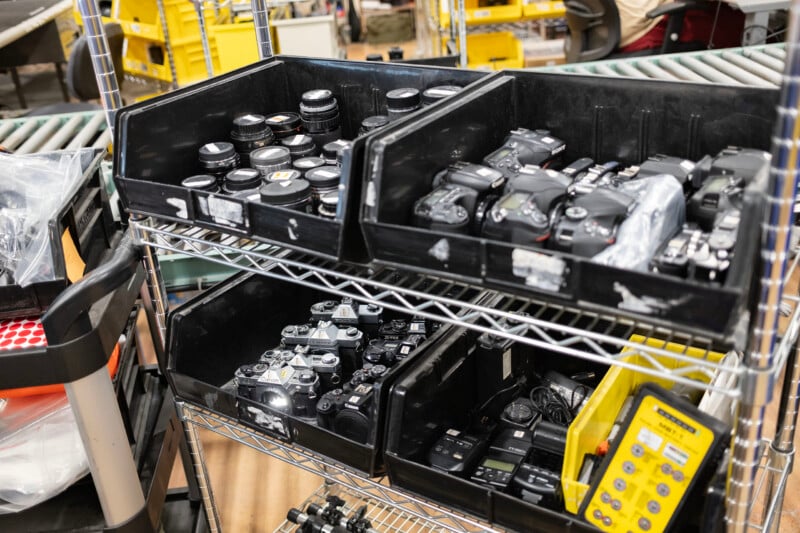
The end of the tour brought us to the shipping area, which was probably the most exciting part of the whole experience. It was here that we wandered through row after row of cataloged gear for sale. The entire website inventory could be found here, and walking past all the trays of gear was a constant barrage of head turns and second glances.
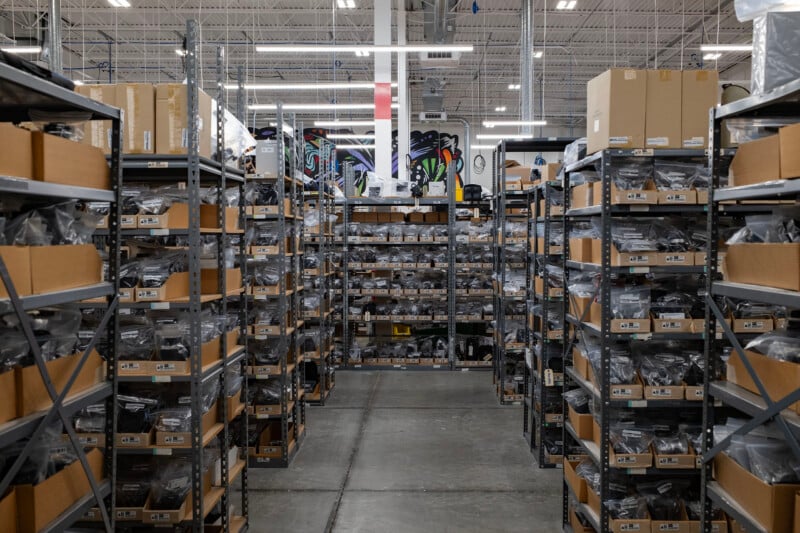
Pretty much anything you could imagine photographically could be found on these shelves and it was essentially akin to perusing a second-hand camera store the size of an industrial warehouse.
Nothing goes to waste if it doesn’t have to, either. Every spare camera strap, lens cap, hood, filter, and cable release that is still functional gets cataloged and set aside to find a proper home. As items get sold online, they are found via a special organization system, picked, packaged, and shipped with an incredible level of efficiency and speed. Every space that gets emptied is shortly filled again with another product that is new-to-you. I even got to find a Tamron 60mm f/2 SP macro lens on the shelves that I purchased for the episode we filmed about the original Canon EOS 300D Digital Rebel.
It’s one thing to understand how an operation like KEH can feasibly function, but it’s a whole other experience to witness it for yourself and meet the hard-working people behind the endeavor. I was impressed by the generational knowledge of the staff working there, and the way that they pass that knowledge on to preserve used camera gear for future photographers to enjoy.
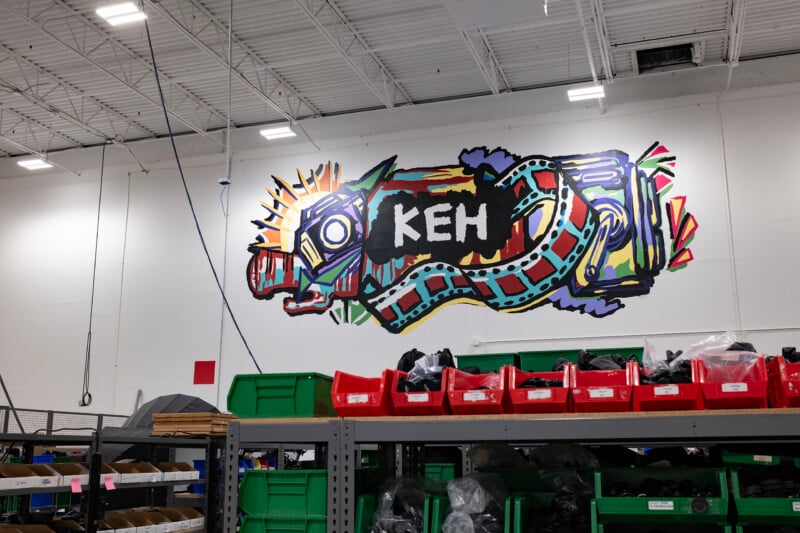
KEH is a passion project as much as it is a business, and I’m glad I got to get an insider perspective on the whole process. One can only be left with a deep appreciation for the people who passionately try to preserve and restore used gear, regardless of what storefront or outfit they work for.
Full disclosureThis story was sponsored by and made possible thanks to KEH’s long-standing support of the PetaPixel YouTube channel.