Photographer Builds Miniature Wildlife Scenes Using the Objects That Threaten Endangered Animals
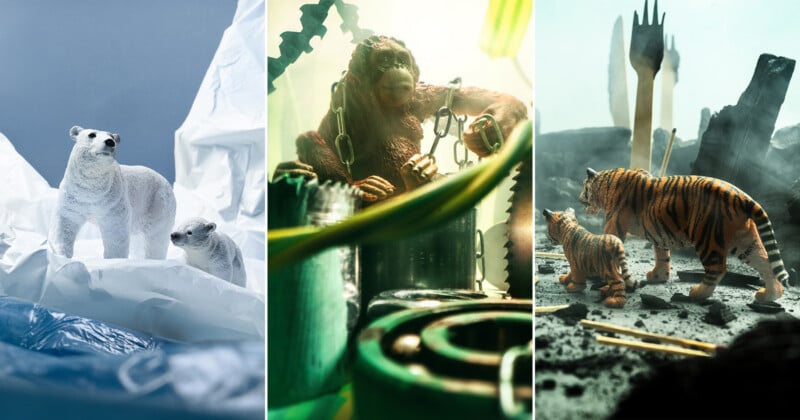
Photographer Benedek Lampert’s new series, The Nature We Replaced, combines the miniature worlds the photographer is known for crafting with powerful environmental storytelling.
As Lampert explains, his previous miniature photography series have focused on bringing realistic worlds to life. This time, though, the emphasis is on meaning rather than recreation.
“Nature, wildlife and environmental storytelling have always been close to me, and I couldn’t think of a more universal issue than the future of the planet we all share,” Lampert explains. “Drawing on more than ten years of experience in miniature photography, I set out to create a series that uses illusion not to deceive the viewer, but to confront them.”
In his new series, Lampert put miniature versions of endangered animals, like polar bears, sea turtles, orangutans, and more, into environments “that should never exist.”
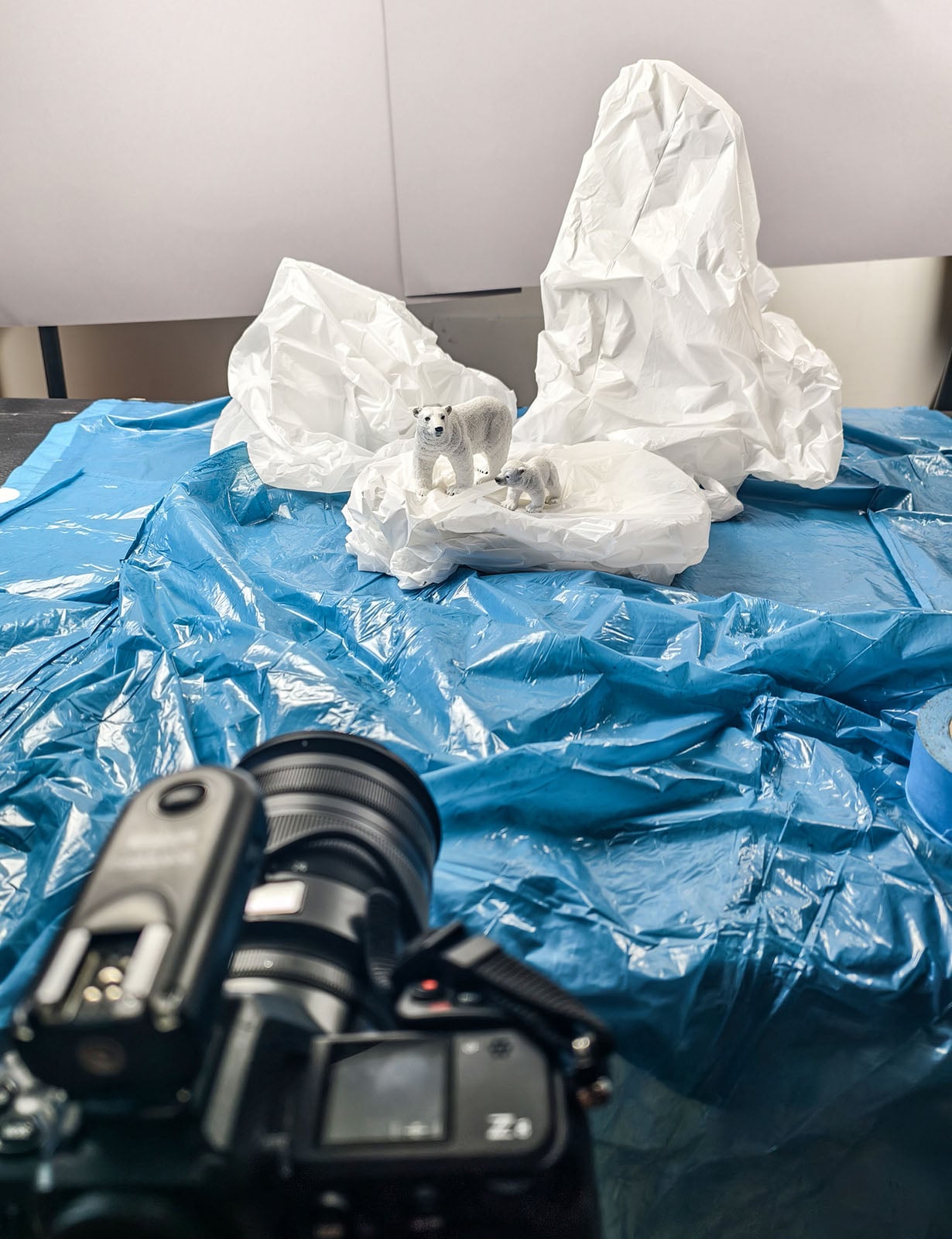
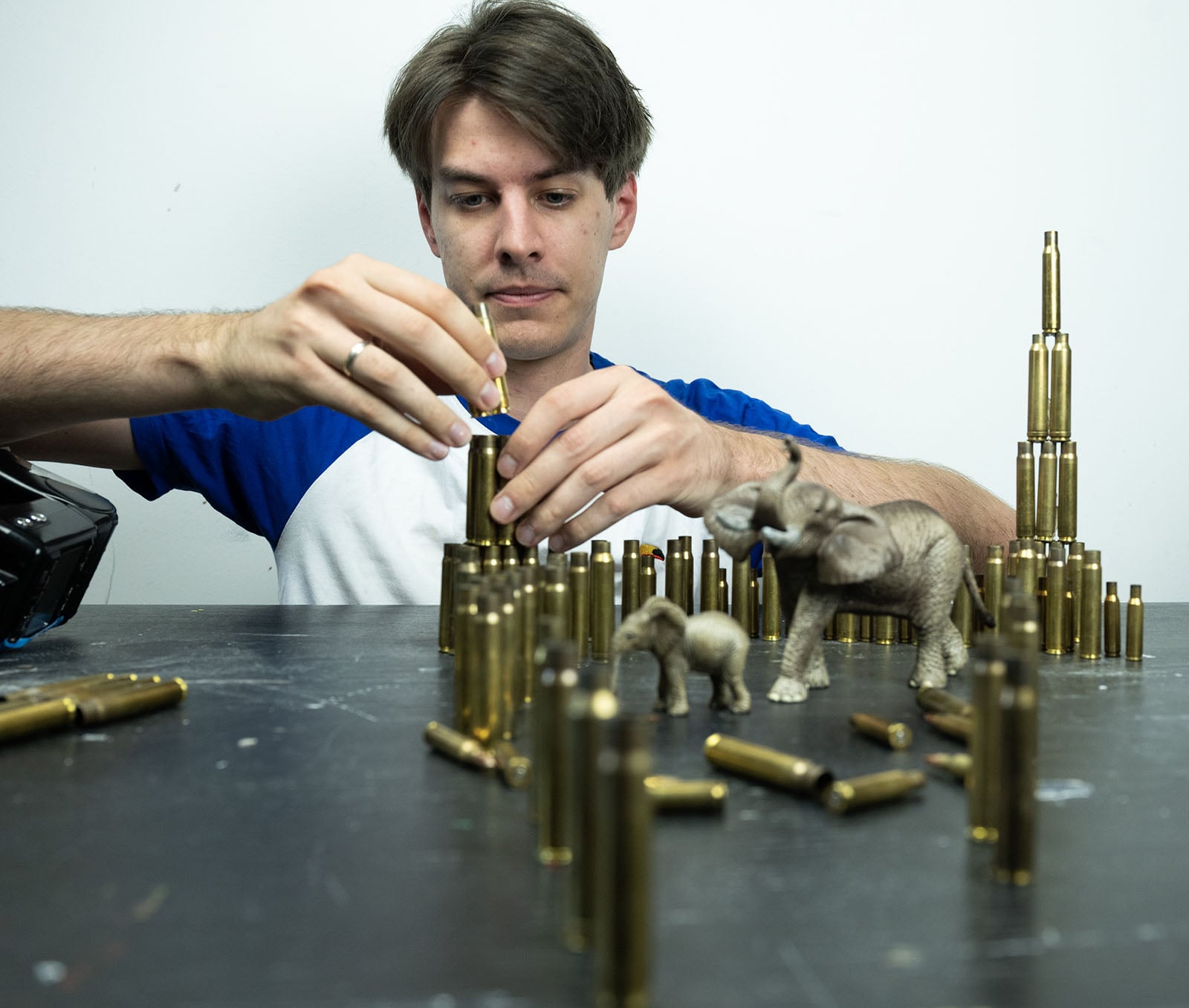
Each of the intricate environments Lampert built is made from materials that threaten that habitat and the animals that call it home. Plastic bags are Arctic ice, fishing nets are oceans, wood products are the forests that are being destroyed, and more.
“Every landscape is constructed from everyday human waste or objects associated with the destruction of that ecosystem,” Lampert says.
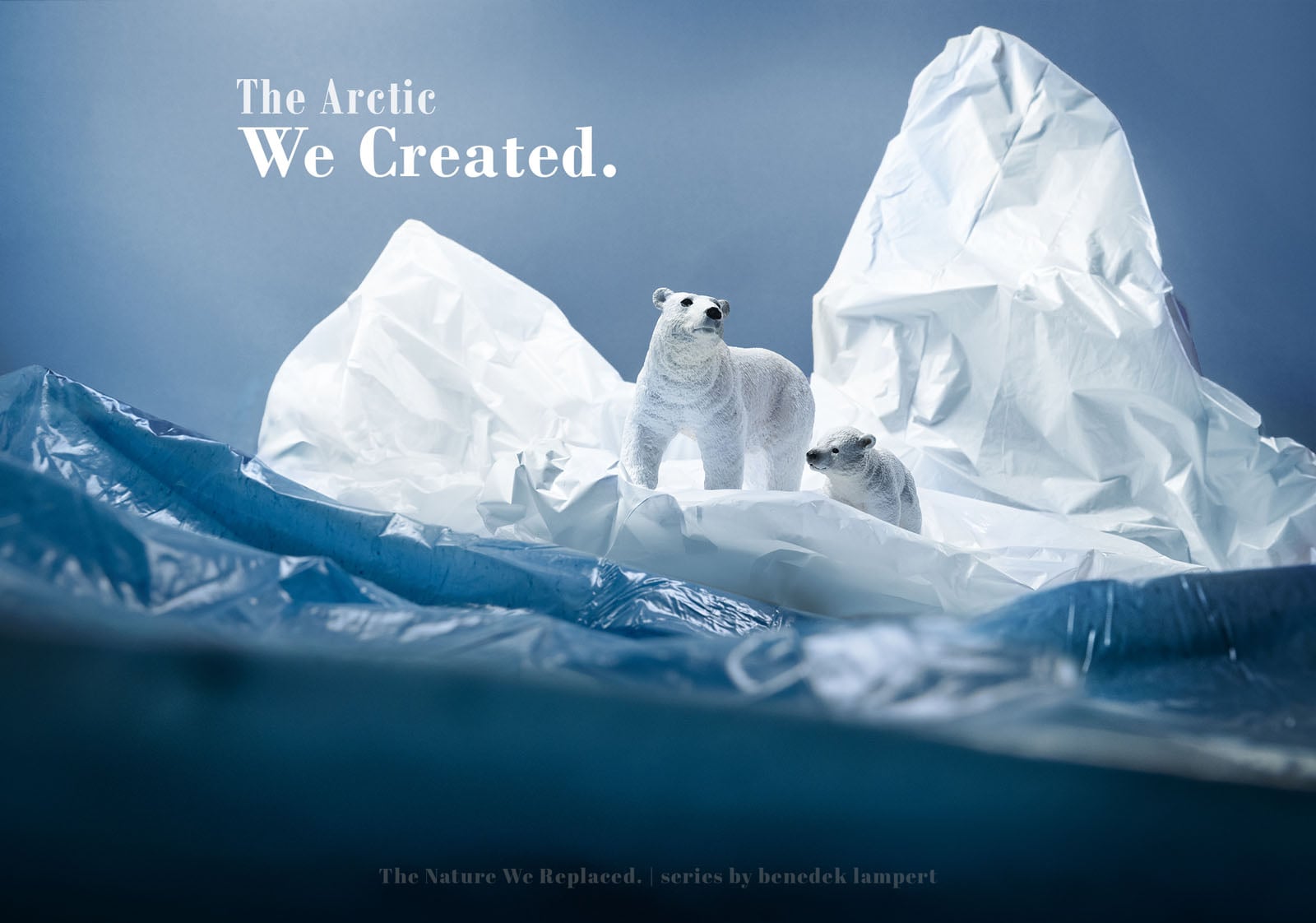
The Arctic in this image is built entirely from plastic bags — a symbol of a world gradually replacing nature with waste.’
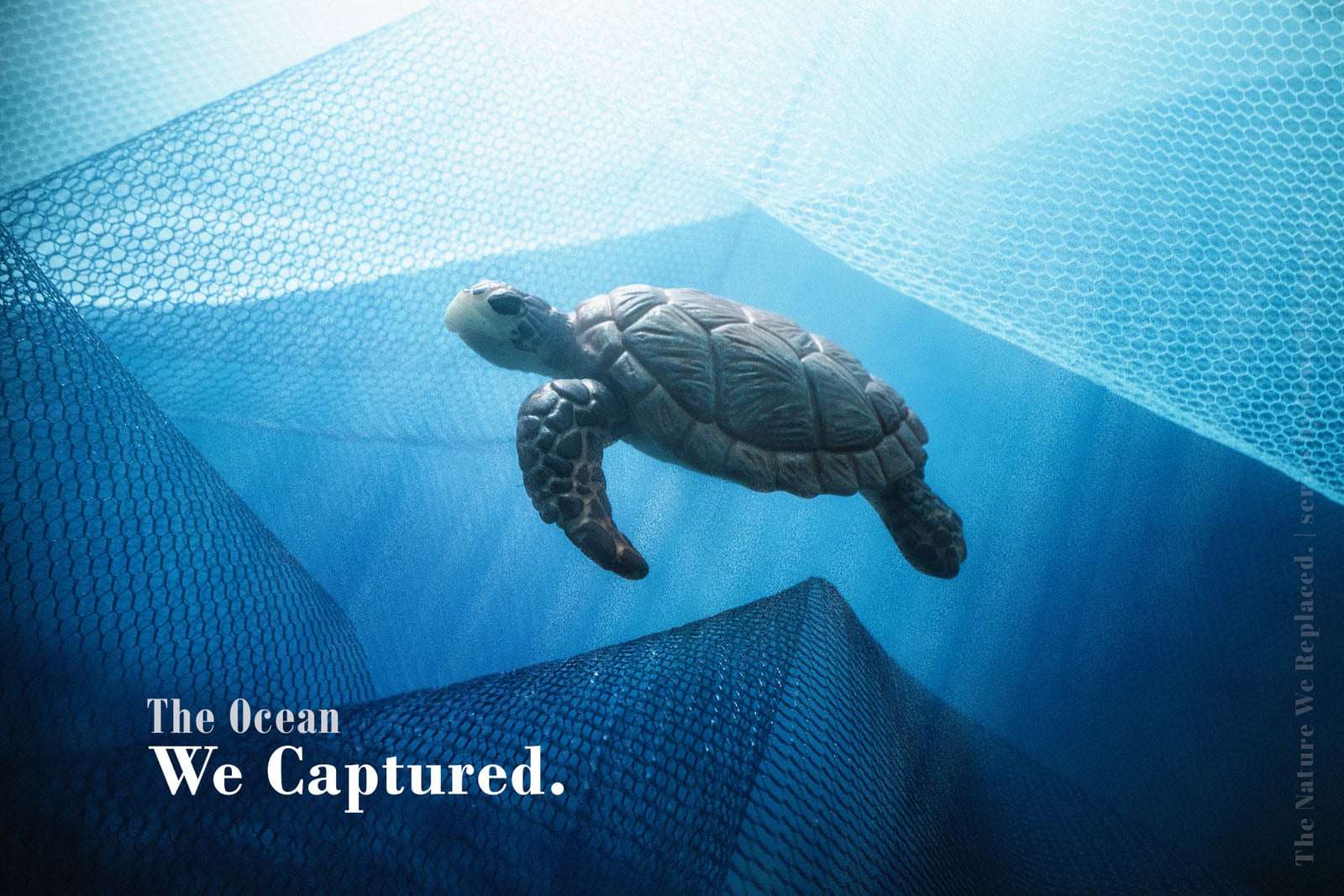
In this image, the ocean itself is made from fishing net, turning the turtles’ natural habitat into an inescapable trap.’
The photographer says his goal is not just to present another look at the ongoing environmental destruction that is endangering animals, but to visualize the “uncomfortable contradiction between wildlife and the world we continue to build around it.”
Lampert adds that he worked closely with the German figure and toy company Schleich to see if it would support the project, and it immediately got on board, supplying Lampert with realistic animal figurines.
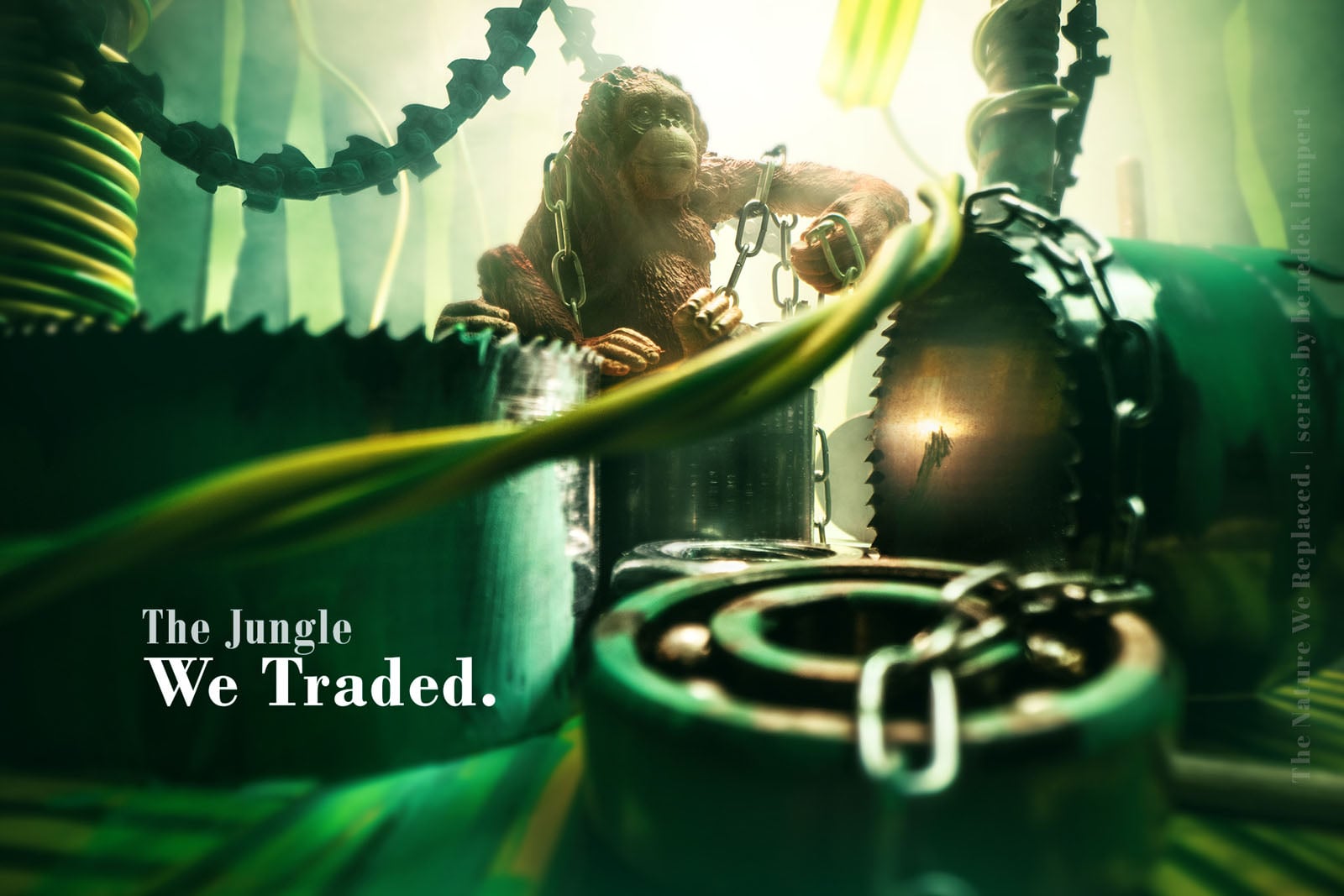
The jungle is reconstructed from industrial machine parts, reflecting how ancient forests are increasingly exchanged for economic profit.’
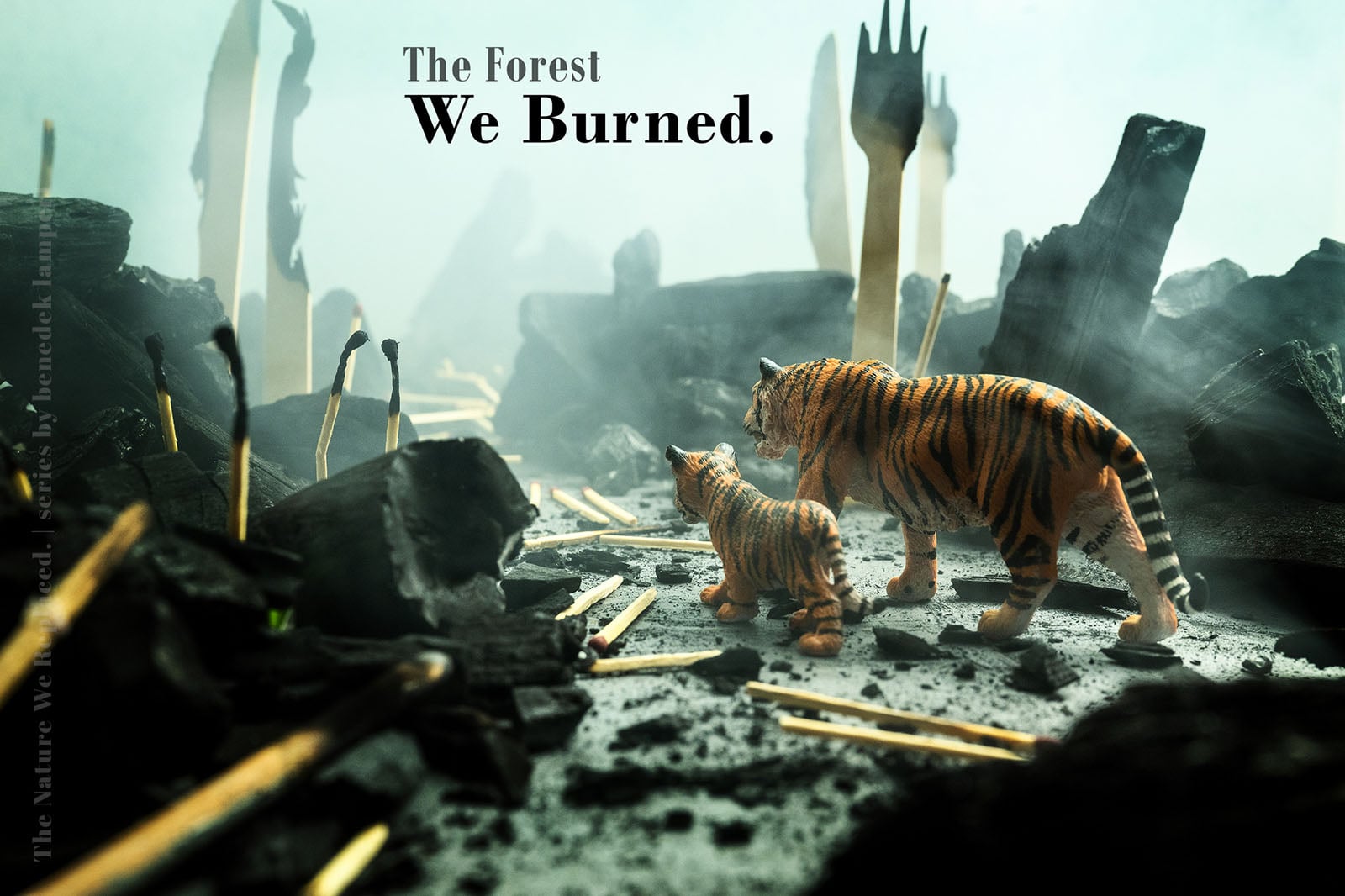
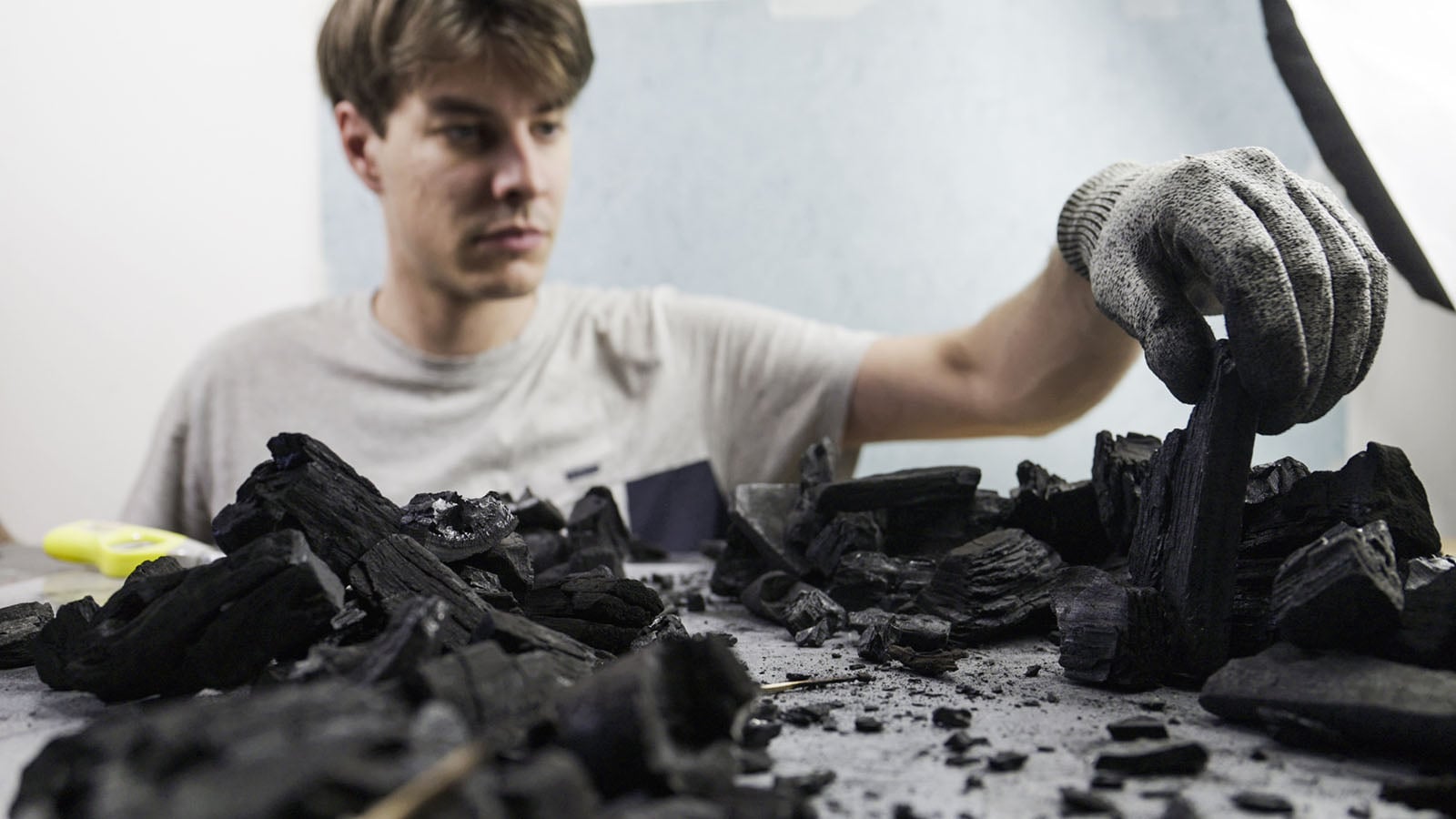
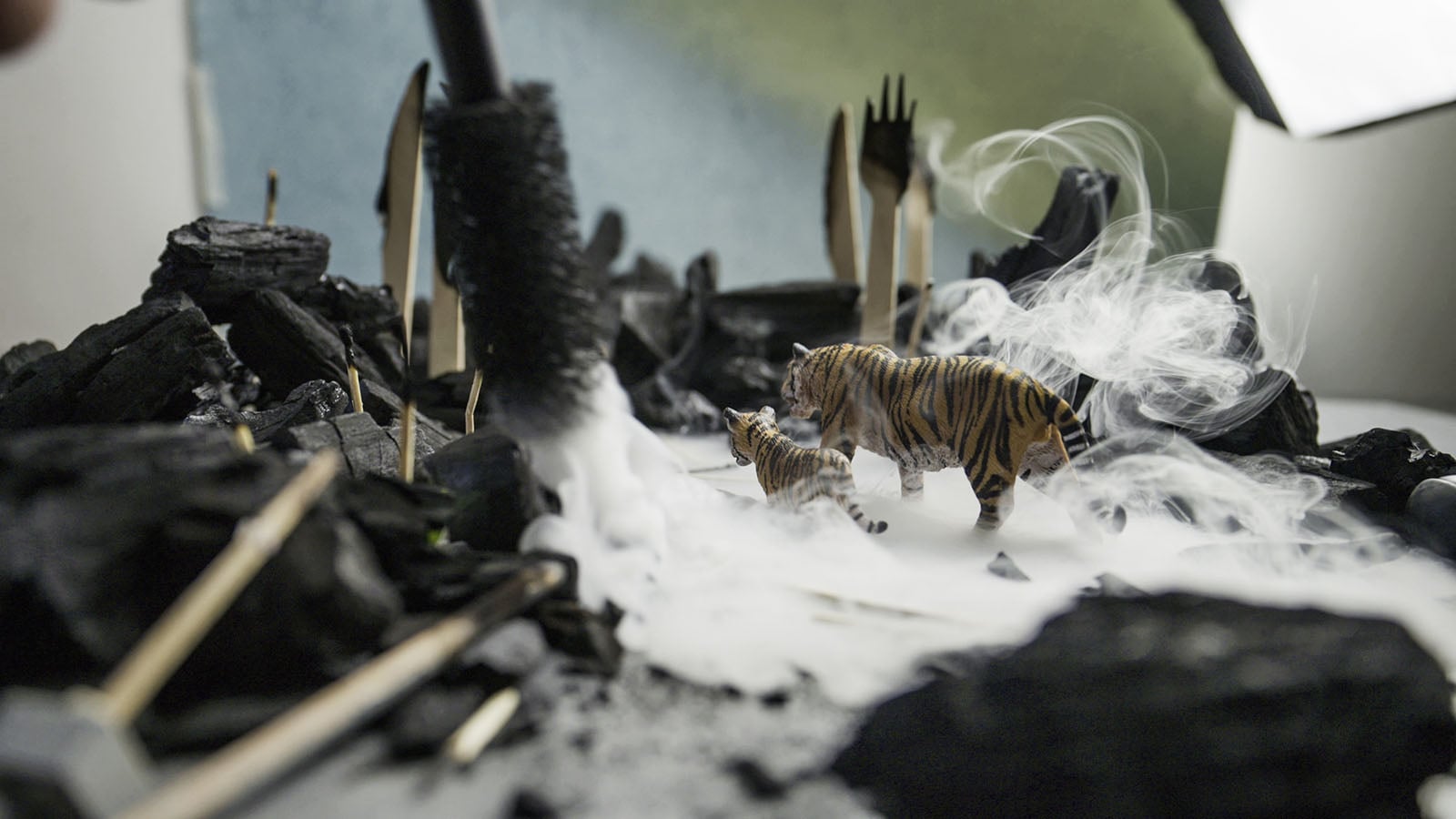
Burnt charcoal and used matches replace the forest floor, illustrating an ecosystem consumed by fire.’
Lampert tells PetaPixel the idea for his new series actually came from an “unexpected place.”
“There was a TikTok trend about a penguin that kept getting separated from its colony and wandering off into the mountains. I thought it would be fun to recreate that story in my own style, so I bought a penguin figure and created a miniature scene based on it,” the photographer says.
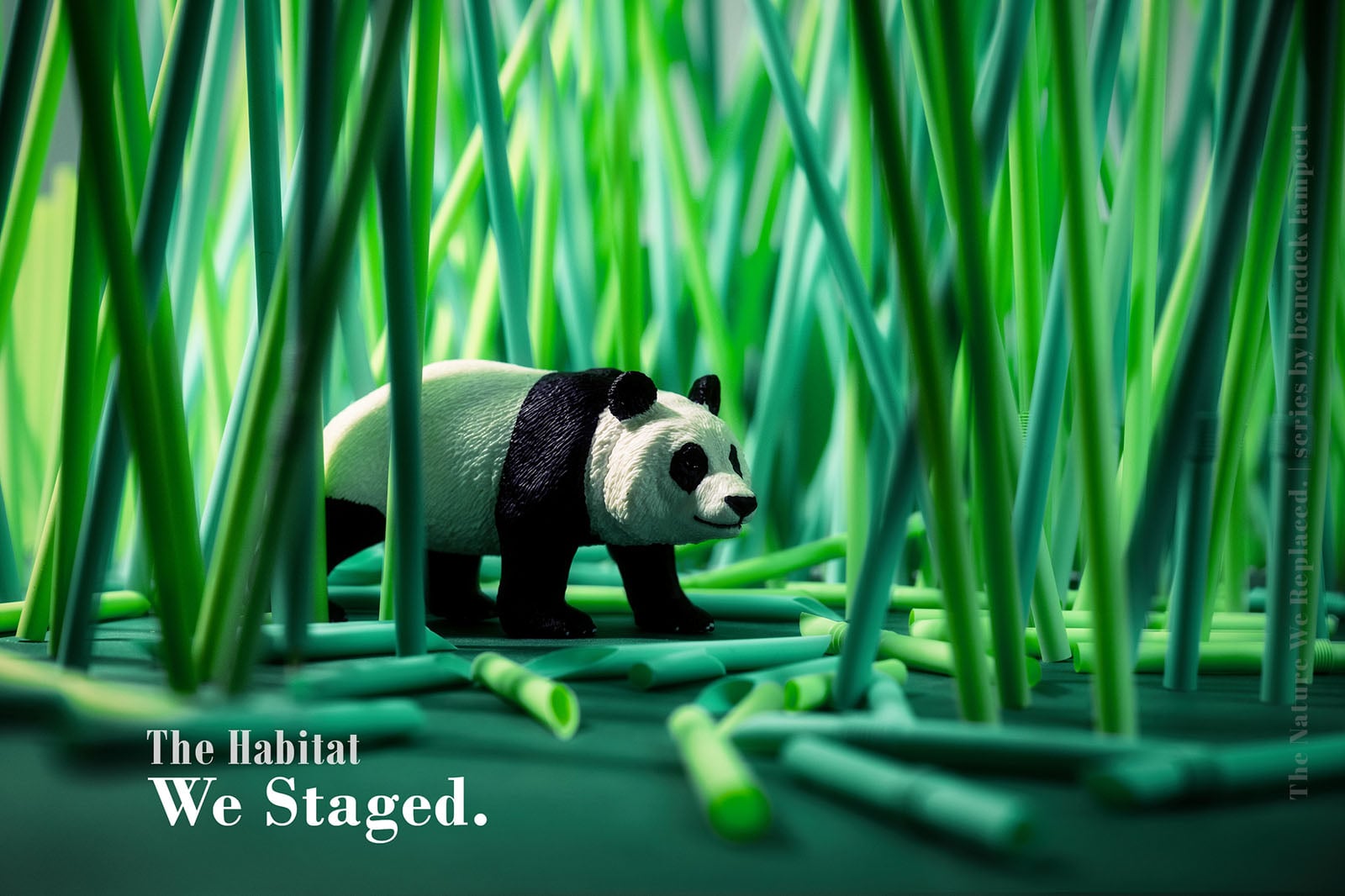
Plastic drinking straws imitate bamboo, transforming a natural habitat into an artificial stage set.’
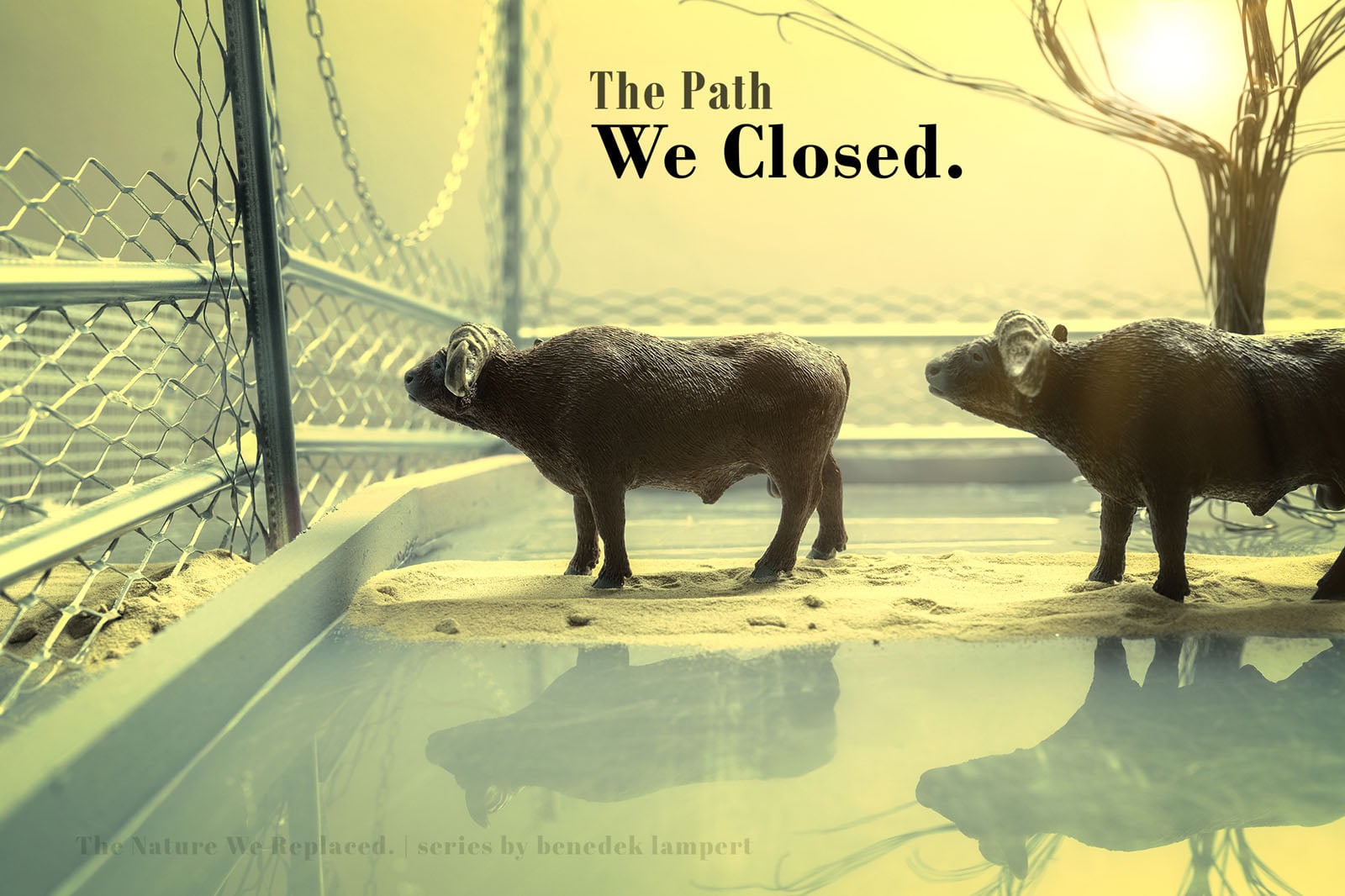
The interrupted path represents landscapes that no longer allow wildlife to move freely.’
While working on that photo, he realized that he really enjoyed photographing wildlife figures. His initial idea was to create a realistic wildlife series, but as he started thinking more about it, Lampert realized that he wanted to do something conceptual with a much deeper meaning.
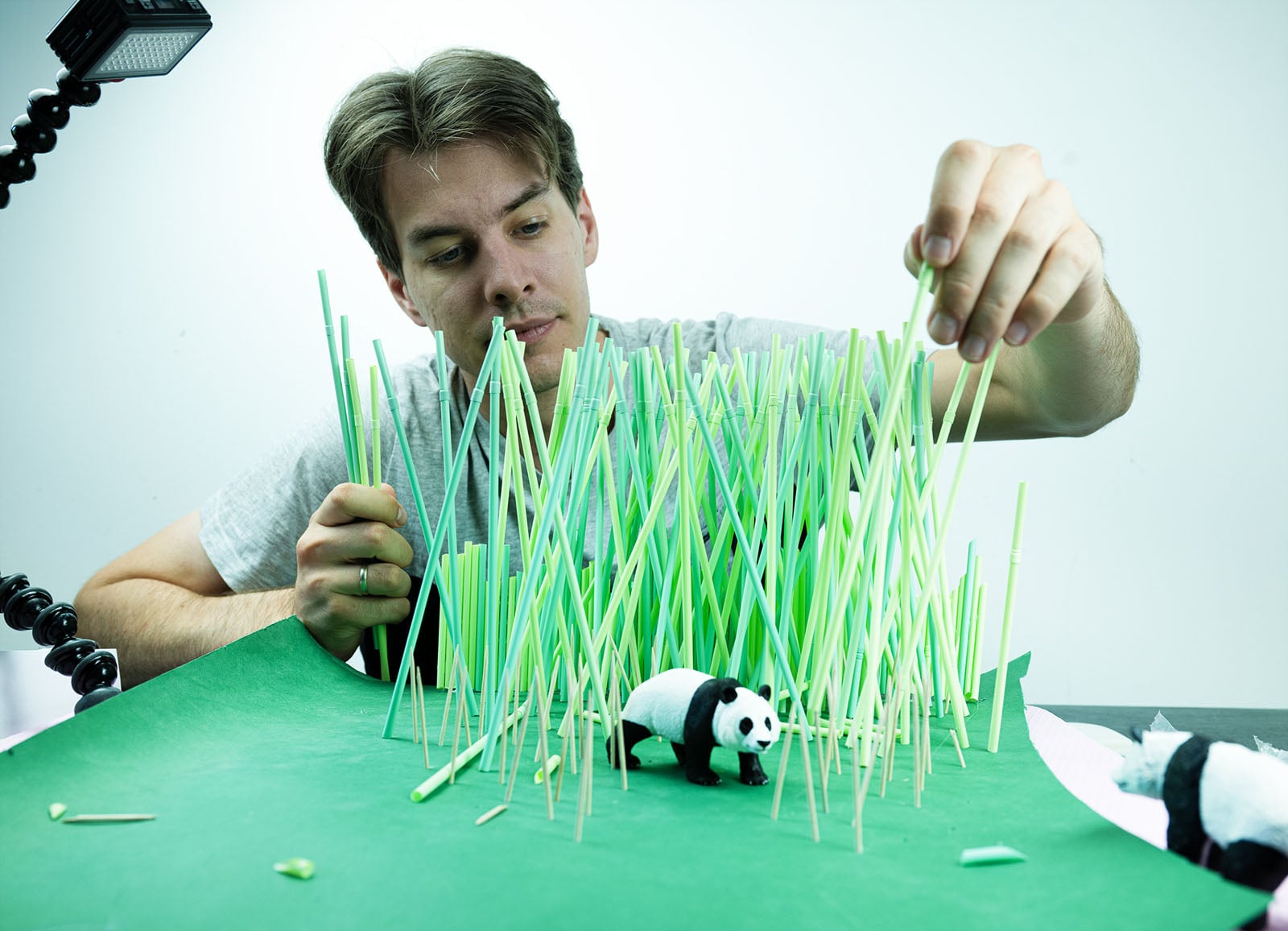
Behind the Scenes
This different approach came with unique challenges, but Lampert specifically cites his tiger photo, The Forest We Burned. as the most challenging.
“Interestingly, it wasn’t the miniature set itself that took the most time — it was finding the right atmosphere through smoke and lighting,” Lampert explains. “I had a vision in my head, but even I wasn’t entirely sure what I was looking for at first. The final image emerged through experimentation, especially when it came to the smoke. I went through countless variations, adjusting its density, how much of the scene it concealed, and how it interacted with the light until it finally felt right.”
Lampert adds that the sea turtle image, The Ocean We Captured. was also “surprisingly difficult.”
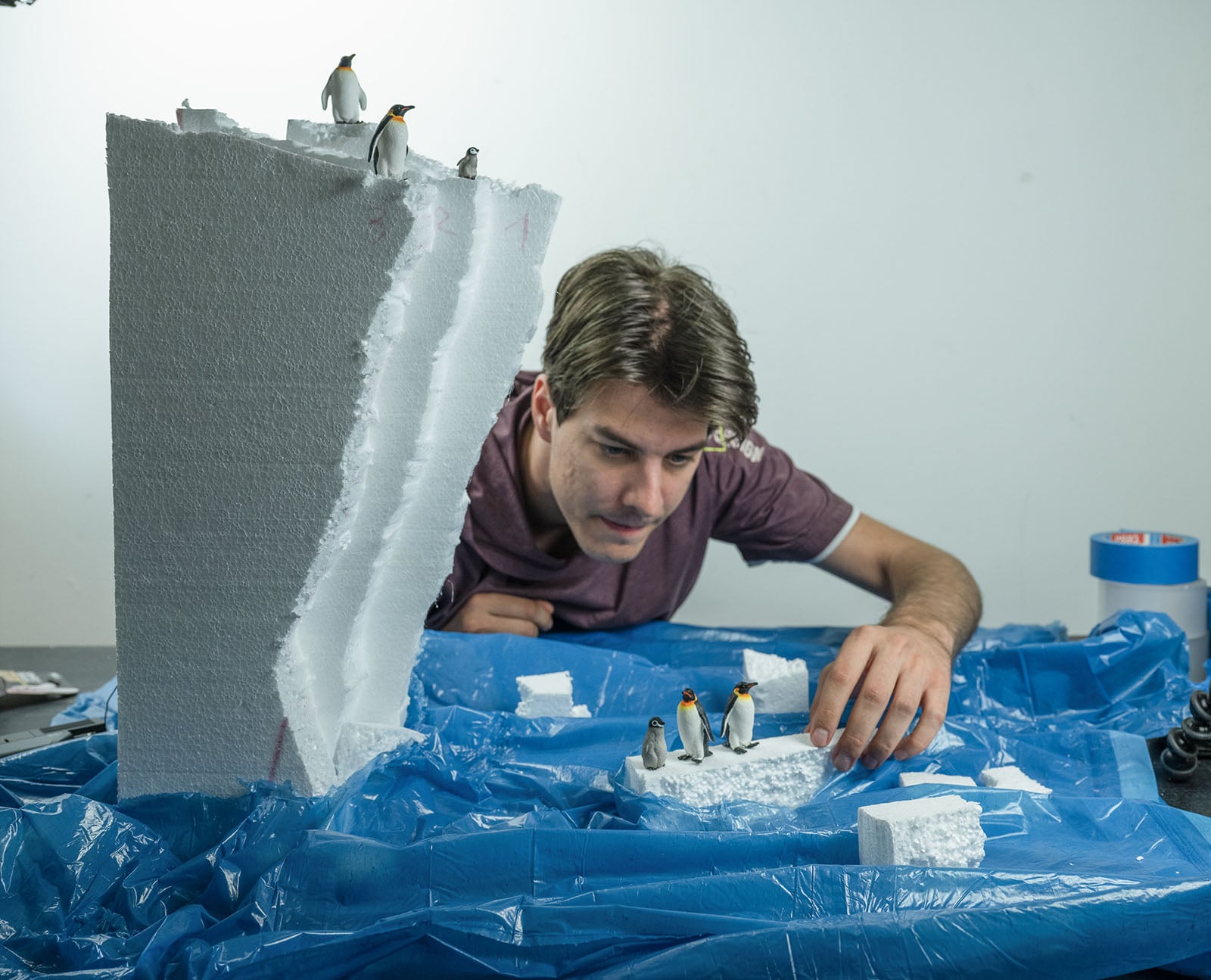
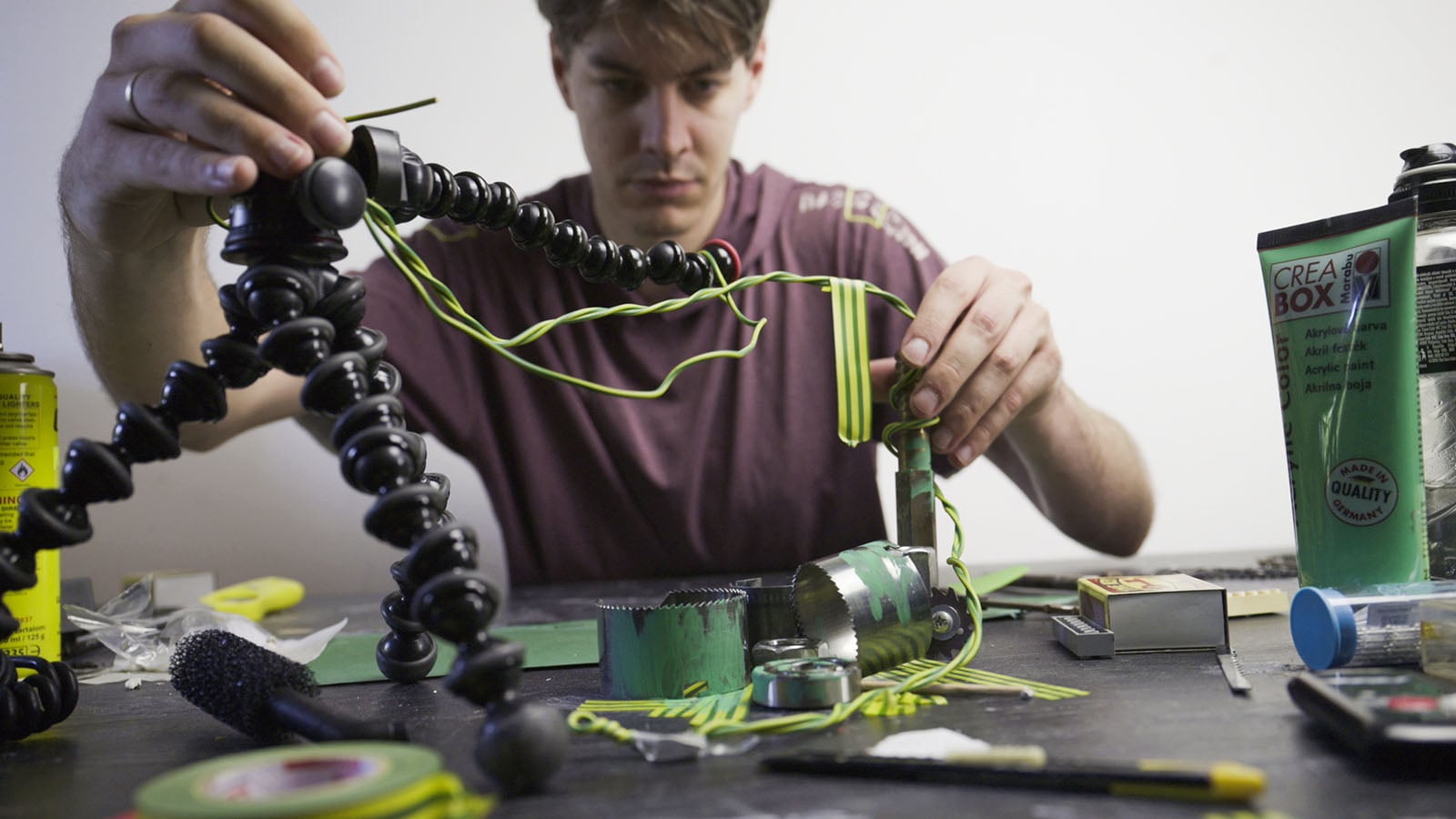
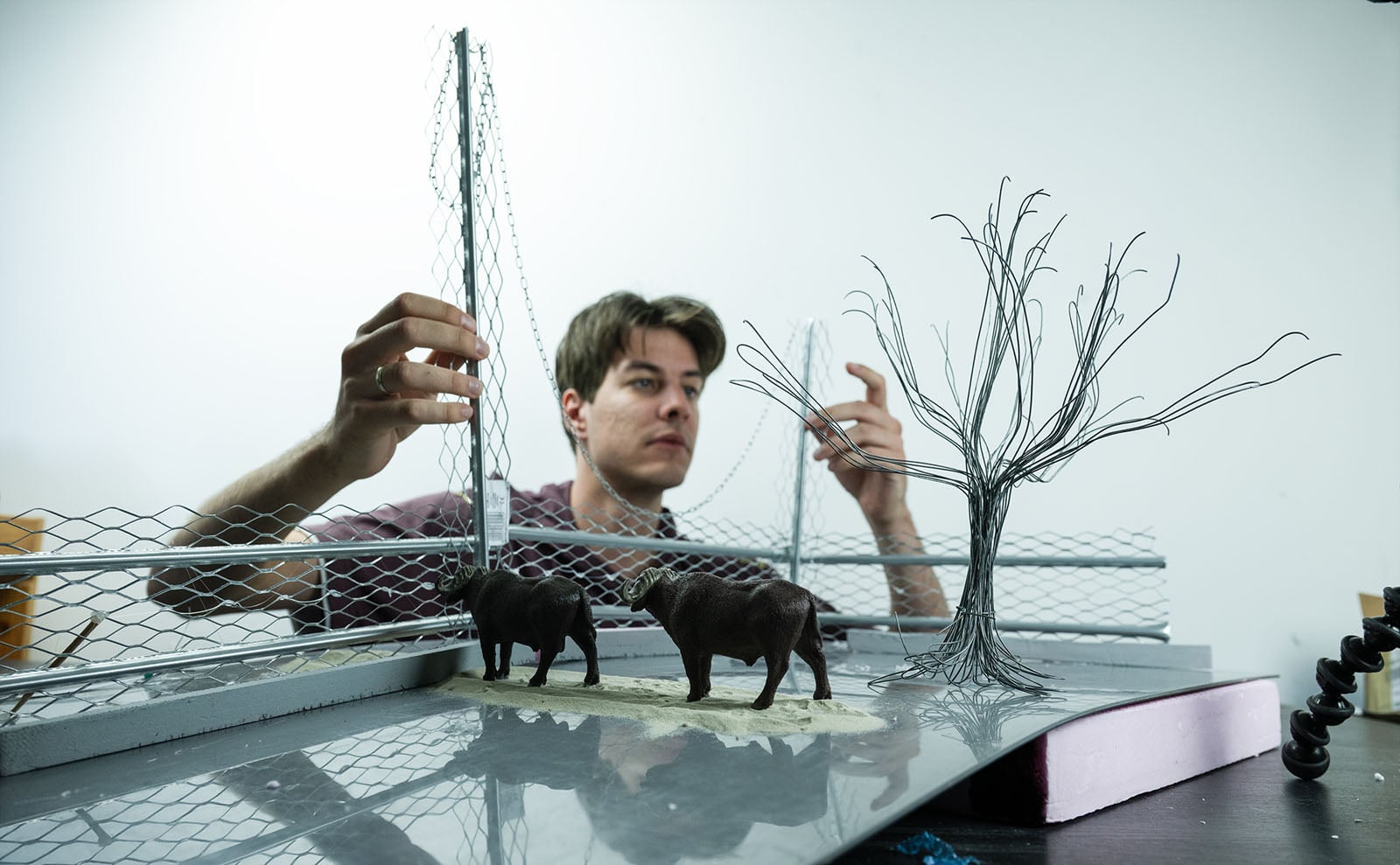
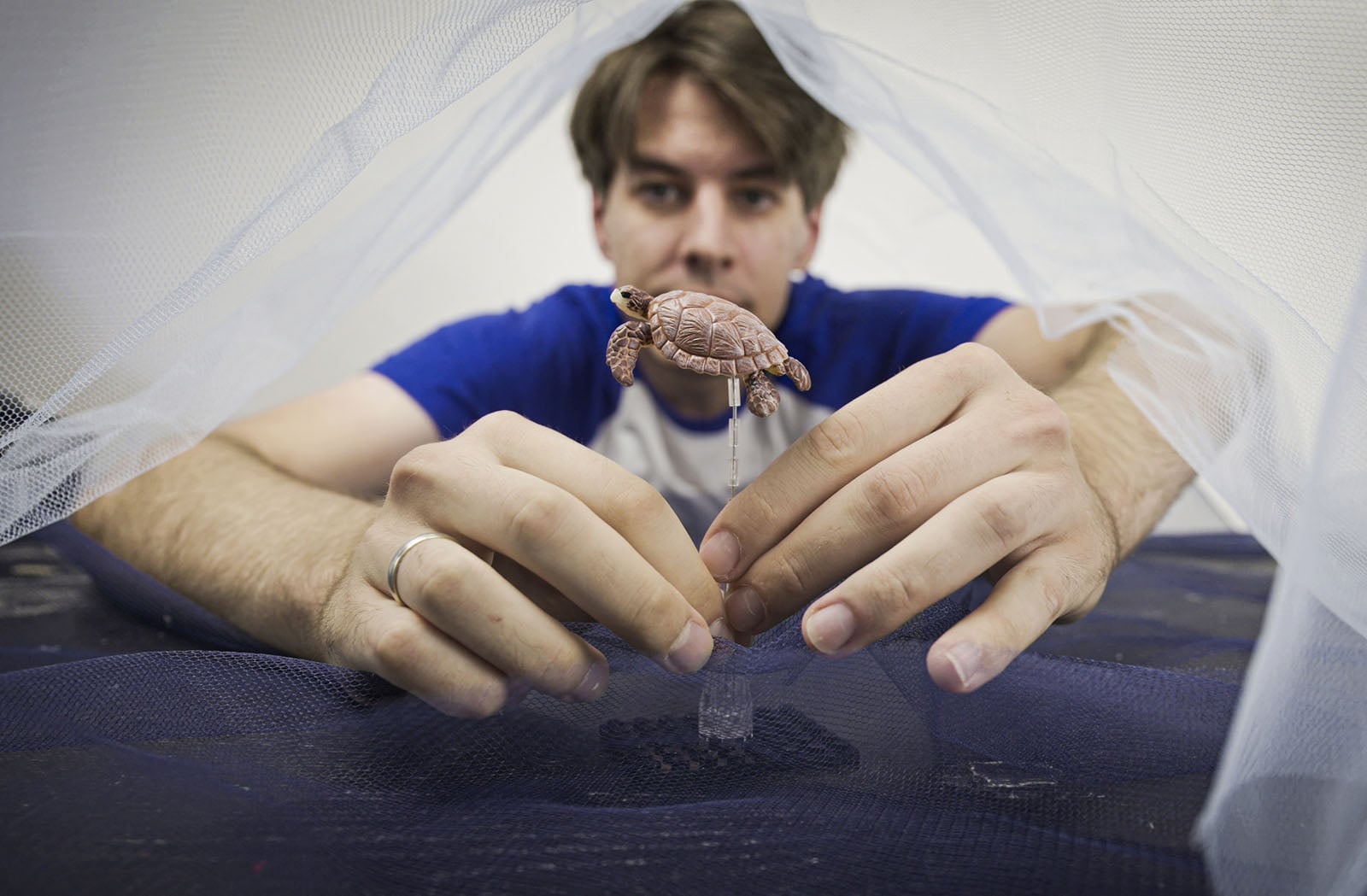
In that case, it was creating the illusion of an underwater scene that proved most challenging. Lampert used smoke here as well, but in this case to create the hazy sort of look seen underwater.
Despite his best efforts, it was not possible to create the subtle light rays, the Tyndall effect, in-camera while also preserving the rest of the scene.
“To recreate those subtle light rays, I enhanced them very carefully in post-production using the original lighting already present in the photograph, keeping the effect as natural as possible,” Lampert says.
An Exaggerated View of the Path We’re On
In contrast to Lampert’s typical work where he recreates reality as closely as possible using intricate miniature scenes, practical effects, and figurines, he says that The Nature We Replaced is more about delivering an exaggerated version of reality that “fortunately cannot yet be photographed.”
Lampert, like so many people, does not want to see endangered animals go extinct or habitats continue to be destroyed. He hopes that his photos serve as a stark, arresting warning to people that we, humans, are collectively sending Earth and its inhabitants toward destruction.
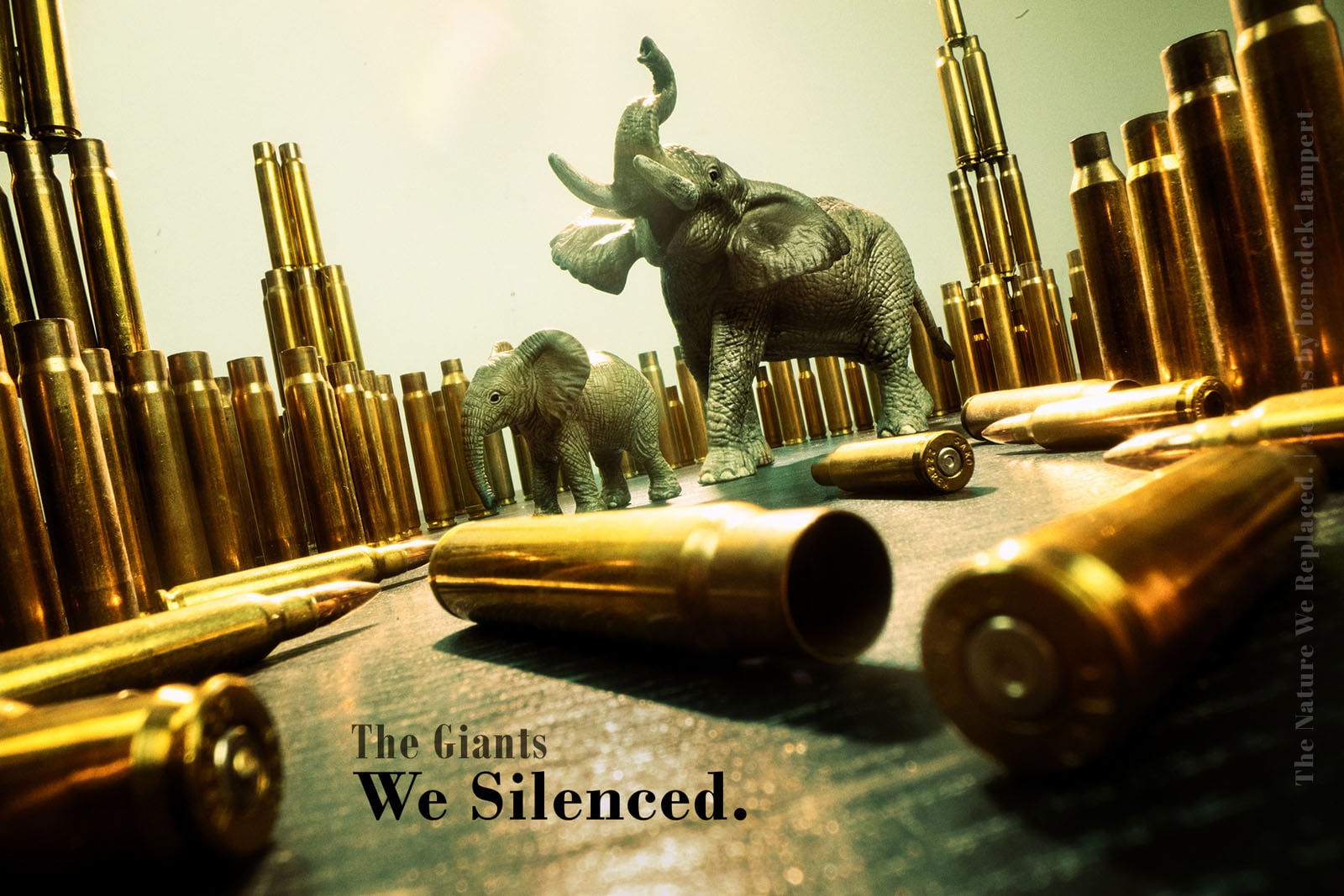
The landscape is built from spent bullet casings, reducing an entire ecosystem to the evidence left behind after a hunt.’
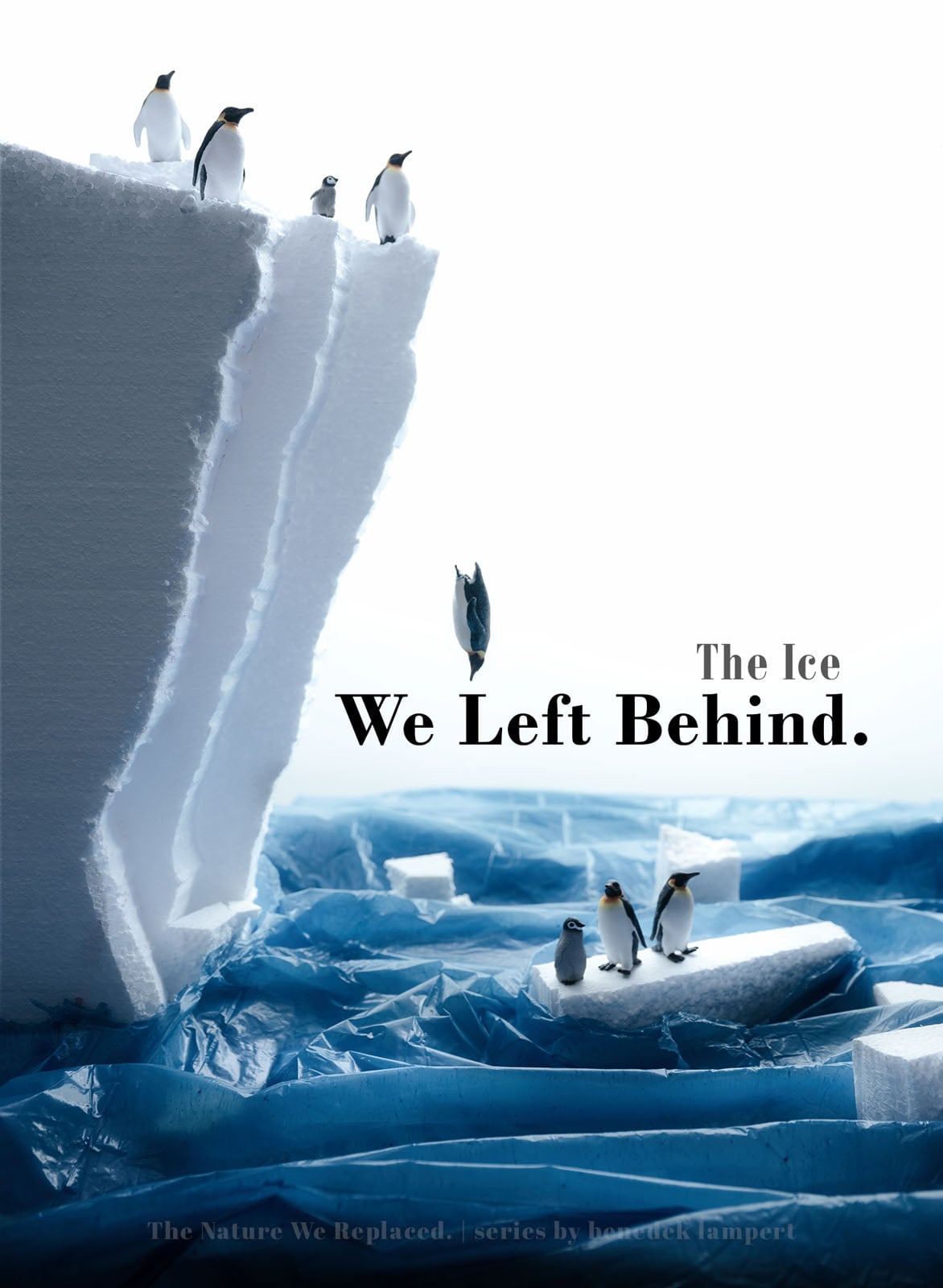
The frozen landscape is constructed from Styrofoam, plastic packaging and discarded plastic bags, suggesting a future where even the most remote wilderness is remembered only through the waste we leave behind.’
“I hope this visual exaggeration helps communicate the severity of the challenges facing these species and ecosystems in a way that statistics or documentary photographs sometimes cannot,” Lampert says.
“In many ways, I think of the series as a visual caricature. It doesn’t depict reality as it is — it deliberately exaggerates it to draw attention to very real issues.”
Image creditsAll photos by Benedek Lampert
Affiliate Disclosure PetaPixel articles may include affiliate links; we may earn a commission if you buy through one.