Are You Prepared for Your Specific Race Demands?
Specificity is one of endurance sport’s most important training principles, yet it’s also one of the easiest to overlook.
Kevin Mackinnon
The principle of specificity is well understood in endurance sport, but despite that, there can still be a gap between understanding the concept and genuinely putting it into practice.
In the fitness world, what we might call “surrogate metrics” – FTP, track paces, pool splits – often get much of the spotlight when it comes to tracking fitness and progress. But when it comes to our real goal, conquering race day, race-specific practice is vital if we want to get the most out of ourselves.
Let’s dive in.
What Should Race-Specific Practice Look Like?
The first step is to understand the actual demands and conditions you’ll face on race day.
The Swim
Let’s start with the swim. Historically, you can check whether your race has been wetsuit legal or not. It’s also worth being prepared for a myriad of potential open-water conditions. For instance, what will you do if there’s chop and breathing is only possible on one side for portions of the race? What will you do if the morning sun makes sighting difficult?
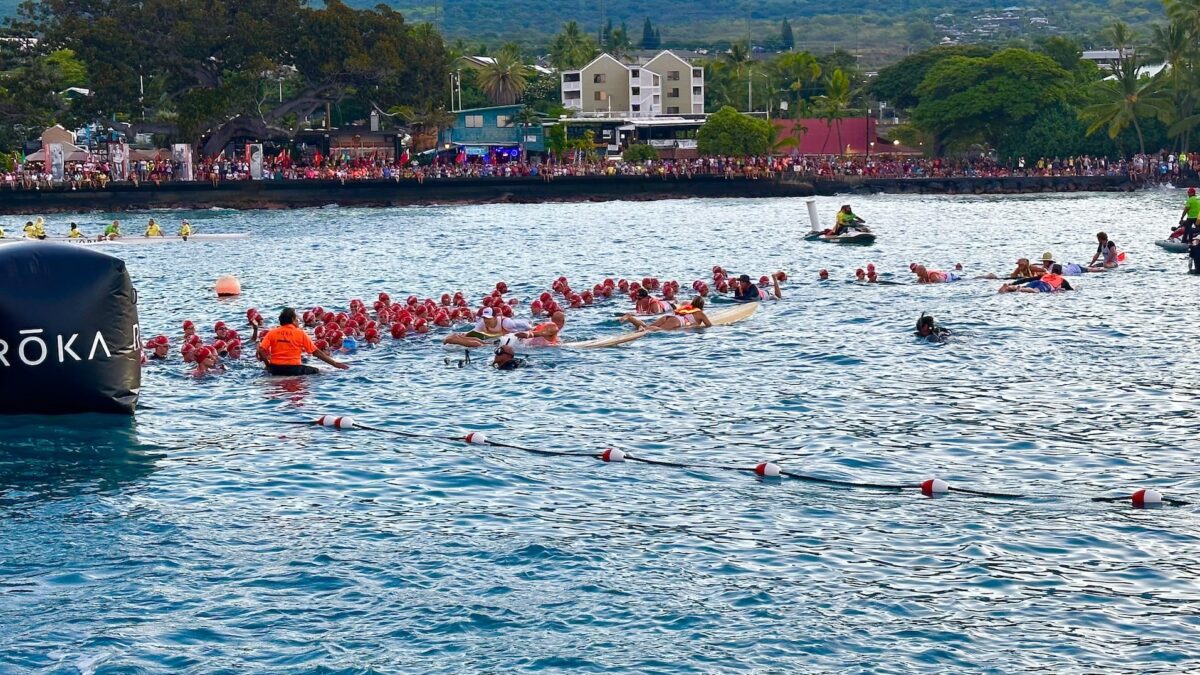
Have you practised swimming in crowds, along with the essential skills of sighting and drafting? And one of the most often overlooked – have you practised Aussie exits, or simply how to exit the water smoothly into T1 after your body has spent time swimming hard in a horizontal position? It can be a surprisingly jarring transition if you’ve never practised it.
I always included mass starts and group open-water swims in my training, and I also regularly practised Aussie exits (even if my race didn’t have one) to get used to the elevated heart rate that typically accompanies exiting the water. Then, come race day, all of this simply felt… normal.

The Bike
The bike is one discipline where it can be very easy to fall into the trap of surrogate metrics. Take FTP, for instance. With a 20-minute power of 268 watts, many calculators estimated I should be able to hold 204 watts over an Ironman (which, at my body weight, would likely have put me in contention for a professional women’s bike course record in the event I was targeting). Did I set a new pro bike course record? Not even close.
Why? Because 20-minute power matters, but it matters surprisingly less than other factors in long-course racing. Factors like practising prolonged riding in the aero position, building a large aerobic base, developing the durability to go the distance (and still run well off the bike), fuelling effectively, and optimizing metabolic efficiency are all essential. Ahead of race day, you should know how it feels to ride the whole distance and what sort of pace is sustainable, and have put in plenty of long rides to build the durability that will shine when it counts.
It’s also worth understanding the course profile and terrain. Preparing for a flat ride predominantly in the TT position is very different than preparing for a route with lots of climbing and descending, and your training will want to replicate and type of course profile you’ll see on race day.

The Run
Last, but certainly not least, is the run. Athletes who train with specificity are likely to arrive at the run in a much stronger position, having been better prepared for the cumulative demands of the swim and bike.
In terms of run preparation, including brick sessions is key (more on that in our related article). It’s also essential to build enough aerobic fitness and durability to run well after you’ve already been racing for several hours. This is very different from simply being fast on the track. You’ll begin the run glycogen depleted, with accumulated fatigue already in your legs.
None of this is reason to worry; it’s simply reason to be specific in training. It’s motivation to meet – and conquer – these challenges before race day, so that when the big day arrives, you’re properly adapted, fully prepared, and ready to get the most out of yourself.
