Live Die Repeat
Ukrainian drones wipe out entire US tank brigade in live war game
Ukrainian drone pilots teach the US military and NATO hard battlefield lessons.
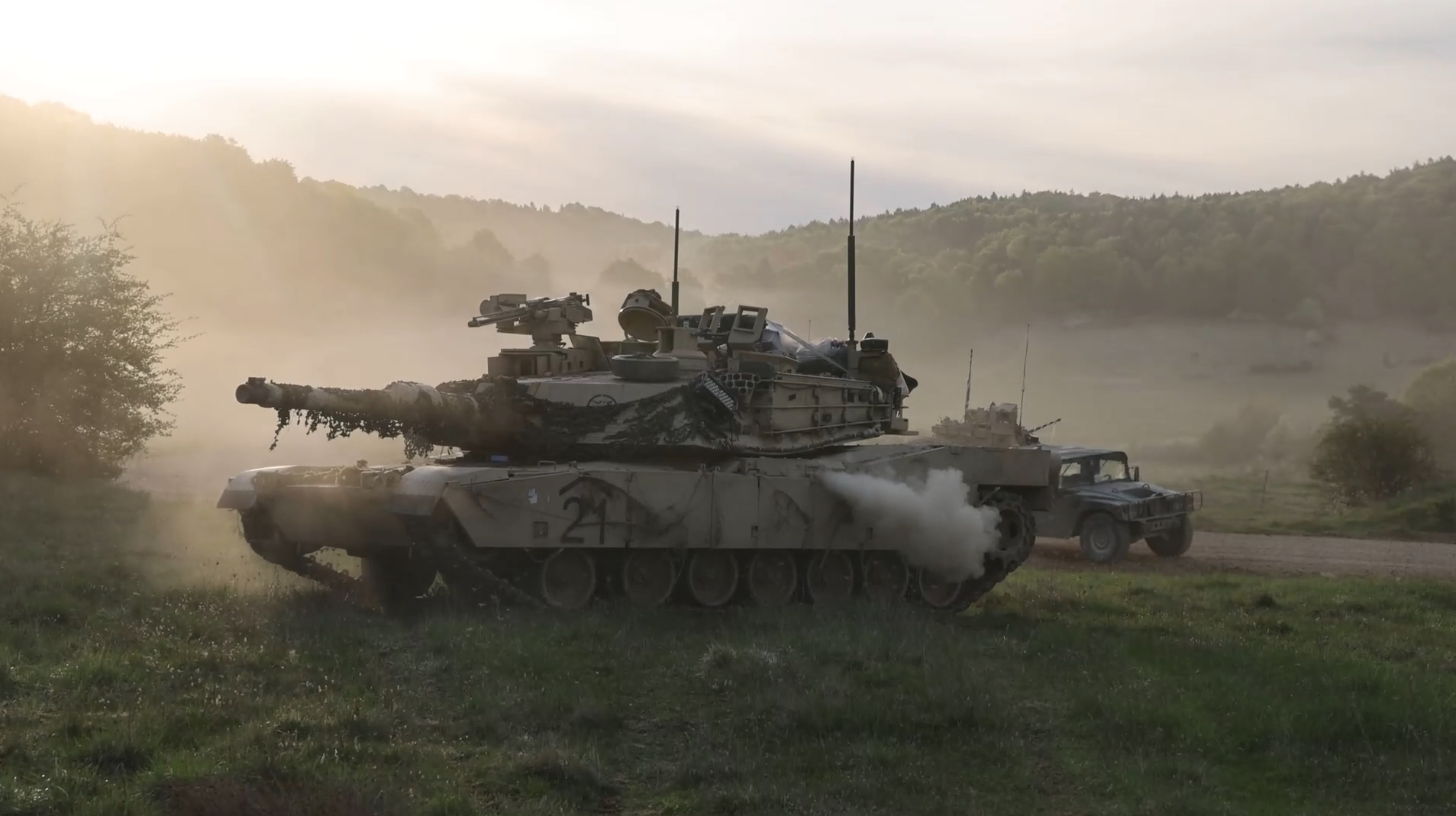
Ukrainian drone teams demolished a brigade of US Army tanks and armored vehicles during a live war game held this year—but the US soldiers were lucky enough to get “respawn” attempts while learning from the experience.
The semiannual military exercise, called Combined Resolve, gave the US military a firsthand taste of how modern drone warfare has evolved on the battlefields of Ukraine. The Ukrainian drone operators participating in the exercise were easily able to spot and destroy US armored vehicles by mimicking the actions of dropping bombs from above or moving close enough to simulate a kamikaze strike, according to US officials and a participant who spoke with The Wall Street Journal.
US armored vehicles were being destroyed so quickly that they were “respawned” and sent back into the simulated fray, a US official told The Wall Street Journal. The US troops who participated in the exercise—held in Germany from April 9 to May 10—were on rotational deployment from Fort Hood, Texas.
“Using the drones with the Army, it keeps everyone on edge,” according to an unidentified US Army soldier in a promotional video for Combined Resolve. “There is never a safe spot or safe moment in the game anymore.”
The participating troops hailed from the 3rd Armored Brigade Combat Team of the 1st Cavalry Division, which typically operates armored vehicles, like M1A2 tanks and Bradley infantry fighting vehicles.
But by repeating the training scenario throughout the two-week exercise, US Army troops got better at figuring out how to disperse and hide from the drones while using countermeasures such as electronic warfare.
The US military is not alone in learning such lessons from battle-hardened Ukrainian drone operators.
Ukrainian drone teams also participated in a Swedish-led military exercise for NATO, called Aurora 26, that was also held in May. A mock mechanized assault by NATO tanks and infantry fighting vehicles allowed Ukrainian drones to take out dozens of the attacking armored vehicles, which eventually forced planners to reset the war game, The Kyiv Independent reported.
Armor on the brink of extinction?
Armored tanks first played a useful role in helping break through entrenched battlefield lines during the final years of World War I more than a century ago. But since Russia launched its full-scale invasion of Ukraine in 2022, frontline combat has seen the return of positional warfare centered on fortified networks of trenches. That is because the increased lethality of modern drone warfare has largely negated large assaults by armored vehicles and troops in recent years.
The current lethality of the so-called drone kill zone has forced both sides to rely primarily on infiltration tactics using small groups or even individual soldiers when trying to take or reclaim territory, sometimes riding motorcycles, all-terrain vehicles, or horses. Russia’s offensives, which are aimed at seizing more Ukrainian territory, have been reduced to bloody attritional operations where soldiers are sent forward on near-suicidal missions in what Russians themselves describe as the “meat grinder.”
Meanwhile, armored tanks and vehicles have mostly become an endangered species on the frontlines. Russia has lost more than 14,000 tanks and armored vehicles of other types during the war, according to the Dutch open source intelligence tracking project Oryx, which only counted visually verified losses. Ukraine has lost over 6,000 armored combat vehicles.
But both Russia and Ukraine are still attempting to use mechanized assaults with vehicles on occasion. In May of this year, Ukraine used armored vehicles in limited counterattacks that penetrated Russian defenses—the result of Ukrainian military experiments with using electronic warfare and targeted strikes on Russian drone pilots to help achieve localized territorial gains. That was a notable feat, given that enabling mechanized vehicles to survive the Russian drone kill zone was “categorically impossible in 2025,” according to the Institute for the Study of War based in Washington, DC.
In July, Russian forces launched their own mechanized assault with tanks and infantry fighting vehicles in the hotly contested Donetsk Oblast in eastern Ukraine. This attack was apparently repelled, with the Ukrainian military reportedly destroying 80 percent of the Russian vehicles before they even reached the frontlines.
The Pentagon has requested more than $54 billion for acquiring drone and counterdrone systems in its fiscal year 2027 budget proposal, an amount that exceeds Ukraine’s entire military budget. But as the Combined Resolve exercise showed, the US military must also adapt its unit training and operational practices to the threat of short-range drones if it wants troops to survive on future battlefields.