AI glasses PSA
As demand for Meta AI glasses explodes, it’s harder to avoid creepy recordings
Ars looks at Zuckoff, the latest free app detecting Meta AI glasses amid privacy backlash.
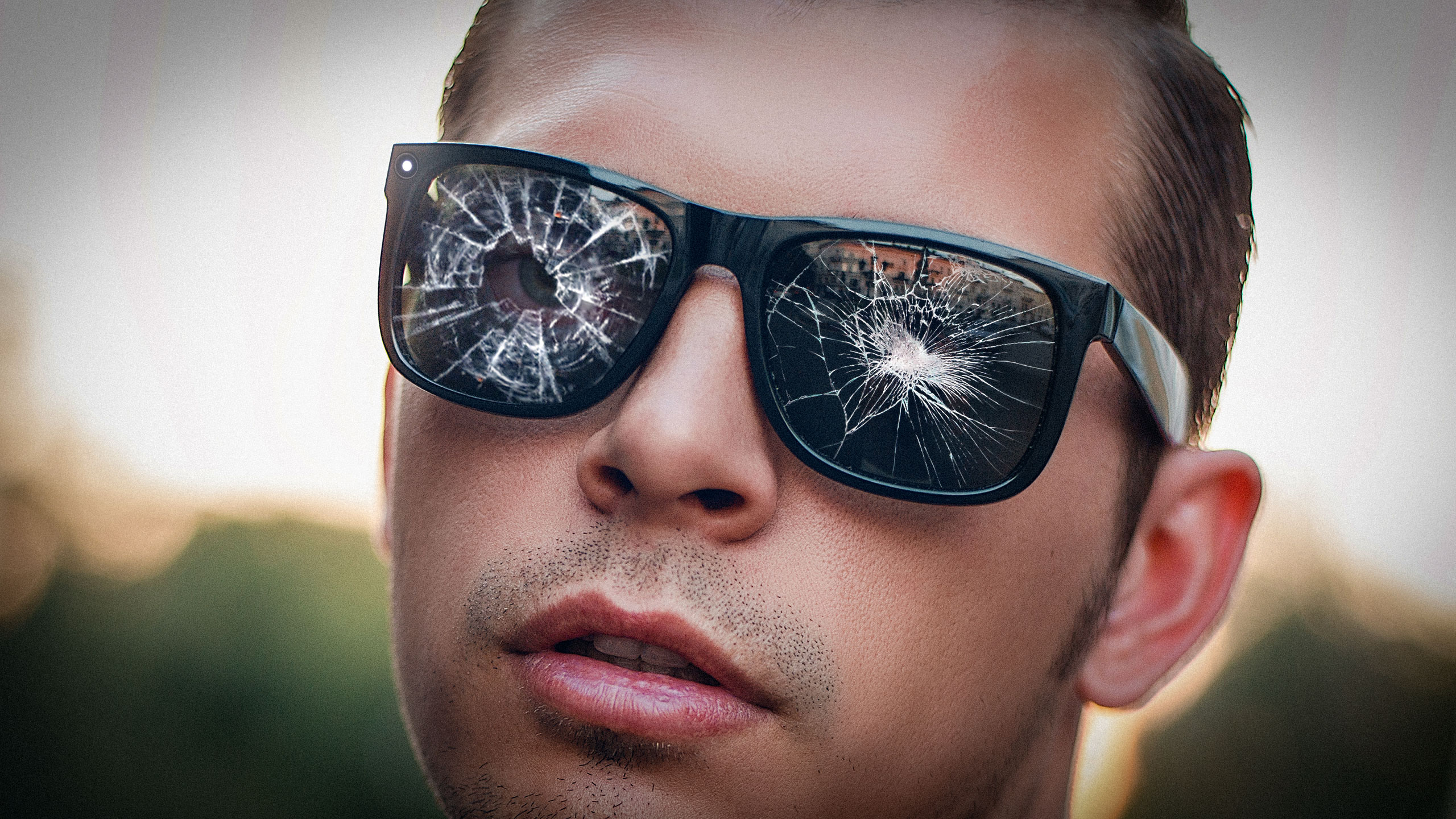
Credit:
Aurich Lawson | Getty Images
Credit:
Aurich Lawson | Getty Images
Can you tell when someone nearby is wearing Meta AI glasses?
As millions of people buy into the smart glasses fad each year, the odds are increasing that you could be secretly recorded while simply going about your day.
Meta is not the only smart glasses maker, but its AI glasses are by far the most popular. And as the devices become more common, some public places, including schools, courts, restaurants, and entertainment venues, have begun to ban them. Even tech lovers have rejected Meta glasses in certain settings. The hackers behind DEF CON 2026 reportedly banned smart glasses with no exceptions, reminding attendees with prescription pairs to “be sure to pack non-violating eyewear if you need them.”
But a ban is only as effective as the people enforcing it. Spotting a pair of smart glasses can require tech-savvy security staff, and enforcement may depend on users voluntarily disclosing their devices—or on watchful observers speaking up.
Those bans are an important way to push back against the potential for abuse. But privacy advocates know that increasing the social friction around nonconsensual recording can’t stop the practice by itself.
Until comprehensive consumer privacy laws are passed, the Electronic Frontier Foundation (EFF) has warned that Meta seems prepared to make the tech even more invasive in its bid to sell more glasses and stay ahead of rivals in the burgeoning industry.
And as AI advances, EFF staff technologist Cooper Quintin told Ars, potential new features such as facial recognition could raise the stakes further, potentially allowing the devices to be used to create convincing deepfakes or nonconsensual intimate imagery of people who may not be aware that cameras are rolling.
“I think that there are a lot of other concerns there beyond just being recorded without your knowledge,” Quintin told Ars.
EFF has warned that smart glasses makers will likely be tempted to add facial-recognition features unless lawmakers intervene and give people a private right to sue companies whose products violate their biometric privacy rights. In the meantime, the group has released a guide for smart-glasses users that lays out ways to resist facial recognition, develop responsible recording habits, and better understand the privacy risks of continuous recording. It also urges users to consider blurring strangers’ faces before posting videos online.
For people unknowingly targeted in secret recordings, the only safety feature Meta provides is nearly “useless,” Quintin told Ars.
A tiny recording light that can be easily covered with a sticker is unlikely to deter bad actors intent on abusing the glasses, whether stalkers or creepy partners secretly recording women in public bathrooms or private bedrooms. The tech has also controversially been used in immigration raids, 404 Media reported, and to harass sex workers and retail workers. And on social media, videos show a range of other unwanted recordings, from relatively inoffensive pranks to more harmful videos featuring bullying or harassment.
The volume of these videos online suggests the LED feature “is better than nothing, but not by much,” Quintin said.
Hobbyists build apps to detect glasses
Experts have noted that Meta may already have plans to diminish that limited safety feature. The company is supposedly “testing a prototype of ‘super sensing’ AI glasses that would use cameras and audio recordings to capture a wearer’s every moment,” the Financial Times reported last month. According to sources familiar with Meta’s thinking, executives “are planning not to activate the LED when the super-sensing features are being used,” even though “that would make it harder for bystanders to know when they were being recorded.”
Meta execs’ plans may change if the public’s privacy concerns remain a sticking point, though, sources have suggested. And backlash will likely be sustained as more people wear the glasses, since digital rights experts have accused Meta of failing to consider civil rights or privacy ramifications when designing new features. Perhaps most troublingly, Meta recently backpedaled and deleted an unreleased facial recognition system from its smart-glasses app that Wired and EFF revealed had been quietly installed on 50 million phones in June.
It’s unclear if or when Meta might try to bring the facial recognition system back. Meta did not respond to Ars’ request to comment on this story.
As Meta glasses have become more commonplace, hobbyist programmers have been building apps to detect when smart glasses are nearby so people can steer clear of them.
These civil defense apps, Quintin said, aren’t a perfect solution to the social problem of smart-glasses recording without consent. But when used in combination with bans, the apps can offer wary members of the public a way to check if a ban is being enforced or whether a nearby device may begin recording at a sensitive time. Society needs both solutions, Quintin said, especially because the most popular and recognizable smart glasses available today will likely one day come in a wider assortment of trendy models, making them harder to spot in the wild.
“You need to have the social construct around these being unwelcome, and you also need to be able to find when people are using these,” Quintin said. “Right now, they’re pretty easy to just detect with your eyes. They’re pretty obvious, but that might not always be the case. So technologies like this are also important to supplement that.”
“I can do something about it”
Since February, engineers have been releasing and updating apps that help people detect glasses like Ray-Ban Meta, Oakley Meta, or Snap Spectacles.
“It is completely unsurprising that people are building apps to fight back against Meta glasses and other surreptitious public recording,” Quintin told Ars. Many people “have a deep revulsion to being recorded without their consent, which is understandable,” and that remains “the biggest problem with these glasses,” Quintin said.
Smart-glasses detector apps aren’t perfect. At best, they can alert users when nearby glasses are turned on by detecting the Bluetooth signal used to pair the glasses with a phone. Most importantly, the apps cannot determine whether the glasses are actively recording, and users are cautioned to never assume that someone wearing smart glasses is recording them. App makers also advise against confrontation and accept no liability for false positives or misunderstandings. Additionally, detection may be unreliable if a wall or other obstacle, like a human body, interferes with a signal.
Users don’t seem to consider these flaws deal-breakers. They simply want some way to scan a room, and some are eager to provide feedback to improve the apps, even expressing an emotional investment in seeing the technology develop.
One of the first apps, Nearby Glasses, is available for $2.99 on both iOS and Android. It has been downloaded more than 100,000 times from the Play Store and remains the most popular such app, despite the developer, Yves Jeanrenaud, warning on GitHub that he’s “no pro developer” and that “detecting Bluetooth LE devices might sometimes just not work as expected,” and “false positives are likely.”
Released in response to online content showing that smart glasses are “an intolerable intrusion, consent neglecting, horrible piece of tech,” Jeanrenaud said, he kept his goals humble. On GitHub, he wrote that “I hope this app is useful for someone,” but “I do not want to promote techsolutionism, nor do I want people to feel falsely secure. It’s still an imperfect approach,” and it probably “always will be.”
By July, another detector, Antizuck Smart Glasses Scanner, was nearing the top of iPhone charts, also charging $3 for the service. One high school teacher reviewing the app called it the “best $3 I’ve spent,” writing that she was concerned that her students could use AI glasses to take unwanted recordings in class.
Ars tested the most recently released app, Zuckoff, which launched for free on iPhone in early August and is currently seeking 12 testers to launch on Android devices later this year.
Already, thousands of users have downloaded the iPhone app, with some eagerly submitting feedback that has helped improve key functionality, including the ability to detect AI glasses and receive alerts when the app is closed. Perpetual scanning is an optional feature that costs about $10 a year. The subscription helps cover the costs of “continuous support” for the app, Zuckoff’s creator, Pawel Szydlowski, told Ars.
Like Jeanrenaud’s app, Zuckoff collects no data and was created partly in response to toxic Meta glasses content flooding social media. Szydlowski told Ars that he built the app in one week after finishing another project that scans for nearby Bluetooth devices and deciding, “Let’s see how far we can go with detecting those glasses.”
Without researching whether other apps had already sought to solve the problem, Szydlowski decided to put his 10 years of iPhone developer experience to work. “I was like, ‘I can do something about it, so let’s go,’” Szydlowski told Ars.
Building a Meta glasses detector
Szydlowski’s biggest challenge was collecting the unique identifiers that manufacturers use to label different products for regulatory purposes. Zuckoff uses these identifiers to help users detect specific smart-glasses models while ignoring Bluetooth signals from less creepy devices. To compile as comprehensive a list as possible, Szydlowski crawled Instagram and Reddit for photos of people wearing different types of smart glasses.
“I see you have those glasses,” Szydlowski would say in messages to early Meta glasses adopters, who agreed to help despite presumably approving of the technology. “Can you help me with this little name? I want to know the unique identifier that’s broadcasting.”
To catch glasses with identifiers that Zuckoff hasn’t yet logged, Szydlowski created a workaround that first flags devices by their advertised names. It’s less precise, he said, but it gives users some indication that a pair of smart glasses may be nearby, even without a known identifier. He’s currently working on another solution that should widen discovery even further, he told Ars.
Szydlowski’s app first alerted him to nearby smart glasses when he ran into two colleagues wearing them at a recent Apple event in Poland. That helped him confirm the tech was working as he hoped.
When you load Zuckoff, the app “estimates distance from signal strength and puts a confidence level on every hit rather than a hard yes or no,” Szydlowski explained. Esitmates tell users if glasses are very close (within arm’s length), close (in the same room), near (nearby) and far. This feature also makes it possible to see when you may be approaching an area with a larger concentration of smart glasses, like in a tourist trap such as the Las Vegas strip.
Ars replicated the test, thanks to this writer’s brother-in-law, who agreed to use the app to detect his own Ray-Bans. He likes to use his smart glasses to record nature sightings when he goes boating or to take action shots of his bulldog playing fetch along the lake, and he had the glasses on him when I called to see if he could run the test.
After putting the glasses on, my brother-in-law loaded the app, which detected the glasses in minutes and warned that “one possible pair” was “within arm’s length.” (In this case, the message was very literal, since he was wearing the glasses while looking at the phone in his hand.)
The app then references the identifier to help the user detect exactly which model is nearby, and my brother-in-law confirmed that Zuckoff correctly labeled his smart glasses.
For Szydlowski, the toughest challenge was figuring out how Apple might allow the app to run in the background, since the company is “very strict when it comes to apps working in the background all the time.” He worried some users wouldn’t find the app as beneficial without that functionality. Eventually, he settled on a solution that scans continuously, but rather than flagging all known devices the moment they’re turned on, Apple allows only a fixed list of known Bluetooth service identifiers to be detected in that mode. Extra-cautious users should therefore also open the app to see the full list of potential devices in the area.
“This background feature, it’s so crucial,” Szydlowski said.
Android may allow him to offer faster detection through background functionality, Szydlowski suggested, because unlike Apple devices, Android allows background activities to be “possible to exempt from battery optimization,” Szydlowski said. That means Zuckoff “can continue using the battery in the background” without Android protocols that “wipe out the apps that are consuming your battery,” he said.
Although people have mostly grown accustomed to the idea of being recorded without consent in public, smart glasses have the potential to expand mass surveillance in ways that deeply concern privacy advocates.
Meta could introduce technical solutions, like automatically blurring faces, as Google does in Street View images, but Szydlowski doubts Meta would voluntarily make such a privacy-conscious change without regulatory or public pressure. The creator of Zuckoff, a name that takes a cheeky dig at Meta’s founder, also said that “I’m pretty sure they’re not going to be happy with this app existing.”
He likens malicious smart-glasses recording to the earliest harms of Apple’s AirTags. When that technology was released in 2021, the easy-to-hide tracking devices were soon implicated in stalking cases. But there still is no federal law targeting AirTag abuses, and it took the first states to act on the emerging privacy threat roughly three to five years to pass legislation prohibiting the invasive tracking.
Szydlowski worries lawmakers will be similarly slow to react to threats from Meta glasses. He told Ars he thinks the best solution might be rules mandating companies like Meta to advertise a specific Bluetooth service identifier while recording. That would improve civil defense apps like his.
In the meantime, he hopes people will find the detector app that they like best and use it to spread awareness of the risk that smart glasses may be present in a room where they’re unexpected or explicitly forbidden.
“The goal of this app was just making people aware because a lot of people won’t be aware until it becomes a major problem, which was the case with AirTags, basically,” Szydlowski said.
Meta expects demand to explode
Last December, analysts forecasted that 2026 would be a breakthrough year for smart glasses. And it’s clear by now that Meta wants this to be the year that AI glasses are suddenly everywhere you look.
The tech giant invested heavily in promoting them, collaborating with celebrity influencer Kylie Jenner on a pair of Ray-Bans featuring an AI assistant that speaks in her voice. The campaign featured billboard ads and a video spot showing Kylie simply enjoying wearing the glasses, without necessarily highlighting their practical features. The partnership was rumored to have paid Jenner millions of dollars and was intended to position the technology as a fashionable, practical accessory—and perhaps buff out the public perception of them as “pervert glasses.” But critics have argued that the ads seem narrowly designed to encourage more people to use their glasses for continuous recording.
Though the Jenner campaign was supposedly viewed as a success internally at Meta, it also prompted global backlash. On social media, the protest collective “Everyone Hates Elon” razed Jenner, The Huffington Post reported, saying that “recording everything we see and do constantly? It’s giving fascism, not fashion,” “hun.” And pop singer Lorde stopped a festival performance to tell her fans, “Fuck the glasses. Don’t get the glasses. Not sexy.”
Salon’s Andi Zeisler slammed the Kylie Edition glasses for trying to lull women into a false sense of security, even as Meta knows the technology has been used to record women without their knowledge, both in public and private. In London, activists took that criticism a step further, replacing bus stop ads of Jenner smiling in the glasses with a spoof in which her face transforms into a skeletal grin above the warning that at Meta, “We’re always watching.”
But despite protests, the glasses aren’t going away any time soon, as Meta plans to move millions more into production. In 2025, the company sold more than 7 million AI glasses—up from 2 million sold in the prior two years combined—then quickly made plans to double its Ray-Ban outputs, Bloomberg reported. By the end of 2026, Meta expects to start producing at least 20 million glasses annually to meet demand, or perhaps as many as 30 million if the market continues trending strongly.
Beyond the backlash, regulating the glasses is a touchy subject, Quintin told Ars. No civil rights group would advocate banning recording in public, a practice that can be crucial for holding police and government officials accountable. What may prove just as useful as thoughtful privacy regulations, Quintin suggested, is a broader effort to ban the technology at the community level.
Szydlowski told Ars that he’s personally not bothered by Meta’s AI glasses, only by the gross content made with them. But other critics, like Quintin, think the tech is “disgusting” and “unacceptable,” and he has little hope that technical solutions can solve the problem and abundant concern that the privacy risks will compound as enthusiasm for the technology grows.
Right now, there’s less social friction around using glasses to record than there was when people first started using phones to record public interactions, Quintin suggested. As a father of young children, he recently saw another dad using glasses to film kids at a birthday party, a moment that illustrates how smart glasses have shifted the power dynamic.
Previously, “if you wanted to record somebody, you had to take out your phone, shove it in their face,” Quintin said. “And they know they’re being recorded. That is a useful social friction. And the glasses remove that and put the friction on the other end. The friction is now on me, calling you a pervert for wearing glasses and telling you to stop recording my kids.”
Szydlowski somewhat agreed. He told Ars there’s value in being able to record hands-free from eye level, but he created Zuckoff because he draws the line at posting harmful smart-glasses recordings online.
“People are using it in a bad way,” Szydlowski said. “That was the first part that annoyed me. I was like, ‘I don’t like it. I just don’t enjoy the content, and I don’t think it’s valid’ because myself, I wouldn’t have a way to react to being recorded because I’m used to people holding the phone and actually pointing at me. Then I can say, ‘Hold on a second. This is not scrolling. Someone is actually recording.’”