Predatory pricing
Personalized pricing is “abhorrent,” but FTC limits may increase costs, critics say
Some Americans fear the FTC may be thinking about personalized pricing all wrong.
Some Americans worry that the Federal Trade Commission’s rush to limit personalized pricing in the name of consumer protection could end up killing discounts they depend on or, counterintuitively, raising prices.
The FTC has no power to ban personalized pricing, in which a business uses a customer’s personal data to determine the highest price that person might be willing to pay for a product or service. But the agency believes it could set limits on the practice, including potential penalties for businesses that fail to disclose when customers may be paying more because data suggests they won’t balk at the price.
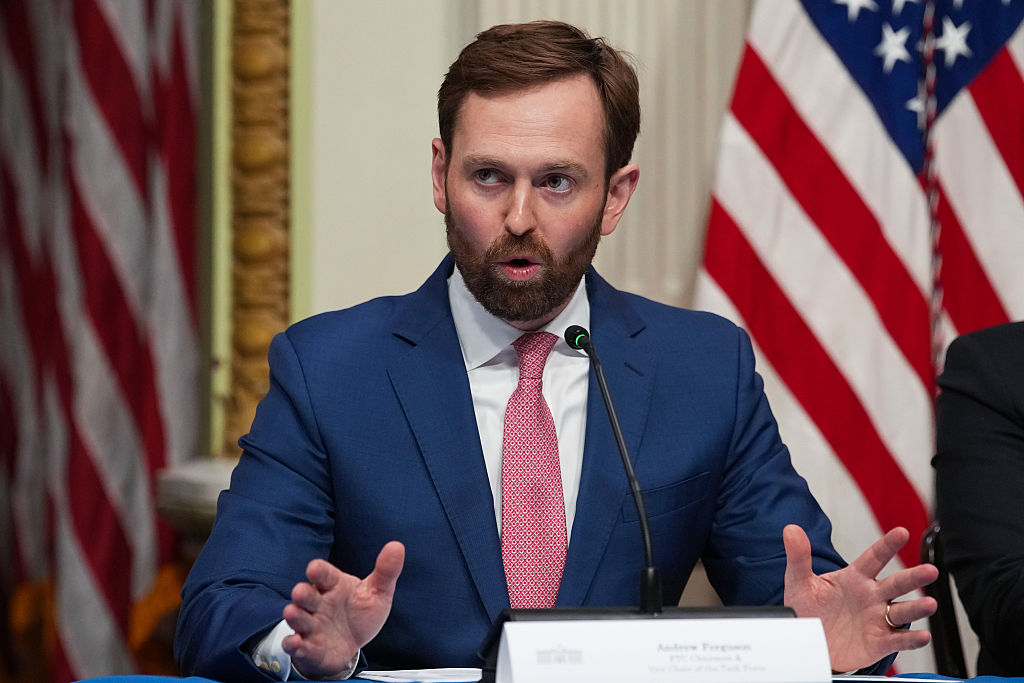
In a request for public comment on a proposed policy statement, the FTC acknowledged that personalized pricing is common in some industries. But FTC Chair Andrew Ferguson said new industries are increasingly tracking customers to set individualized prices, blindsiding consumers who expect a listed price in markets like retail “to be the same price that everyone else sees,” Ferguson said.
“The FTC does not have the legal authority to ban personalized pricing in all circumstances, but businesses that fail to tell consumers how their personal data is being used to set a price may be in violation of the FTC Act and other laws we enforce,” Ferguson said.
Members of the public were given 30 days to submit comments on the proposed change in enforcement.
FTC’s plan to combat surveillance pricing
The FTC said that there’s little economic research on how personalized pricing is impacting consumers, and it’s unclear how many businesses may be using it. But “the rise of data-driven ‘personalized pricing’ has the potential to transform our history of relatively limited variation in pricing from one consumer to the next,” the FTC’s policy statement said, potentially propping up more monopolists.
What research does exist, the FTC said, suggests that “while personalized pricing is likely to increase business profits, benefits to some consumers are accompanied by losses to other consumers and that the more sophisticated personalized pricing practices become, the less likely consumers are to benefit.”
If the public agrees with the FTC’s plan, personalized pricing could be found to violate the FTC Act when a seller misrepresents a price as static or widely available when it is actually personalized. That’s misleading, the FTC said, since customers who know how prices are set could take defensive measures, such as using a private browsing session or a virtual private network to mask their browsing history. Or they could choose to avoid sites that use personalized pricing altogether.
Additionally, the FTC wants businesses that use personalized pricing to disclose what data is used to set an individual’s price and to get consent to collect data for personalized pricing purposes. That would ensure businesses aren’t hiding the factors that influence pricing, the FTC said.
The agency explained that “consumers who reasonably believe that a personalized price is a discount based on their purchase history with that retailer when it is in fact a higher price based on information about their disposable income or their shopping habits with other firms, for example, may be deceived into not taking action to avoid the personalized price.” These disclosures would further give customers a chance to dispute incorrect data influencing their prices, the FTC said, or to “avoid the collection of that data in the first place.”
“Many Americans do not understand just how much data they generate every second of their lives,” the policy statement said. “Nor do they necessarily understand how those data are collected and stored, to whom they may be sold, or how they may be used—including, potentially, to price products and services uniquely for them on the basis of their intimate details.”
Early commenters loathe predatory pricing
The FTC listed several examples of businesses that could violate the FTC Act if they used personalized pricing in ways the agency deems misleading.
If a food delivery service raises prices because its data shows a customer may be unable to leave home, that would be deceptive. So would a grocery chain charging a family more for milk because data reveals they have more children. It would also be misleading if a hotel quoted a higher price after learning that a guest was traveling for a funeral and had few nearby options.
Even certain practices in industries where personalized pricing is more expected, like the rideshare industry, could be found in violation, the FTC said. For example, it would be deceptive if Uber charged a customer more after determining that no rival rideshare apps were installed on that person’s phone.
So far, dozens of Americans have submitted comments, and the majority want to see the FTC heavily regulate personalized pricing, which they view as discriminatory.
The practice is “atrocious” and “abhorrent” and an “egregious affront to consumer privacy and protections” that “should not be tolerated,” these commenters agreed. Low-income people seem most at risk of being disadvantaged, commenters suggested, as well as “naïve young people,” “poor people with limited access to information,” and “trusting seniors.” At the bare minimum, the FTC should ensure that personalized pricing cannot use a person’s race, gender, religion, or sexual preferences as a factor, commenters said. And to the furthest extent possible, the FTC should end the practice, the majority agreed.
“What is the point of trying to build a stable financial life if the cost of goods and services is no longer tied to a broader market but to a single person?” one anonymous commenter asked.
“This practice undermines fair markets by replacing transparent pricing with hidden, data-driven discrimination between buyers,” another supportive commenter, Sarah Burdell, said. “Consumers cannot verify whether they are receiving a fair price, eroding trust in commerce.”
“Those with less time, technical literacy, or resources to detect and circumvent these practices bear a disproportionate burden,” Burdell continued. “Moreover, because pricing algorithms often rely on data correlated with race, gender, age, or geography, personalized pricing risks reproducing discriminatory outcomes even absent explicit intent, potentially violating consumer protection and anti-discrimination principles.”
FTC may inadvertently kill discounts
Some commenters, however, were concerned that the FTC’s plan to limit personalized pricing was well-meaning but misguided.
A data privacy attorney, Blake Hunter Yagman, who said he has represented plaintiffs in both surveillance pricing and surveillance wage cases, warned the FTC that allowing the surreptitious data collection to go unchecked is quickly increasing mass surveillance. The practice “turns routine consumer data collection into an extractive pricing weapon,” another commenter agreed. Urging more action to combat the practice, the lawyer suggested that the FTC policy statement’s scope was too narrow and should penalize surveillance wage schemes, too.
Another critical commenter, Deymond Lashley, said that the scope was too broad, perhaps threatening discounts that customers depend on.
It’s true that some customers would be offered lower prices through personalized pricing, and the FTC is perhaps rushing rulemaking, Lashley said, and making assumptions about what customers reasonably expect at certain checkout points.
Lashley suggested that the FTC could “shape the future of commerce” by restricting price-setting in ways that limit competition by applying restrictions on personalized price discrimination that aren’t placed on other forms of price discrimination, like loyalty rewards programs or coupons. Some businesses that could benefit from personalized pricing schemes may be less likely to succeed in the market if the FTC intervenes too much, Lashley argued.
Another critic, Jessie Shettleroe, agreed that discounts could be lost. A concerned citizen, Shettleroe agreed that all of the conduct described in the FTC’s examples seemed plainly predatory but said that the FTC would be wise to slow down and sharpen the policy to ensure the most financially vulnerable consumers aren’t unexpectedly hit with higher costs.
“I would support the Commission going after all of it, hard,” Shettleroe said. “My concern is that this Proposed Statement will not accomplish that, and may make things worse for consumers like me.”
Shettleroe criticized the FTC’s required disclosures as legitimizing the practice, noting that the policy statement “describes conduct that outrages people, then offers a remedy that permits it with a notice attached. I do not want a disclosure. I want the practice prohibited where it is clearly exploitative.”
Most people won’t read those disclosures, Shettleroe argued, reducing the FTC’s intervention “to a compliance checkbox, not consumer protection.”
Instead, the FTC should be requiring that businesses provide an opt-out, which might “do more for consumers than every disclosure in this document combined,” Shettleroe said. Another commenter suggested that the FTC should require businesses using surveillance pricing to allow buyers to negotiate prices.
Most frustratingly for avid discount hunters, Shettleroe said the FTC’s “undefined scope” of what’s considered violating personalized pricing could threaten discounts that customers rely on to reduce costs.
“Nowhere does the Commission define ‘personalized pricing,’” Shettleroe said. “The operative phrase is prices that ‘vary based on their personal data.’ That covers my grocery loyalty card, emailed coupons, and app-only prices. Those save me money. If businesses cannot tell which practices are covered, the safe response is to stop personalizing altogether, and the first thing to disappear will be the discounts, not the surcharges. Please state explicitly that loyalty and membership pricing, coupons, promotional codes, and randomized price testing are outside the scope.”
The FTC may look to Congress for help refining its policy statement to resolve some of these concerns. Only Congress can ban personalized pricing, and a bill, the Stop AI Price Gouging and Wage Fixing Act, has been introduced in the House of Representatives. If passed, that law would “prohibit certain uses of algorithmic decision systems to inform individualized prices and wages,” as well as for other purposes.
That bill includes carve-outs for discounts that people have long depended on, including exceptions when a “discounted price is offered to members of a broadly defined group, including teachers, veterans, senior citizens, or students, based on publicly disclosed eligibility criteria,” as well as discounted prices “offered through a loyalty, membership, or rewards program that consumers affirmatively enrolled in.”