Bobcat Viciously Attacks World’s Largest Rattlesnake in Dramatic Camera Trap Photos
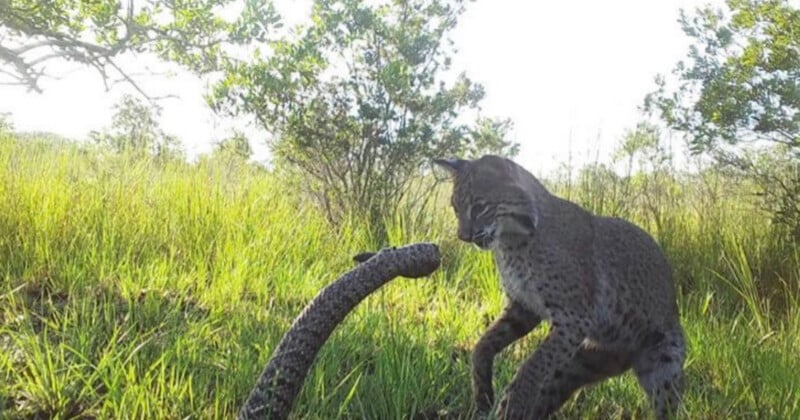
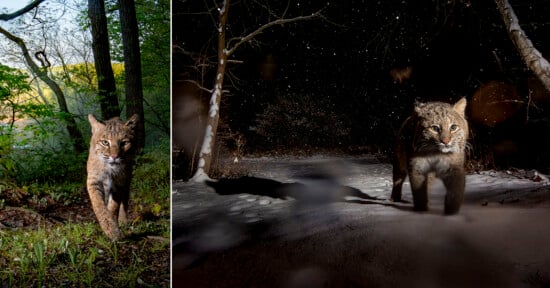
A remote camera has captured dramatic images of a bobcat viciously attacking the world’s largest rattlesnake species in Florida — a type of encounter that is rarely documented in the wild.
The striking photos were revealed as part of a study published in the journal Southeastern Naturalist earlier this month. The researchers say the camera-trap sequence provides rare photographic evidence of a bobcat attacking an adult eastern diamondback rattlesnake in the wild, an interaction rarely seen by scientists.
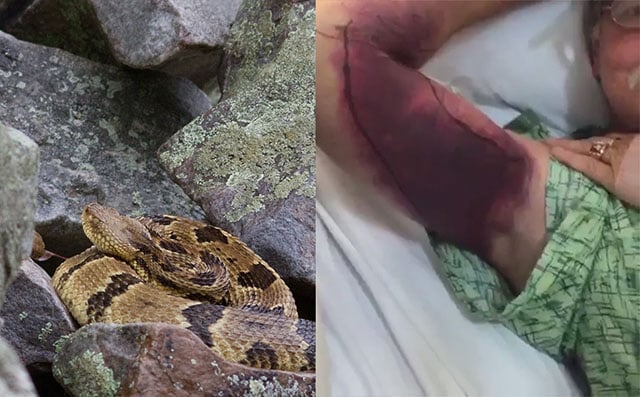
The camera trap photos show the bobcat attacking the rattlesnake’s tail and body before biting its head and leaving the snake with visible wounds. The eastern diamondback rattlesnake is generally considered the largest rattlesnake species in the world, particularly in terms of overall body size and weight, making the bobcat’s attack even more extraordinary.
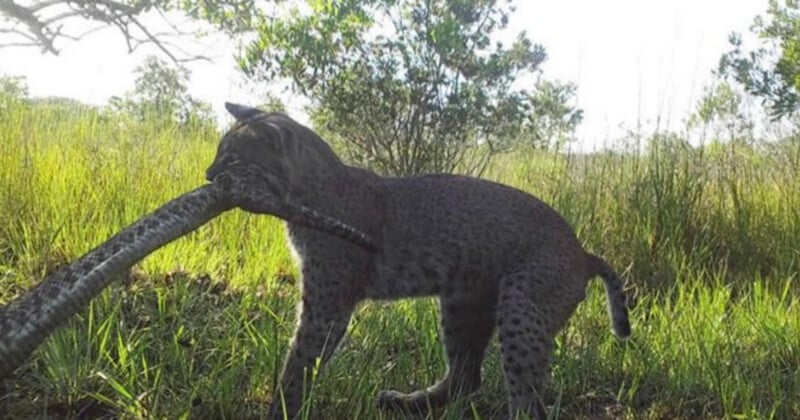
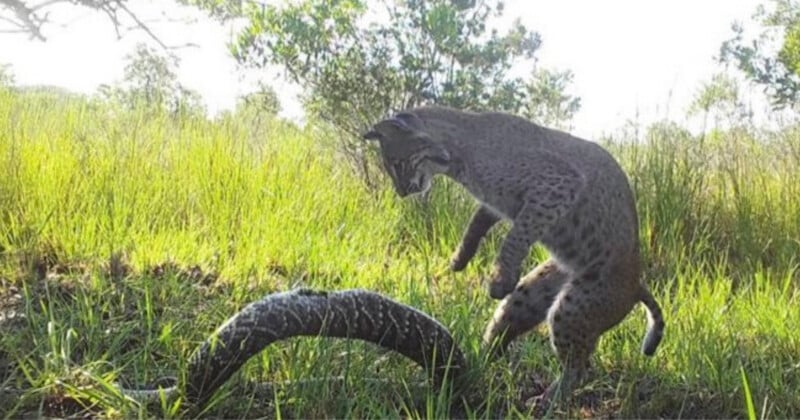
According to the researchers, the remote camera captured 38 photographs over roughly 90 minutes. The image of the bobcat carefully approaching the snake, avoiding its rattling tail, then biting the tail, clawing at its body and eventually biting its head. Later images show the rattlesnake overturned and visibly injured, while still making several attempts to strike at the bobcat without success.
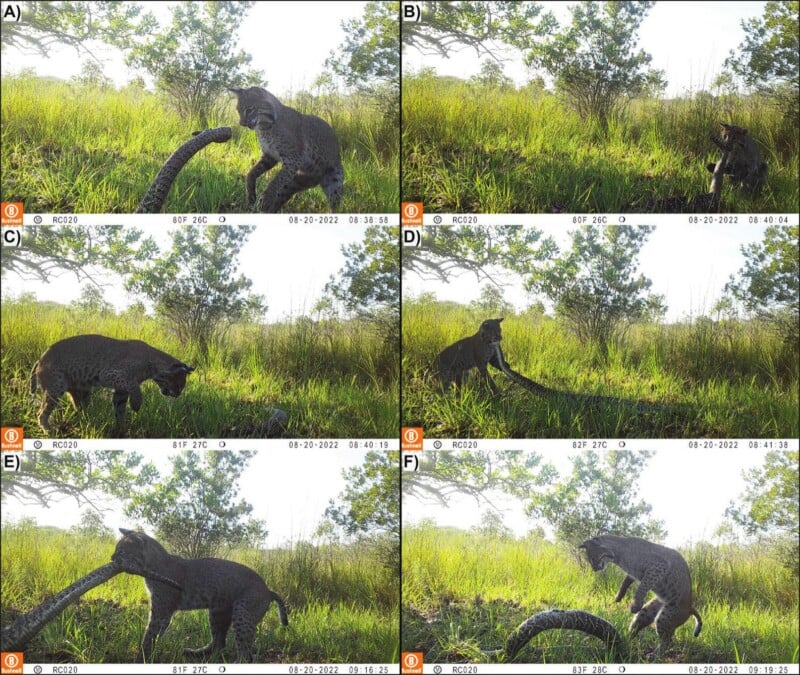
The 38 photographs were taken on a camera trap system as part of a larger wildlife-monitoring grid at the University of Florida Range Cattle Research and Education Center in Hardee County, Florida, on August 20, 2022 — but the pictures have only been published now.
The authors of the study say the photographs provide rare direct evidence that bobcats can seriously injure adult venomous snakes — and support previous, indirect reports of bobcats preying on Burmese pythons. They suggest these interactions may be more common than previously thought but often go unnoticed in the wild, indicating that bobcats may be capable of taking on a wider range of large reptiles, including dangerous or invasive species.
“Adult rattlesnakes are infrequently documented as prey, and direct evidence of mammalian attacks on large venomous snakes is limited,” the authors write in the study.
“Our observation provides primary photographic evidence that Bobcats can attack and severely wound adult vipers,” the researchers add. “It also supports previous indirect evidence of predation on Burmese Pythons by confirming the species’ capacity to kill large reptiles, even venomous ones. Together, these observations form a growing body of evidence that Bobcats can attack or consume relatively large reptiles.”
Affiliate Disclosure PetaPixel articles may include affiliate links; we may earn a commission if you buy through one.