Duck tale
Donald Duck’s uncle was partly based on Wernher von Braun
Introducing the “world-famous authority on outer space…”
Did you know that the first character that Walt Disney created to specifically appear on television was inspired, in part, by early Space Age rocket scientists?
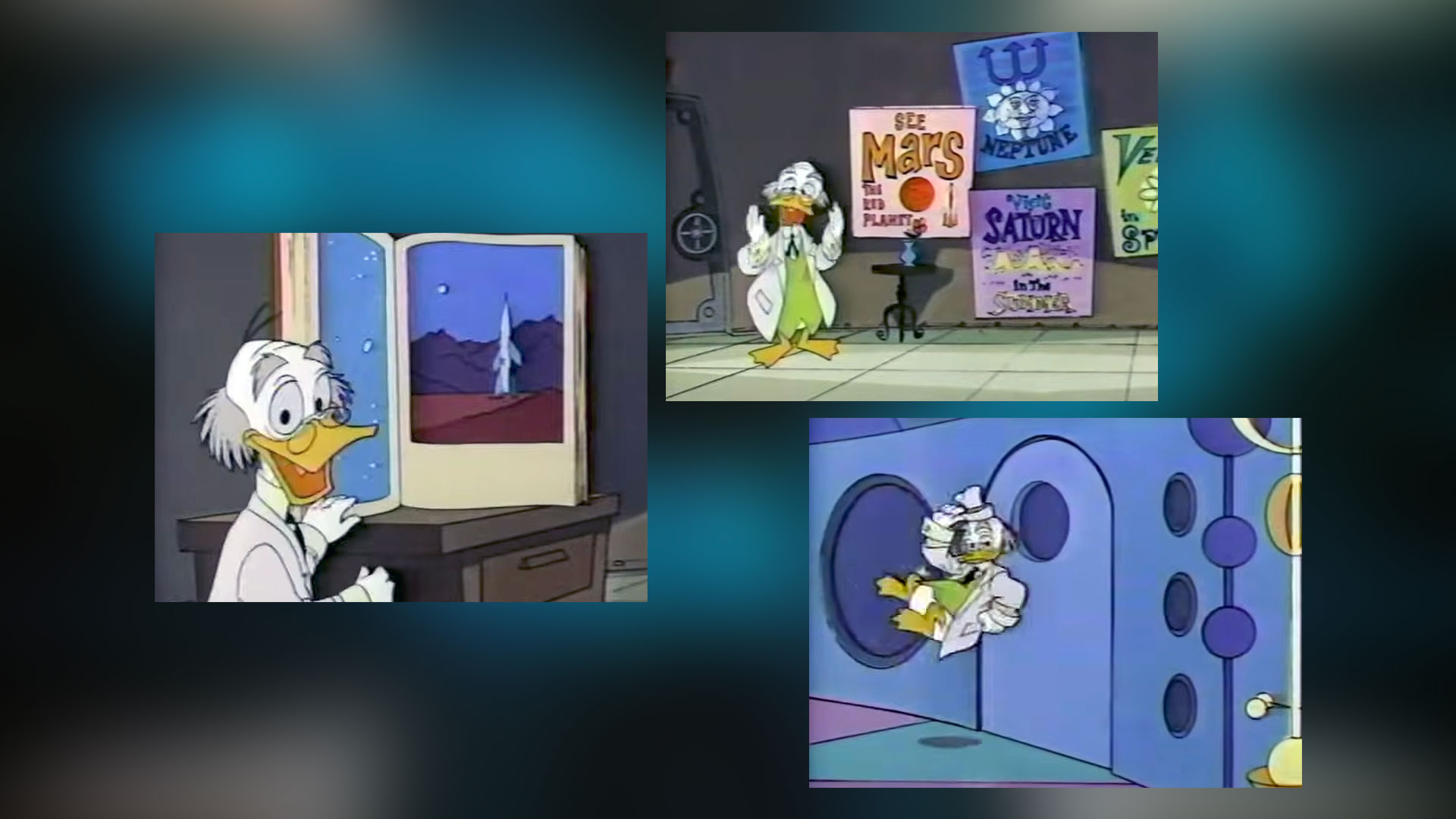
On this day 65 years ago (September 24, 1961), Disney introduced the “renowned scientist, lecturer, psychologist [and] world traveler,” Ludwig Von Drake. A member of the Duck family (he is the “brilliant and eccentric” uncle of Donald Duck), Von Drake was “the outstanding genius of the century” (per Disney himself) who helped to explain scientific principles and technological concepts to the millions of people who tuned in every Sunday to watch Walt Disney’s Wonderful World of Color on NBC.
A few years later, after expertly (but often absent-mindedly) addressing topics such as how color television works, the health benefits of exercising, and the history of aviation, Von Drake dove into the topic for which he said he wrote the book on, in the February 10, 1963, episode “Inside Outer Space.”
“You people out there are going to see stars you have never seen before… when you go traveling in outer space. In fact, there are going to be a lot of things out there you don’t know about, but don’t let it bother you, ’cause all of the answers is [sic] right in here,” Von Drake says at the beginning of the animated segment. “I call my guidebook Inside Outer Space because everything known about outer space is on the inside.
“Which reminds me, the way things are going, you better get your copy right away before it becomes obsolete,” he says. “And prices go up.”
NASA
Credit:
NASA
Tomorrowland
As it turns out, Von Drake was not wrong—well, maybe not about the cost of his book, but about the part about being obsolete. The show reused animation from earlier Disneyland TV episodes, “Man and the Moon,” “Man in Space,” and “Mars and Beyond,” which first aired on December 4, 1957, two months after the launch of the world’s first artificial satellite.
Produced well before the first human lifted off for space, the shows were speculative and even fantastical at times, especially when compared to what we know about spaceflight today. By the time “Inside Outer Space” premiered four years later, two Soviet cosmonauts had orbited Earth, and two American astronauts had completed suborbital missions, milestones that go unmentioned by Von Drake.
The reused clips were not, however, the only way that Von Drake crossed histories with the three earlier space-themed episodes.
Von Drake
The Walt Disney Company
Credit:
The Walt Disney Company
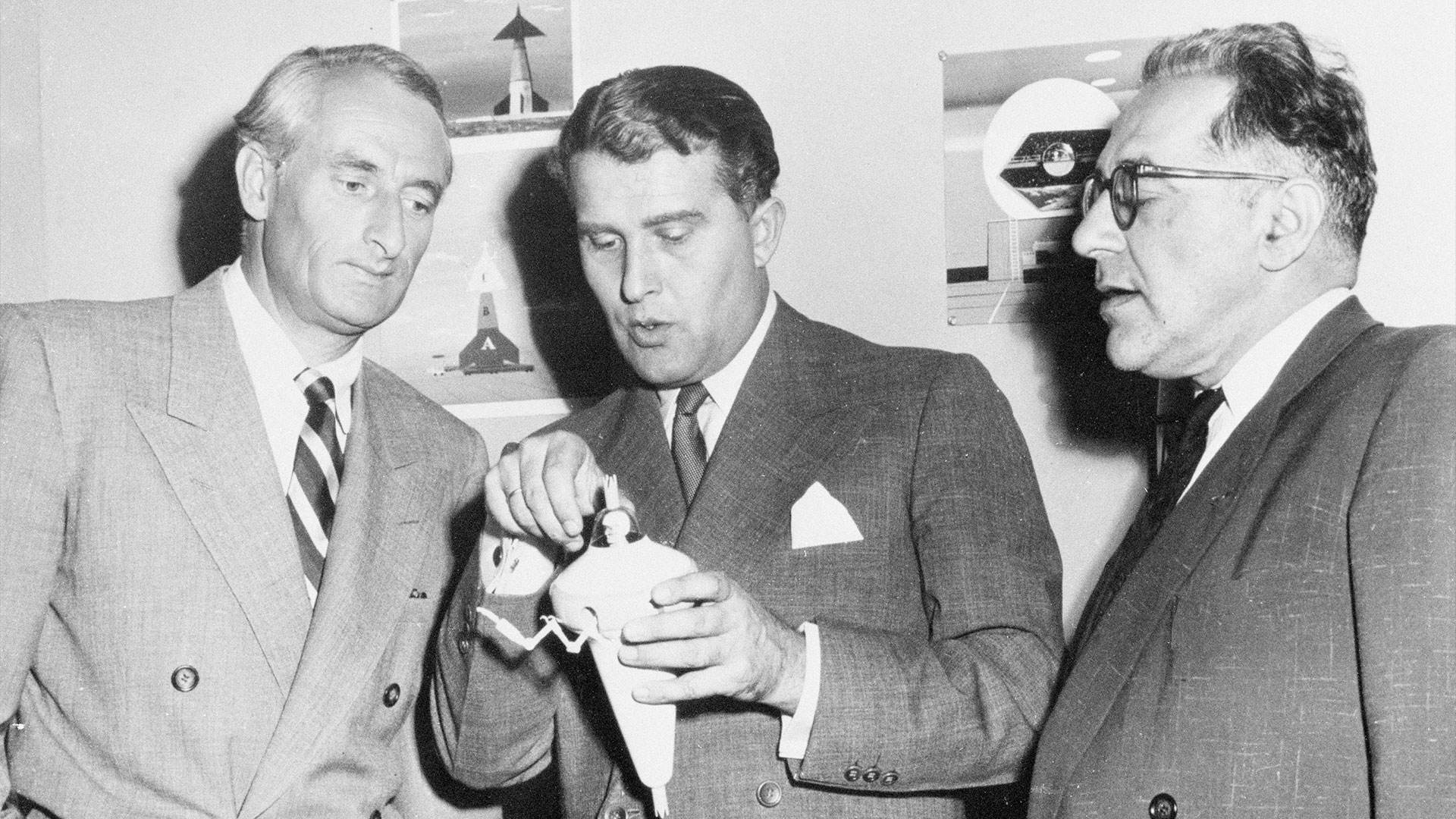
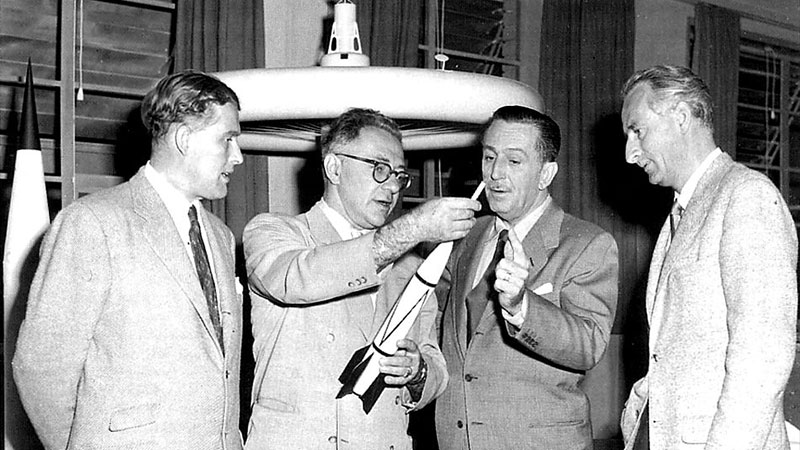
To ensure they were presenting accurate (for then) information, Disney and director/animator Ward Kimball consulted with and brought on air German rocket scientist Wernher von Braun, physicist Heinz Haber, and science writer Willy Ley, whose individual work to popularize the idea of space exploration has since been credited with giving NASA a foothold in the public’s perception of the space race.
Von Braun, Haber, and Ley are also said to have influenced Disney, writer Bill Berg, and animator Milt Kahl when they decided on Von Drake’s name and character. With an Austrian accent provided by Paul Frees (as World War II was still fresh in people’s minds), Von Drake drew from Haber and Ley’s breadth of knowledge and von Braun’s expertise and personality.
The latter also contributed to giving Ludwig his full name, as Disney let on in his remarks introducing the host of “Inside Outer Space.”
“The world-famous authority on outer space, Professor Wernher von … I mean … Ludwig Von Drake,” Disney said.