Mostly the Same, But Still a Little Better
Review: The iPhone 18 Pro is Apple’s coolest smartphone (but only literally)
Better thermals and battery life make this iterative update nicer to use.
Credit:
Samuel Axon
Credit:
Samuel Axon
As Apple’s Tim Cook era draws to a close, we’re seeing more experimentation with the iPhone’s design than we’ve seen in a long time, but you wouldn’t know it from the iPhone 18 Pro. This absurdly fast, full-featured handset might be eclipsed by the hype around the iPhone Duo this year, but it’s still just as good as its immediate predecessor.
Of course, not too much has changed since the iPhone 17 Pro. There’s the new variable aperture and other camera controls for those who want to get granular with their mobile photography, a welcome addition given the iPhone’s reputation for inflexibly opinionated computational photography.
Beyond that, though, all the most important changes are under the hood: a new chip, better battery life, and much-improved thermals that both give the phone better sustained performance and make it cooler to the touch in many situations.
I think we’re seeing something of a transition for the “Pro” iPhones. They may still be the flagships in a sense, but Apple is at least for now saving its flashier design ideas for new products like last year’s iPhone Air or this year’s iPhone Duo.
The Pro phones aren’t the sexy, cool ones right now; they’re the everything-and-the-kitchen-sink, cover-for-every-kind-of-obsessive-user workhorses. I think that’s a great space for them to occupy, and this year’s iteration is no exception.
Design
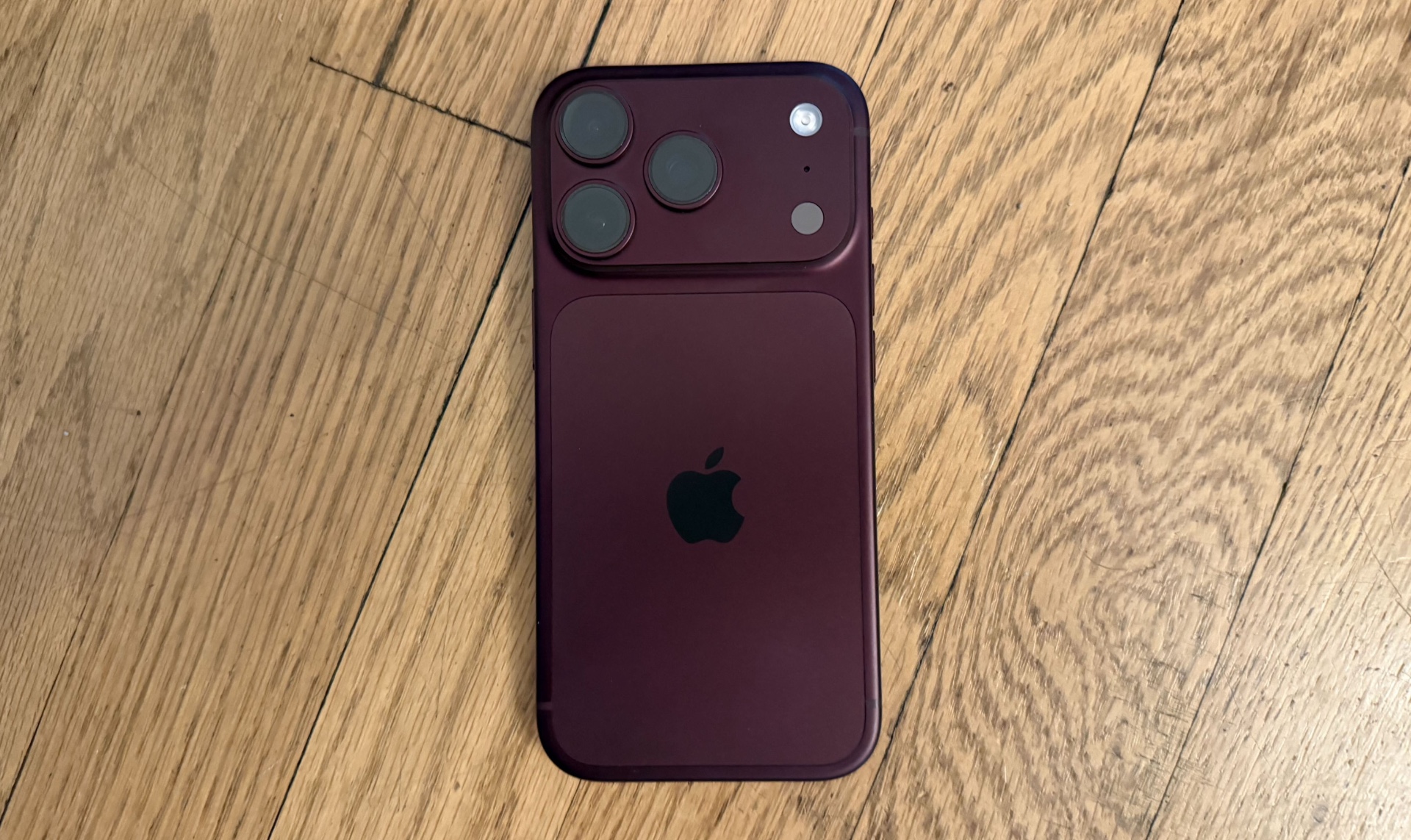
The iPhone 18 Pro mostly looks and feels like last year’s flagship. It’s a function-over-form design (at least compared to something like the iPhone Air) with good materials.
I’m not normally one to care too much about color in these phones. For my personal phone, I’ve always just grabbed whatever was closest to black. (Apple says this year’s black is the blackest yet, of course.) But I have to admit the new burgundy color of my review unit is appealing, even though it’s quite the fingerprint magnet, in a long tradition for iPhones.
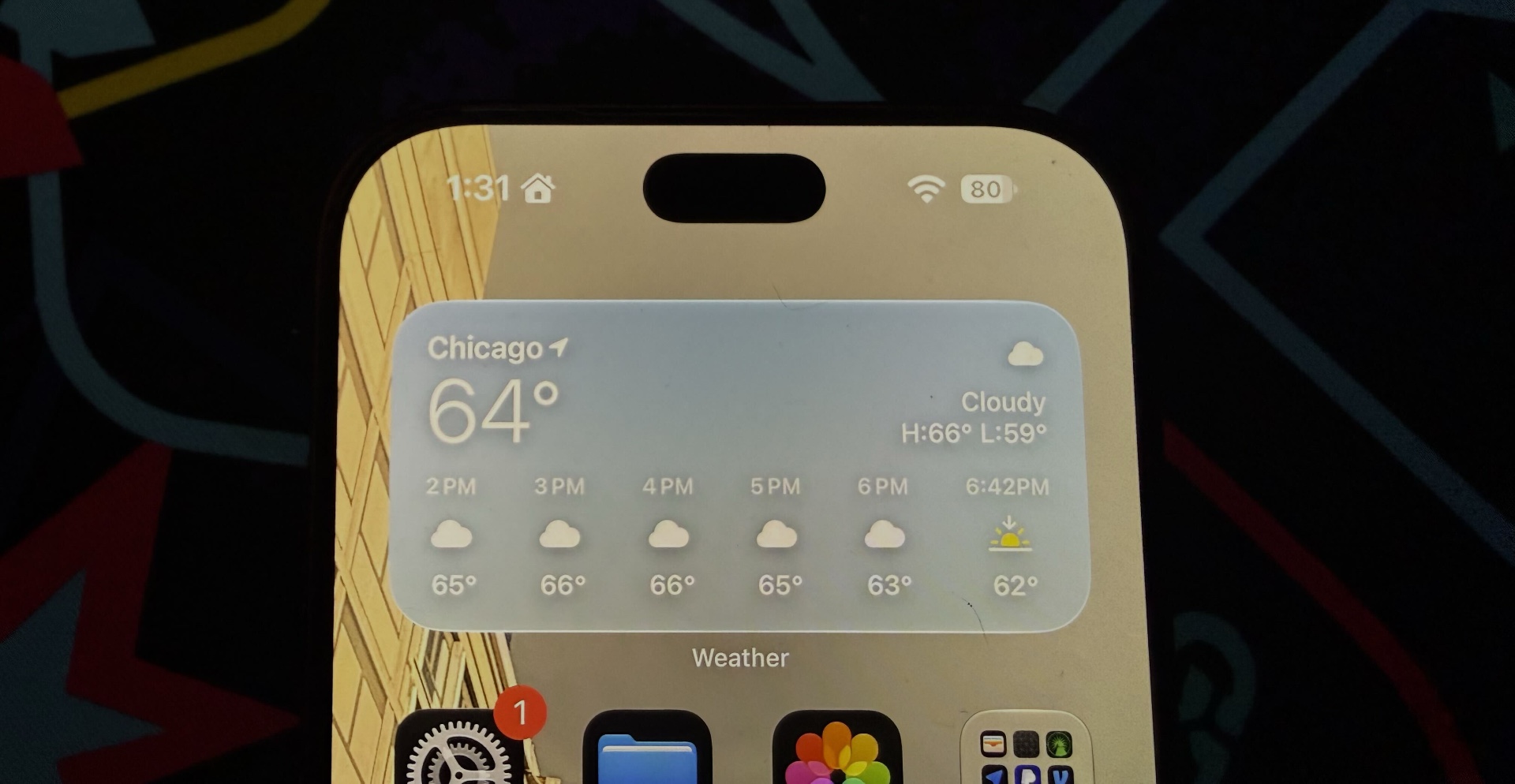
The main design difference this time around is a smaller Dynamic Island, that cut-out at the top of the screen that houses the front-facing camera and sensors. Apple has achieved this by moving the IR camera underneath the OLED panel, now in the top-left corner of the screen.
A new pixel arrangement allows infrared light to pass through in that spot, while the pixels in this region operate at twice the brightness to compensate for lower density, so there’s little visible effect on the image on the display. You can tell there’s something subtly going on in that corner if you know what to look for and look closely, but I don’t think most people will notice.
As I wrote when the Dynamic Island was first introduced, the way Apple combines the per-pixel brightness and absolute blacks of the OLED panel with creative software to turn what should be something of an albatross—a big, chunky hole in the screen—into an appealing feature by displaying live activities and other information around the sensors is one of the company’s more impressive design ideas in recent years. The execution is excellent and remains so.
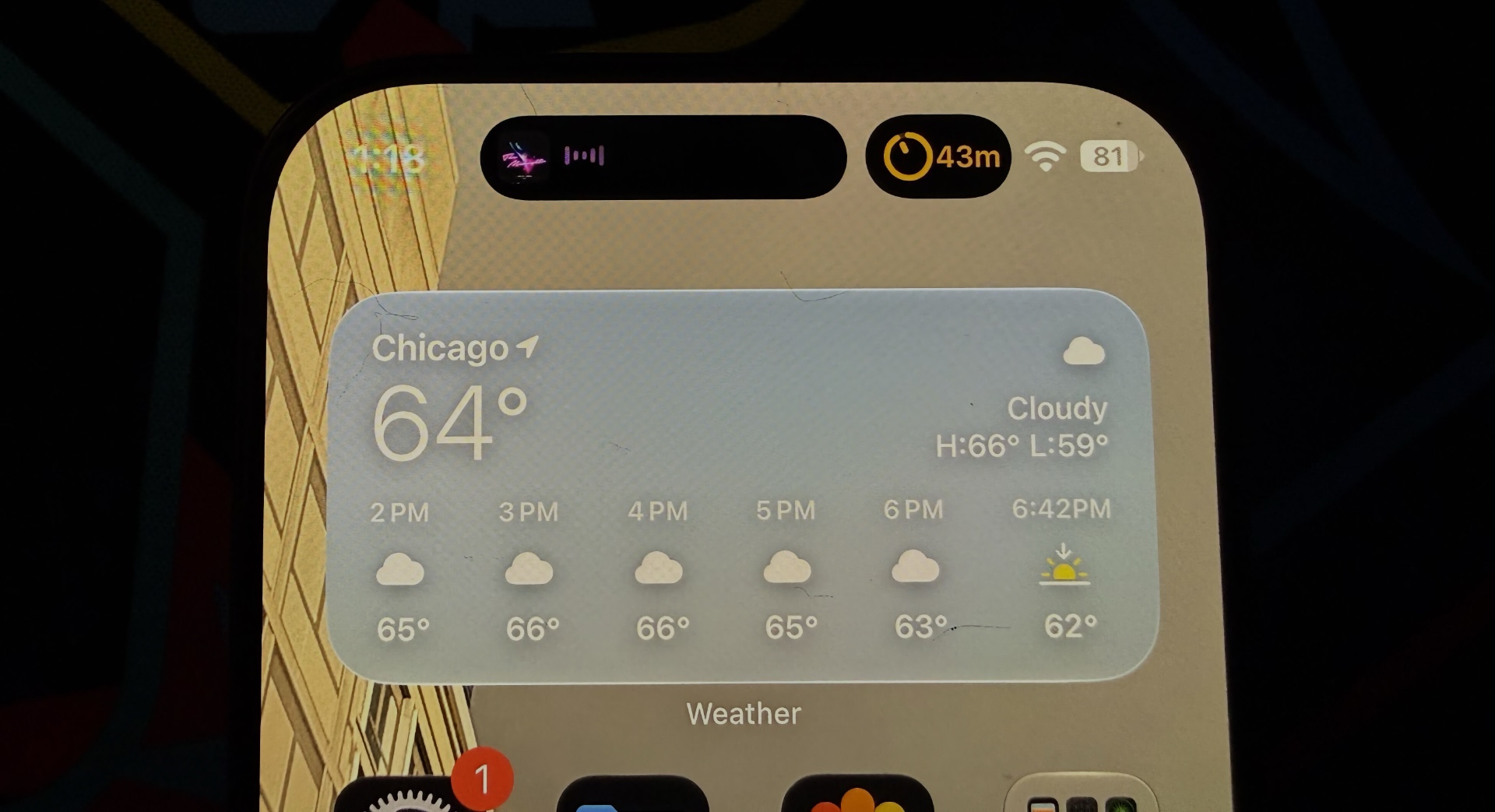
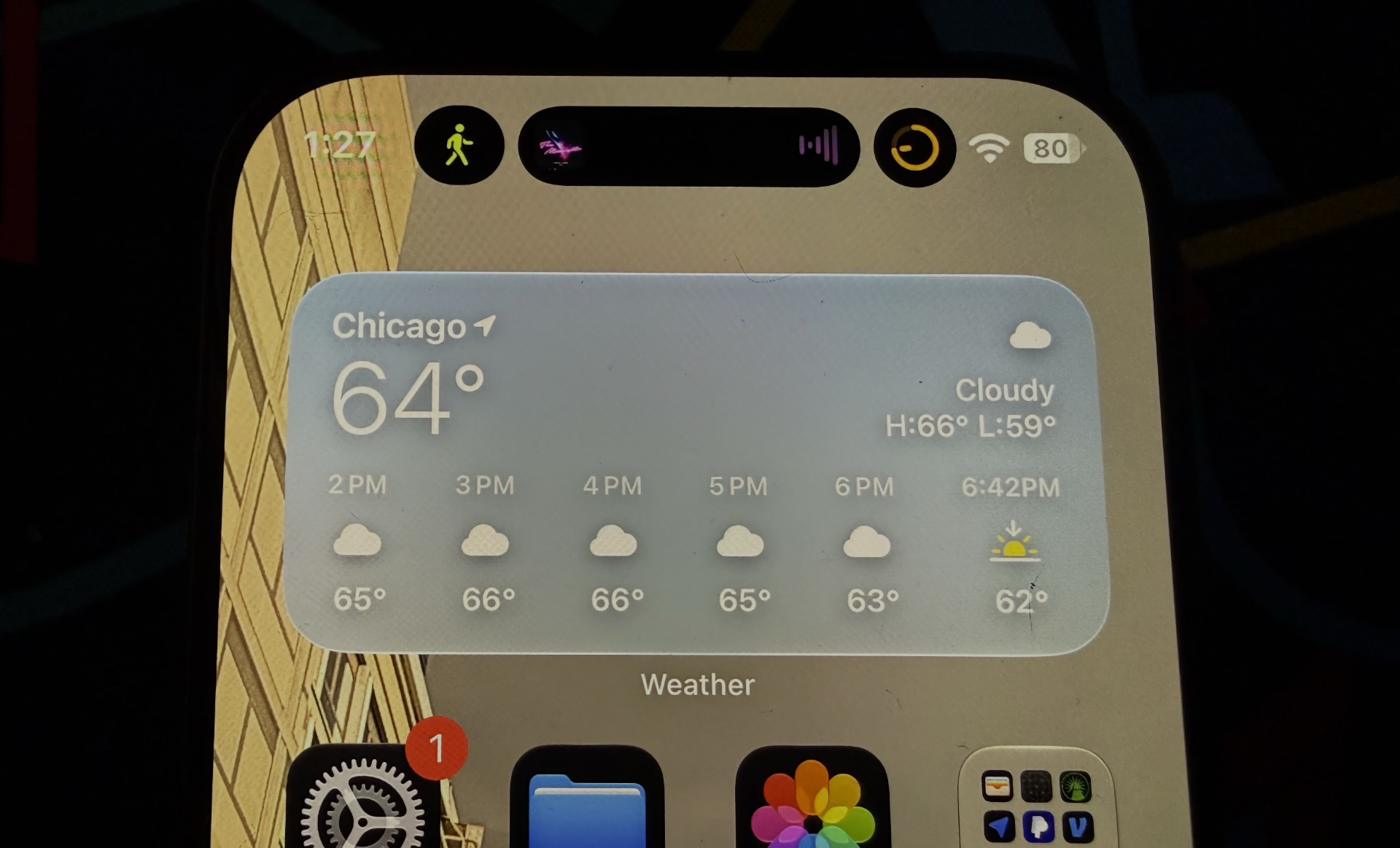
Now, that hole is less big and chunky, making it sensible for Apple to now show up to three live activities at once in the region, not just one. The middle one has more information, while those on the left and right are basically dots with just enough to tell you something useful.
Samuel Axon
Samuel Axon
Samuel Axon
Samuel Axon
Samuel Axon
It’s also now possible to show more information on a second live activity when there are just two being displayed; I found this even more appealing than showing three live activities.
This isn’t enough of a reason to upgrade from an earlier Dynamic Island phone, of course, but it has made a good feature a little bit better.
Performance and thermals
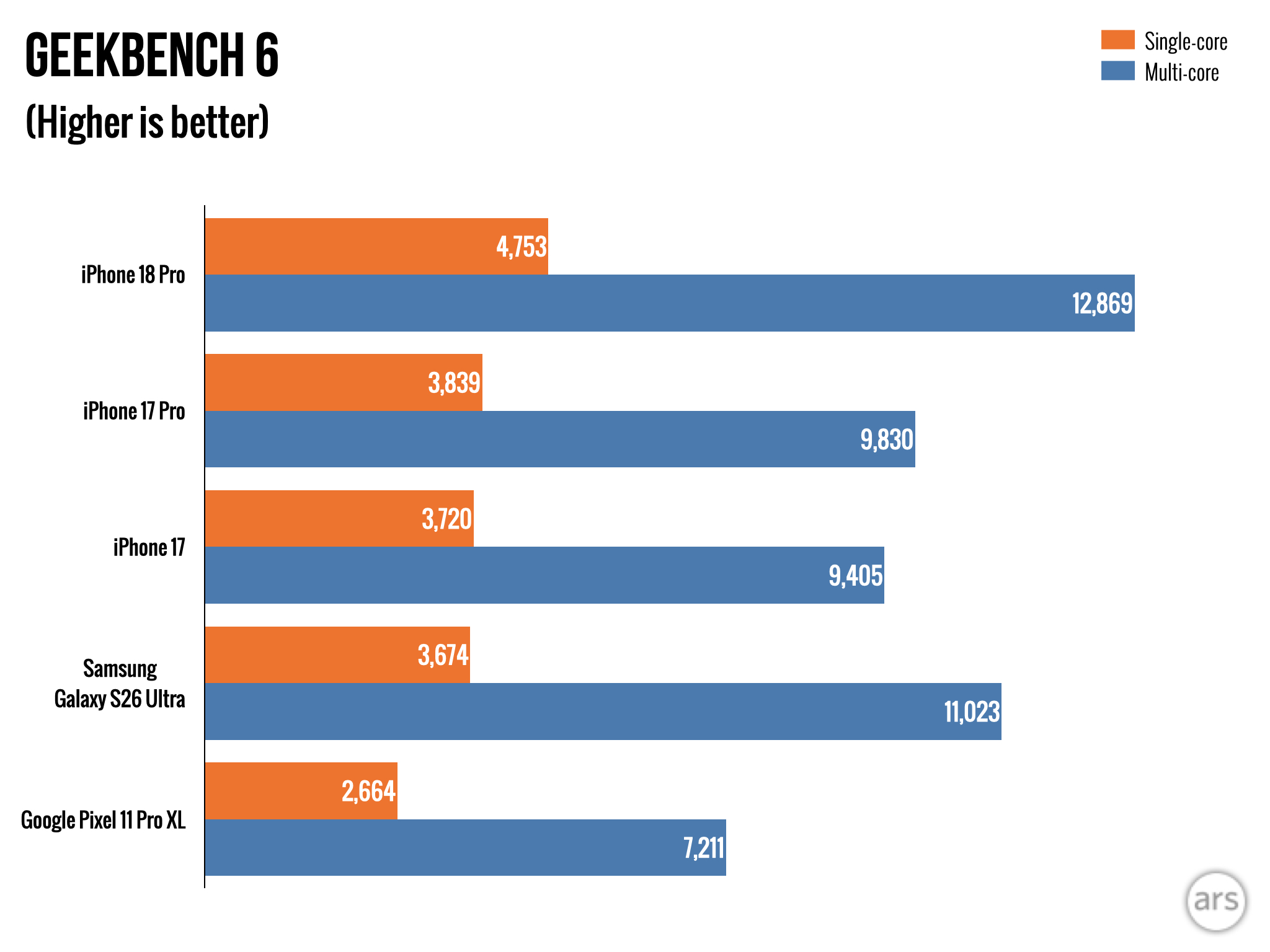
Let’s talk specs, performance, and the main story with this phone—heat management. For most specs, this is last year’s iPhone 17 Pro. But the A20 Pro chip has some improvements that make this one of the more notable performance steps in a while.
A20 Pro
First up is the new A20 Pro chip. Apple has gone from a 3-nanometer process node in the A19 Pro to 2 nm here. It has a 6-core CPU with four efficiency cores and two performance cores—nothing new there. The GPU has seven cores, each with a Neural Accelerator that Apple says helps improve GPU-based AI workloads. (There’s hardware-accelerated ray-tracing support, too, though few games or apps utilize it.)
Also for local AI features (which are a big emphasis for this year’s iOS 27), there’s the dual 16-core Neural Engine.
Apple also says the A20 Pro has “the widest memory interface ever shipped in an iPhone” (naturally) with 50 percent more bandwidth. Based on what Apple has said so far about it, that seems to be mainly to improve AI performance. I’m speculating here, but given that Apple Intelligence and Siri AI features work fine on other recent iPhones, I imagine that’s a bit of padding to enable support for future AI features that won’t work on the 16 Pro or 17 Pro.
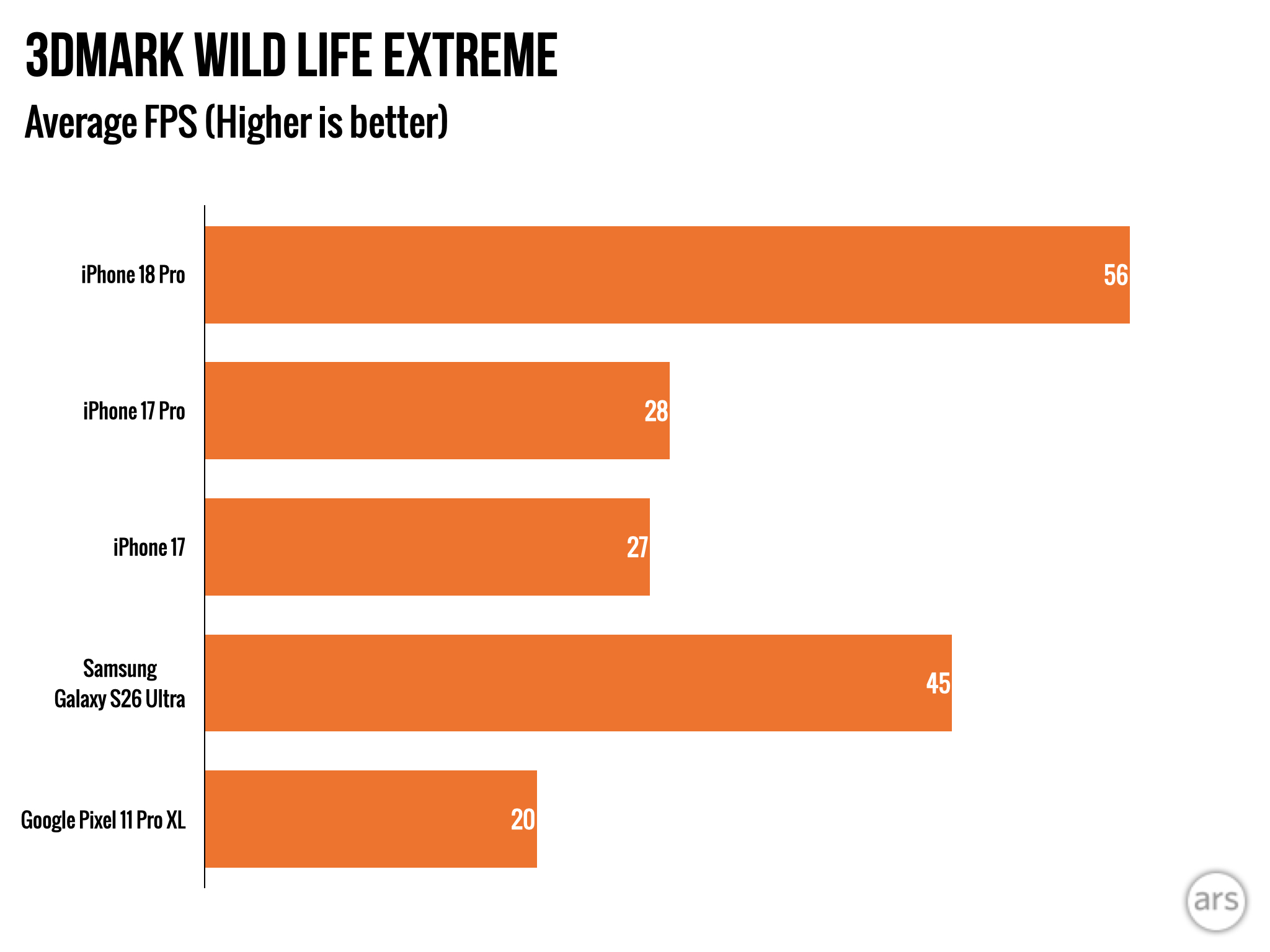
Unsurprisingly, and as the 3DMark benchmark chart below shows, that could make a big difference in graphics performance, too. It’s not like many people were complaining about the 17 Pro’s frame rates in Genshin Impact or Diablo Immortal, but hey, they definitely won’t be now.
Improved heat management
The chip has been re-architected in a couple of ways. New chip packaging promises improved heat management, thanks in part to a design that puts the system-on-a-chip next to the memory instead of stacked on top of it.
The most notable improvement is arguably a larger vapor chamber. Last year’s iPhone 17 Pro introduced the vapor chamber as an additional cooling measure, meant to help the phone sustain good performance for longer and distribute heat more sensibly. A copper material on the display plate helps keep the display cooler, too.
Apple promises up to 40 percent better sustained performance compared to last year’s Pro and up to 100 percent better than the iPhone 16 Pro before that. That’s neat, but sustained performance wasn’t a big problem for most users before. The main benefit is that the phone feels cooler and is less likely to overheat.
In my view, the better thermals are the most welcome addition to the iPhone 18 Pro. Many of us who have tried to use our phone as a GPS on the car dashboard on a hot summer day know the frustration of features shutting down when the phone goes into crisis heat-management mode. And even in normal use, like during online gaming or web browsing while streaming video, iPhones from a couple of years ago or earlier tended to get quite hot.
It’s been quite cool and overcast in Chicago this week—fall is here at last—so I haven’t been able to test the former of those extreme cases, but I’ve used the phone enough to be able to report that there is noticeable improvement in the more day-to-day scenarios. It still gets warm in some situations, like when I read the 3DMark benchmarks, but most of the time, it subjectively seems better than a couple of generations ago.
It’s normally hard to notice the absence of a problem, but my own iPhone 16 Pro has gotten hot frequently enough over the past couple of years that the contrast has been real and felt.
We’ll leave the camera specs to the cameras section of the review, but there are a couple of other spec changes worth noting.
A beefy battery (and other updates)
First off, there are further battery life improvements. Apple has long used offline video playback as one of its measures, and it says the iPhone 18 Pro can offer up to 36 hours of that on a single charge, compared to 33 for its predecessor. (It’s up to 45 for the 18 Pro Max and 39 for the 17 Pro Max.)
Subjectively, I’m impressed by the battery performance here. My personal daily driver is an iPhone 16 Pro Max, which is currently sitting at 86 percent maximum capacity per Apple’s battery health panel in the Settings app.
I have no complaints; I charge it for about an hour in the morning, then do whatever I want with it (other than maybe intensive 3D gaming) with the brightness cranked up until the next morning, when I charge again.
I noticed the iPhone 18 Pro showing higher percentages when I wake up in the morning than my 16 Pro Max with similar use, which is impressive for a smaller phone—even though my 160 Pro Max’s battery has aged a bit.
In terms of other additions, Apple has put its proprietary C2 cellular modem in the 18 Pro, which uses less energy than the Qualcomm modem in the 17 Pro, so that’s part of the battery life story here, too.
And if you’re inclined to charge wirelessly rather than with a USB-C cable, the iPhone 18 Pro has wireless charging at up to 25 W.
Cameras
If you’ve read my iPhone reviews before, you may recall I am not a photography geek. This is not the review to read if you want a deep dive on optics or how well this thing will work in a professional photo shoot scenario. (I’ll leave it to more skilled and knowledgeable people to assess the phone from that perspective, as there are already many such reviews out there.)
I’m a point-and-shooter. Thanks to both new hardware features and developments in computational photography, that’s actually where some of the more interesting and fastest-moving developments have been happening in the iPhone and its Android competitors over the past few years.
Sure, the iPhone 18 Pro is “pro” in the sense that it will be used by content creators and others who approach snapping photos or capturing videos far more seriously and creatively than I do. But really, it’s the phone that sometimes lets non-pros like me produce quasi-pro-looking images despite ourselves.
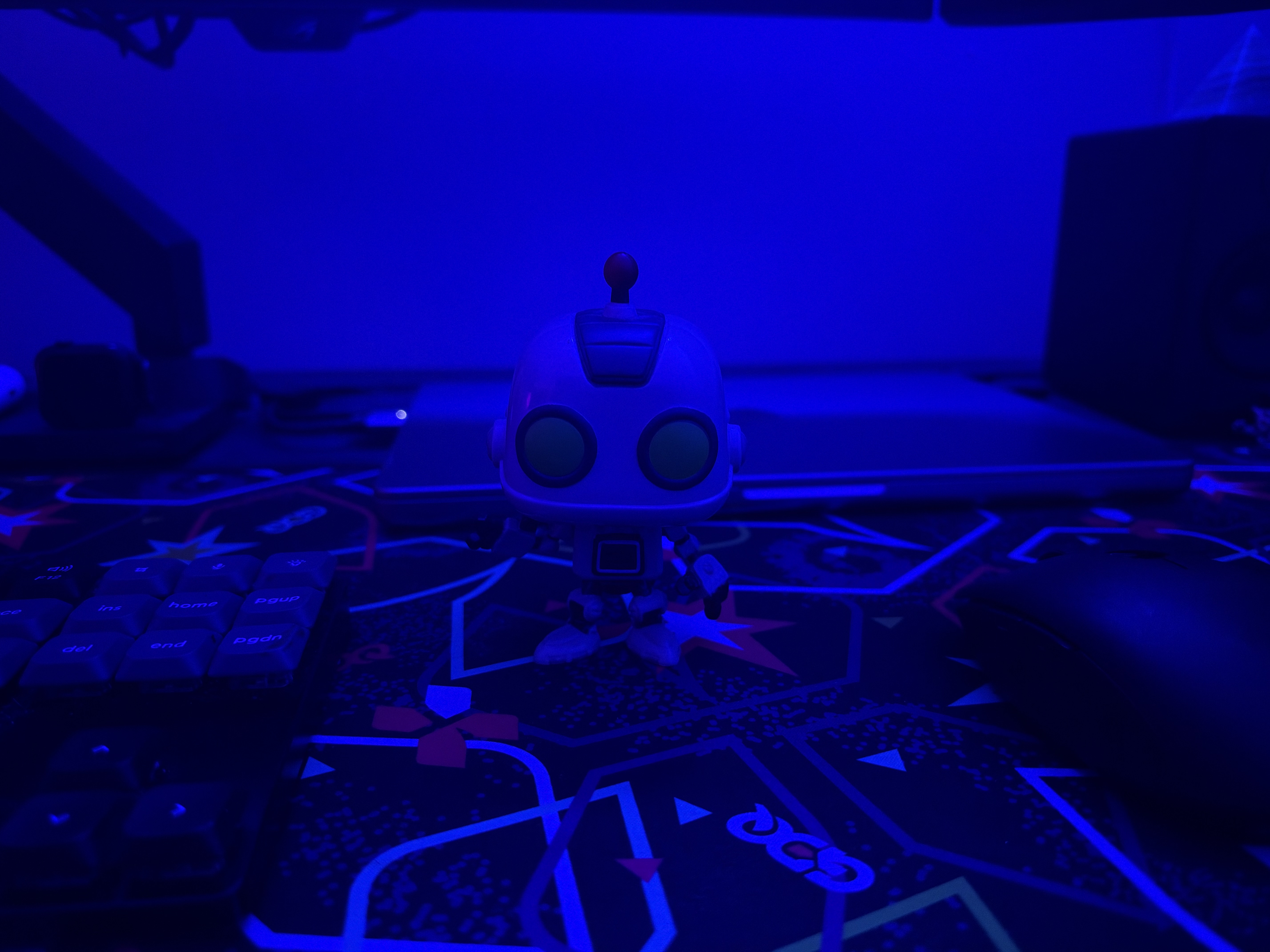
Take the new variable aperture feature, which got the most fanfare when this handset was announced. The ability to tweak this setting manually is a niche proposal, really; many people will rarely, if ever, touch it. That said, it adjusts automatically based on what’s in the scene by default, so in many cases, even folks like me will get slightly better photos.

Samuel Axon
Samuel Axon
Samuel Axon
Samuel Axon

Samuel Axon

Samuel Axon
Samuel Axon
Samuel Axon
There’s also Photographic Styles 3, the latest generation of Apple’s set of non-destructive presets for the general appearance and vibe of the photos you’re taking. Think Instagram filters, but less blunt-force. Previously, Photographic Styles were basically just color balance settings, but Photographic Styles 3 allows for texture tweaks, too.
This includes four texture options: film, glow, soft skin, and standard. These options—especially the film one—allow the iPhone’s built-in Camera app to compete with some third-party apps that tried to give photos warmer, more film-like looks. I won’t say it’s enough to make everyone drop those alternatives, but it’s good to have more options for those who are loyal to the main app.
Apart from these and a few other minor tweaks, it’s the same triple-48 MP rear camera system that we reviewed in last year’s iPhone 17 Pro, paired with the same front-facing 18 MP camera.
With the variable aperture and the other custom camera controls that are now accessible in the built-in Camera app (all the others are available on other recent iPhones), Apple has finally done plenty to address long-standing complaints that iPhone cameras were a little too opinionated for some users’ tastes.
Yes, these new features enable better point-and-shoot photos in some narrow situations, but user control seems to be the main pitch for the cameras this year.
For those who just want a good phone
This was Tim Cook’s last year as Apple’s CEO, and the iPhone 18 Pro is the quintessential iPhone of the Tim Cook era: practical, pricey, loaded with features to cover ever-more niche edge cases, and not especially bold in its design or ambitions—all to a high standard of quality.
This is the formula that has made it the world’s most popular flagship smartphone. There’s nothing wrong with that formula. Its recent predecessors were all great phones, and this one is, too.
But we all know the era of buying a new smartphone every year or two to enjoy amazing new features has passed. (Which is also great, by the way—for our pocketbooks, for the environment, for a whole bunch of reasons.) If you have an iPhone 17 Pro, there’s little reason to upgrade. Yes, we’re seeing some notable performance improvement year-over-year here, but I don’t think too many of us were complaining about the A17 Pro’s performance to begin with.
My personal daily driver is an iPhone 16 Pro, and I won’t be pulling the trigger this year, either. In fact, I think you’re still in great shape with your iPhone 15 Pro, if that’s what you have, provided your battery is still holding up.
Go further back than that, though, and all these little things start to accumulate into something enticing. That’s where we’re at, and that’s where we’ve been for a while now.
I wouldn’t go so far as to say the modern flagship smartphone is perfect in all respects; Apple and its competitors still find small ways to refine it and up the ante for specific types of users year after year, and I expect that to continue. And last year’s base iPhone 17 is still more than good enough for almost everybody.
But after almost two decades of competition and iteration, it’s at least directionally perfect. The basics are all here, and they don’t need to change. I wish the price hadn’t risen, but I suppose that’s the reality we live in right now.
If you want something new and flashy to impress your friends or to satisfy your brain with a novel experience, hold out for the iPhone Duo next month or venture into the slightly more energetic Android market. But if you just want a good phone that leverages all the latest technological progress without overdoing it for attention or progress’ sake, the iPhone Pro line is a good fit.
The good
- Greatly improved thermal management has added up over two generations
- Ditto for battery life
- Very strong graphics and AI performance
- New custom camera controls and photographic styles help you get (a little bit) out of the typical Apple processed look
The bad
- Some might find it a little heavy
- This isn’t really a bad thing, but there’s not much here to excite you or to inspire an upgrade if you already own a recent iPhone