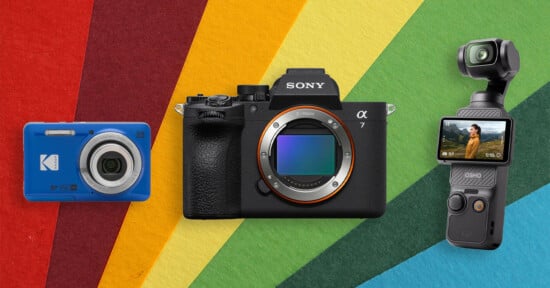
DJI Sells More Digital Cameras Than All Japanese Makers Combined
Chinese technology intelligence company IDC published new research about the global handheld “smart camera” market, which includes action cameras and the ever-popular gimbal camera. This quickly growing market is much bigger than the traditional camera market, and market leader DJI alone outpaces all the Japanese camera makers combined.
As CineD reports, IDC’s data shows that the global “handheld smart camera” market reached 16.65 million units in 2025, up a ridiculous 83% year over year. Total sales exceeded 46 billion yuan, or about $6.875 trillion at current exchange rates. That’s an 86% jump compared to 2024. IDC thinks the market will hit 40 million units by 2030.
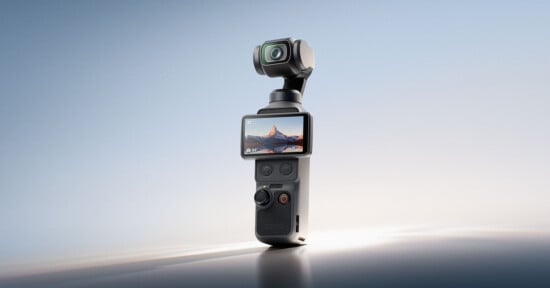
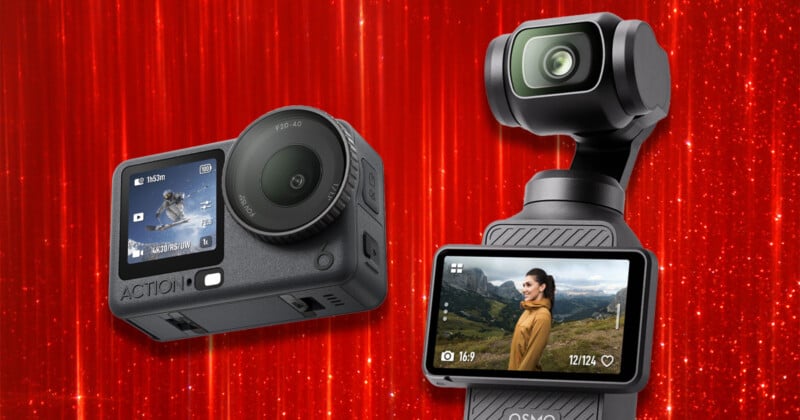
“Handheld smart camera” includes action cameras, 360-degree cameras, and gimbal cameras like the DJI Osmo Pocket series and the new Insta360 Luna Series. It also includes all manufacturers, not just the Chinese giants, so GoPro is part of the equation.
Meanwhile, over in the traditional digital camera market, CIPA is by far the best resource. CIPA includes Japanese camera companies, so it misses relatively niche brands like Leica and Hasselblad. In 2025, a very strong year for the photo industry, total digital camera sales were 9.44 million units, the fourth straight year of growth in the industry. This includes interchangeable lens digital cameras, mirrorless and DSLR alike, and compact cameras with built-in lenses.
9.44 million units is strong; it’s the highest total since 2019 and far above the digital camera industry’s low point in 2023.
However, as IDC explains, market leader DJI itself shipped 10.4 million handheld cameras last year, more than all the member companies of CIPA combined. 2025 was the first time DJI surpassed the 10 million-unit mark. It’ll be interesting to see how ongoing issues with the FCC in the United States affect the company’s shipments this year.

Insta360 shipped 3.4 million handheld cameras last year, over half the total number of mirrorless cameras shipped by all Japanese companies in 2025.
CineD notes that DJI and Insta360 combined shipped about 13.8 million cameras in 2025, which is well over twice as many mirrorless cameras as CIPA members shipped last year (6.1 million units).
As the handheld smart camera market grows at an extreme clip, the Chinese behemoths DJI and Insta360 benefit most. GoPro, meanwhile, continues to lose market share. It has been a long-running trend that has cost the company greatly.
It’s important not to frame this as one type of camera versus another, as that is a gross oversimplification. Both camera markets can grow and succeed at the same time, and one’s success doesn’t necessitate the other’s failure. Many people own both types of cameras since they do very different things. Buying an Osmo or Luna doesn’t make a traditional camera obsolete.
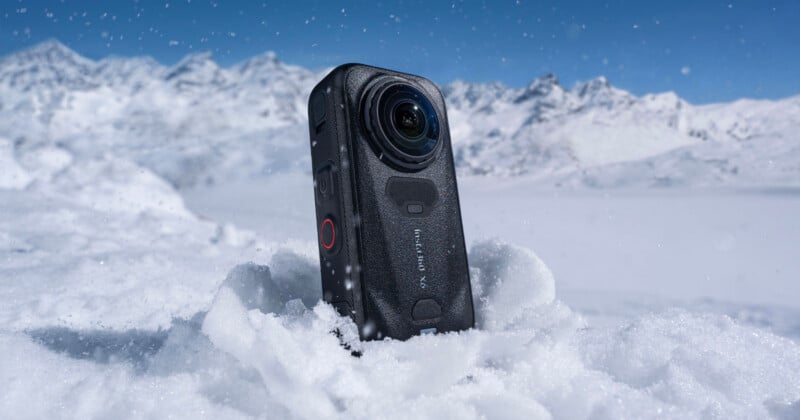
It’s also important to consider the price differences here. An interchangeable-lens camera costs thousands, and the lenses cost at least hundreds of dollars more. An Insta360 Luna Ultra is $770. The digital camera market is a relatively high-margin field, and average camera prices keep rising for a wide range of reasons.
In the handheld smart camera market, on the other hand, margins are significantly thinner, and prices face strong downward pressure. Even a $50 price difference can push buyers one way or the other, whereas that wouldn’t move the needle much on a full-blown camera kit that costs $3,000 or more. The value per unit in the two camera markets is very different.
In any event, both digital camera markets are generally growing these days, but one is growing much faster.
The handheld camera market is a very interesting space to watch. It’s rare for such a large market to be dominated by just two players, one of which is struggling with issues in the U.S., one of the largest consumer tech markets in the world. Beyond that, it’s fascinating to see how differently DJI and Insta360 operate versus the traditional digital camera companies like Canon or Nikon.
How much more room does the handheld camera market have to grow, and will there ever be a point where they are full-fledged alternatives to traditional cameras? That’s a big topic for another day.
Image creditsDJI and Insta360. Header photo created using an asset licensed via Depositphotos.com.
Affiliate Disclosure PetaPixel articles may include affiliate links; we may earn a commission if you buy through one.