Ilford SFX Is a Superpanchromatic Film That Works Wonders with a Red Filter
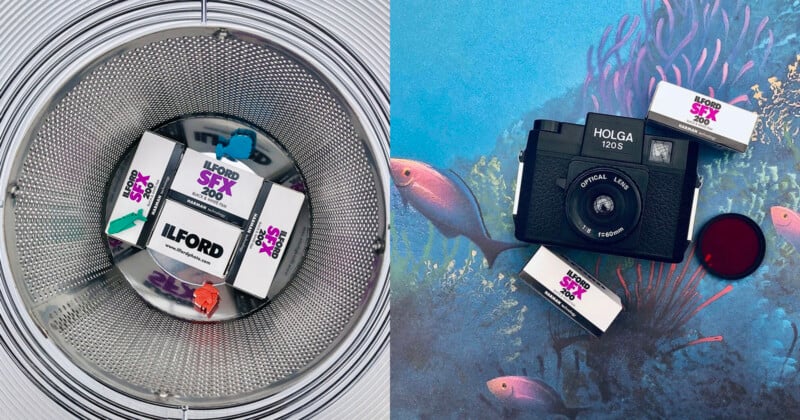
One of our staff members used to joke that combining a Holga with a red filter and a roll of Ilford SFX was like shooting fish in a barrel: you couldn’t miss. While that sentiment is perhaps a little hyperbolic, it is not too far off the mark.
Ilford SFX is an ISO 200 black-and-white film that is both panchromatic and sensitive to the infrared spectrum of light. This means the film can be shot just like any other black-and-white film and you will get the expected results. But put a Red 25 or infrared filter on SFX and wonderful things start to happen.

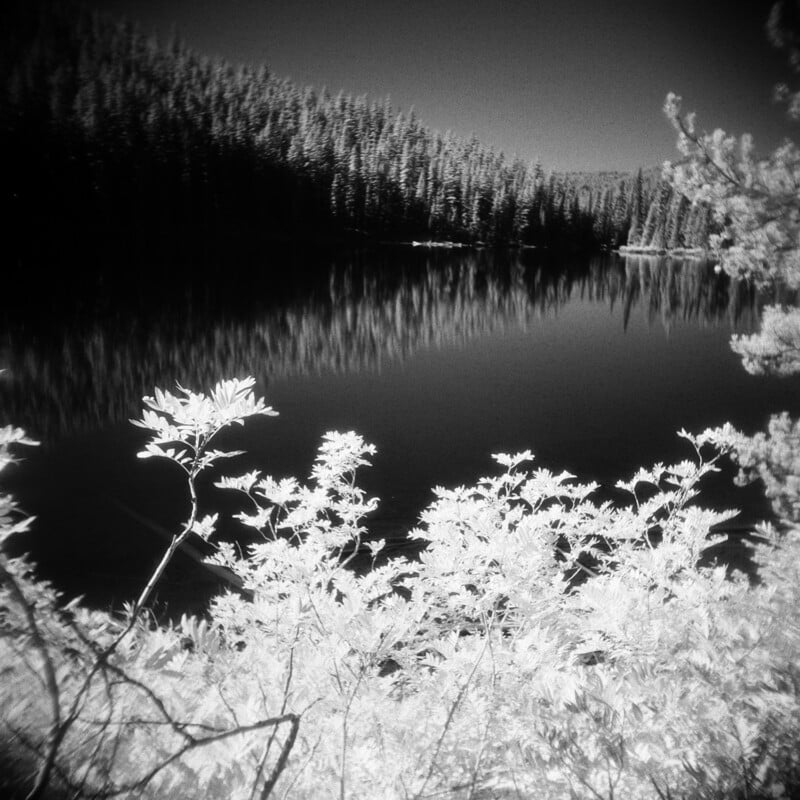
Ilford SFX has been around for some time, but has long been viewed as a niche product in Ilford’s film catalog. In fact, it was discontinued for a short period in the early 2000s while Ilford restructured its business financially. Once the company emerged from that period, SFX was brought back from the dead. So it is a zombie film, making it an appropriate film for the Halloween holiday. Also, SFX is available in both 35mm and 120 — a multiple-format film — which always scores points in our book.
As mentioned above, SFX is superpanchromatic. While it can be used as a normal black-and-white film, SFX’s big appeal comes when you pair it with a heavy red filter and start to eliminate some of that visible light, allowing the infrared exposure to show up more in the resulting images. SFX combined with a red filter is a quick way to take some dramatic pictures. Used in landscapes, SFX can produce deep, nearly black skies that hang ominously over the viewer. Put to use in portraiture, SFX can create striking portraits where subjects have glowing, white skin and deep, dark eyes. Either way, SFX is a fun film to work with.


So if the best way to succeed with SFX is through filtering, let’s dig into those filters a bit more. By far the most popular filter to use with this film is the Red 25. This filter has several benefits: it is easy to find and not as expensive as more specialized infrared filters. You only need to compensate by about 2.5 stops for exposure. You can see through the filter for focusing, composition, and metering. If you are an SFX first-timer, a Red 25 is the filter we would recommend starting with. As an added benefit, that red filter also works well on all other panchromatic black-and-white films to increase contrast and tonal separation.
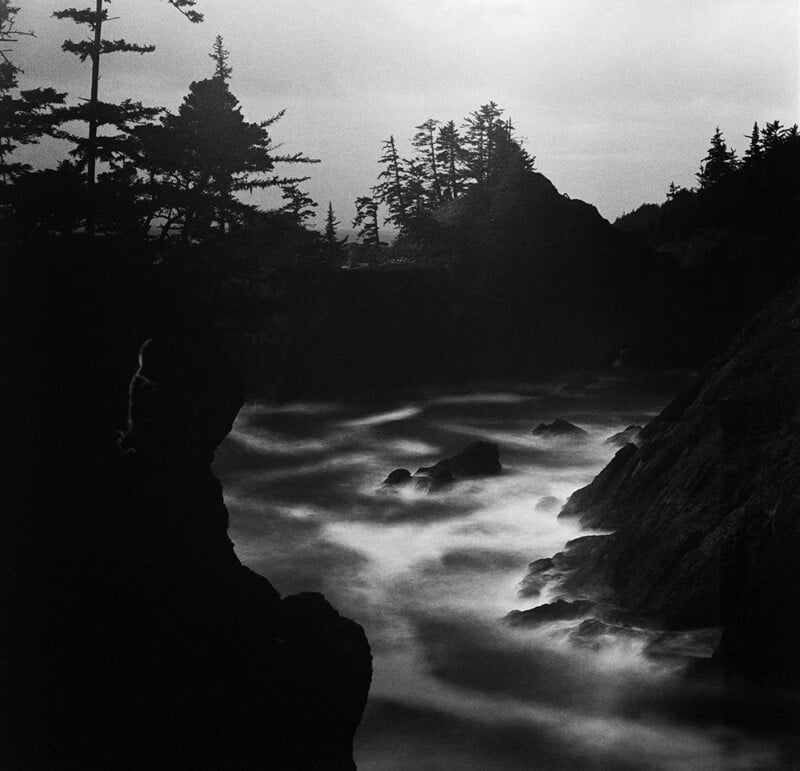

But there are more filter options out there to explore. A Red 29 is sometimes cited as the preferred filter. Basically, a Red 29 is just a slightly deeper red than the 25. It requires slightly more exposure compensation (about an extra 1/2 stop) and delivers a slightly more dramatic infrared look. The differences are fairly slight, though, so if you find a Red 29, great! But there is no need to spend a ton of time hunting one down if you can get your hands on a Red 25 that much more easily.

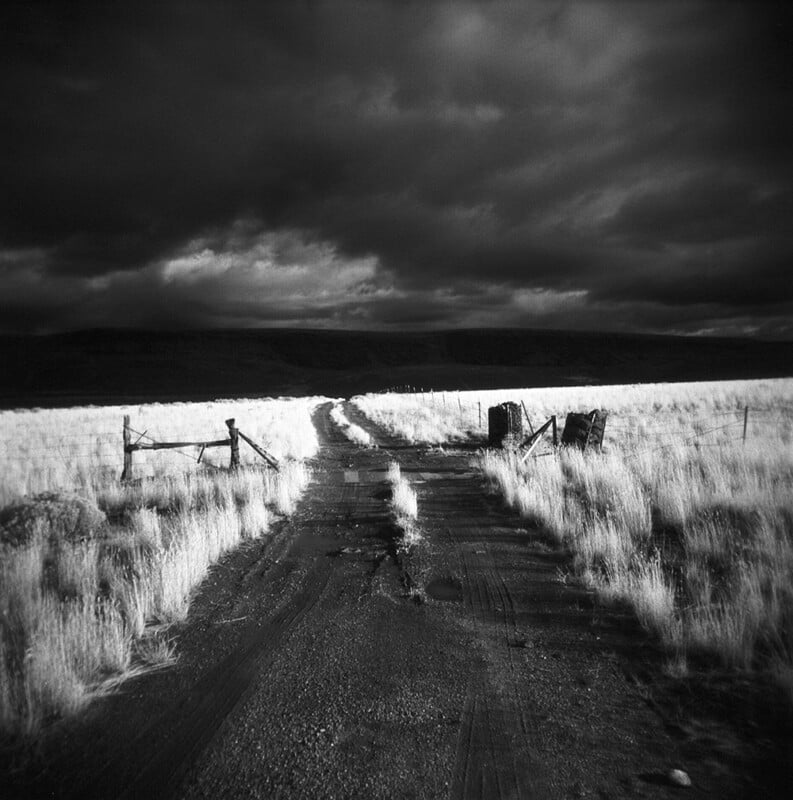
Technically, SFX is what you would call a “near-infrared” film. This means that it is sensitive to the near-infrared end of the spectrum of light. This spectrum runs from about 750 nm out to about 1400 nm (the red end of the visible spectrum ends around 700–750 nm). All infrared films currently on the market are actually near-infrared. Even the famed Kodak HIE infrared film had sensitivity only out to 900 nm. But what this “near-infrared” designation sometimes leads to is confusion over whether Ilford SFX is capable of true infrared images.
Some photographers read “near-infrared” as “not quite infrared.” Quite to the contrary, paired with the right infrared filter, you can produce some remarkable infrared images with SFX. While you do have to be careful about which wavelength your filters cut off, if you choose wisely, the results will work out quite well. Our favorite infrared filter to use with SFX is the R72, which cuts off most light below 700 nm, thereby eliminating almost all visible exposure and allowing SFX to operate nearly entirely in the infrared spectrum.
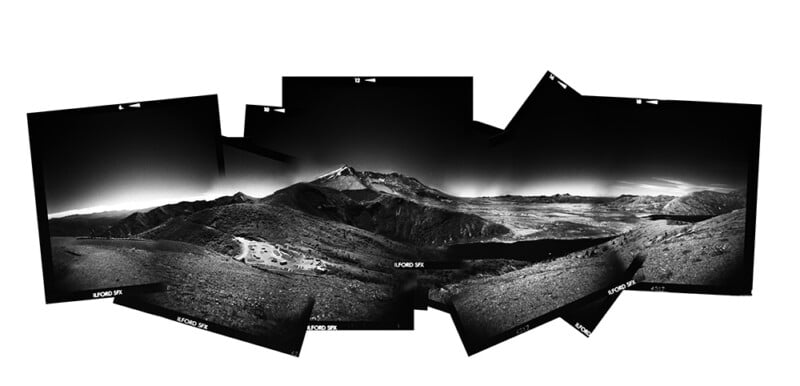
The trick with such a filter, though, is exposing, composing, and focusing.
With regard to exposure, some testing might be required for you to pin down the right exposure in various situations. An R72 filter effectively blinds most meters, so TTL metering is generally not an option. The standard practice is to meter in-camera without the filter on the lens, or to use a handheld meter (or light meter app) and then manually calculate for the R72’s filter factor. We can tell you that typically we bracket our exposures shot through R72 filters at +6 stops and +8 stops, with the +6-stop exposure typically looking really good. But infrared light can be tricky to gauge, so having that bracketed exposure with an extra two stops over is a nice insurance policy.
Composing and focusing can also be tricky since it is nearly impossible to see through these filters. You’ll likely be working on a tripod, so simply compose before putting the filter on, then apply the filter once everything is set up. Focusing is similarly easy if you are shooting at middle or small apertures, but if you like to shoot wide open (think f/2.8, f/2, or wider), be careful, as light in the IR spectrum focuses a bit differently than visible light. Typically, you have to focus a hair closer than you would normally. In fact, many lenses have little red IR marks on the focusing barrels to help you adjust focus for infrared photography.

Our main argument for this film really distills down to how fun it is to see the world in a different spectrum of light. Ilford SFX will show you a strange, new world. Places can be dramatic; people can look eerie. It’s all a ton of fun. SFX is one of those films that once you have tried it and experienced how it renders the world, you’ll wonder why it took you so long to pick up that first roll.
To be fair to this film, though, it does have other qualities worth noting besides its infrared sensitivity. For example, it is super grainy. Like really, really grainy. It is grainier than ISO 400 films. If ISO 800 B&W films were a thing, it’d be grainier than them too, most likely. So we want to point that out. We don’t have a judgment whether SFX’s grain is a good thing or a bad thing. In a lot of ways, it’s both. There are times we really like the grain and grittiness of SFX. Overall, we love film grain. But there are times that the grain can be a bit strong. If you love grit, then this is one more reason to love SFX. If you love smoothness, then approach SFX with some caution.

Ilford SFX also has great contrast, even when shot without any filtration. Of course, using it with a red or infrared filter is going to up its contrast even higher, but the film has a great punch with no filter on the lens at all. Sometimes you want to whisper and sometimes you want to shout — SFX is more of that latter sentiment, and we love it for this quality.
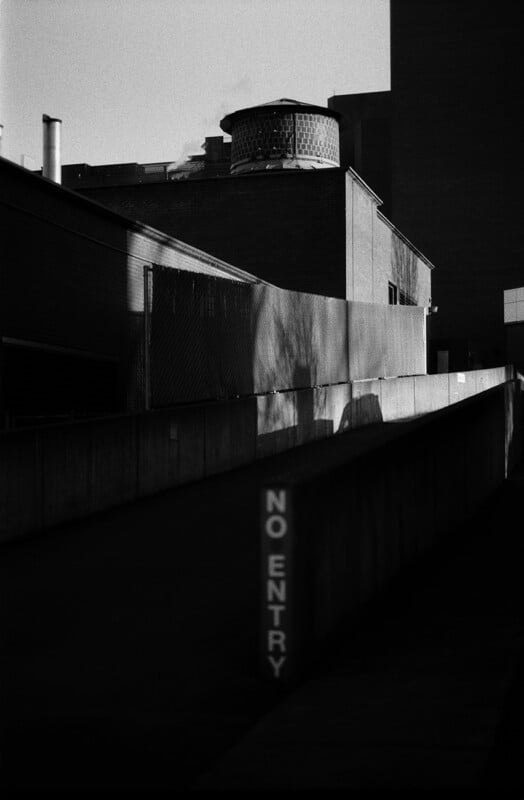
And now, a quick recap as to why SFX is awesome:
- It can see light that is invisible to our eyes. How cool is that?
- Paired with the right filter, it creates some dramatic images full of mood and character.
- It is available in both 35mm and 120. Yay! We even cut some down once for Minox.
- It is easy to work with. It does not have to be loaded in darkness and develops like any other black-and-white film.
- It’s Ilford, and we love Ilford.
Hopefully, this short review and these sample images have given you a newfound reason to try this fun film. If so, hit our website today (or stop by our Portland, Oregon shop) and we will have Ilford SFX available on sale all day (Holgas not included)!
This story is brought to you by Blue Moon Camera and Machine in Portland, OR. Blue Moon offers film, development services, printing, and even an ever-rotating line of film cameras and lenses. PetaPixel Members receive 10% off all lab services with Blue Moon: Join today!
Image creditsAll photos are individually credited and provided courtesy of Blue Moon Camera and Machine.
Affiliate Disclosure PetaPixel articles may include affiliate links; we may earn a commission if you buy through one.