The Historic Practice of the Hidden Mother in Photography
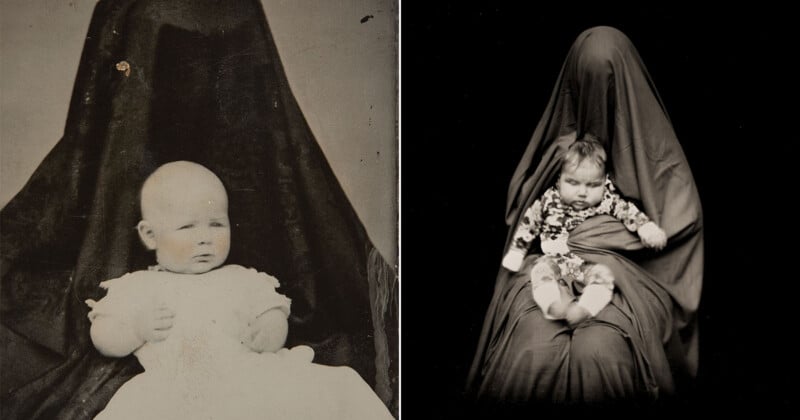
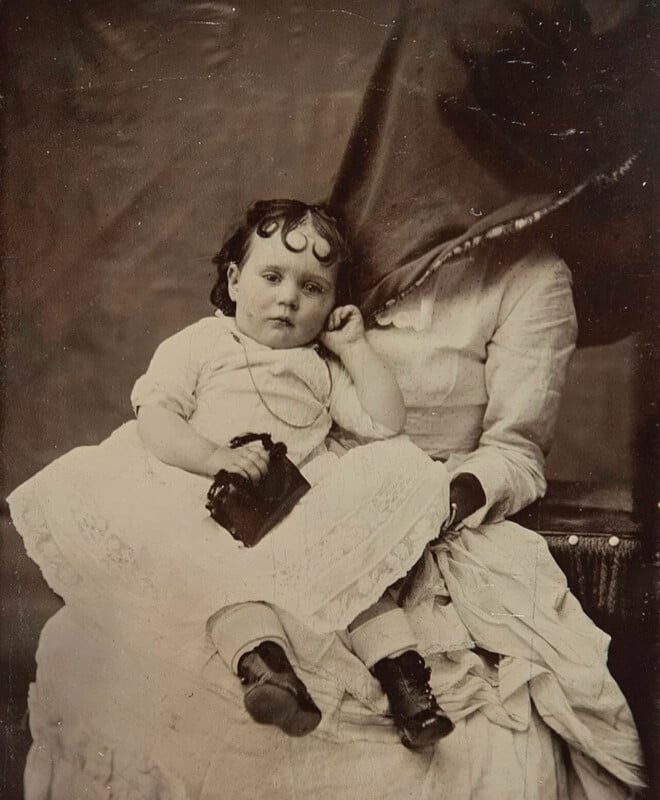
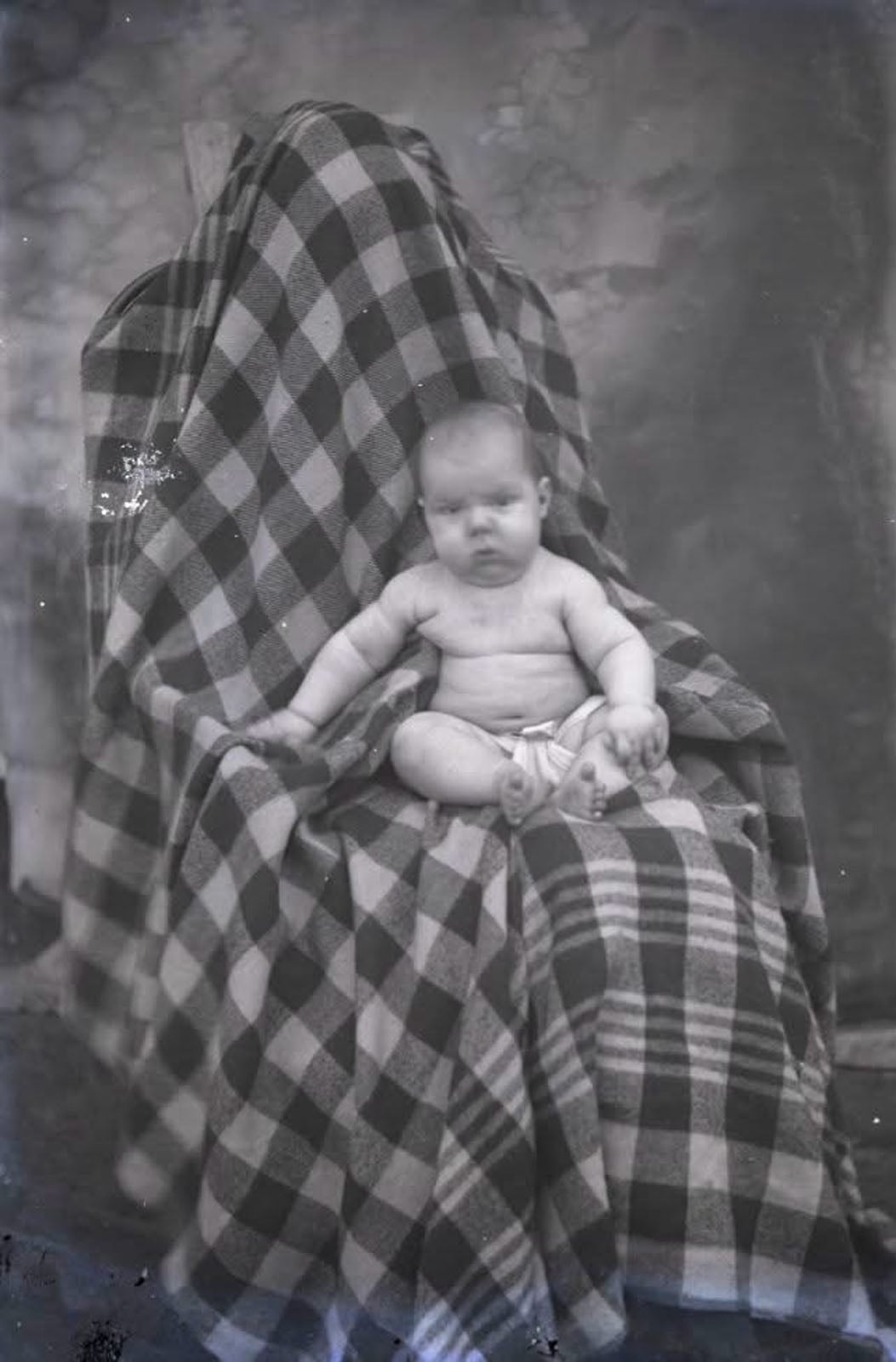
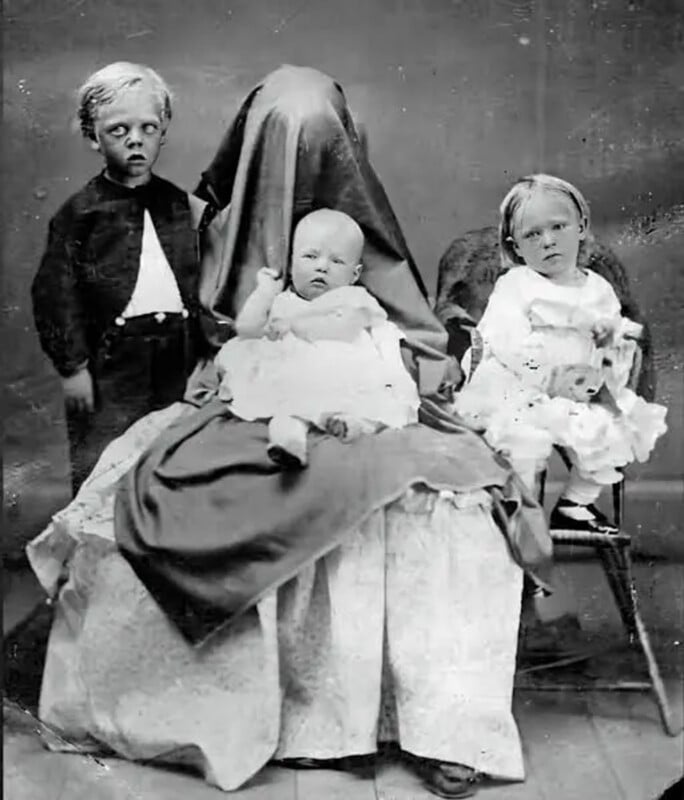
The “Hidden Mother” is a genre of photography that has been practiced since the infancy of the photographic process. Many examples date back to 1839 and the daguerreotype. A shroud or sheet would be thrown over the adult in the composition, or the mother hid behind a cloaked chair. They used varied methods and had varying degrees of success, depending on what worked for the photographer and the sitter. Sometimes an adult stabilizing the child would be just out of frame, and the photographer knew they would simply crop them out later. These photographs have always been strange in a way and have caused confusion and mystery amongst present-day viewers.
The viewer is asked to overlook the figures in the background and focus on the child. The photographs can be humorous and quirky but our modern sensibilities often describe them as unnerving or spooky.
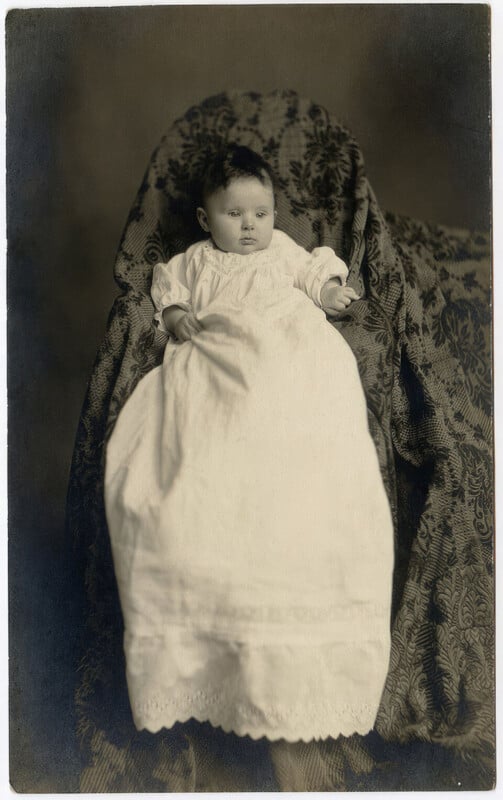
So, what reason would the photographers have for performing this game of hide-and-seek with their subjects? As a wet plate collodion photographer practicing today, the answer is pretty simple: exposure times! Photographs of children were rare in the mid-1800s, and when you did see a child in a photograph, they were often blurry and out of focus. The parents simply wanted a photograph of their young child or baby, and this was the solution. The hidden mother phenomenon continued into the 1920’s until cameras had faster lenses and plate and film photography became much quicker.
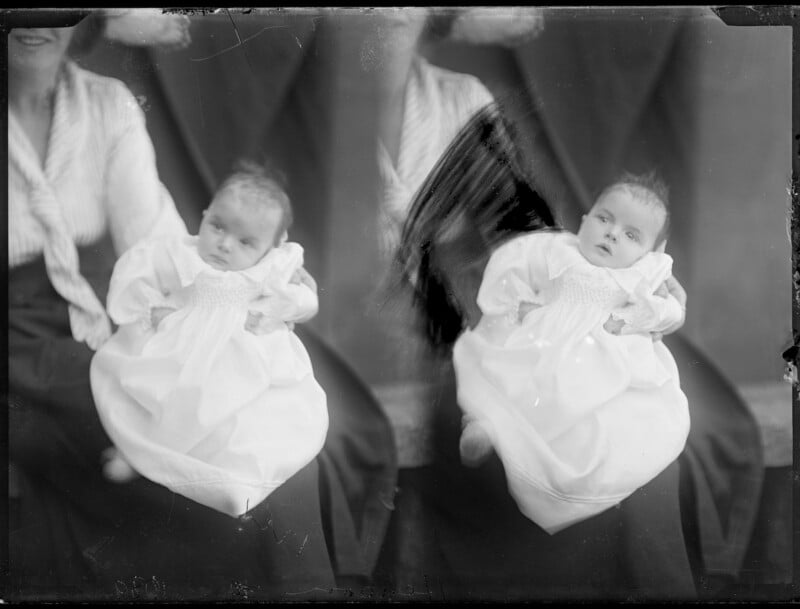
The daguerreotype and the wet plate process are very slow and require the lens to be open for exorbitant amounts of time. Sometimes as little as a few seconds, but sometimes subjects needed to hold perfectly still for minutes on end. These longer exposure times pushed the boundaries of what a human can endure. In my natural light studio, a typical exposure time ranges depending on the time of the year between 6-12 seconds. This may not seem long to many people, but those who have had their wet plate taken in the modern day learn quickly that it can feel like an eternity.
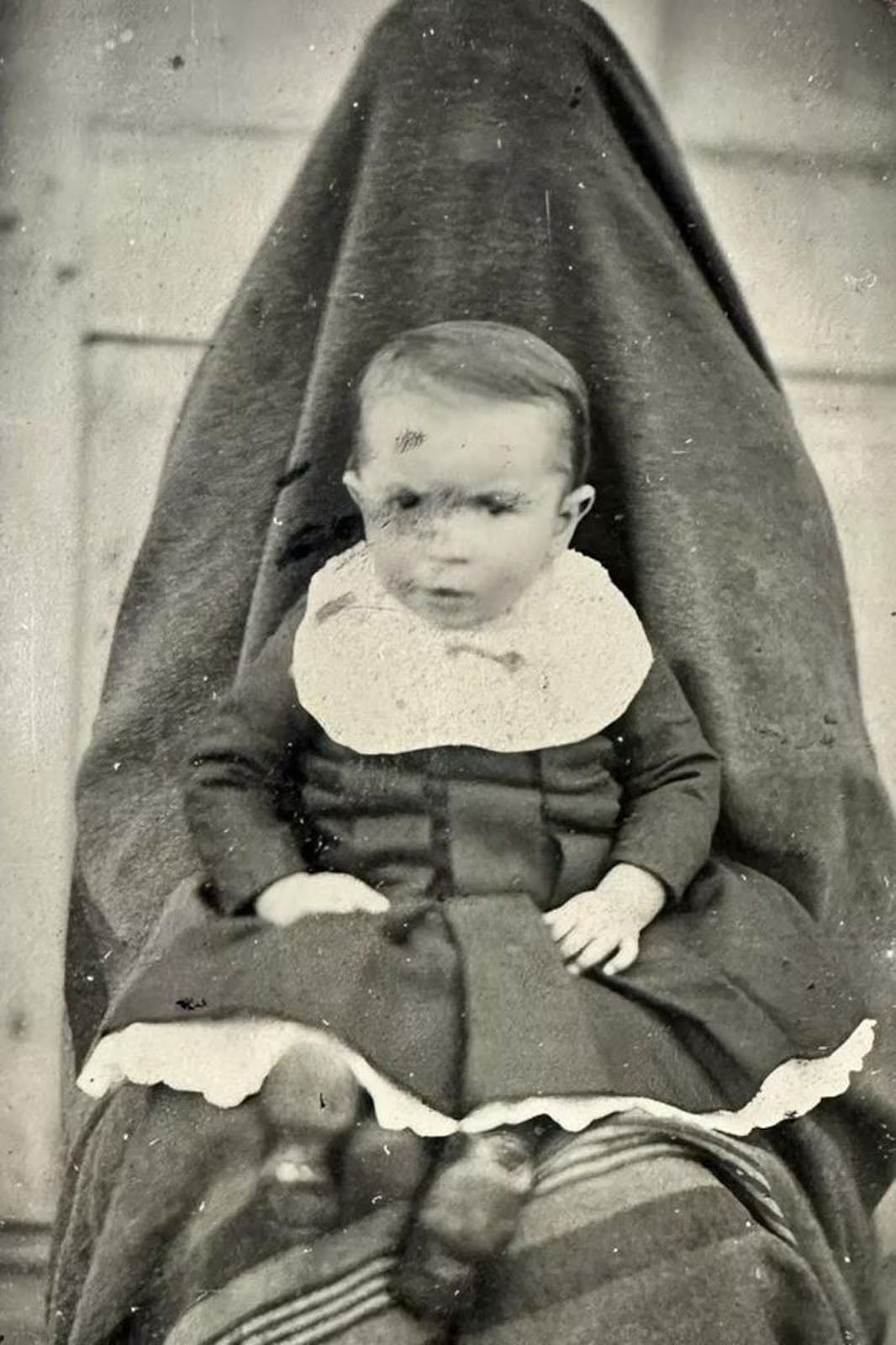
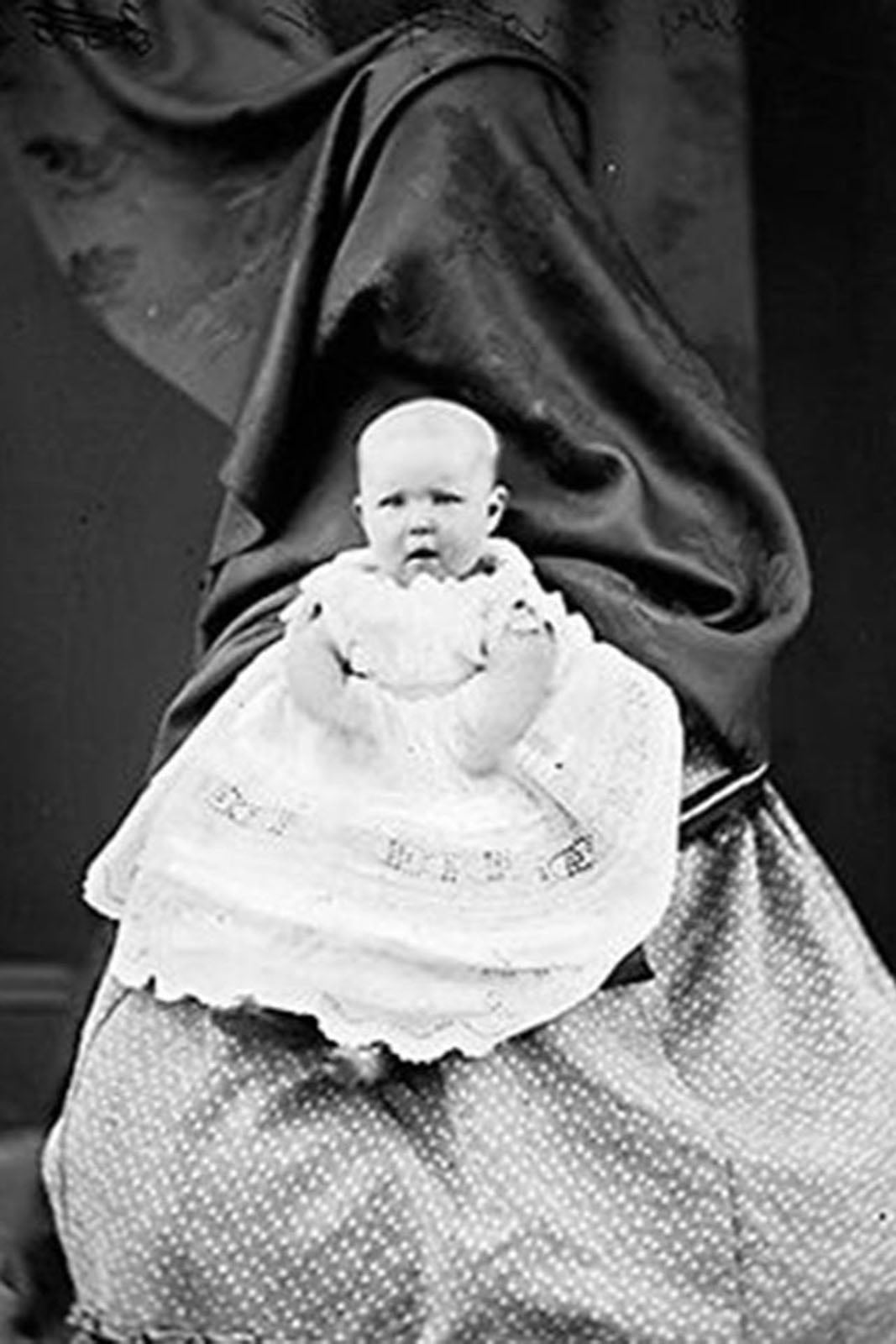
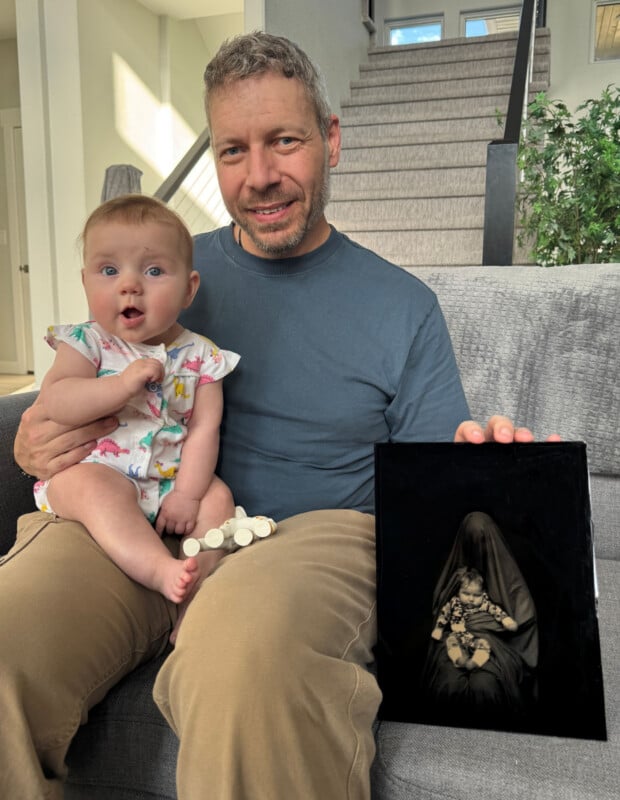
I decided to pay homage to this unique technique in my own natural light studio. I practice the wet plate process invented by Frederick Scott Archer, and it is the only process I care to know. I have always said, “If they could do it 170 years ago, I should be able to do it today .”I asked my dear friend Dana if we could attempt a plate by taking a portrait of her adorable new daughter, Mazie.
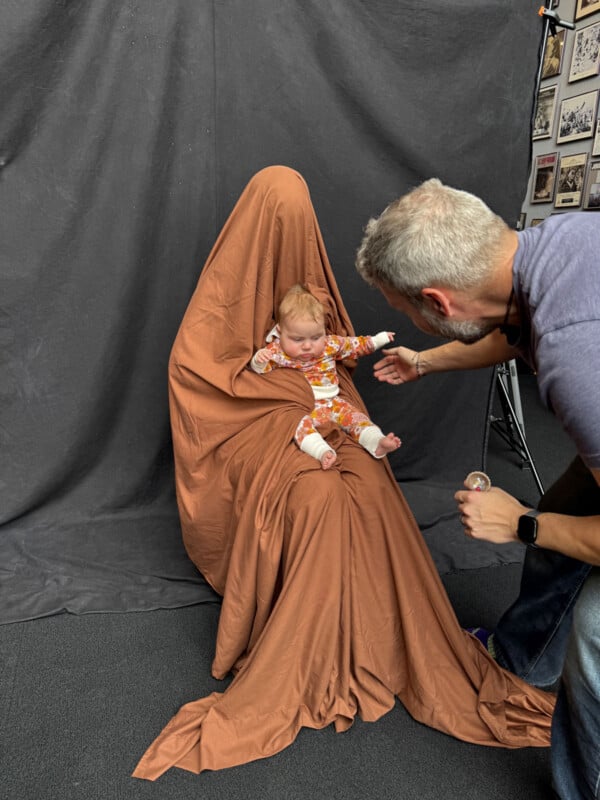
I learned that this technique was effective for many reasons. Mazie had no idea that her mother was shrouded. She could still feel her touch and hear her voice, which comforted her as her mother tried to get her to hold still. Dana stabilized Mazie, which removed any chance the baby would fall over or off the chair. In many of the historic examples that I found, you could see an arm aiding the child’s position. We also had the added advantage of having Mazie’s father, Chris, with us. He could be the “safe” face in her field of view, and shaking her favorite rattle did the trick.
The exposure time was 8 seconds, and she held relatively still. She happened to kick her little legs with 2 seconds to go, and the movement was evident on the final plate. I used my Alessadro Gibellini 8×10 large format camera with a Carl Zeiss Tessar 250mm lens, f/4.5 (wide open), for anyone interested in plate photograph technical details. The final image is silver on glass and fully archival. The plate and subsequent photograph will last 1000 years unbroken.
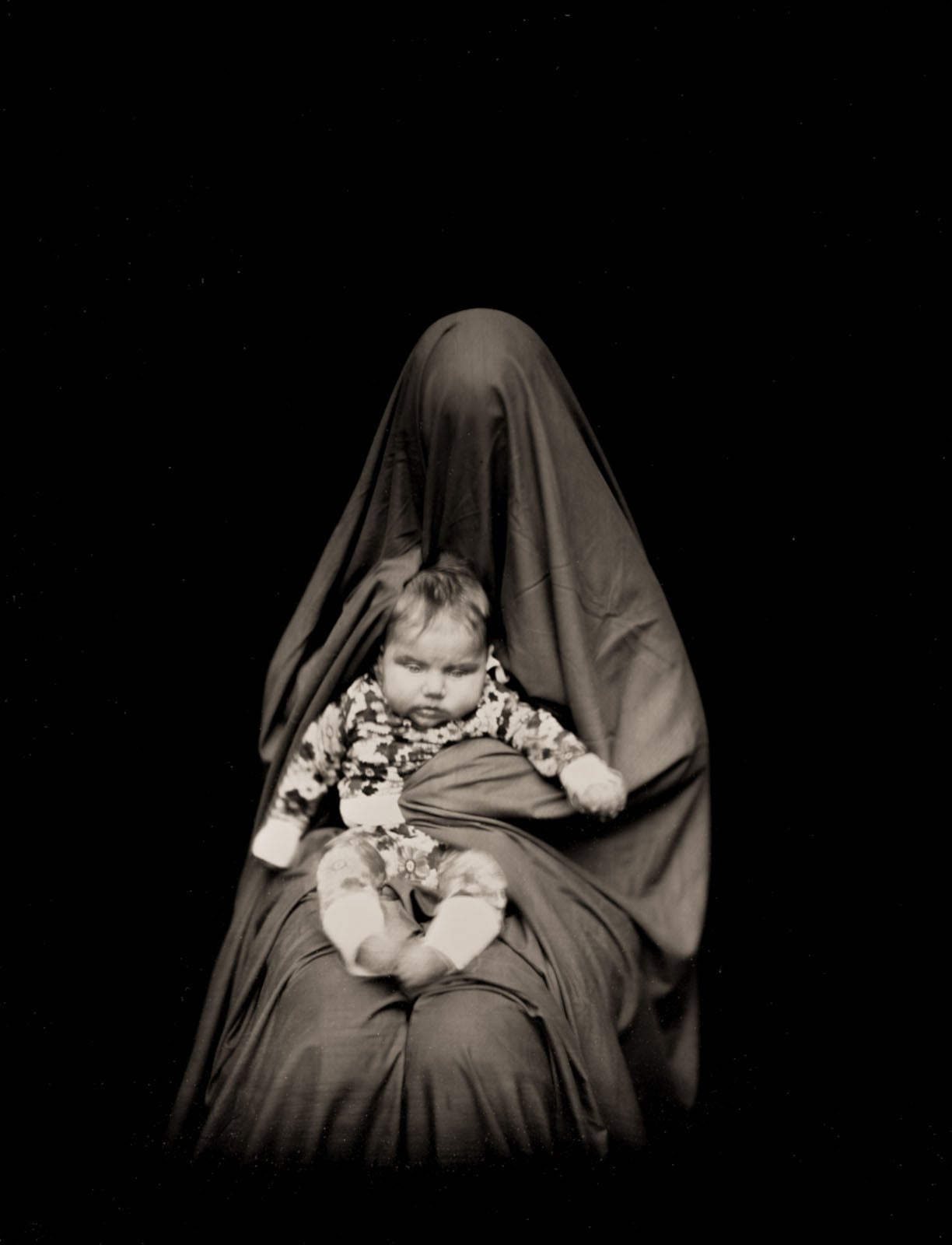
By Shane Balkowitsch at Nostalgic Glass Wet Plate Studio
It wasn’t only children who had trouble holding still in the Victorian era. Many adults find it very daunting to remain motionless for these long exposures. Also remember, some exposures could last minutes on end, depending on the process, the lens, and the available light. A device called a headbrace or posing stand was an important tool in any historic photography studio. I have seen many adults succumb to the pressure of a ten-second exposure in my studio.
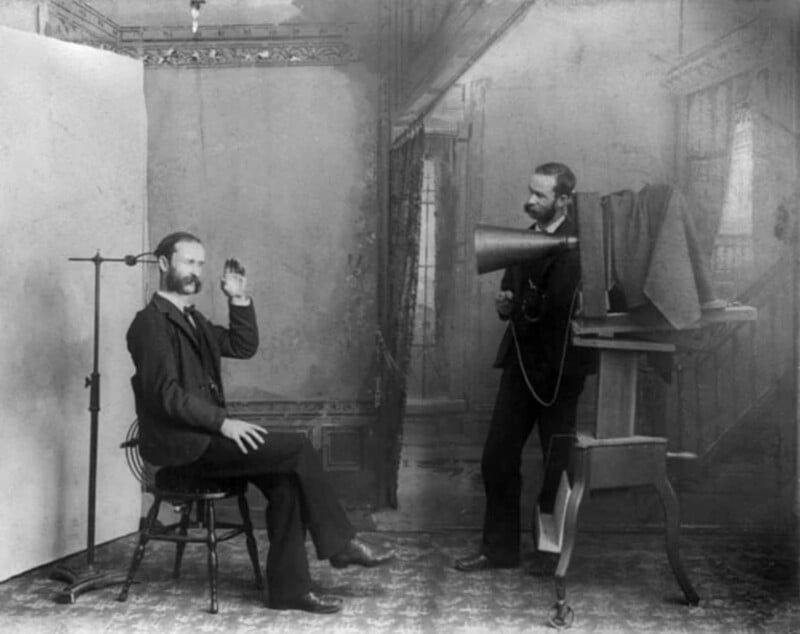
The head brace stabilized the sitter (the person in the chair), and it was a useful tool for these long exposures. The sitter would then only need to worry about blinking. If the sitter felt the human need to blink during the exposure, and they did it quickly, the photographic process was so slow it wouldn’t affect the focus of the final photo. Very few of these original headbraces still exist. They served no other purpose after photographic plates and film became much faster. I have seen good original examples selling upwards of $10,000 at auction. The headbrace that I use weekly in my studio was cast at a modern-day foundry from an original example.
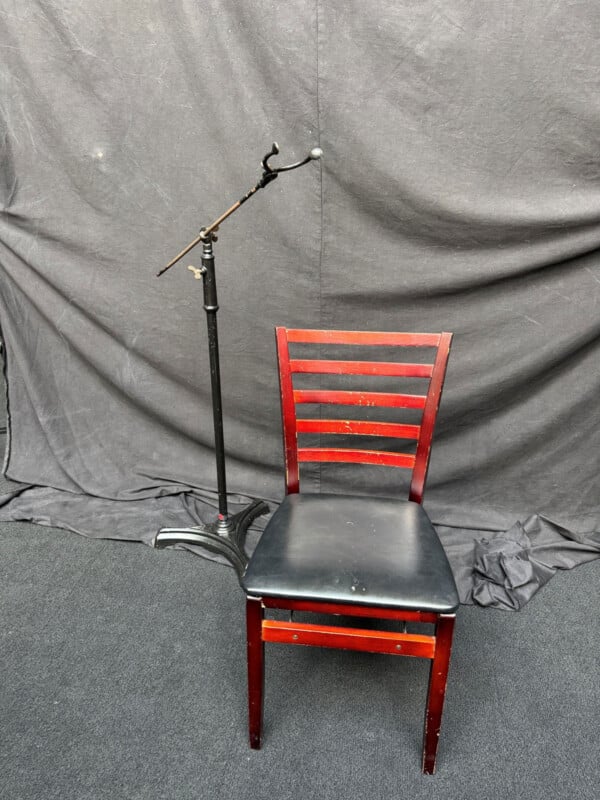
There is a huge misconception as for the use of these headbraces. Laymen today see one of these devices in a historic photo and assume the person is “dead” and that the photograph is a “post-mortem” photograph. This could not be further from the truth. The term “dead weight” has a meaning, and there is no way that one of these metal stands could hold up someone deceased.
What we do know is that the “Hidden Mother” craze from the 1800s has created much fascination in the modern 21st Century. These photographs are often grouped with ghost or spirit photography and fetch a premium when they come up for sale. In 2013 Italian-Swedish artist Linda Fregni Nagler published a book “The Hidden Mother” which features over 1,000 such photographs. The book currently sells for $1,976.00 on Amazon.
As you can see, when the veil, pardon the pun, is pulled back, there is a reasonable explanation for these “ghoulish” historical records. We need to put ourselves back in time when technology was simply different. Long exposures were commonplace, and a photographer and a mother would go to great lengths just to capture a photograph of a child. We take our present cell phone cameras for granted, and photographs were not always instant or free. Everyone today has a camera; that certainly wasn’t the case in the 1850s. Photographers practiced composition, and it sometimes took hours to “set up” the shot. They thought these shots through and agonized over them before the shutter was ever opened.
Amazingly, these plates and prints have survived to this day. We must ask ourselves: will all the digital photographs we are taking today make it into the future? Surely the software and hardware these photographs rely on will become obsolete and be forgotten. A very small portion, far less than 1% of the digital photographs of today, are ever printed and brought into the real world. We may have perfected and made photography accessible to everyone at a very low cost, but will it matter hundreds of years from now? Only time will tell. Until then, we can keep seeking out historical examples of different genres of photography from the past and appreciate them for what they are: interesting and historical.
About the author: Shane Balkowitsch is a wet plate collodion photographer. He has practiced this historic process for over a decade, a process Frederick Scott Archer introduced to the world in 1851. He does not own a digital camera; analog is all he knows. He has original plates at 117 museums around the globe including the Smithsonian, Library of Congress, The Pitt Rivers Museum at the University of Oxford, and the Royal Photographic Society in the United Kingdom. He is a professor of photography at Bismarck State College, where he teaches a bespoke course on wet plate collodion photography. He has been speaking out against A.I. and gives a lecture, “A.I. Pitfalls and Dangers for Humanity,” to college students. Instagram: @balkowitsch, Facebook: @balkowitsch
Shane is a frequent contributor to PetaPixel. Here are some of his previous articles:
- A.I. Imagery Is Not Photography, It Never Will Be
- A.I. Imagery May Destroy History As We Know It
- Art and A.I.: Debating the Definition of Creativity
- Does The World Need Images of Fake A.I. People?
- Time Machines Exist — They Are Called Photographs
- Why is Pamela Anderson Not Allowed to Age?
Affiliate Disclosure PetaPixel articles may include affiliate links; we may earn a commission if you buy through one.