Dem bones
New forensic evidence supports Egyptian “retainer sacrifice”
Fresh analysis of First Dynasty mass burials finds signs of fatal blunt force trauma on 39 percent of skulls
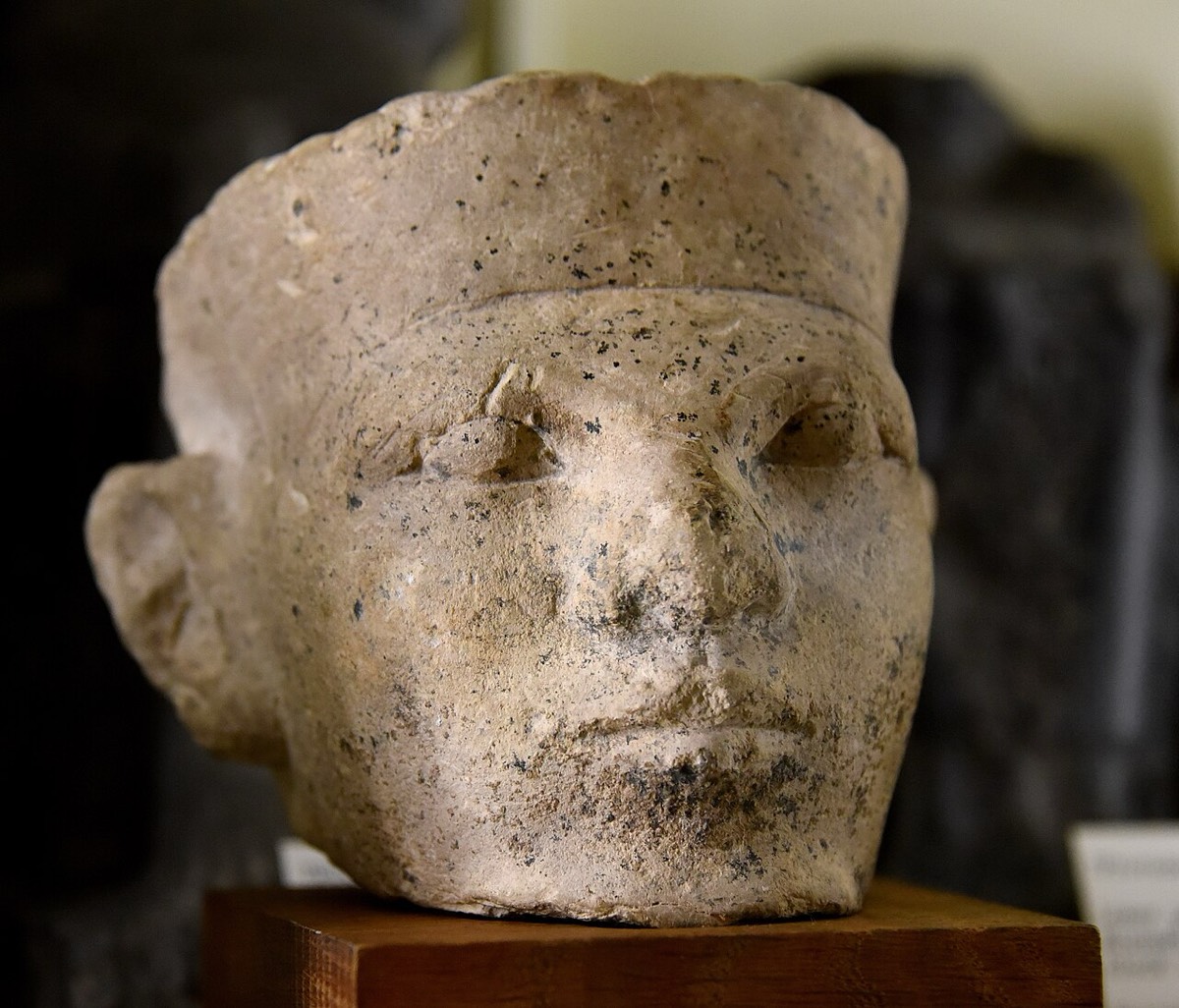
Egyptologists have long debated whether the earliest pharoahs of the First Dynasty were buried with various servants and officials to serve them in the afterlife—a form of human sacrifice. But there is very little archaeological evidence available, given that many of the earliest Egyptian tombs were plundered and/or hastily excavated. A new paper published in the journal Frontiers in Environmental Archaeology reassesses a collection of skulls excavated from tombs in the 1920s and concludes that over one-third show evidence of blunt force trauma. This suggests that they may have been victims of so-called “retainer sacrifice.”
Author Roselyn Campbell is a bioarchaeologist at Purdue University who has long been fascinated with the history of human sacrifice. “I’m interested in how we as human beings decide which types of violence are okay and which are not, and how we even define violence,” Campbell told Ars. “It’s very context specific. We have to be careful not to extend our own ideas about what violence is and how it’s used into other cultures. With Egypt, we have such a long history of European and colonial archeology; they came in with very specific ideas about what this culture was. You really have to make an effort to contextualize the legacy data we have.”
Naturally she found the debate over whether ancient Egyptians practiced retainer sacrifice pertinent to her interests. “People tend to fall into one of two camps,” said Campbell. “Either retainer sacrifice definitely happened, end of discussion, or it definitely didn’t happen, end of discussion. But nobody’s actually looked at the bones in a very long time.” Forensic science has advanced considerably over the last century, so re-analysis could be useful. Complicating matters is the fact that older sets of remains are often incomplete and/or modified for preservation, destroying vital forensic information in the process.
Cold case files
As a case study, Campbell turned to a collection of human remains first excavated by famed British archaeologist Flinders Petrie in the 1920s, from the Abydos site in southern Egypt. Abydos is the site of a royal necropolis where many of the early pharoahs were buried, along with many ancient temples. (It’s also the home of what may be the world’s oldest brewery.) This particular set of remains—46 crania stored at Cambridge University— came from the Umm el-Qaab cemetary, which contains subsidiary burials presumed to be retainers of deceased First Dynasty rulers. Petrie noted several grave markers with names and official titles, mostly lower to mid-level officials and artisans.
This site may offer the strongest evidence of retainer sacrifice in Egypt, given the large number of subsidiary graves around the royal tombs and enclosures, many of which seem to have been filled and sealed all at once, instead of a different times, which is more common in shared Egyptian gravesites. Certainly Petrie believed this to be the case.
But proving it beyond reasonable doubt is another matter. Petrie kept meticulous notes, recording and photographing all the graves, and brought in medical doctors to analyze human remains, primarily the crania. Then Petrie coated the skulls in paraffin for preservation and shipped them back to England. He did measure the long bones of 96 different people before reburying them in a pit, all mixed together.
“At the time, it was very common to focus most of the attention on the skull, and part of that was because phrenology and similar ideas held sway,” said Campbell. “There were these deeply racist ideas about your cranial capacity being tied to your racial phenotype and intelligence. Petrie was particularly racist, a proponent of dynastic race theory. He believed some outside culture must have come into the Nile Valley and built all these beautiful monuments because surely the native Egyptians wouldn’t have been able to do that.”
As for dumping the rest of the bones in a mass grave, “They had found so many remains so the bones were treated fairly casually,” said Campbell. “Petrie was, in many ways, ahead of his time as far as taking notes, but he was also a product of his time. I’m sure in 100 years people will be shocked by the things that we have done. This is just part of science. It continually self-corrects. These days, we try to make sure that we preserve as much knowledge as possible. Our methods may be the best we have now, but if science works as it should, in 100 years, they’ll have much better methods. We want to preserve as much as we can for those future scientists.”
Telltale fractures
Campbell re-examined the 46 crania to ascertain age and sex, as well as clues about their health and how the individuals may have died. Her findings with regard to biological sex were largely consistent with Petrie’s, although Campbell cautions that it’s difficult to make a conclusive finding based only on the skulls; one would need the pelvic bones to be sure. Even if she had the funds and the time to re-excavate those remains, it would be extremely difficult to match the bones to their respective crania.
Most interesting was the presence of linear fractures in 18 of the skulls (about 39 percent), suggesting blunt force trauma. Such fractures would have knocked the individuals unconscious, causing internal bleeding and likely death, per Campbell. Some of the skulls also showed signs of sharp-force trauma, including signs of chopping to one of the skull’s eyes. As for how the others might have died, scholars have suggested asphyxiation, strangulation, or poisoning.
Petrie didn’t note any evidence of fatal trauma on the remains, but the field has advanced considerably over the last century. “I don’t think he missed them because he was a pretty careful observer,” said Campbell. “He just didn’t know what he was looking at. It’s only in the past few decades that we’ve gotten a much clearer understanding of how to differentiate the timing of an injury. A lot of that is studying how dry bone, fresh bone, bone that is exposed to different types of forces will react to different types of insults. If you don’t know that a bone is going to break differently if it’s 100 years old versus 1,000 years old versus 6 days old, you would see a crack and go, ‘Oh, well, it probably happened during excavation.’ That’s not uncommon, unfortunately.”
While Egyptian rulers are often shown smiting enemies with a mace, such a weapon would have caused depressed fractures, not the lineaer variety observed here, so it is more likely to have been a flat, wide, lighter weapon of some kind. “It’s really hard to say specifically,” said Campbell. “It could be as simple as a board. Petrie thought it could have been a sandbag. Honestly, sandbags are very heavy, and I think the force required to swing a large sandbag might’ve caused more damage, but you could easily fashion some kind of wooden club. People use makeshift weapons all the time.”
As for why retainer sacrifice emerged in the first place, “When you establish a new form of government, especially one that relies on a single divine or semi-divine ruler, you have to convince a huge population that you’re in power, and control over life or death is one of the best ways to do that,” said Campbell. “And it seems likely that there was already belief in an afterlife. Why else would you need objects in your tomb? Why else would you need to take your officials and servants into the afterlife? This suggests they’re going to have a function after death. If you just want to kill people to display your power, you could pick a bunch of poor farmers and nobody would necessarily care.”
“Egypt’s first dynasty did not spring out of nothing,” said Campbell. “We have societies that were rich and stratified with potential evidence for violence, maybe human sacrifice, before this period all along the Nile. What is interesting about the First Dynasty burials is the scale, and it dies out very quickly. It is economically very costly to kill off hundreds of people every 20 to 40 years. That’s not really sustainable.”
DOI: Frontiers in Environmental Archaeology, 2026. 10.3389/fearc.2026.1858940 (About DOIs).