“This business will get out of control”
Drones sink ships near NATO countries in “unacceptable” attacks, EU says
Two cargo ships have sunk, one ship was afire, and sailors are dead or missing.
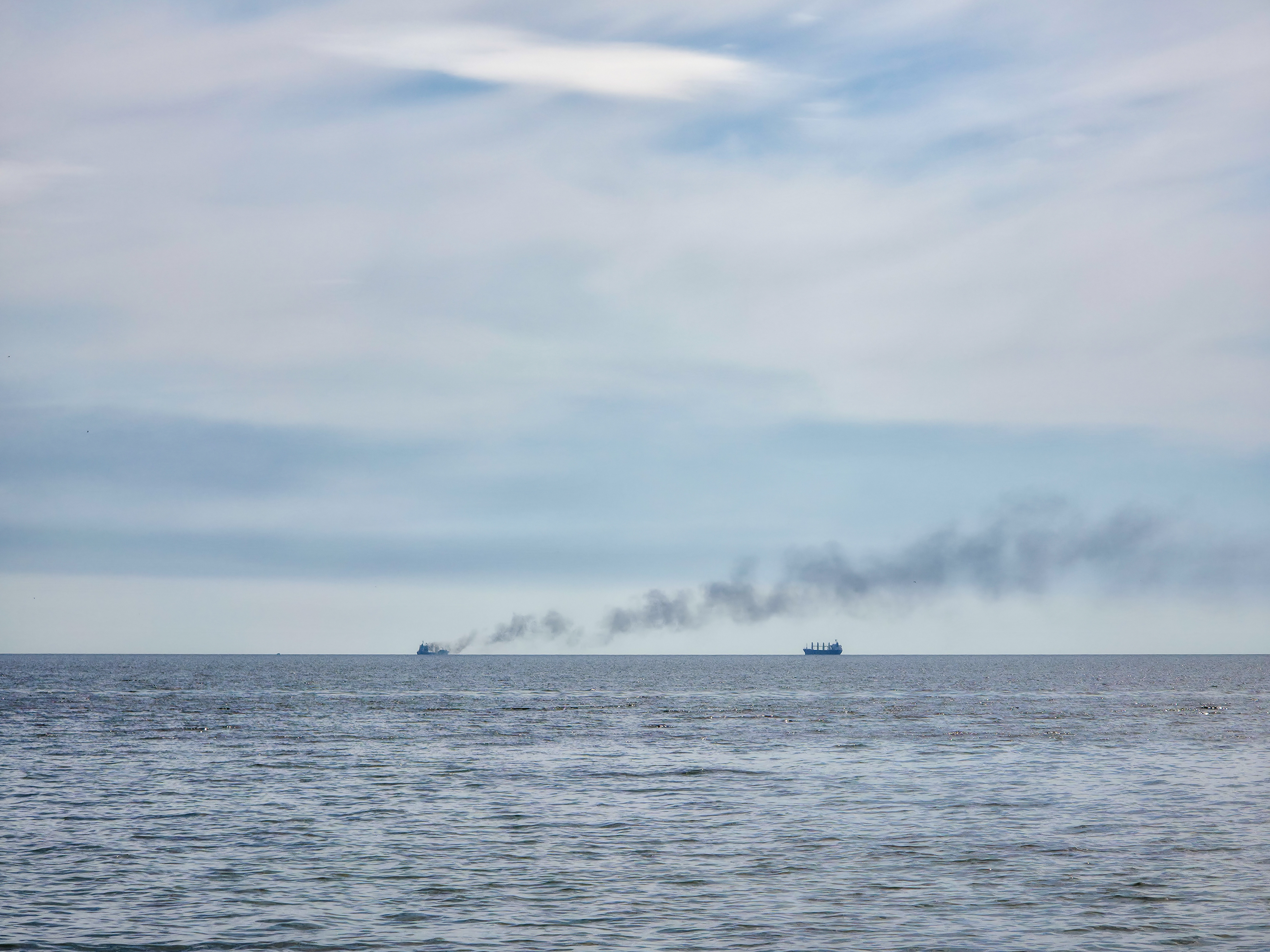
Drones sank two cargo ships and damaged a third in the exclusive economic zones of NATO member countries for the first time, killing at least two sailors. The attacks represent a notable escalation as Black Sea commercial shipping has increasingly come under attack during the Russian invasion of Ukraine, with Russia also being accused of carrying out “hybrid warfare” incidents across Europe.
The Togo-flagged cargo ship Alfa Watan sank, and the Palau-flagged cargo ship Able was set ablaze after being attacked by multiple sea and aerial drones about 80 miles (128 kilometers) off the coast of Bulgaria on October 6, according to the Associated Press. In an interview, Bulgarian Prime Minister Rumen Radev described the incidents as “an unacceptable attack in Bulgaria’s exclusive economic zone” and “a blatant violation of international law and maritime law.”
The fate of the Alfa Watan’s crew was not immediately known after the vessel sank. A Bulgarian ferry managed to evacuate the 18 crew members of the Able, with two severely injured mariners being flown to a hospital in the city of Varna.
This comes one day after drones struck the Turkish-owned cargo ship named Royad Mammadov within Romania’s exclusive economic zone in the Black Sea on October 5. That ship caught fire and eventually sank, with 11 crew members rescued by Romanian ships and helicopters while one crew member remains missing, according to Euronews. Two crew members were killed.
European Union president Ursula von der Leyen described the drone strikes on the three vessels in the Black Sea as “increasingly concerning” in a post on X. But she also cautioned that the circumstances of the attacks are “still being established” without naming a probable attacker.
“Attacks on civilian shipping are unacceptable,” Leyen wrote. “We stand in full solidarity with our Member States on the Eastern flank.”
By contrast, Ukrainian President Volodymyr Zelenskyy described a joint investigation with Bulgaria’s navy as finding that the latest strikes represented a “Russian combined attack using both sea and aerial drones,” Reuters reported. Zelenskyy also said that Ukraine’s military was not conducting operations in that part of the Black Sea.
Widening Black Sea warfare
The attacks represent the widening consequences of the ongoing war that escalated sharply with Russia’s full-scale invasion of Ukraine in February 2022. Despite lacking much of a traditional navy, Ukraine has successfully challenged Russian naval control of the Black Sea by deploying both aerial drones and drone boats to strike Russian warships and ports.
Ukrainian drones have also stepped up attacks on Russian-linked oil and gas tankers along with other supply ships. In a milestone for naval warfare, a Ukrainian sea drone even used a machine gun to sink a Russian kamikaze drone boat carrying explosives in September 2026.
But Russia has also increasingly deployed its own aerial drones and sea drones to attack Ukrainian ships and ports, along with attacking international commercial ships carrying grain and other cargo from Ukraine or docked in Ukrainian ports.
The cargo ship Able was carrying wheat and sailing south when the drones attacked, while the Alfa Watan was heading north with the cargo being unknown. The Royad Mammadov had been carrying corn loaded in the Ukrainian port of Ismail when it was reportedly attacked by both aerial drones and drone boats.
In a social media post reacting to the earlier attack on the Royad Mammadov, Zelenskyy condemned the “horrific strike by two Russian drones on a civilian vessel in neutral waters” and reiterated Ukrainian efforts to “de-escalate the situation and ensure security in the Black Sea.”
“But Russia consistently chooses terror and sinking civilian vessels instead of normal maritime navigation,” Zelenskyy wrote. “Pressure is needed to restore global food security.”
Zelenskyy also referred to “relevant proposals from third countries” on this topic. India has been holding discussions with both Ukraine and Russia on safeguarding shipping in the Black Sea and has generally called for a halt to the fighting, according to Bloomberg News.
India has a strategic partnership with Russia that includes the Indian military using Russian fighter jets and air defense systems, while the country continues to purchase Russian oil for its energy needs. But many Indian citizens also work as seafarers on commercial vessels that have come under attack in the Black Sea and Strait of Hormuz, with three Indian nationals having been aboard the Royad Mammadov and one being injured in the attack.
Hybrid warfare in Europe
The latest drone strikes on ships off the coasts of Romania and Bulgaria coincide with a growing number of incidents attributed to Russian hybrid warfare or gray-zone tactics aimed at multiple European countries within the NATO alliance. Russian embassy officials have denied this, but the evidence continues to accumulate, with multiple European governments pointing to Russia.
For example, Romanian military divers previously destroyed two Russian-made drones found floating in the Black Sea near the vital European natural gas project called Neptun Deep in August. A few weeks later, Romania scrambled fighter jets to disable a Russian drone boat loaded with explosives that was also discovered near the same offshore gas platform.
Germany has also formally accused Russia of organizing an attempted explosive drone attack on Ukrainian cargo aircraft parked at Leipzig Airport in August. Meanwhile, Estonia has also described Russian special services as being behind an arson attack on the Estonian company Milrem Robotics, which supplies Ukraine with military robotic vehicles.
Similarly, Poland has been investigating a fire at a state-owned satellite station using SpaceX’s Starlink communication service as an “act of sabotage” that aligns with a “new Russian doctrine of attack,” according to Polish Deputy Prime Minister Krzysztof Gawkowski as reported by BBC News.
Much of the NATO alliance is still rearming and trying to adapt to modern warfare dominated by drones, which both Ukraine and Russia have already spent years developing and practicing on the battlefield. But the Russian-instigated hybrid warfare across Europe poses a different immediate challenge—can NATO member countries agree on a strategy for discouraging sabotage and other provocative incidents from a nuclear-armed adversary?