Photographer Brings Speed to Life Through Jaw-Dropping Plane Photos
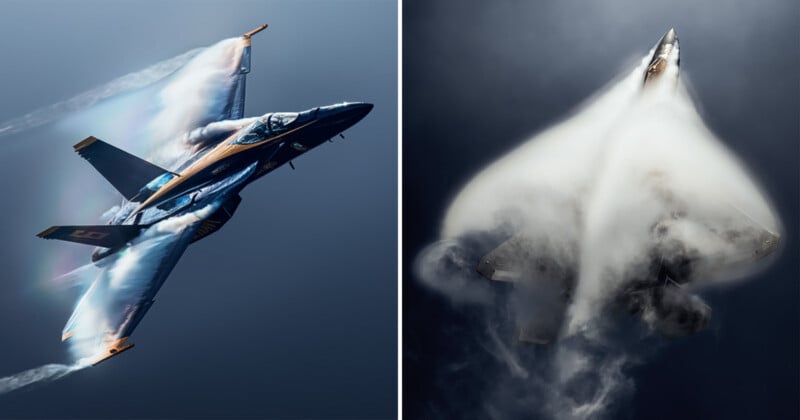
Italian photographer Simone Marulli is at the very apex of aviation photography. PetaPixel spoke to Marulli about his incredible photos of planes, including commercial airliners and fighter jets alike.
A Lifetime of Loving Photography With a 25-Year Layover In Computer Graphics
Marulli has loved photography his entire life.
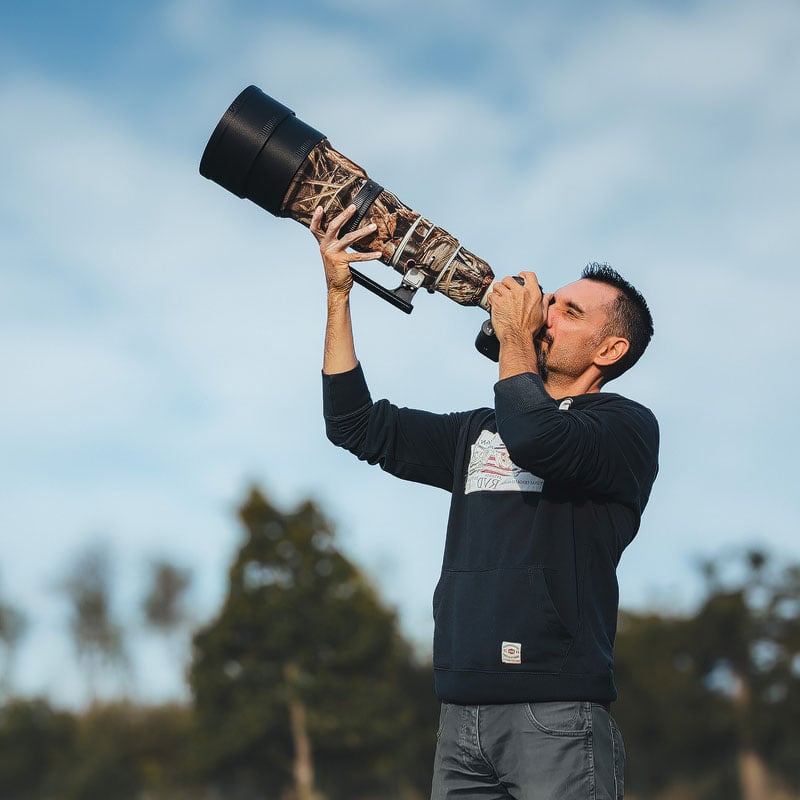
“Photography came into my life through my father, long before I ever thought of becoming a photographer. He gave me his fully manual film camera when I was still a child and would ask me to take pictures of him and my mother. He took thousands of photographs and slides throughout his life,” Marulli tells PetaPixel.
He says the family often gathered around the slide projector after dinner to look at family photos.
“The slides had been developed, the room would go dark, and suddenly these moments were alive again on the wall,” Marulli says.
Through his photography today, Marulli’s subjects, often planes but sometimes wildlife and landscapes, come alive, too. Marulli’s love for the medium is immediately clear in his work, and he believes his passion began as a child, looking at family photos.
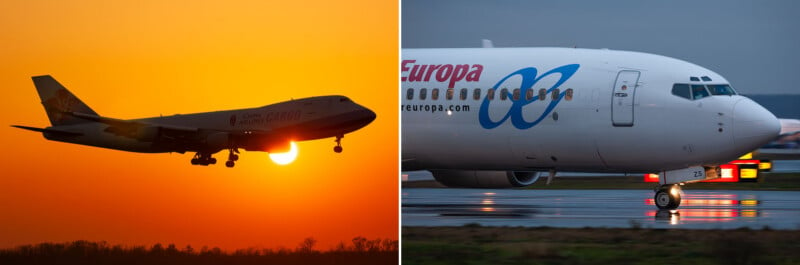
It took Marulli a while to find his way back to photography as an adult, though. His professional career began in 3D graphics and animation instead. He worked in that field for 25 years.
“3D taught me how to build an image from nothing,” Marulli says. “It taught me about light, composition, color, balance, and patience. It changed the way I looked at the world.”
In contrast to 3D graphics, though, Marulli cannot “create” images from thin air from behind the lens. With computer graphics, he could build the world. As a photographer, he must instead capture it, which can mean waiting for the right moment, which does not always arrive.
“In 3D, I could control almost everything,” Marulli says. “In photography, reality had its own plans. I couldn’t control the weather, the light, or the aircraft. I could only prepare, be present, and hope that, for a few seconds, everything would come together.”
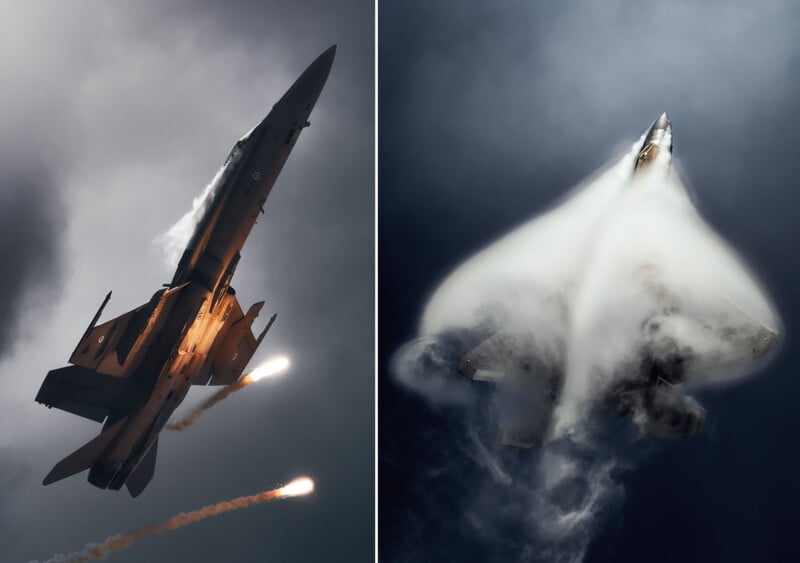
Marulli’s 3D graphics background also offers him a different way of viewing photography.
“My background in 3D taught me to think in terms of light, color, balance, and visual hierarchy long before I ever opened a RAW file. When I’m looking through the viewfinder, I’m not just seeing what the camera sees. I’m mentally stripping away distractions and imagining the finished photograph hanging on a wall,” he says.
Envisioning the final photograph is a common skill among extremely talented, experienced photographers, and Marulli is confident his background in computer graphics makes it easier to imagine the processed photo.
“That vision influences every decision I make in the field: where I stand, when I press the shutter, how I use the light, and even whether an image is worth taking in the first place.”
Revealing Reality Through Processing
Post-processing isn’t a solution for fixing problems in a photo, nor a way to change reality. For Marulli, post-processing helps him reveal the underlying photo that made him press the shutter in the first place.
He has developed a recognizable, consistent style built upon rich tones, strong contrast, and deep colors. He relies heavily on fine details in his subjects, trying to make the viewer feel like they could reach out and touch the plane.
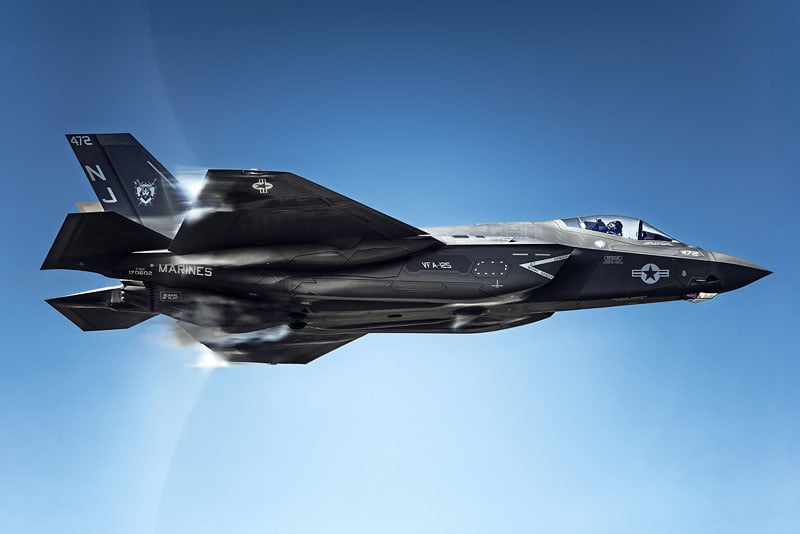
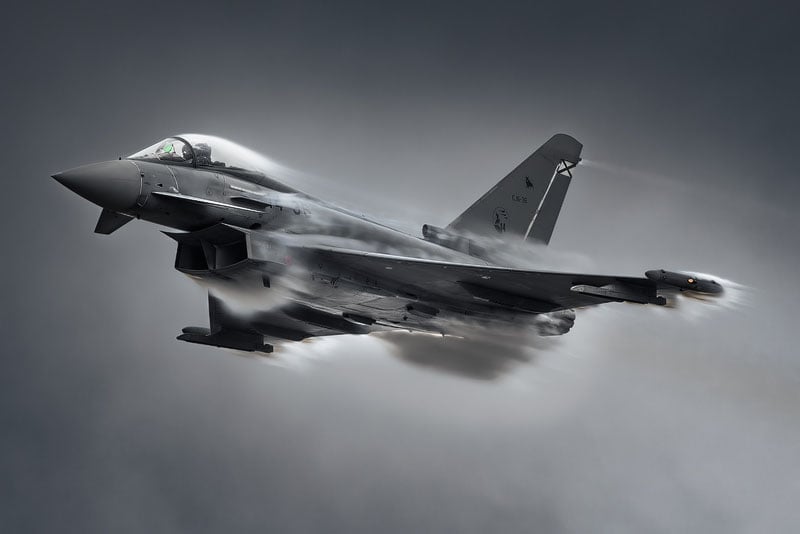
In aviation photography, the subject isn’t always just the plane, but the human inside the machine. The pilot in the cockpit is a huge part of the photo, even if they take up relatively little space in the frame.
For Marulli, his post-processing workflow removes distractions and makes photos more powerful.
“I don’t edit to make a photograph look better. I edit to make it feel as close as possible to what I experienced in that moment,” he says.
Aviation Photography Is Highly Specialized
Like many of life’s greatest loves, Marulli doesn’t know exactly why he loves aviation photography — he just knows that he does.
“It feels as though it has always been a part of me,” he explains.
One of Marulli’s very earliest memories is riding his bicycle 20 kilometers (over 12 miles) to a store to buy Strike Commander, a 1993 combat flight simulation computer game.
“The funny part is I didn’t even a computer capable of running it yet,” Marulli laughs. “I simply knew I wanted it.”
“Looking back, that probably says everything about how deep this passion already was,” he continues.
However, Marulli believes it wasn’t necessarily the planes themselves that captured his imagination, but what planes represent. It was never about the war aspects of fighter jets, either, but what humans can build when they are determined.
“For me, military aviation was one of the highest expressions of that pursuit,” Marulli says. “It brings together engineering, discipline, teamwork, precision, and an extraordinary level of trust.”
These aircraft are the culmination of extreme engineering capabilities and are piloted by remarkable people.
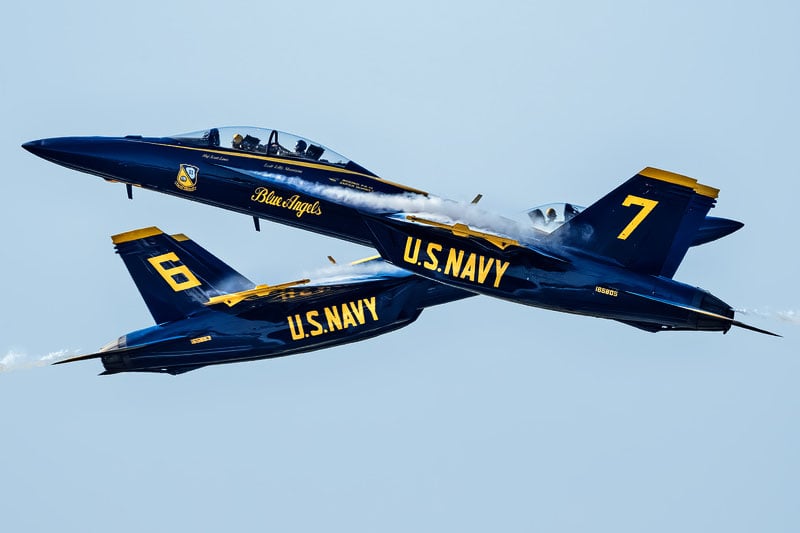
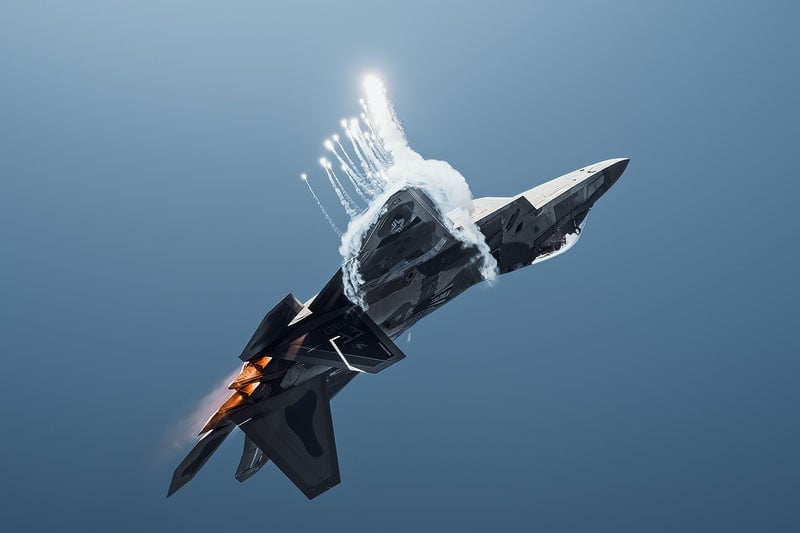
“In many ways, an aircraft is one of the most complex expressions of human ingenuity. Standing beneath one in flight is a reminder that curiosity, dedication, and countless people’s work can become something that once seemed impossible,” the photographer says.
Marulli adds that he thinks perhaps after all these years, he hasn’t really been photographing aircraft but rather humanity “at its most extraordinary.”
There’s also a huge part of aircraft that can be very tricky to capture in a still frame: their speed. When people think of a fighter jet, one of the first things that comes to mind is how fast it is. Eardrum-shattering, Mach-level speed.
A photograph is, of course, a single moment suspended in time. How photographers capture movement in a medium that is inherently unmoving is always fascinating.
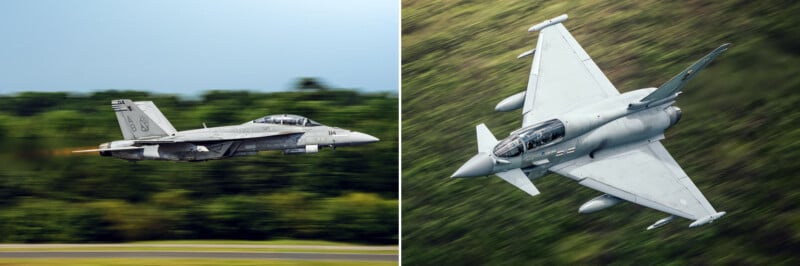
“Speed in a photograph is much more about perception than shutter speed,” Marulli says. “Of course, the technical side matters. I choose my shutter speed depending on the situation, the type of aircraft, the light, and what I want the image to communicate. Sometimes I’ll use a very fast shutter speed to freeze an instant of incredible intensity. Other times I’ll deliberately slow it down to introduce motion blur and create a stronger sense of movement.”
“But those settings are never the starting point.”
He is not thinking about shutter speed first, but energy.
“I’m asking myself questions like: ‘Where is the aircraft going? How is the light shaping it? What emotion do I want someone to feel when they look at this photograph?’” the photographer tells PetaPixel. ”Long before the aircraft reaches me, I’ve already composed the photograph in my mind. I know where I want it to enter the frame, where I want it to leave, and the exact instant that will best express the feeling I’m looking for. When that moment arrives, pressing the shutter becomes almost instinctive.”
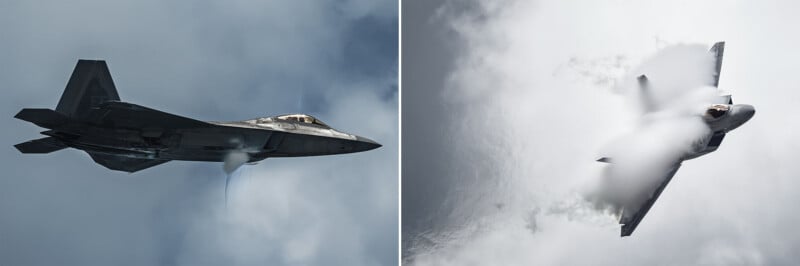
Marulli says that even against a clear sky, it’s still possible to capture a sense of movement and speed. The aircraft’s angle, the tension in its wings, telephoto compression, and its position in the frame all tell part of that story of speed and energy.
“Our brains naturally complete the motion,” he says.
“My years in 3D probably influenced this more than anything else. In animation, every line, every perspective, and every source of light contributes to the illusion of movement, even in a still frame. I still think that way today. I’m constantly looking for visual tension rather than simply documenting what’s in front of me,” Marulli describes.
“My goal isn’t simply to show speed. It’s to make the viewer feel that, even though the photograph is still, the aircraft never stopped moving.”
Marulli developed these aviation photography skills first with planes that weren’t especially fast. His photos of airliners at airports, so different from his photos of fighter jets screaming through the skies, were partly a result of accessibility.
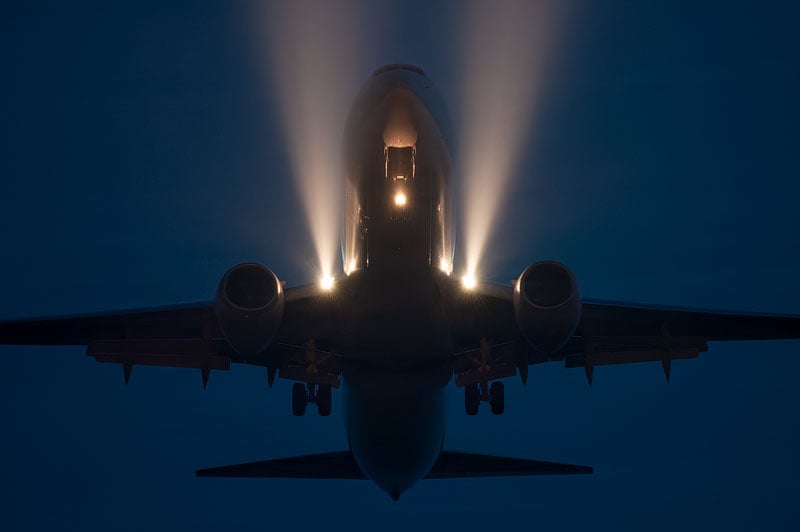
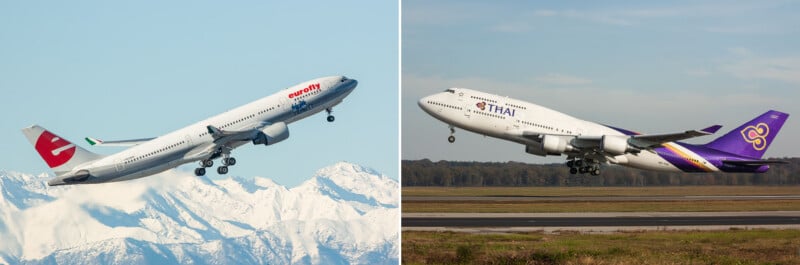
“In the early 2000s, commercial aviation was the world I could realistically access. It was my way into aviation photography,” the photographer asserts. “I spent countless hours at airports, learning, making mistakes, and slowly understanding how to photograph aircraft.”
“An aircraft, by itself, is an extraordinary machine. But what keeps bringing me back isn’t the machine alone,” he continues. “It’s that brief moment when everything aligns, the sound, the light, the anticipation, the skill of the pilot, the years of engineering behind the aircraft, and for a few seconds, you experience something almost impossible to explain.
“That’s the moment I’m chasing,” Marulli says. Photography is his way of preserving it.
How Can You Become an Aviation Photographer?
For those who are inspired by Marulli’s photos and want to take aviation images for themselves, Marulli has plenty of advice.
The first piece of advice is for all photographers, though: “Learn to be genuinely curious.”
For aviation, that means curiosity about the people, history, and engineering behind the planes. All of the things that make aviation possible in the first place matter.
“The more you understand what you’re looking at, the more meaningful your photographs will become,” Marulli says.
“The technical skills will come with time. Curiosity has to come first.”
From a practical standpoint, air shows are fantastic for budding aviation photographers. They’re an “incredible place to learn,” Marulli says. He captured some of his favorite shots during military exercises and public demonstrations at air shows.
Bird Photography and Aviation Photography Share Much In Common
But Marulli doesn’t just excel at photographing planes in the sky. He’s also a very good bird photographer, and the overlap between planes and birds is quite obvious from a technical perspective.
Both require fast autofocus, anticipatory skills, and quick reaction times.
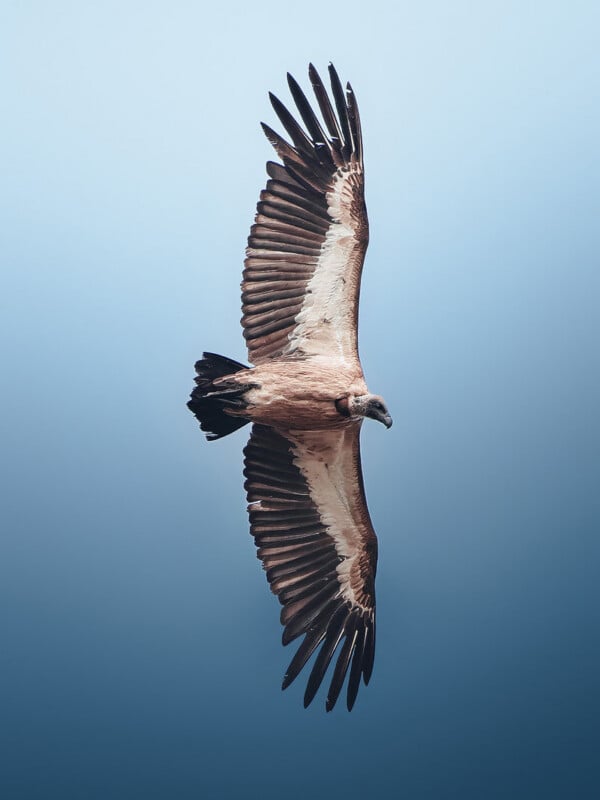
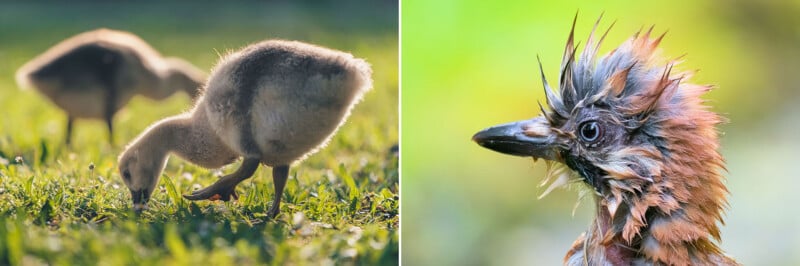
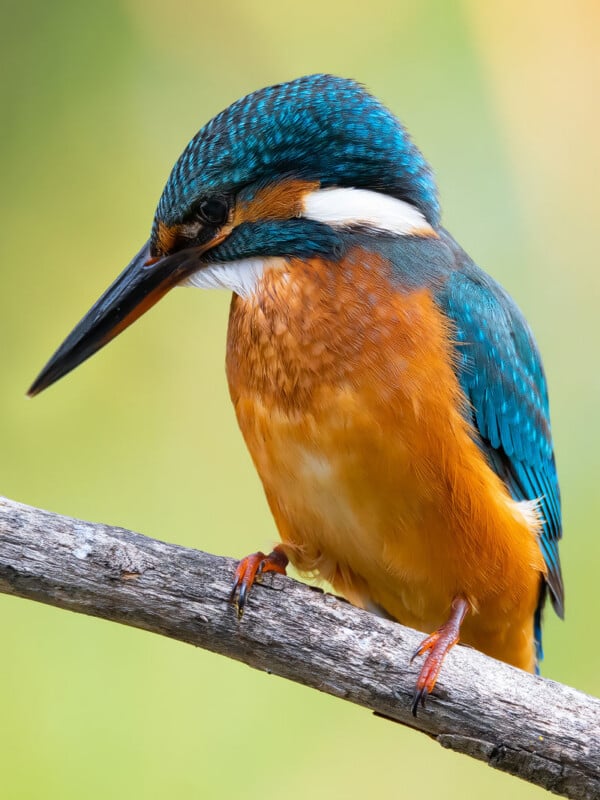

“Whether you’re photographing a fighter jet or a bird in flight, you rarely get to ask for a second chance,” Marulli says.
However, Marulli believes the deeper connection isn’t technical at all, but behavioral.
“It’s about observation,” he says. “Bird photography was actually an important school for me. Today it’s quite rare for me to dedicate an entire outing to wildlife, but for several years I spent countless hours photographing birds. Looking back, I realize I wasn’t just learning how to photograph birds, I was learning how to observe.”
No matter what he’s photographing, though, whether it’s planes, birds, or landscapes (yes, Marulli is great at that, too), he has the same goal: to make the viewer stop and marvel at the world.
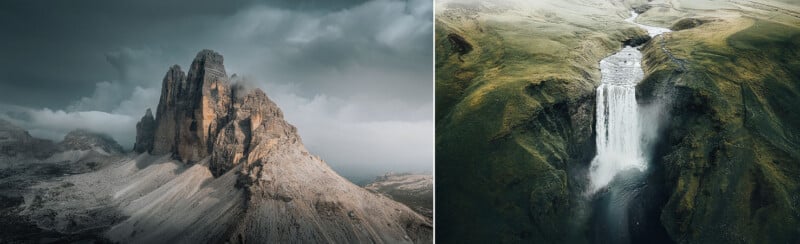
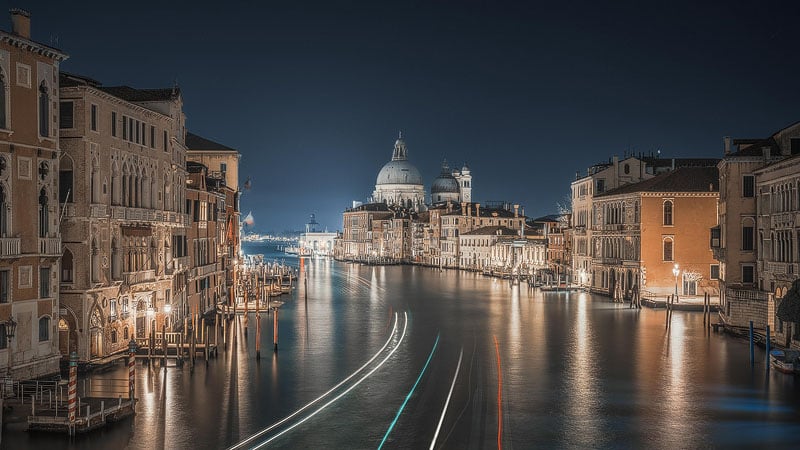

Although aviation photography is Marulli’s primary focus and drives most of his work and travel, he says he always makes time for wildlife and nature photography.
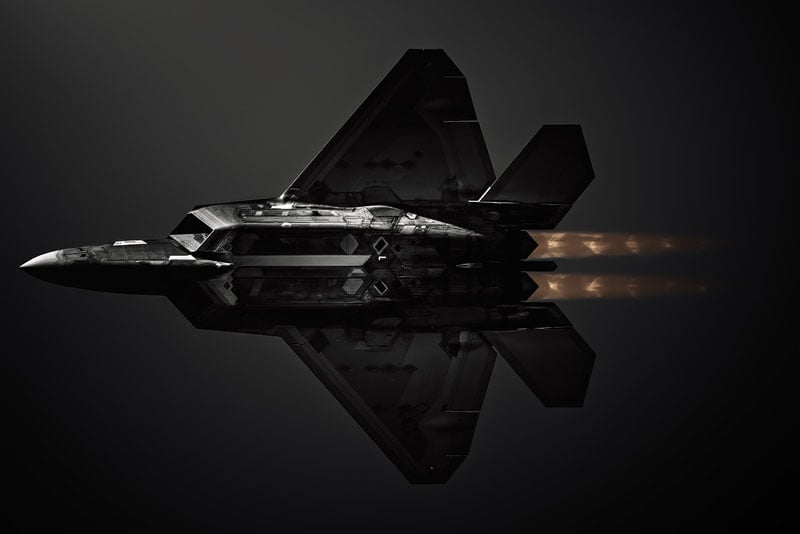
“Every encounter with something extraordinary, whether it’s an F-22 slicing through a mountain valley or a condor soaring above the Andes, reminds me of exactly the same feeling: wonder.”
The F-22 mention is important, as it’s a plane Marulli says he is especially fascinated by. Between the B-2 and the F-22 Raptor, it’s tough to pick a favorite, but each has its appeal.
“The B-2 is unlike anything else in the sky. Its design is timeless, almost surreal. Every time I see one, it still feels like watching the future fly overhead,” Marulli marvels. “The F-22 is something completely different. It’s an extraordinary combination of elegance, raw power, and engineering excellence. Photographing it is always exciting because no two displays ever feel exactly the same.”
Don’t Chase Photographs
Over 25 years of doing it, though, one lesson stands above the rest.
“Don’t chase photographs,” Marulli warns. “Chase experiences.”
“When you focus only on coming home with a spectacular image, you’ll often leave disappointed. When you focus on being fully present, watching, listening, learning, meeting people, understanding the environment, you’ll come home with something much more valuable. Sometimes that will be a photograph. Sometimes it will simply be a memory that changes the way you see the world.”
“The day you stop looking up with the same curiosity you had as a child is the day your photographs will start losing something, even if they become technically perfect. Protect that curiosity. Protect that sense of wonder. Everything else can be learned,” Marulli concludes.
Image creditsSimone Marulli
Affiliate Disclosure PetaPixel articles may include affiliate links; we may earn a commission if you buy through one.