a Faustian bargain?
What happens to mathematics when AI becomes an oracle?
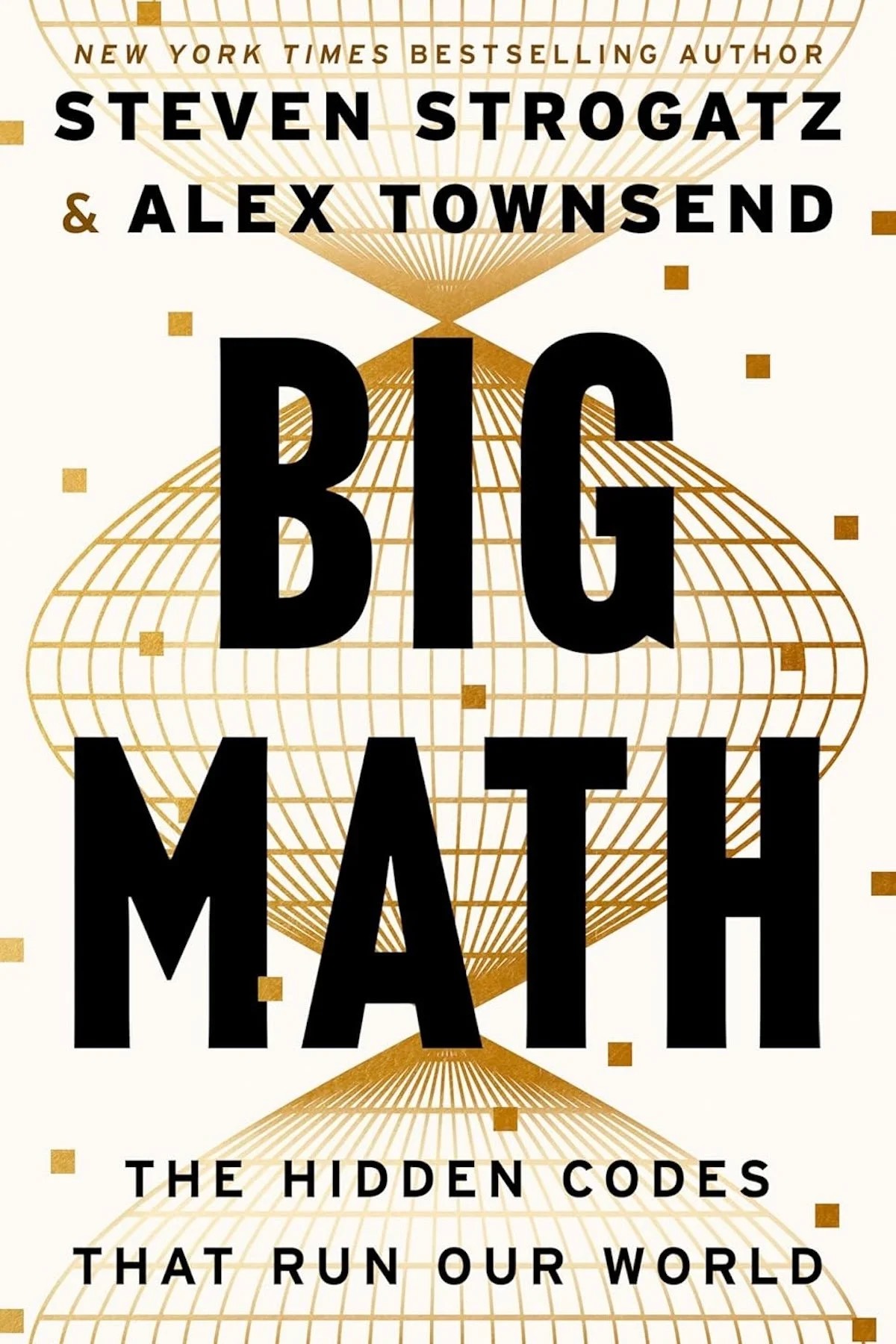
Mathematician Steven Strogatz discusses his new book, Big Math: The Hidden Codes That Run Our World.

Our modern world runs on math, from social media algorithms, package delivery, and weather prediction to medical imaging and machine learning. The rise of computers helped fuel its dominance, enabling us to work with increasingly large numbers that would otherwise be beyond the capacity of our finite human brains. But with the rise of large language models, AI chatbots, and, soon, quantum computing, so-called “big math” is beginning to outstrip its creators entirely. What that means, and how we might adapt, is the focus of a new book, Big Math: The Hidden Codes That Run Our World, by applied mathematicians Steven Strogatz and Alex Townsend.
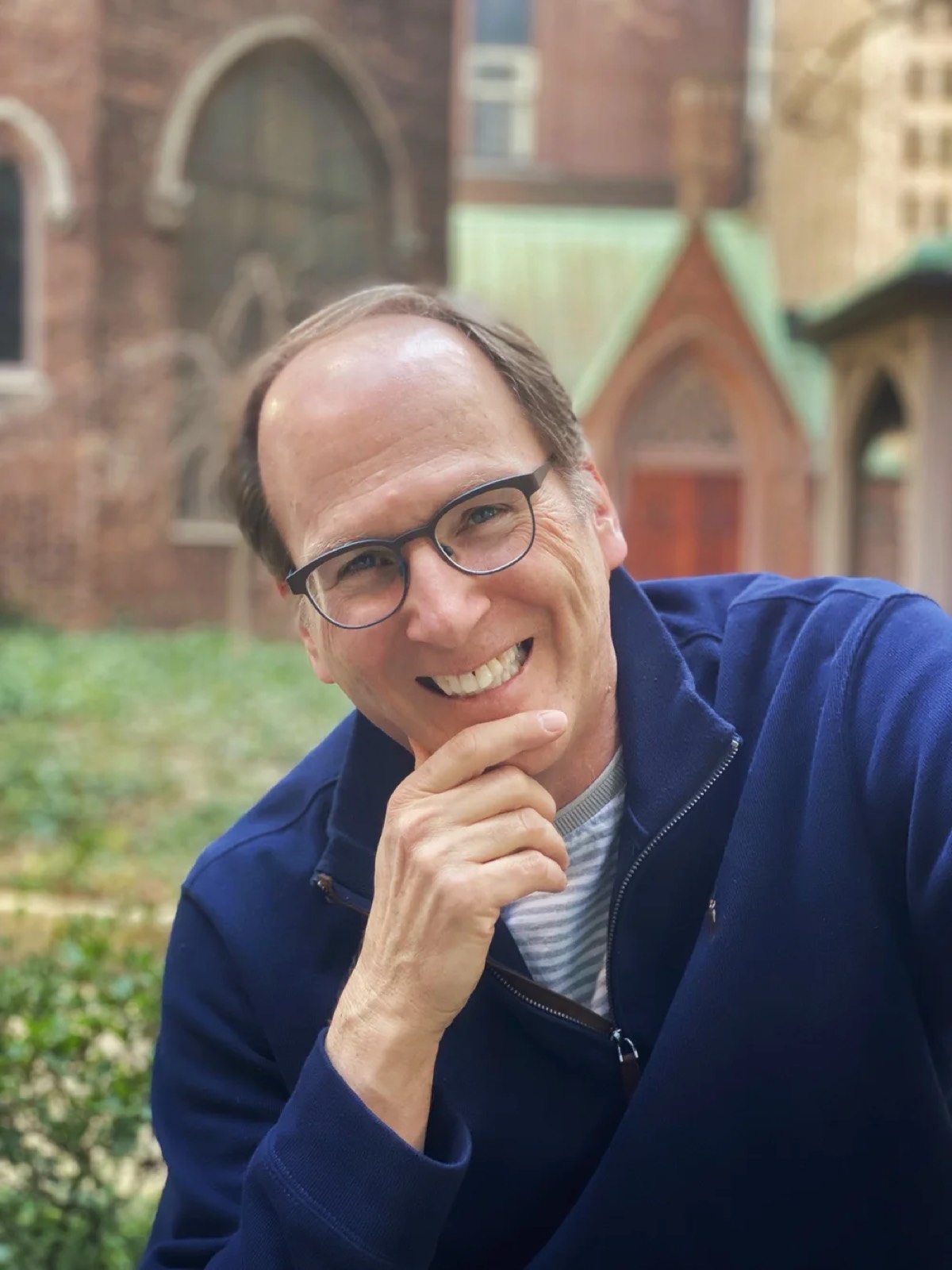
Strogatz is perhaps best known in his field for his co-authorship of a seminal 1998 paper with Duncan Watts on the collective dynamics of small-world networks. He has also studied chaos theory as applied to physics, the geometry of supercoiled DNA, and the biological collective oscillators, such as swarms of synchronously flashing fireflies and crickets that chirp in unison. In 2005, Strogatz extended his study of synchronicity to the crowds that caused the wobbling of London’s Millennium Bridge.
An award-winning communicator, Strogatz wrote three series of columns on mathematics for The New York Times in 2010, 2012, and 2025 and hosted a podcast for Quanta magazine from 2020–2021. He has written four popular books: Sync (2003), The Calculus of Friendship (2009), The Joy of X (2012), and the New York Times bestseller Infinite Powers (2019).
This time around, Strogatz has found a well-matched co-author in Townsend, a younger colleague recently hired at Cornell who studies numerical analysis and deep learning. As senior faculty, Strogatz was assigned to mentor Townsend, and the two men began regularly lunching together in Risley Hall. Strogatz was intrigued by the popular book potential of Townsend’s course on the top 20 algorithms of the 20th century and suggested co-authorship. That concept slowly morphed into a book about big matrix calculations, and then into what became Big Math.
“There are so many books about pure math, as if computers didn’t exist,” Strogatz told Ars. “Alex and I are both very applied mathematicians. We thought there should be a book on computers and math, especially the class of really big problems with billions of variables or parameters that you just can’t approach in your head. A lot of the math we’ve had for centuries perfectly scales up to this computer moment. What the abacus did for arithmetic, the fangcheng (“rectangular array”) board did for systems of linear equations. It was a matrix you could manipulate with your hand and bamboo sticks. So this externalizing of math outside of our heads into our tools is a 2,000-year-old idea.”
“The mathematician in each of us will always want to know more,” Strogatz and Townsend wrote. “The human being must insist that knowledge serves something larger than itself. That might be the work of our century: letting our power grow without losing our soul. Big Math keeps getting bigger. So must we.”
Ars caught up with Strogatz to learn more.
Ars Technica: Let’s start by defining “big math,” because it’s such a broad umbrella term.
Steven Strogatz: Operationally, big math is “big” relative to human cognitive capacity. So it can be surprisingly small and yet big. We also wanted to expand it to things that people would think of as computational engineering—in the building of the Burj Khalifa, that’d be civil engineering or design architecture. It’s there in medical imaging. It’s in getting us to the Moon. The lunar module was controlled by a tiny computer that only had to think about 20 or 30 variables at a time to steer the LEM down to the Moon’s surface. But it’s not something a person could do in their head.
Big Math is not simply big in the ordinary sense of big numbers. There’s an undercurrent in the book about the importance of linearity and sparsity. When problems are linear, they can be scaled up to immense size, and they stay tractable. If they’re non-linear, you don’t have any hope of dealing with them with pure math. You can do them with computers. But for the people who want rigorous theorems, we’re in terra incognita when we deal with anything that’s non-linear and big.
Small math can be very hard. Historically we had small math problems with one or two variables, arithmetic, algebra that you learn in high school. Even to this day, a lot of pure math is relatively small. It doesn’t concern itself with enormous numbers of variables simultaneously because it’s totally intractable. Cryptography can be small, but it’s so complicated with its non-linearities and other algebraic difficulties. So big is one way to be difficult, but there are a lot of other ways.
Nowadays, trillions of parameters are typical in the biggest of the large language models. But infinity is not big from this point. Infinity, which you would think of would be the biggest of big math, is not because calculus fits perfectly nicely in a human head. Infinity turns out to be very tractable in a way that a billion is not.
Little, Brown & Co.
Leah Strogatz
Little, Brown & Co.
Leah Strogatz
Ars Technica: One of your real-world examples of big math is particularly relevant at the moment: mathematics as it relates to the gerrymandering issue.
Steven Strogatz: It’s an interesting question of, what’s a fair map and what’s a reasonable redistricting? The legal system gives us certain criteria, but they are vague. The districts should not be too snakey-looking, not look like salamanders, for instance. The term in the law is ‘compact.’ They should be reasonably compact. But what does that mean mathematically? The districts are also supposed to be contiguous; you don’t want to have separate islands and call that one district. It’s supposed to respect natural boundaries like rivers or other landscape features. Also, each district is supposed to have roughly the same population.
So how to make maps that respect all of the criteria? It turns out there are a lot of ways to make them. Using past voting information, you can stack the deck. That’s what gerrymandering is all about, trying to redistrict in favor of whatever party is in power. There has been a big debate about whether certain maps violate people’s rights. The principle should be one person, one vote. If you do things that dilute somebody’s power so that their votes are wasted, so to speak, that’s traditionally thought to be unfair or maybe even illegal.
The Supreme Court has heard all kinds of cases, but the court is very resistant to the use of math. I quoted [Chief Justice] John Roberts talking about the efficiency gap as one measure of gerrymandering. He referred to it by its Greek letters and said something like, “The average person on the street is just going to think this is gobbledygook, that this is not a criterion that the law should pay any attention to.”
Nevertheless, Moon Duchin and her colleagues showed this very down-to-earth way of generating a big ensemble of reasonable maps that satisfy all the legal criteria so that you have a baseline, you could do the control experiment. What the math does is give you a principled way of generating maps at random that respect the criteria that the law requires, but otherwise are just a random sample of reasonable maps. How often would a map produce the result that the gerrymander intended? If you can show that it’s an extreme outlier, that’s a measure of something. Does it prove malicious intent? Not really. It does prove it’s not typical.
There was an Alabama voting rights case where Roberts actually voted with the plaintiffs, who said that there was real harm being done to Black voters in Alabama with one of Alabama’s maps. The state was claiming there’s no way we could get a reasonable map to have two districts with Black majority voters. Moon Duchin showed that was wrong. You could generate thousands of maps that would do that. So it just wasn’t true what the state had claimed.
After the book was copyedited and ready to go to press, a Supreme Court decision was made that in fact you can partisan gerrymander as much as you want. It doesn’t violate the Voting Rights Act. We wrote a more optimistic story.
Ars Technica: How has math changed over time from a philosophical standpoint?
Steven Strogatz: I think a crisp way to encapsulate it is the role of the computer. For a long time, a computer was a servant to mathematicians and engineers and scientists. It was no more philosophically threatening than a microscope or a telescope. It could extend our senses. It’s a chisel, it’s an anvil, it’s a tool. It helped us do calculations faster; things that would be too hard for people to do at scale you could do on a machine. We had mechanical calculators. They became electronic computers in the 1950s with the invention of the transistor and got much faster to give us today’s supercomputers. We program them, they do exactly what we tell them. So they’re servants.
The first philosophically big change is in the 1950s, when computers start to be used as more than servants; they become scouts. You could send the computer out into unknown, unexplored territory in the mathematical landscape. The clearest example was work by Enrico Fermi and his colleagues (Pasta, Ulam, and Tsingou) that we wrote about in the chapter on simulation. Mary Tsingou was the one who did the calculations in what was traditionally called the Fermi-Pasta-Ulam numerical experiment.
What distinguished it from earlier uses of computers is that Fermi and colleagues had no idea what the answer was going to be. It’s one thing to use a computer to calculate the power released by an atomic bomb blast or to calculate an artillery shell’s trajectory. We didn’t know the exact numerical values, but we knew what was happening. With this experiment, they were trying to simulate a simplified model of how atoms could, in the jargon, formalize as chemical bonds jiggle. You want to see the decay to entropy. How do systems degenerate to greater and greater disorder if they’re just left to their own devices?
Fermi thought that the non-linear aspect of chemical bonds—meaning if you’d stretch a chemical bond by twice as much, it doesn’t pull back exactly twice as hard, so it’s not strictly proportional—might account for the so-called second law of thermodynamics, the decay to entropy. Pencil and paper math was not up to the job because you couldn’t calculate these non-linear interactions far enough to see the decay into entropy.
So they ran it in the computer, and a shocking thing happened: It didn’t decay. It showed a strange echo. You started all the energy in one of the modes of vibration of this system, and then it started to degenerate. But after a while, 98 percent of the energy came back into the original mode. That was the echo that they called a recurrence phenomenon. It led us to a whole new branch of math that we call soliton theory. It was an early indication that once you walk into the nonlinear jungle, human intuition breaks down. We couldn’t walk there, but we sent our scout, this computer probe, into the wilderness of the mind, and it was the only thing capable of doing the calculations and reporting back to us what it found.
Ars Technica: The rapid rise of AI in mathematics has alarmed many in the field, particularly in light of OpenAI’s release last month of 722 AI-generated math papers, dubbed the “mathocalypse.” Technically, AI is also a new tool, but it seems fundamentally different.
Steven Strogatz: So from servant to scout was a new thing, and computing was our partner. At first, it was all very thrilling. It was like having a new Ferrari or something. You could race ahead and then discover things. That’s what Fermi and Ulam said at the time. That was truly amazing. They didn’t know what to expect. The computer was now teaching us by showing us things, but we could still keep up. We could develop these new theories like soliton theory, so we could rationalize what it was showing us.
What’s different now is that it’s going from servant to scout to oracle, where it’s showing us things that we don’t understand and it’s not articulate enough to explain itself. It seems to be right. A clear example would be something like Google Translate, where it’s fantastic at translating one language into another, but it has not discovered new principles of linguistics, or if it has, it can’t tell us what they are.
Likewise, protein folding with AlphaFold that won the Nobel Prize in chemistry a couple of years ago for the people who built it. We now can solve a thousand times more proteins than we had before, but we have not done it by learning new physics or chemistry. It just recognized patterns, but it can’t tell us how it’s doing it. So that’s where we are, and it’s going to get worse.
Ars Technica: In your book, you ask if insight still matters, citing Stephen Wolfram as an example of someone who might answer that question in the negative.
Steven Strogatz: Wolfram’s position is tricky. He pushes computational irreducibility. I love these two words, perspicuous and perspicacious. Systems can be perspicuous, you can see into them. Science has for thousands of years concerned itself with systems that are perspicuous, meaning you can get insight into them because you’re so perspicacious. But the question from Wolfram would be, have we been the famous drunk that’s looking under the lamppost for his keys because it’s dark everywhere else? You wouldn’t have any hope of finding them except under the lamppost.
So is it that we’ve artificially restricted ourself to systems that are transparent enough that we can develop science that our insight illuminates? I think Wolfram would claim that most of nature is computationally irreducible in the sense that there is no simple insightful theory into what’s going on. The best you can do is just run a simulation and watch what happens, similar to just letting nature unfold and watch what happens in reality.
In the jargon people use nowadays, you shouldn’t expect a compressed description, a simplified model that will account for what you’re seeing. We have seen those. Newton could explain the motion of the planets from a few simple principles and that worked, but that’s, I think in Wolfram’s take, artificially simple. Most of science is not going to end up being like that. We don’t know if Wolfram is really right about that. Wolfram, I think, is demonstrably right that many computer simulations are computationally irreducible, but nature might not be.
Ars Technica: If you can’t see into the models, and they can’t explain what they’re doing, how do you know they’re right?
Steven Strogatz: Let’s stipulate that we don’t understand them, and that they are not at the present able to explain themselves to us. Let’s put a little asterisk next to that part, though, because it could be that they’ll become very good teachers. Or maybe we don’t understand Google Translate or AlphaFold right now, but we will in 10 years. I do believe that there will be systems that are truly opaque because of human limits, that we just won’t be fast enough or smart enough or have enough memory. AIs will show us something that we just won’t be able to understand even with their help. What happens then?
Then I think math starts to be more like science or medicine, or engineering. At the FDA, for a new drug to be approved, it has to be shown to be safe by doing a lot of controlled studies and randomized trials. There’s a whole methodology for opacity that people in medicine have worked out. But the doctors do not require knowledge of the mechanism of action. You don’t have to know how aspirin works. You don’t have to know how electroconvulsive therapy works for people with intractable depression. Even if we don’t understand, we can still live with these technologies or drugs by these methods. You don’t have to have first principles understanding. If the AI is an oracle, you can still check it by seeing how often it is right.
Ars Technica: What are we losing in the process?
Steven Strogatz: It is a loss. I don’t want to pooh-pooh the severity of the—to use a fancy philosophical word—epistemic loss. What we have prided ourselves on in pure math for so long is that we’re the only subject that has absolute proof. We have certainty. We’re as close to certainty as anything that humanity can do. We can write a proof. Euclid’s proofs are still correct today, even though he wrote them in 300 BC. There’s nothing in the science or medicine of 300 BC that is still accepted, but all of the math is still true.
So there is something eternal and very special about math. Even though we’re just primates, somehow we’re tapping into something really deep. And so to say, “Well, science and engineering are the models for math,” would be a big sacrifice to the purest of pure mathematicians. They don’t want to give up the certainty that we’ve always been so proud of.
Ars Technica: There’s a sadness among many mathematicians, not just for the epistemic questions, but also for the impact on why we do math in the first place. You write about that “aha!” moment when you’re struggling with a problem and suddenly you see the pattern. Are we losing that?
Steven Strogatz: There’s so many things that mathematicians are in grief about, those of us who feel grief. I have been through the whole sequence of the five stages of grief. I’m joking with you a little. But the young students don’t think this is funny. I’m an old person at the end of my career, so it’s one thing for me to be philosophical about it. But imagine being 25 years old and you love this subject and you’ve dreamt about being a mathematician, and now people are saying the subject is over. There are even people gloating about it. Some of the people in the tech community are very cruel about what’s happening to math.
We talked about the epistemic aspect, but there’s also the culture of productive struggle. The pure math people like Terry Tao have been emphasizing understanding. That’s our idea of insight, that when you try hard to understand something, even if you don’t solve it, you often are so resourceful in thinking of strategies or other simplified versions of the problem. You learn a lot on the journey. You also have all this companionship and human joy of being with other people who love the thing you love. This is not restricted to math. The people who love art or weaving—my colleagues in creative writing are bereft over what their students are experiencing now, handing in AI [generated work]. They want writing with soul, with human individuality.
Ars Technica: That is the opposite of what AI does. I guess I worry that it will do the same thing to math. There is a beauty to math, an aesthetic element. If all you’re focused on is getting the answers and ignore the journey, those are qualitative losses. Mathematicians have individual voices, too.
Steven Strogatz: Totally. There are people whose style is very visible in the questions they ask, in the approach they take to them, in the way they explain themselves. I have cried on camera for several interviews over the past few months because there are lots of things maybe being lost. But I want to put an underline on the fact that we don’t really know. For example, what if AI gets really good at teaching us? I find when I interact with it, that it can be a very effective explainer.
And why do we have to feel sad? Maybe we can understand math better than ever with the help of this machine. We may not get to make the greatest discoveries because the machine will probably be making them, but we can still make little discoveries. I never made a great discovery. I’m not at the level of a Fields medalist, but I can still enjoy math and so can people way below me. There are recreational mathematicians who take pleasure in discovery, whatever they figure out on their own. Just like when a person solves a puzzle, it’s not like a jigsaw puzzle or Sudoku is important. You just have the pleasure of thinking.
There are people who love the workout part of it. There are people who like the competition. We shouldn’t pretend. There are people who are thrilled by the idea of being the first to make a big discovery. That’s animating for some folks and it will be hard for them.
Ars Technica: Is there any reason for hope?
Steven Strogatz: So far the AIs are not good at asking questions. I think they could be trained to ask good questions. A graduate student is often not good at asking questions when they start because in college you’re not taught to ask questions, you’re taught to give answers. The hardest thing in training a new PhD or postdoc is helping them figure out how to ask questions. I think we could do that with AIs, too.
There is a feeling of loss, but I don’t think we should shortchange the feeling of excitement. There’s so many practical, important benefits that could happen in energy technology and climate and medicine, theoretical physics, pure math. I mean, we’re making astonishing discoveries through this machine. So for a lot of people, it’s a very joyful time. It’s very confusing. That’s the only honest assessment.
We end the book with Faust. Usually people hear “Faustian bargain” as, “You have sold your soul to the devil, now you’re going to pay.” Goethe’s version is more ambiguous: that if we keep striving to build something bigger than ourselves, maybe we can be redeemed. But it’s still a very dangerous game that we have chosen to play.