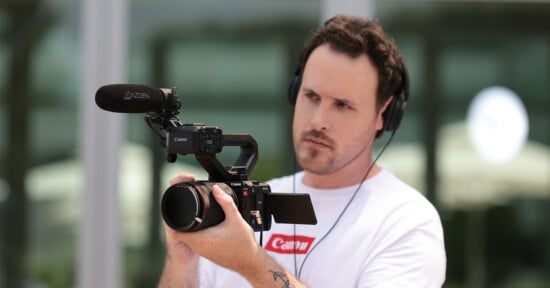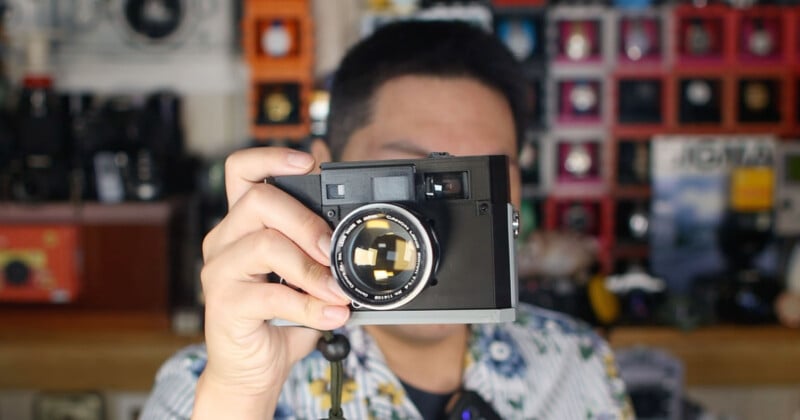
Earlier this year, photographer and creator Mr. 50mm built a DIY digital rangefinder camera using parts he salvaged from a FED 5 Soviet-era rangefinder and a Panasonic GF3 Micro Four Thirds camera. Mr. 50mm is back with an even better DIY digital rangefinder, and this time it’s APS-C.
Unlike the Micro Four Thirds-based camera Mr. 50mm dubbed the “RGM-79” earlier this year, the new “C7M” uses a larger APS-C image sensor. Mr. 50mm is using the imaging pipeline from the original Canon EOS M mirrorless camera, which Canon unveiled way back in 2012.

The Canon EOS M features an 18-megapixel APS-C CMOS image sensor, up from the 12.1-megapixel Micro Four Thirds sensor Mr. 50mm salvaged from a Panasonic GF3.
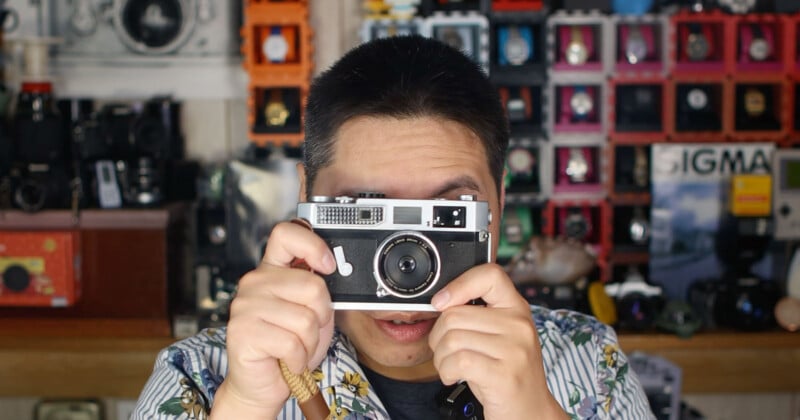
A DIY digital rangefinder requires two donors, though. Rather than the FED 5 rangefinder Mr. 50mm used before, he’s sticking with two Canon cameras this time around. The donor rangefinder is the Canon 7, a rangefinder series that started in 1961 with the original Canon 7 and ended in 1967 with the Canon 7sZ.
Although Mr. 50mm hasn’t finalized everything or released a build video yet — it’s in the works — the C7M sure does look impressive thus far. Mr. 50mm is especially impressed with the Canon 7’s finder, which he describes as a “marked upgrade compared to a Fed camera.”
“The bar wasn’t that high, but the Canon 7 does a lot of things very, very well. You get a brighter finder, you get projected and selectable frame lines, and they’re parallax-corrected,” the builder explains.
Further, the Canon 7 uses a Leica M39 screw mount, which is great news for Mr. 50mm. It’s a widely used mount with a ton of lens options on the market.
While the Canon 7 doesn’t have many controls, that isn’t a downside for Mr. 50mm.
“It doesn’t have that many dedicated controls, which helps reduce the amount of controls I need to either port or figure out if I’m okay to live without. In the end, the digital camera really just has to be able to do two things. It has to accommodate the rangefinder that I’m gonna put on top, and it has to be able to accommodate the mount that I’m using,” he explains.
There are plenty of challenges, though.
“Unfortunately, it isn’t just as easy as disassembling an EOS M and then jamming on new parts,” Mr. 50mm explains. “There [were] quite a few modifications that needed to be done to the camera to make this work, which I’ll discuss probably in depth in another video.”
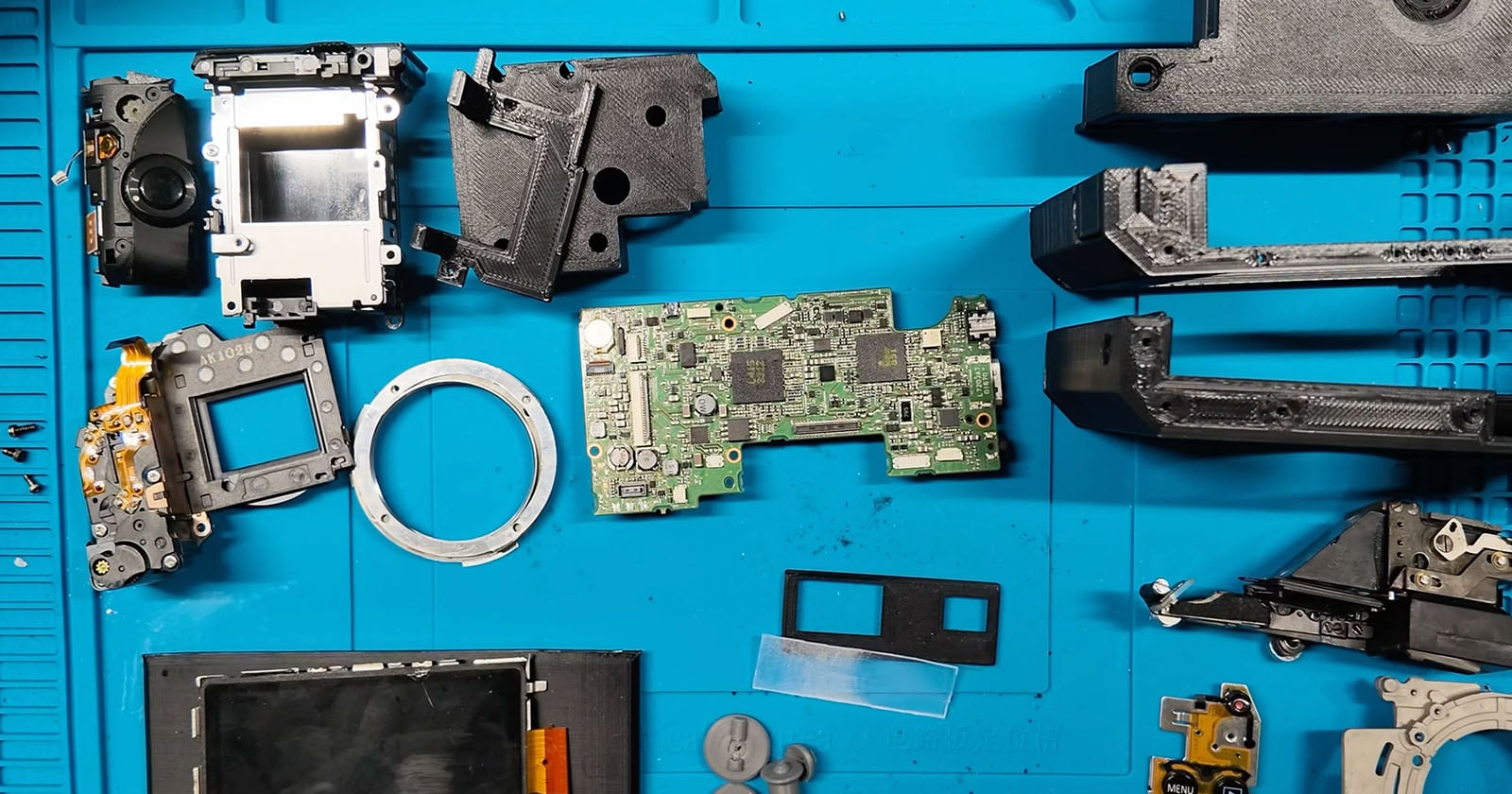
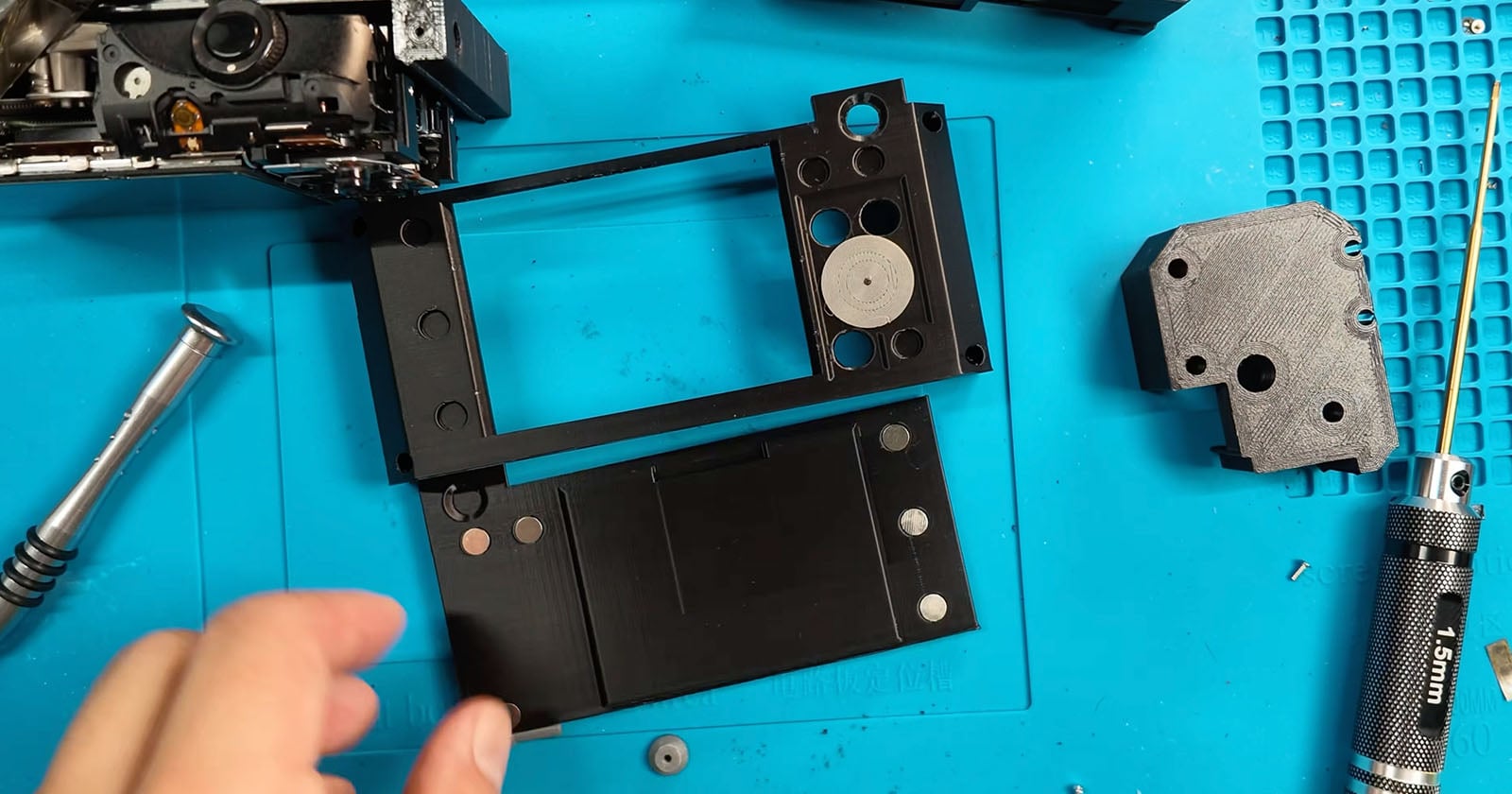
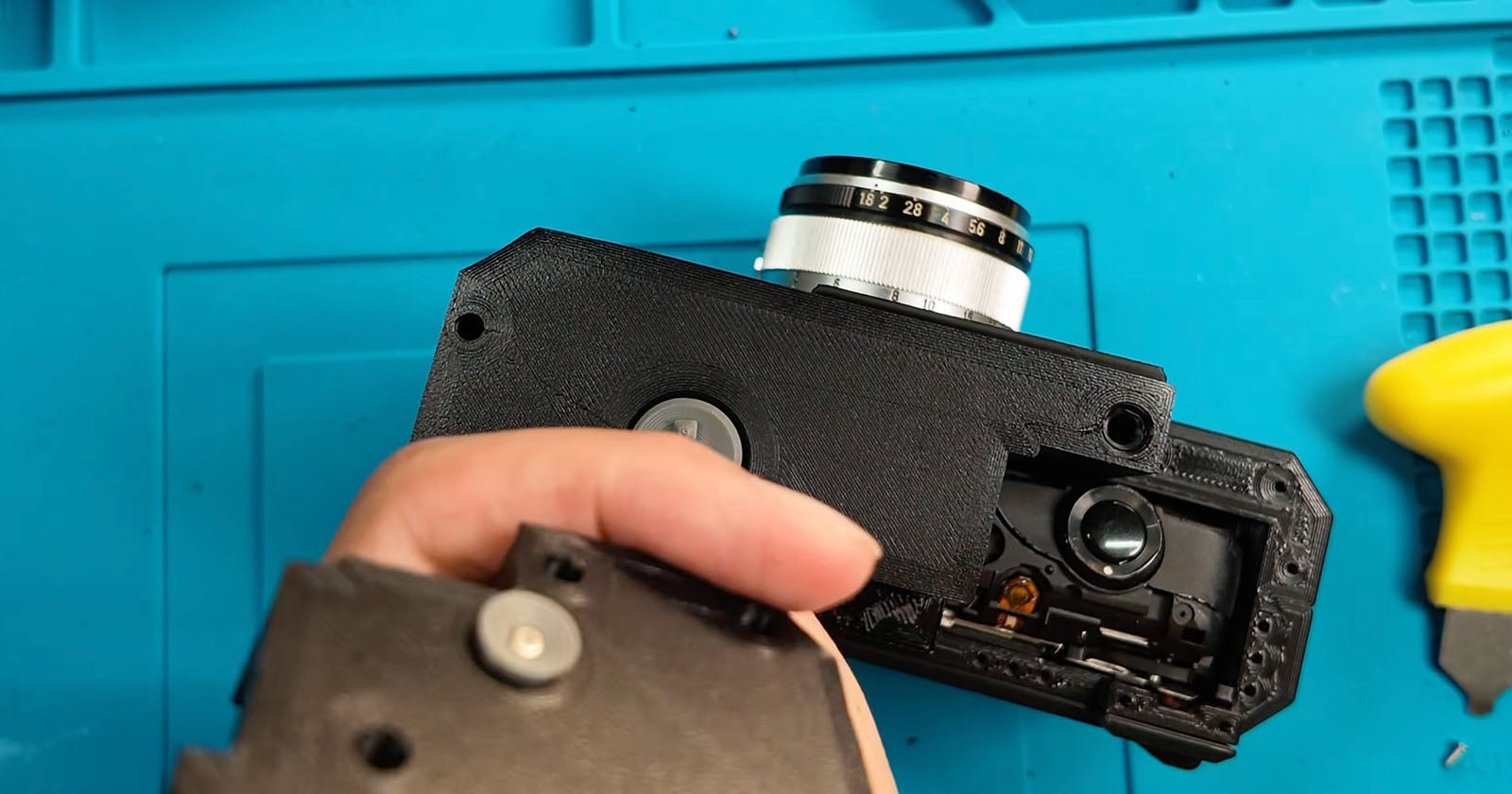
Ultimately, as the video above shows, he solved the biggest challenges. He says the C7M is “mostly done” and, impressively, it only took a couple of weeks to build from start to finish. Despite a damaging drop during the build, it came together pretty well.
There’s always a catch, though. There are some rangefinder calibration issues left to figure out, and not everything aligns perfectly yet. Mr. 50mm says he needs to trim back some more material from the EOS M’s parts, although he isn’t sure how much they have left to give.
“Eventually, once things get a bit more ironed out, I’ll draft up a tutorial on how you can actually make your own,” the photographer says.
So while the C7M isn’t totally finished yet, it looks very cool and even more promising. Digital rangefinder cameras are expensive, but building one using donor parts and 3D-printed components makes the format significantly more accessible, assuming someone is comfortable with the build process itself.
Although there isn’t a build tutorial yet, it’s still worth considering the potential cost to build a C7M. The Canon EOS M body is around $260 used, not much more than a Canon 7 rangefinder body. If someone has access to a 3D printer, printing the other parts won’t cost much. That’s much less than a brand-new Leica digital rangefinder, for sure.
Keep an eye on Mr. 50mm’s (excellent) YouTube channel to stay up to date with the project.
Image creditsMr. 50mm
Affiliate Disclosure PetaPixel articles may include affiliate links; we may earn a commission if you buy through one.