You Can Now Watch the First Season of ‘Stranger Things’ Like It’s On VHS
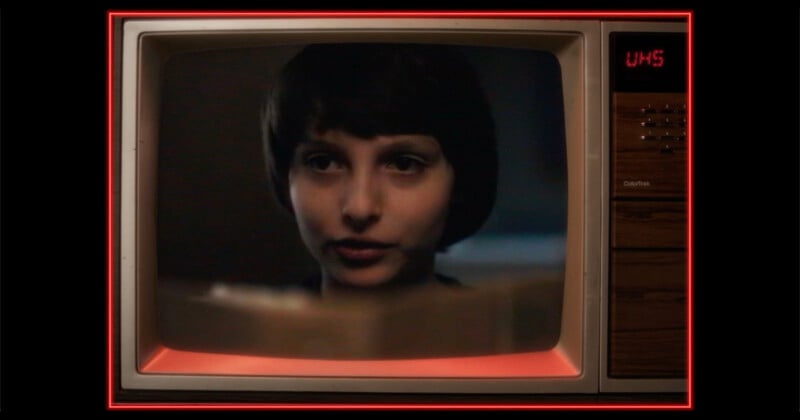
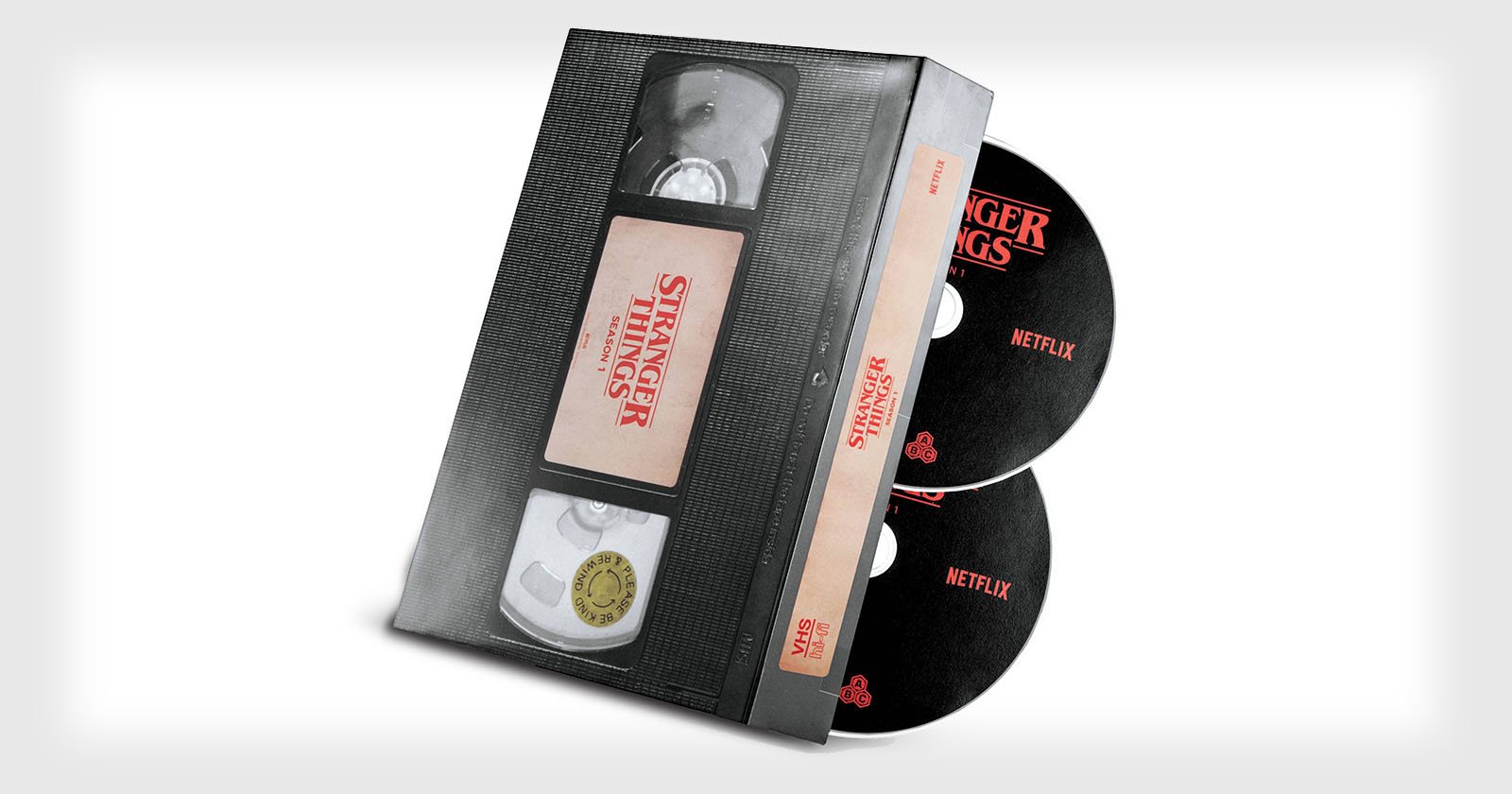
To celebrate the 10th anniversary of Stranger Things, a transformative original series for Netflix and its first true global hit, the streaming platform is releasing a commemorative “VHS special edition” of the show’s first season.
“Rewatch Season 1 like it’s 1983. This special VHS version comes packed with visual and audio effects that seem to come straight from a video store rental,” Netflix says.
“If Stranger Things existed in Hawkins, sitting on a shelf at Family Video, it would look just like this — complete with pan-and-scan,” say the show’s co-creators, The Duffer Brothers, identical twins Matt and Ross.
“And hey, if enough of you nerds watch it, maybe we’ll do the rest of the seasons,” they add.
A little treat from Family Video 📼
Stranger Things VHS Special Edition is now playing on Netflix! pic.twitter.com/kx1ZyMYoZ7
— Netflix (@netflix) July 15, 2026
The special re-release of season one is complete with a very VHS-inspired new Netflix intro, tracking graphics and all. Once the show proper starts, viewers will instantly notice that it is now in a 4:3 aspect ratio and that the image quality is noisy, blurry, low in contrast, and heavy on color bleed. Classic and vintage.
As expected, this is digital trickery. Had Stranger Things been shot on film, rather than RED Dragon cameras for season one and Arri Alexa cinema models later, it would have been possible to use a very analog process all the way until final digitization from an actual VHS tape.
But that begs the question, what truly makes a convincing VHS “look”? And why do real VHS tapes look so bad, or so good, depending on viewer preference?
As YouTube creator Tom Scott explains in his video about the “VHS look” below, most creators seeking that nostalgic look opt for digital filters, and the way they work is rather interesting.
For his video, which, while six years old, remains perfectly relevant today, Scott spoke to Harry Frank, Product and Content Designer for Red Giant, an award-winning motion graphics and effects company that makes very widely used VHS effects. Perhaps it’s even the company that made the filters Netflix used, although that’s merely speculation.
“VHS has very muted color because more information’s dedicated to the black and white information, the luminance part of the image,” Frank says. “The color suffers a little bit, so it gets downsampled, there’s less information there, it tends to kind of get softened and bleed outside of the edges.”
As Frank explains, Red Giant went out to as many second-hand stores as they could and picked up as many VHS and S-VHS decks as they could.
“With the decks and camcorders that we had, we used a clean reference image that we could later compare the recorded version on the deck to. So when you take an original clean version and the post-VHS version, and line them on top of each other, you can create a lookup table (LUT).”
As Frank adds, when creating VHS effects filters for professional filmmakers, it’s not just about as close to a perfect technical match as possible, but also about balancing that against what creators and viewers expect VHS to look like. Sometimes people’s concepts of VHS don’t entirely align with what tapes used to look like, especially since people are viewing content on large 4K OLED and LED panels today, rather than small CRT screens. It’s a different viewing experience, and accuracy is balanced against artistic intent to a degree.
Further, as Scott explains, these digital filters are all 1s and 0s in code being applied to pixel values. VHS tapes, of course, are an analog medium. It is data being stored on magnetic tape, so there is a type of randomness to the look of a VHS tape that is hard to replicate digitally.
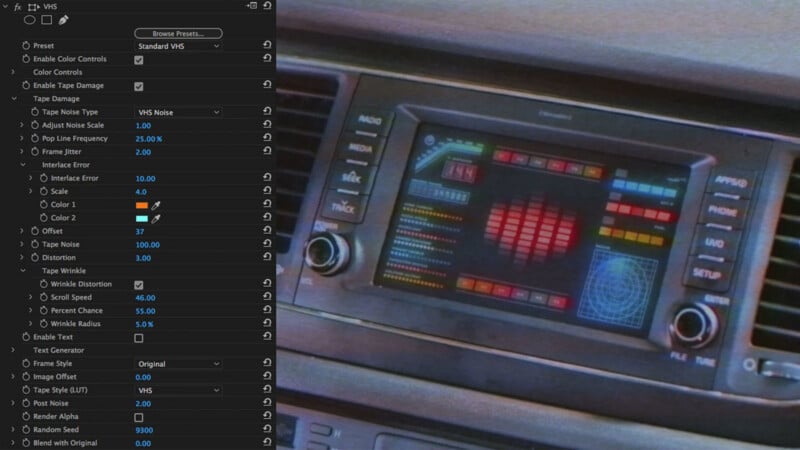
“There are also some interesting analog glitches,” as Scott puts it.
“We start with an analog tape, like this,” says Matt Nixon, Lead QA Engineer at Red Giant, while holding up a VHS. “We throw it into one of the VCR decks, one of them has the lid off of it, and that is the one that died making the VHS transitions. That one went through a lot, and all of that got printed onto this tape.”
The things that tape went through were magnets being run across the tape deck to influence controlled glitches, and Nixon physically tinkering with the VCR head during playback. He specifically taped two pencils to his fingers, put them in the tape to slow it down, and then dropped a magnet on top of the deck. The deck died, but at least in service of art.
“The hardest part was getting the tape out.”
Red Giant’s VHS effect includes user control over these sorts of “damages,” which are all too familiar to people who watched VHS movies back in the day.
Stranger Things offers some of that look, feel, and, of course, nostalgia right now with the “VHS special edition” version, available to stream now.
Image creditsNetflix, Red Giant