Tranche 1
The Pentagon’s Space Development Agency hasn’t moved as fast as anyone would like
“Missiles are being launched at the joint force every single day in [Operation] Epic Fury.”
Credit:
SpaceX
Credit:
SpaceX
The Space Development Agency was established in 2019 to help speed up the deployment of US military space systems by sidestepping the Pentagon’s traditional sluggish bureaucracy.
Seven years later, SDA is finally launching its first batches of operational satellites, just as the Pentagon plans to shutter the semi-autonomous agency and fold it back into the Space Force’s procurement pipeline, newly reorganized under several program acquisition executives in a bid to streamline weapons buying.
SDA’s fate is not a surprise, and lawmakers in both houses of Congress have backed the agency’s closure in drafts of this year’s National Defense Authorization Act.
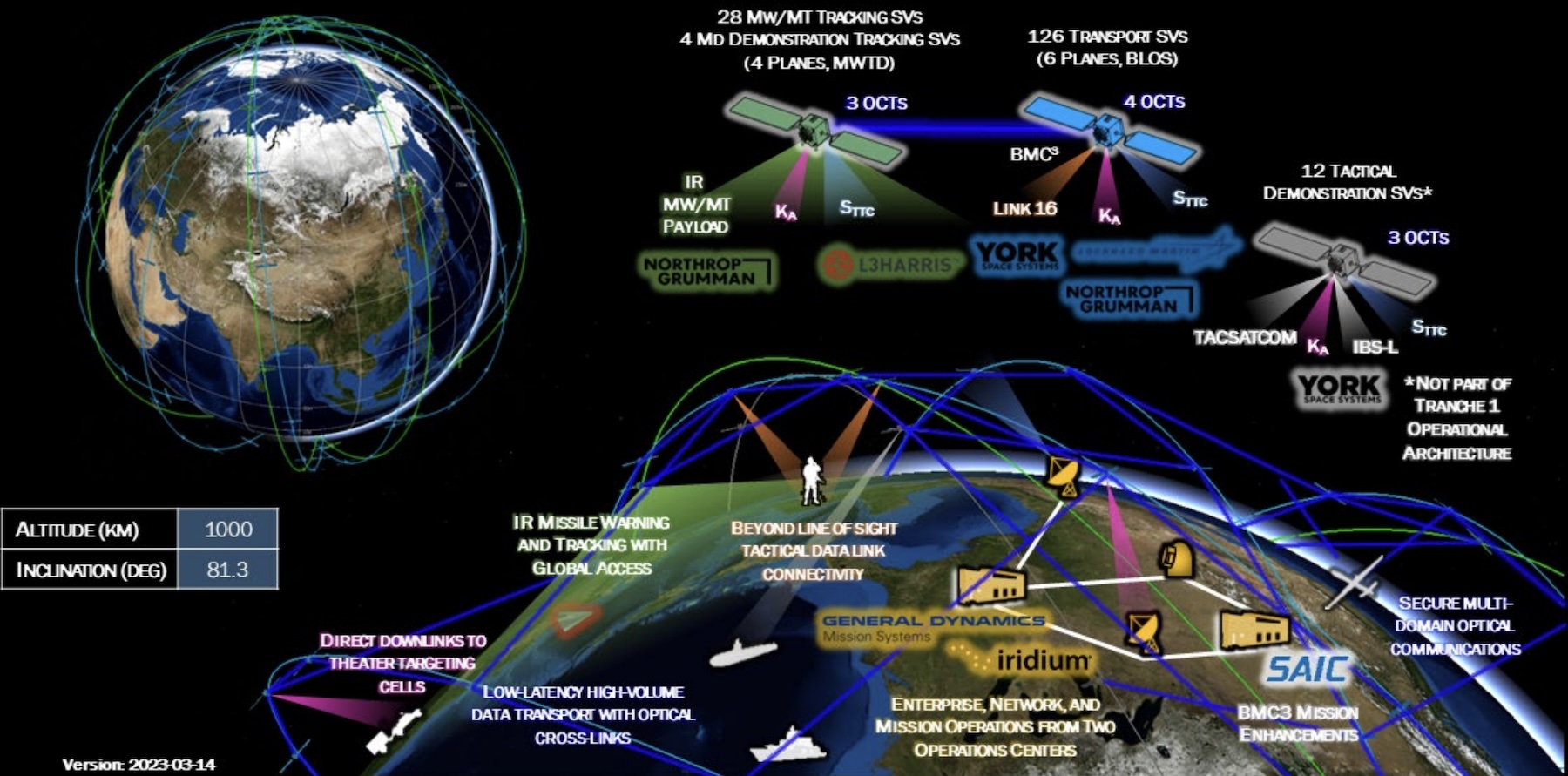
The Space Development Agency’s primary mission has been to develop a constellation of several hundred missile warning and data relay satellites in low-Earth orbit designed to detect, track, and target ballistic and hypersonic missiles. The military calls the constellation the Proliferated Warfighter Space Architecture (PWSA). The Pentagon currently has a small fleet of legacy missile warning satellites in much higher geosynchronous orbits. These satellites are expensive and vulnerable to attack, and their distance from Earth makes them less sensitive to smaller, dimmer missiles.
The idea was to rapidly procure, develop, and field new generations, or tranches, of tracking and data “transport” satellites every two years. SDA’s strategy was to cast a wide net across the US space industry, using satellites and sensors developed by many companies. Launches of SDA’s new satellites were supposed to occur at a cadence of about once per month.
Rough waters
Much of SDA’s mission will continue under a different banner within the US Space Force. The missile-warning and data-relay satellites will eventually be part of the Pentagon’s planned Golden Dome missile shield, one of the Trump administration’s top priorities for the Space Force.
The capabilities foreseen for SDA’s satellite constellation predate President Trump’s announcement of Golden Dome last year, and are far less controversial than the White House’s push to include space-based weapons as part of the missile shield.
SDA’s history has been marred by schedule delays, production and supply chain bottlenecks, and technical issues with the organization’s first batches of operational data relay satellites after their launch last year. The purpose of the data relay, or “transport,” satellites is to receive tracking data from SDA’s missile-warning satellites via inter-satellite laser communication links and relay the information to the ground for action.
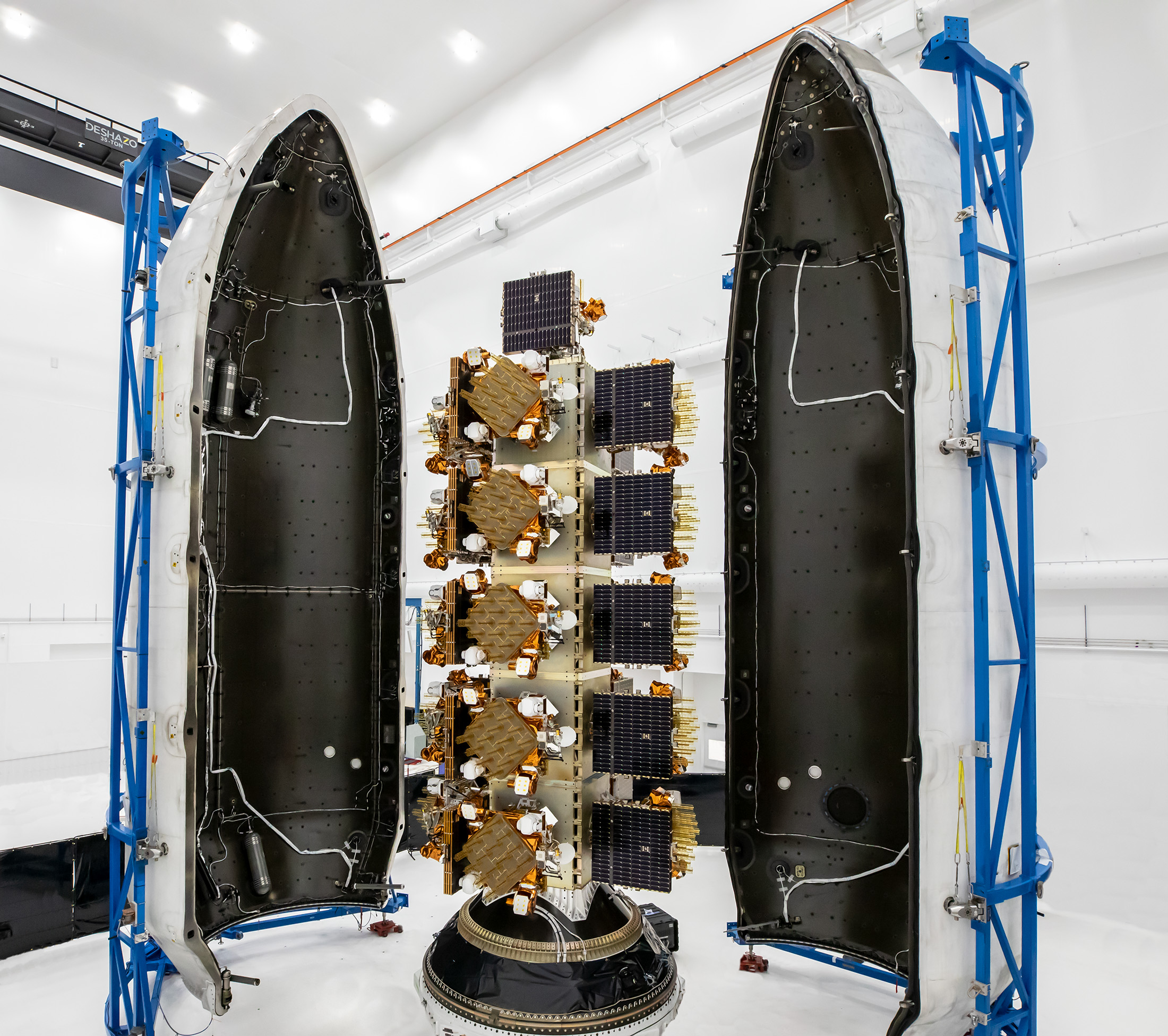
SDA started launching prototype tracking and data transport satellites in 2023 and launched its first two batches of transport satellites last year. The third group of data transport satellites launched Thursday on a SpaceX Falcon 9 rocket from Vandenberg Space Force Base, California, bringing the total number of transport satellites launched in Tranche 1 to 63.
“This launch continues to expand warfighting capability to deliver persistent tactical satellite communication for the warning and tracking of advanced missile threats,” said Gurpartap “GP” Sandhoo, director of the Space Development Agency, in a statement. Sandhoo also serves as the Space Force’s portfolio acquisition executive for missile warning and tracking, which would keep him in charge of much of the SDA’s mission after the agency’s dissolution.
“The deployment of Tranche 1’s proliferated capability will soon deliver continuous overwatch—neutralizing any first-mover advantage by delivering data to warfighters around the world, nearly instantaneously,” Sandhoo said.
Thursday’s launch marked the resumption of SDA satellite deployments after standing down for nine months due to issues with the spacecraft on the first two Tranche 1 launches last September and October. Those launches were successful, but ground teams ran into problems activating and commissioning satellites made by York Space Systems and Lockheed Martin.
Sandhoo identified several issues with the first Tranche 1 satellites during a roundtable with reporters before this week’s launch. Ground controllers lacked sufficient ground station coverage to communicate with the satellites after last year’s launches. Some of the satellites encountered thermal control and propulsion system problems as they climbed from their insertion orbit to an operational altitude of more than 600 miles (1,000 kilometers), significantly higher than SpaceX’s Starlink Internet network, Sandhoo said.
“We are in a pretty harsh radiation environment at 1,000 kilometers, so not all of our orbit raising has gone according to plan,” he said. “It has been sporadic. We’re working through it.” Sandhoo is optimistic that ground teams will eventually declare most of the satellites ready for operations, but it’s taking longer than expected.
Space Development Agency
Credit:
Space Development Agency
Getting it right
SDA and its contractors “took a pause” after last year’s launches to “make sure we fixed at least the known issues,” Sandhoo said. “We expect this launch to be a lot smoother than the last one.”
Thursday’s launch was the second SDA launch of York’s data transport satellites, and the third for Tranche 1 overall. Seven more launches will complete Tranche with 63 additional data transport satellites and 28 missile tracking satellites manufactured by Lockheed Martin, Northrop Grumman, and L3Harris. None of the Tranche 1 tracking satellites have launched yet.
Sandhoo said the schedule for the next series of SDA satellites is “still constrained” by the availability of optical communication terminals, the laser transmitters and receivers needed to connect the transport and tracking satellites into one integrated mesh network.
While SDA officials declined to say when the next few launches might occur, the agency said the Tranche 1 satellites will “provide initial warfighting capability beginning in 2027. Sandhoo said the agency is no longer focused on achieving a monthly launch cadence. It’s more important, he said, to make sure SDA’s satellites launch when they are ready. “The goal is to get operational as quickly as possible once you get in orbit,” he said.
If all the Tranche 1 satellites had launched as originally scheduled, the constellation’s enhanced missile warning capability might have been available to military commanders today. That might have proven useful for US and allied forces to counter Iranian ballistic missiles launched during the current war in the Middle East.
“That’s what I think the nation needs right now, to face the threat that we are in,” Sandhoo said. “If you see what’s going on, I wish we were on orbit and supporting this mission right now because, literally, missiles are being launched at the joint force every single day in [Operation] Epic Fury.
“We are where we are,” Sandhoo said. “But we are doing everything we can to solve these technical challenges to get these systems on orbit, so we can deliver these capabilities.”
In all, SDA’s Tranche 1 constellation will number 154 operational satellites when complete. Tranche 2, set to begin launching next year, will include more than 250 transport and tracking satellites supplied by six manufacturers. SDA has ordered 108 satellites in the Tranche 3 tracking layer due to start launching in 2028.
The transport layer will end after Tranche 3. It will be superseded by the Space Force’s Space Network. The Space Force announced in May that it selected SpaceX to build the SDN “backbone” using technology originally developed for SpaceX’s Starlink broadband constellation. SDA’s transport satellites will fold into the Space Data Network to work alongside SpaceX’s satellites, Sandhoo said.