Nat Geo’s ‘Pompeii: Out of Time’ Combines Cinematic Filmmaking, History, and Tom Hiddleston
National Geographic‘s new three-part docudrama series, Pompeii: Out of Time, combines Tom Hiddleston’s charming presentation skills, cinematic filmmaking, and a passion for history to tell the story of Pompeii’s final hours before it was decimated by the volcanic eruption of Mount Vesuvius in 79 A.D.
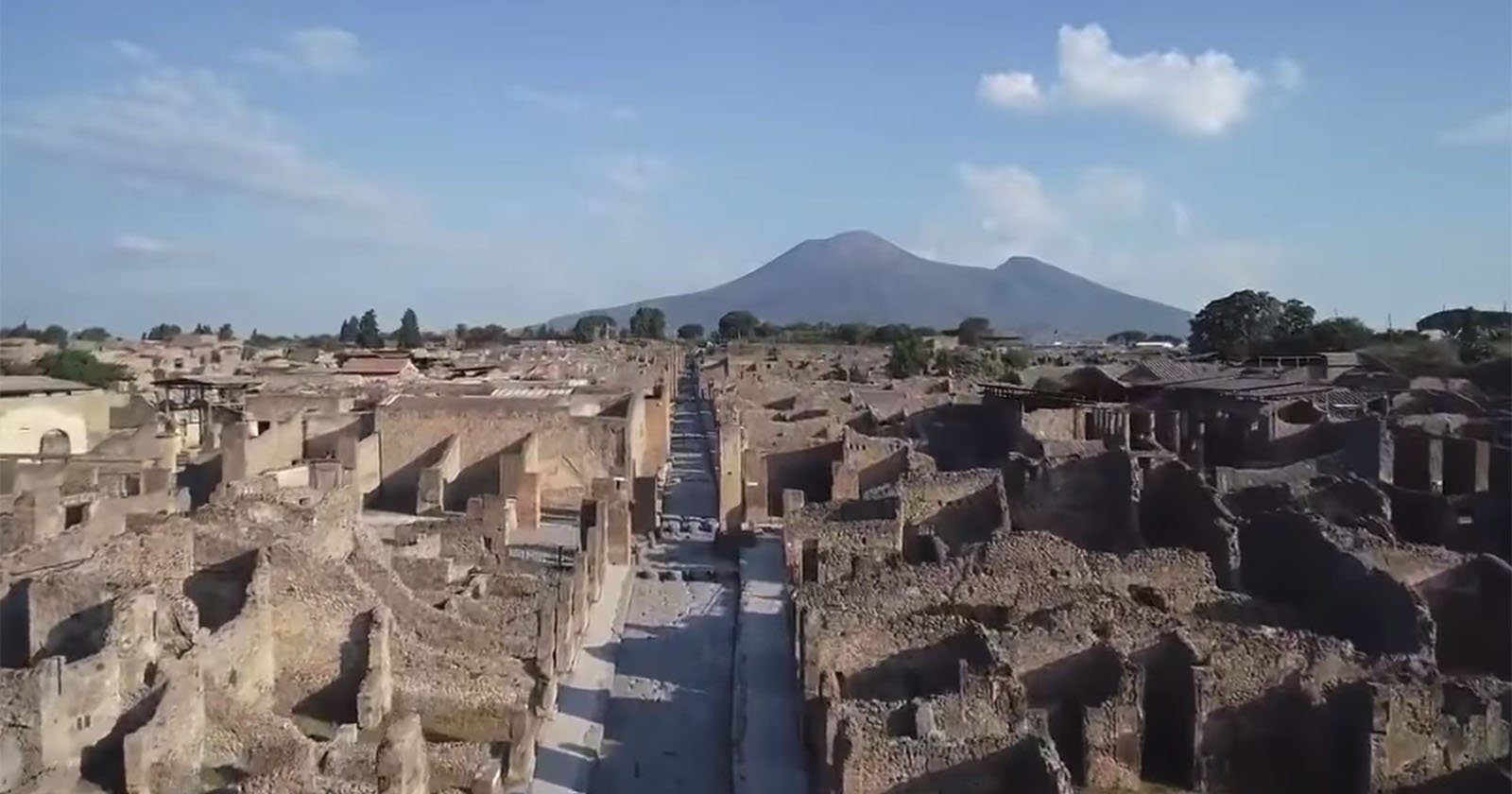
Pompeii has maintained a hold over people for nearly 2,000 years. Nearly 2.5 million people visit the UNESCO World Heritage Site every year, exploring the remarkably well-preserved remains of an ancient Roman city. There is nowhere else like it on Earth, and it is of little surprise that people remain interested in the destroyed city today.
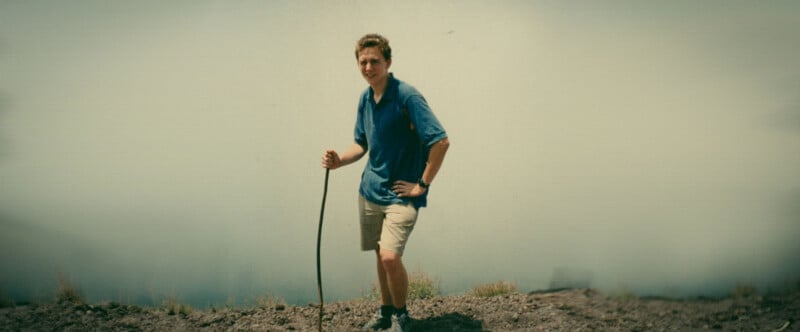
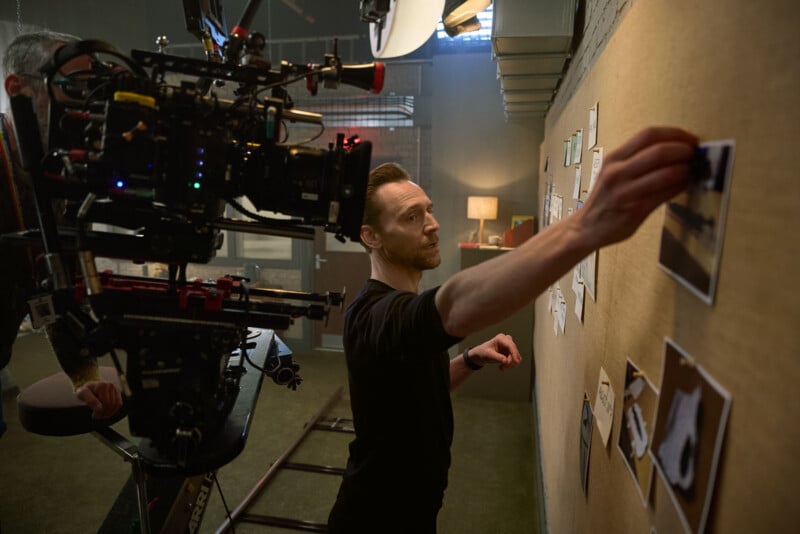
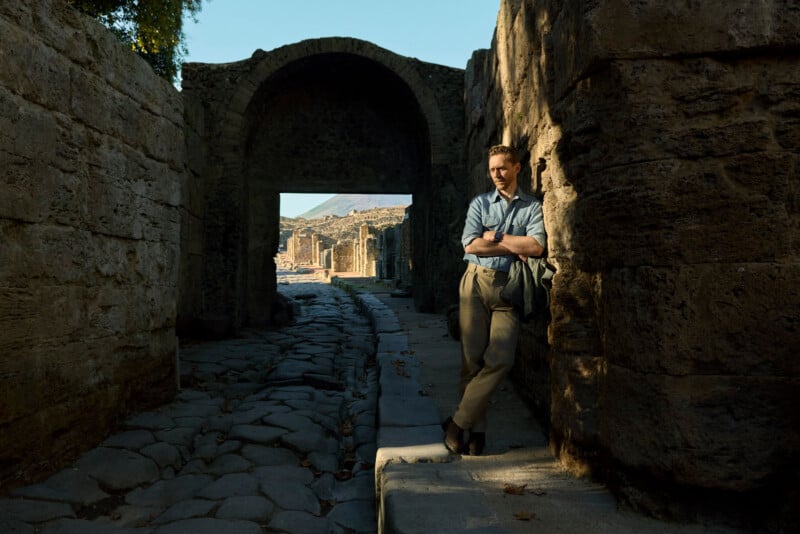
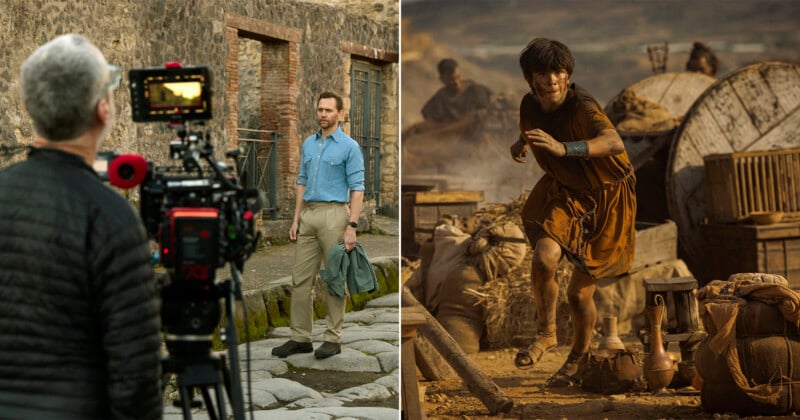
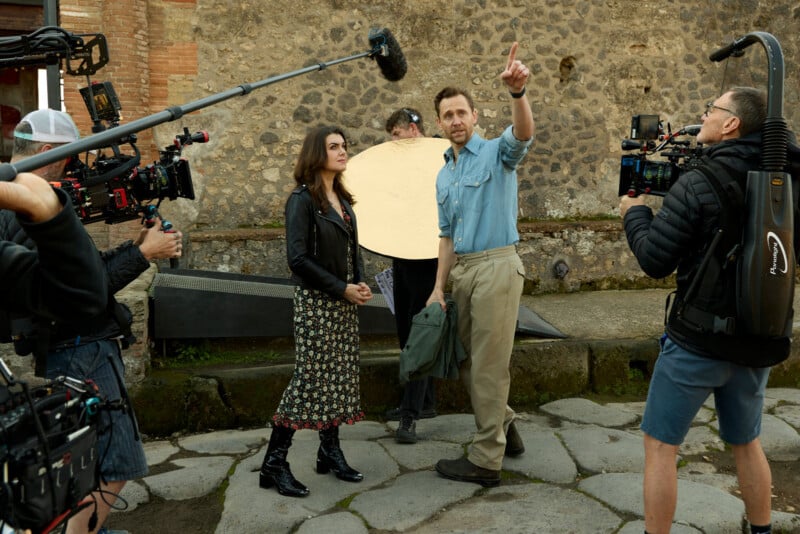
PetaPixel spoke to cinematographer Jim Jolliffe, who, alongside director Tom Barbor-Might and acclaimed Marvel star Tom Hiddleston, expertly blended past and present in Nat Geo’s new series. As the photos above show, Hiddleston is not just a famous face for the series; he’s a history buff who visited Pompeii long before his Hollywood star shone. As Jolliffe adds, Hiddleston is also incredible at making people feel comfortable on-set, which is a boon when interviewing archaeologists, historians, and academics who are rarely on camera.
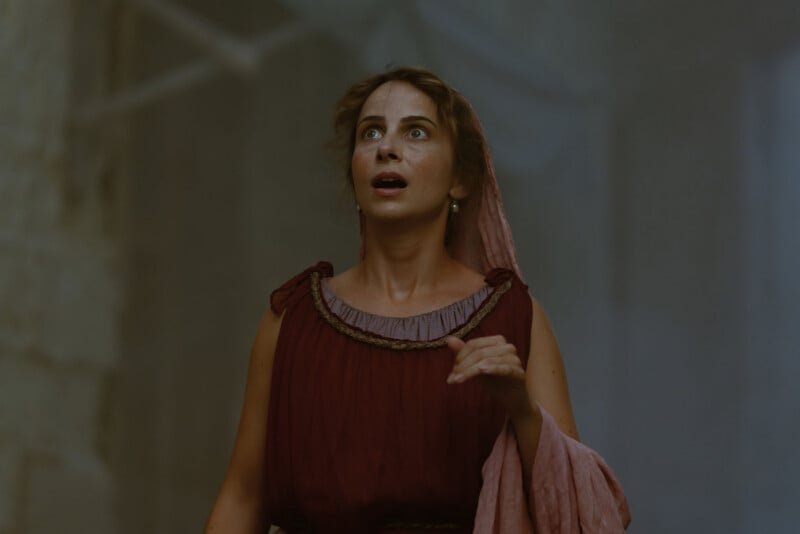
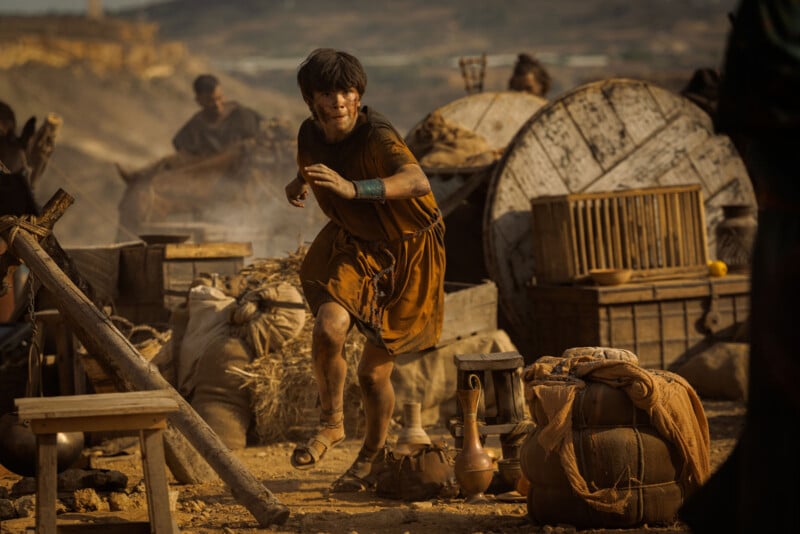
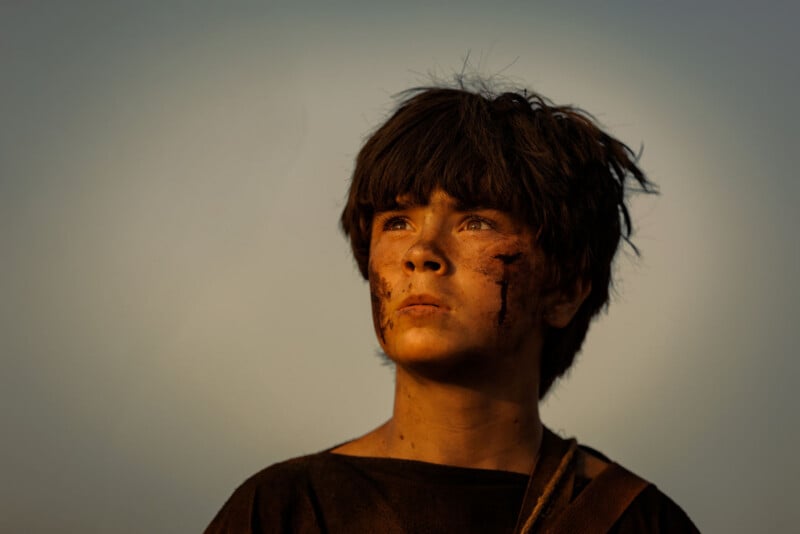
The new series combines a cinematic, dramatic reenactment of Pompeii’s final hours with academic, historical expertise to bring the past to life. Having seen many dramatic reenactment-style series over the years, I was immediately struck by how Pompeii: Out of Time‘s historic segments look more like a movie and less like the cheesy reenactments many viewers might be used to seeing. This was the result of very careful consideration, extensive planning, and serious dedication by the crew.
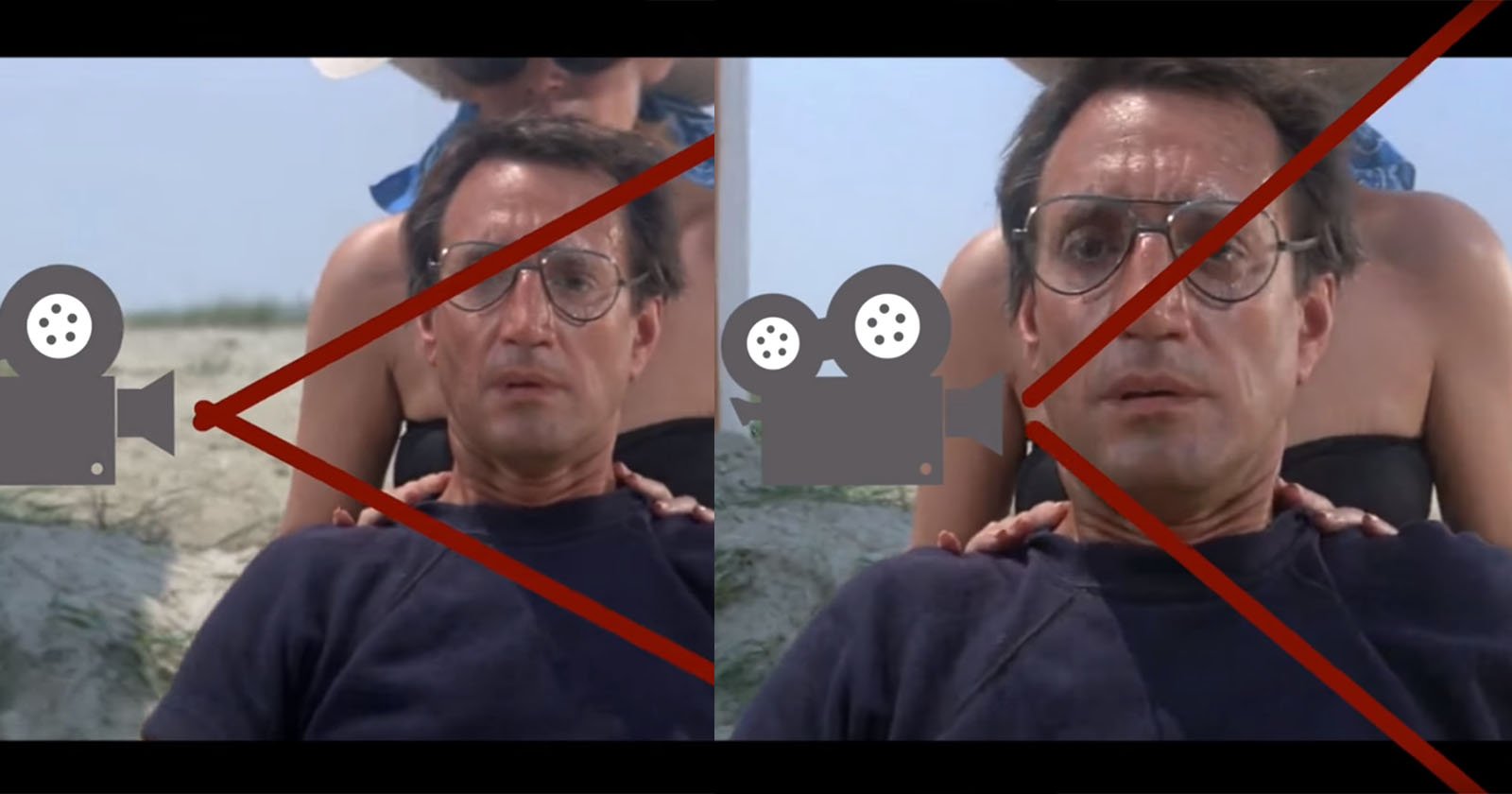
“The first thing we thought was that we both wanted to shoot on anamorphic lenses,” Jolliffe tells PetaPixel about he and Barbor-Might’s artistic goals for the series. “We thought, first, it’s obviously great for the drama, and second, it would be a great way to visually tie the drama-world into the present-day with Tom and his interviews and stuff.”
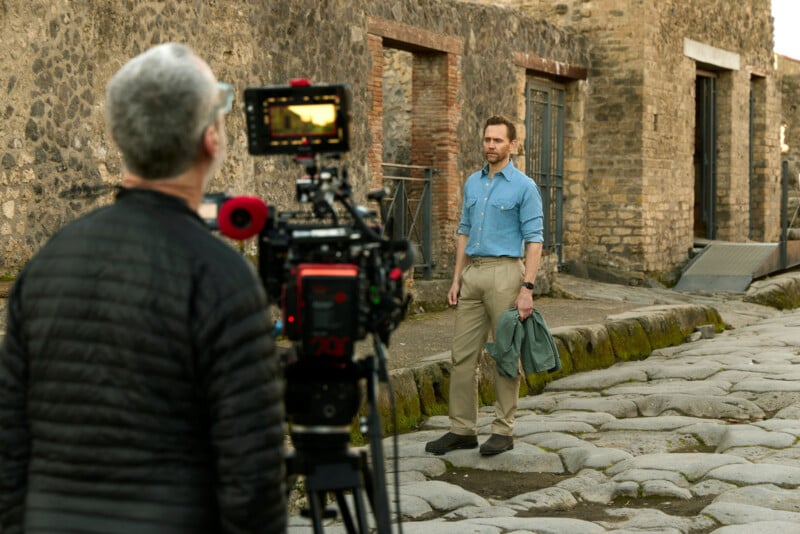
The anamorphic look lends the entire product an air of cinema.
“The lenses do a very good job giving it a distinct look across both timelines,” Jolliffe continues.
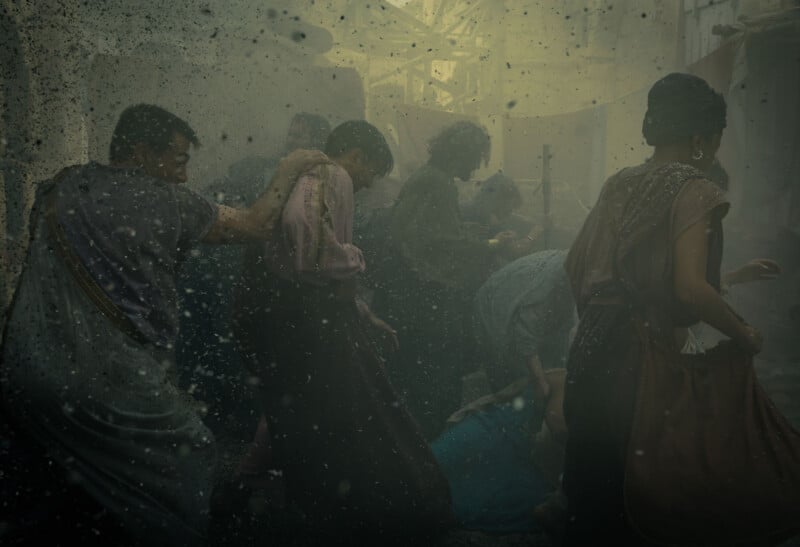
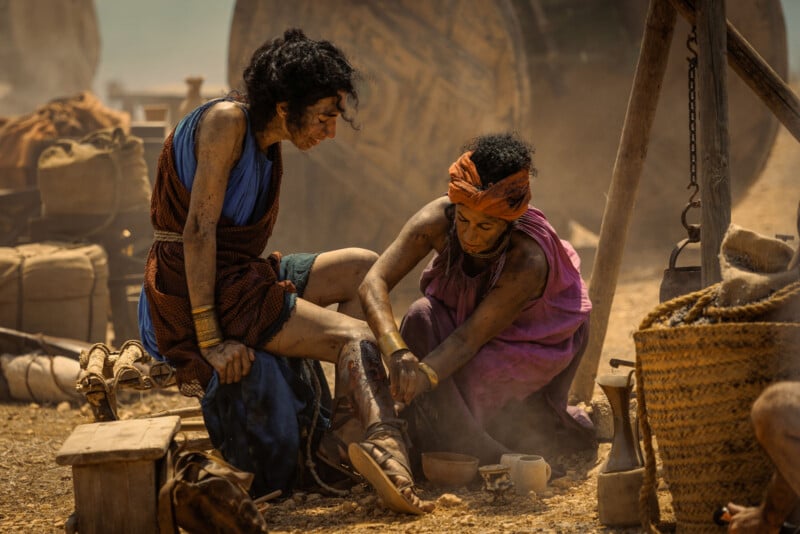
While there is an aesthetic through-line across all three parts of the series, Jolliffe was very careful about how each sequence looked, including before, during, and after the deadly volcanic eruption.
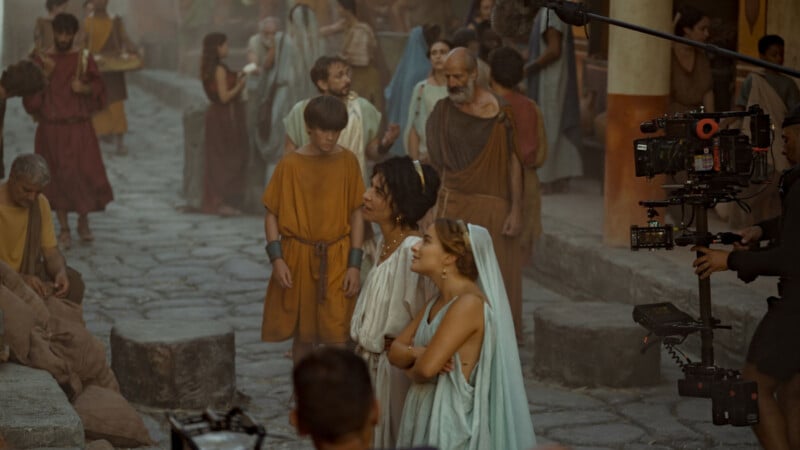
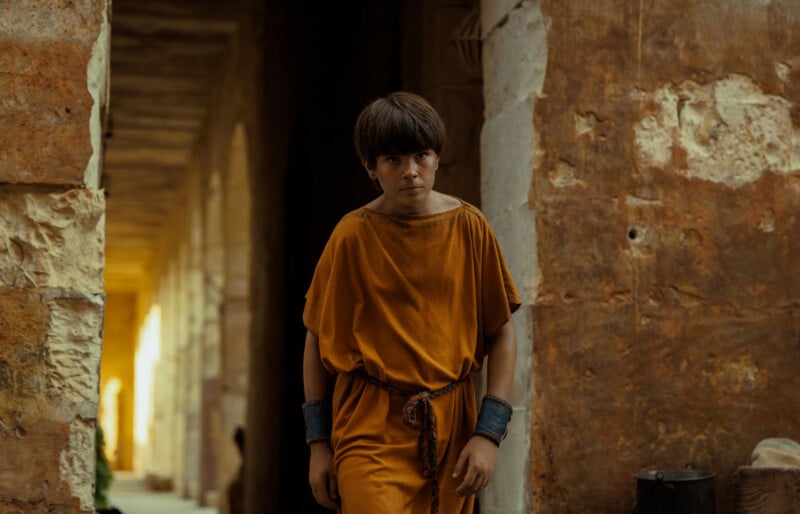
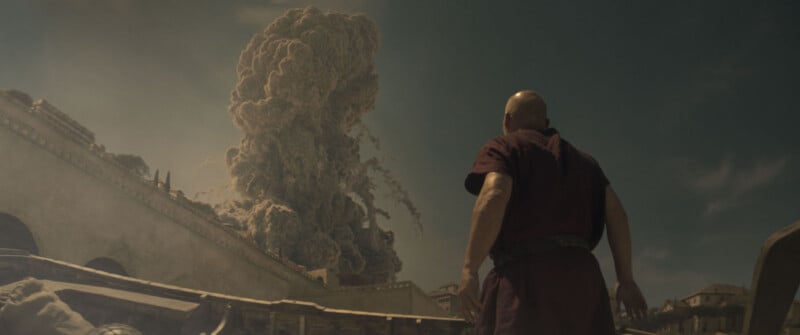
Pre-eruption sequences have a warmer look, which carries over to present-day interview sequences, and then everything gets cooler during the eruption itself, with the ash piling up.
Jolliffe says it was fun to execute different looks across a single project, and noted that the colorists and editors did an incredible job bringing the pre-shooting “look” he envisioned to life in the final cut.
As for which specific lenses Jolliffe used, he settled on Caldwell Chameleons, a series of 1.79x anamorphic prime lenses with interchangeable rear groups that enable them to work on various sensor sizes. In this case, Jolliffe shot with the Arri Alexa 35, a Super35-format cinema camera.
“They flare beautifully, but because of the nature of this job, there weren’t many lights on the edge of the frame,” Jolliffe laughs.
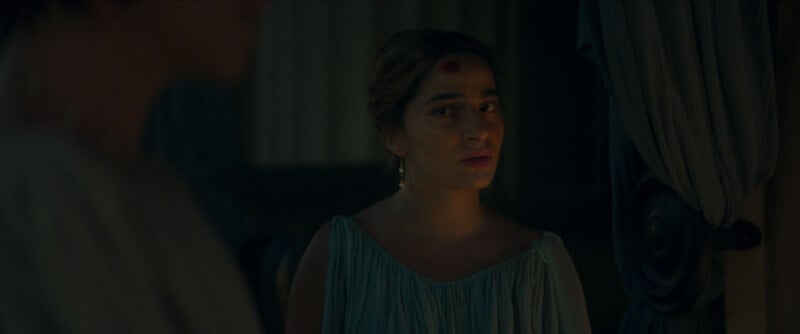
The lighting in the series is particularly interesting, because for the historic, dramatic components, light is generally very low and characters have torches or candles.
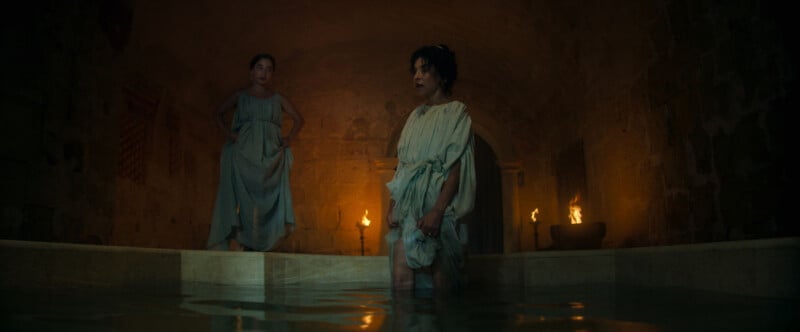
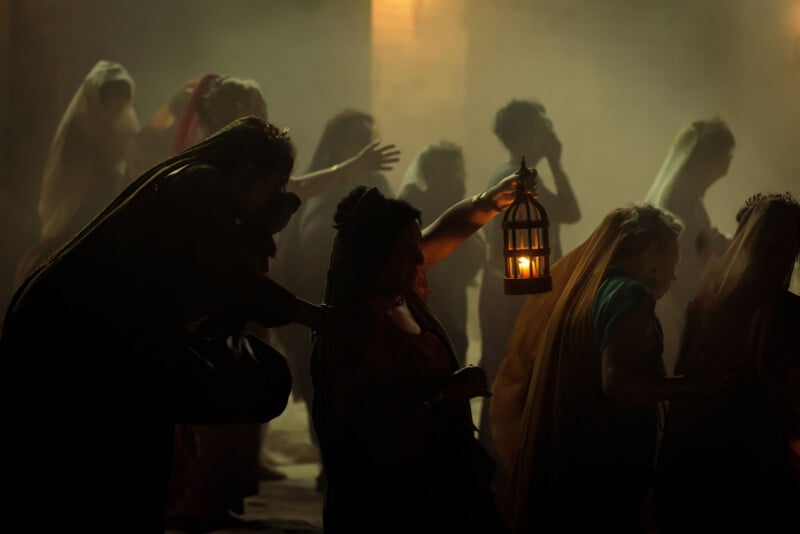
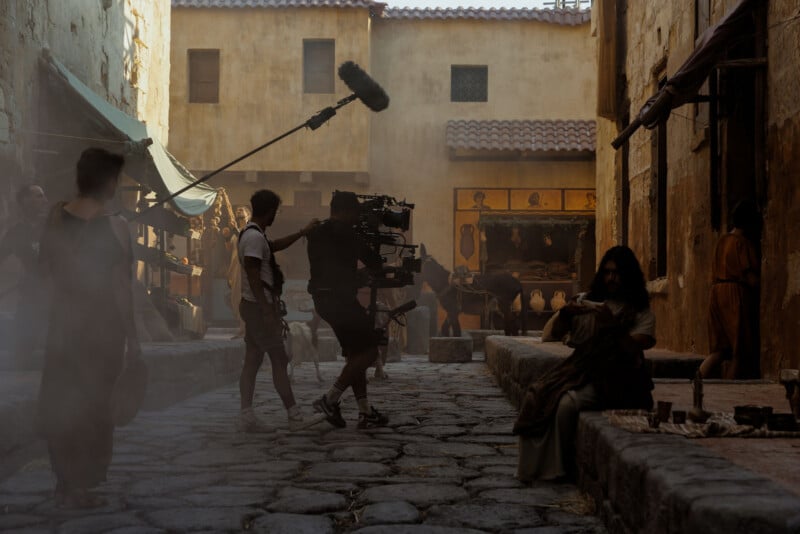
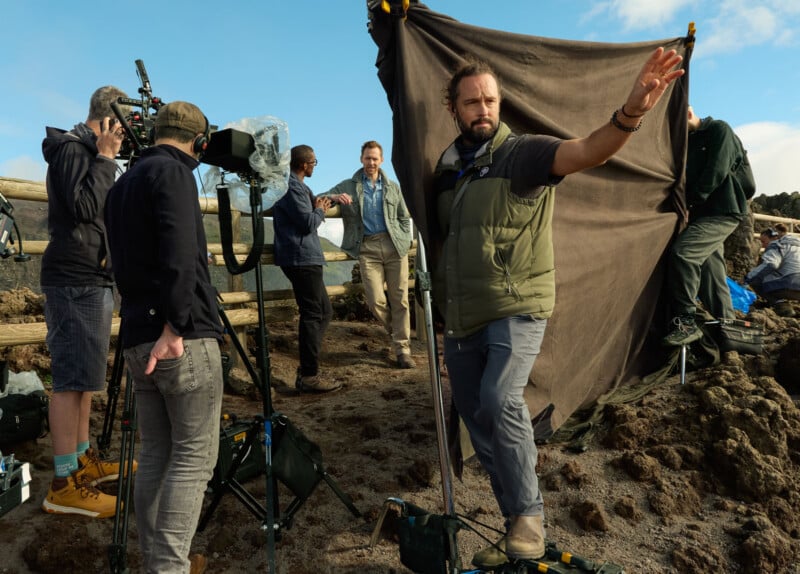
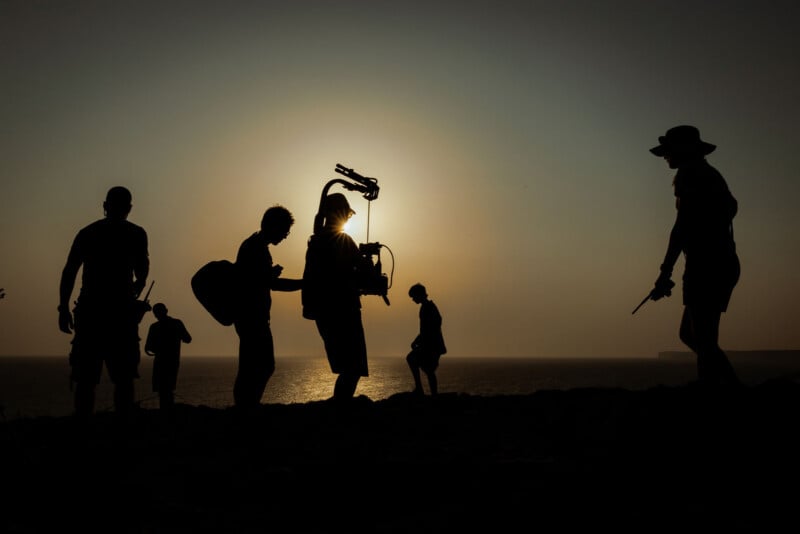
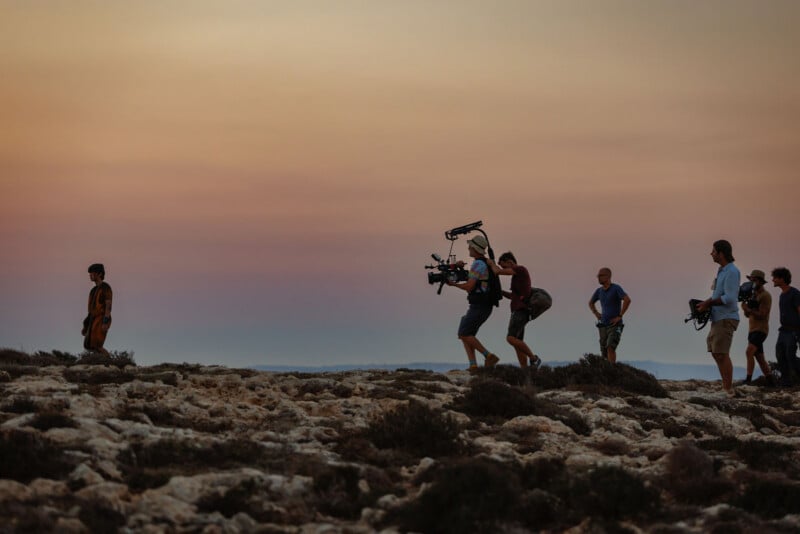
In Pompeii specifically, the crew had to be extremely small, often including just Jolliffe, an audio technician, the director, Barbor-Might, and Tom Hiddleston. They couldn’t bring in lights, so they had to work around natural lighting conditions, using bounce and diffusion to make everything look good.
While this proved challenging at times, it also meant that the crew could be agile and, importantly, that modern-day footage was very similarly lit to the dramatic, historic reenactment sequences that likewise didn’t use big artificial lights.
Jolliffe notes that he did use artificial lights at times, of course, but he opted for relatively straightforward LED fixtures. They weren’t powerful enough to overcome bright sunlight, so working alongside natural light was a theme throughout shooting.
The result is a three-part series that is both entertaining and educational, which is obviously important, but cinematic and extremely pleasant to look at. Pompeii: Out of Time delivers a cinematic approach to historic documentary work.

“National Geographic has spent more than a century bringing the past to life through groundbreaking discoveries, exploration and world-class storytelling,” says Tom McDonald, EVP of Content, National Geographic. “Working with Tom and Kevin, alongside the team at Plimsoll led by showrunner Tom Barbor-Might, has been a process of inventing an entirely new genre of history programming — one which brings evidence and imagination together in a way which feels distinctive.”
Tomorrow, July 21, National Geographic will publish a major feature story about the three Roman cities buried by Mount Vesuvius’ eruption, which will also be featured in the August issue of the magazine.
Pompeii: Out of Time premieres on National Geographic on July 22 at 9/8c, and then the following day, July 23, on Disney+ and Hulu.
Image creditsNational Geographic