Initial report
SpaceX spooks investors with debut earnings report
Shares slide in pre-market trading even as group says its quarterly revenues nearly doubled.
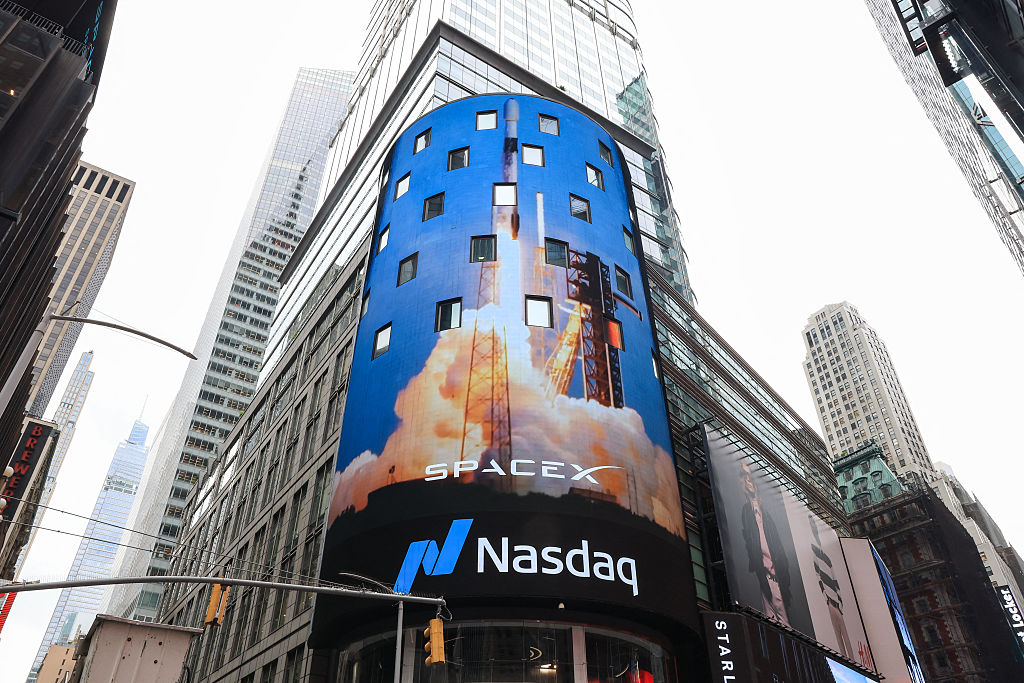
SpaceX shares dropped on Wednesday after Elon Musk’s plans for blockbuster spending to position his AI and rocket company as a data center developer spooked investors.
SpaceX surpassed analysts’ expectations in Tuesday’s debut earnings report, posting quarterly revenues of $7.8 billion, well above analysts’ estimates of $6.82 billion and up 92 percent from a year earlier. It posted a net loss of about $541 million, better than estimates of $2.12 billion.
But shares in SpaceX fell 10 percent in early trading after it reported capital expenditure of almost $16 billion on AI, double the previous quarter and well above Wall Street’s expectations. It said spending would persist at current levels for at least two more quarters.
The earnings report comes after SpaceX raised $86 billion in a historic initial public offering in June that was underpinned by expectations that it will generate meteoric revenue growth in coming years.
SpaceX’s shares initially surged but they have shed around half their value, from a peak of $225 in the week after going public to $112 on Wednesday.
Musk told investors on an earnings call that the group planned to increase its computing capacity from 2 gigawatts at the end of this year to “closer to 10GW [than 5GW]” by the end of 2027.
Each gigawatt of new capacity costs tens of billions of dollars to develop, with the bulk of that spent on chips. Musk announced that he would rely exclusively on Nvidia hardware in future infrastructure development.
At the highest end of Musk’s estimate, the company’s data centers would be consuming as much power as New York City at the peak of summer by the end of 2027.
Musk, whose commercial success at Tesla and SpaceX has come from developing hardware, is betting that his company can capitalize on insatiable demand for computing power.
Bret Johnsen, SpaceX’s chief financial officer, told investors that the group would generate more than $100 billion in annual recurring revenue by the end of the year, with cloud services accounting for the bulk of its growth.
“I think what the investment community wasn’t overly excited about was the capex number in the AI segment,” said Melissa Otto, global head of Visible Alpha research at S&P Global. “It’s ambitious.”
SpaceX’s AI revenue more than trebled from the previous quarter to $2.56 billion, with the majority of that coming from deals to lease data center capacity to rival AI groups including Anthropic and Google.
That approach has boosted SpaceX’s short-term revenues while limiting its capacity to train and run its own competitive AI models.
Dec Mullarkey, managing director of SLC Management, said SpaceX’s data center leasing could hamper it. “Their margins are going to be capped if they are primarily a cloud company,” he said.
SpaceX’s $1.65 trillion market capitalization also hinges on Musk achieving ambitious goals such as reaching Mars with reusable rockets, putting data centers into orbit, and playing a critical role in developing AI.
Goldman Sachs, a bookrunner on SpaceX’s offering, expects the company’s AI revenue to increase 100-fold by 2030. Musk said on Tuesday that SpaceX could hit $1 trillion in revenue by the end of the decade.
On the earnings call, Musk said SpaceX had made progress on its first generation of orbital data centers, dubbed Starmind AI-1. “This is not some sort of far-future, distant thing. We expect to start launching these next year.”
The latest series of Grok AI models are being trained on SpaceX data, which Musk said would give his company’s tools an edge in engineering.
Musk also argued that the potential of the group’s Starlink unit—which provides satellite Internet—was “under-appreciated.”
Some traders have been putting on bets against SpaceX shares in recent weeks. Short interest in the company has risen to the equivalent of 220 million shares, or roughly 34 percent of the shares that are freely trading, according to data provider S3 Partners.
Analysts at Deutsche Bank said the end of the stock’s initial lock-up period for employees on Thursday was weighing on SpaceX’s equity price. The German bank also said “lower than expected” buying by passive funds that track indices was affecting SpaceX’s shares after it was added to the Nasdaq 100 index last month.
Investors are also weighing the probability of Musk merging SpaceX with Tesla after previously consolidating parts of his business empire.
Musk said the electric-car maker was increasingly collaborating with SpaceX, including through Terafab, a semiconductor manufacturing initiative, during Tesla’s earnings call last month.
He added that any merger would have to take place under the “appropriate process.”
© 2026 The Financial Times Ltd. All rights reserved. Not to be redistributed, copied, or modified in any way.