I swapped strength training for triathlon training – did I lose my strength?
After months of chasing strength personal bests, 220 Triathlon writer India Paine swapped heavy lifting for swimming, cycling and running to train for her first T100. But after three months of reduced strength training, what happened when she returned to the weights?


For many years, my training revolved around barbells and dumbbells. I was never focused on how many kilometres I needed to run or ride. Instead, my numbers came from the weight I could push and pull during strength training sessions.
By the end of my latest strength block, which finished at the start of the year, I had reached a 110kg squat, 120kg deadlift and 60kg bench press. Strength training wasn’t just part of my routine – it was the foundation of it, chasing PBs for as long as I can remember.
I’d always managed to maintain my strength through different phases of training. Even while preparing for an ultramarathon, I continued prioritising key compound lifts because I was only running twice a week. Training for my first T100 Olympic-distance triathlon was another story.
Instead of balancing strength work with one discipline, I suddenly had three to fit into my week: swimming, cycling and running. Every extra hour spent in the pool or on the bike was an hour I couldn’t spend under the barbell.
At first, I was determined not to let my strength slip. I kept my heavy gym sessions in the programme, convinced I could do it all. But by Thursday, after one heavy lifting session, a run, a bike ride and two swims, I was exhausted. Rather than looking forward to deadlifts, I was dragging myself through them, and my performance in the gym was suffering. Something had to give.
But one concern kept creeping into my mind: would reducing my heavy lifting mean losing the strength I had spent months building?

How my strength training changed in the gym
Firstly, I didn’t stop strength training. I continued going to the gym three times a week. Over the years, as I’ve trained for more endurance events, I’ve learned the importance of maintaining strength to help prevent common overuse injuries, improve movement economy and maintain good form as fatigue sets in. What changed was the type of strength training I was doing.
Heavy compound lifts, such as deadlifts and back squats, recruit multiple muscle groups at once and require your body to produce a huge amount of force. While they’re incredibly effective for building strength, they’re also some of the most demanding exercises to recover from. Combined with the fatigue of swimming, cycling and running, it explained why I felt so drained after my Thursday deadlift sessions.
Working with my coach, we recognised that the gym needed to support my triathlon training rather than compete with it. The goal was to maintain strength while saving enough energy for key triathlon-specific training sessions, particularly end-of-week brick workouts.
“Whilst it is extremely important to prioritise strength for endurance training to maintain top-end strength and muscle mass and reduce the chance of injury, compound movements are more taxing on the body and central nervous system,” says personal trainer Bobby Quinn, who coached me to my first triathlon.
“As volume increases across running, swimming and cycling, we don’t want to compromise recovery. Also, as we get closer to the event, we want to reduce the risk of injury as much as possible. Switching the compound movements to unilateral reduces the required load and therefore reduces overall fatigue. It also has a great carryover into running and cycling,” he says.
With this in mind, we adjusted my programme. Instead of traditional back squats, I switched to box squats. They allowed me to keep training the squat movement pattern and maintain lower-body strength, while being easier for me to recover from.
Heavy barbell deadlifts were replaced with dumbbell B-stance deadlifts. Although the overall load was lower, they still targeted the glutes and hamstrings while improving balance, hip stability and single-leg strength – all qualities that transfer well to running.
Bench press remained in my programme, but I swapped the barbell for dumbbells and performed the exercise at different angles to maintain upper-body strength without placing as much overall demand on my body.
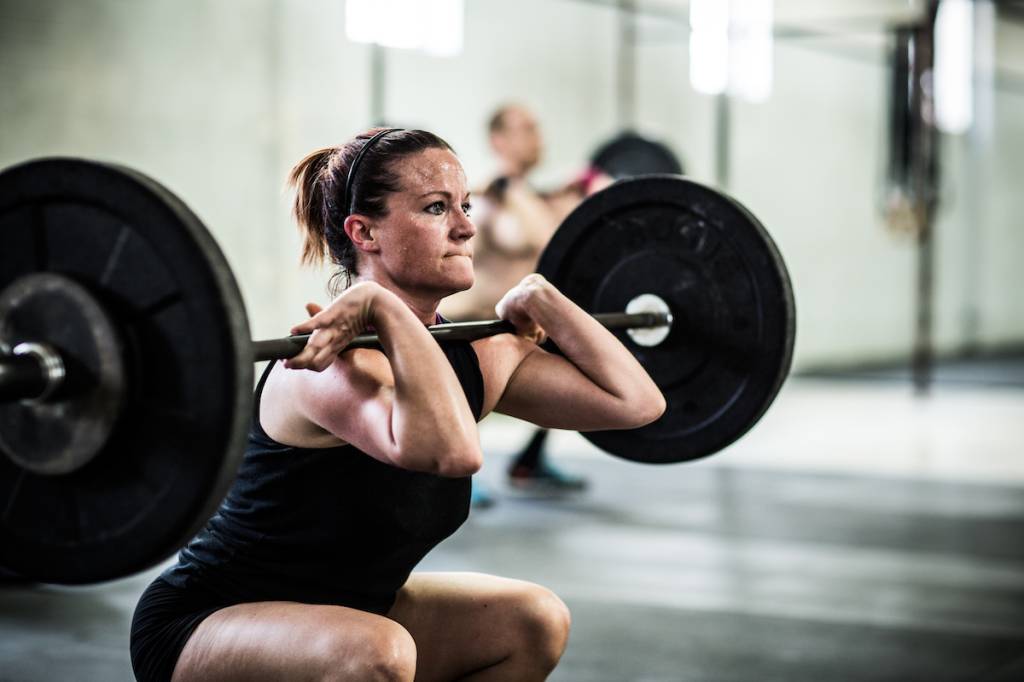
Did I lose strength when I went back to weights after my triathlon?
When I saw squats, deadlifts and strict press return to my weekly training routine, I was admittedly excited. I loved my triathlon training, but strength training will always be my bread and butter. However, after more than three months away from those heavier movements, I was curious to see what would happen when I put some weight back on the bar.
The first session was a bit of a shock to the system. The weights felt heavier than I remembered, and the DOMS (delayed onset muscle soreness) was a painful reminder that my body wasn’t used to lifting heavy anymore. Four days after my first squat session back, I was still letting out a moan every time I bent down to pick something up.
Quinn explains that this was exactly what I should expect after reducing my weight load and changing the focus of my strength training.
“Going back to usual gym work with lifts such as squats, deadlifts and strict press, there will naturally be a reduction in top-end strength and movement efficiency, but this is largely down to them just being out of your training plan for a period of time rather than an actual loss in strength,” Quinn says, reinforcing that the DOMS wasn’t a sign I’d lost my strength.
In my first week back under the barbell, I worked my way from 60kg to 80kg for six reps on the back squat. On the strict press – always a tough movement for me – I managed to reach 35kg for the same number of reps. On the deadlift, I maintained a solid 100kg for four reps.
At first glance, these numbers were lower than my previous personal bests. But that doesn’t necessarily mean I had lost a significant amount of strength. After months away from these specific movements, I had lost some of the efficiency and confidence that came from practising them week after week.
“I would expect the next couple of weeks of lifting to be slightly lower than before the triathlon, but usually that is just a case of getting familiar with the movement patterns rather than a loss of strength,” Quinn says, adding that he expected my lifts to return to theirprevious levels within a few weeks.
The biggest takeaway was that my three weekly gym sessions – even with reduced loads and different exercises – had allowed me to preserve a large amount of my strength base. I hadn’t become weaker. I had simply become less practised at lifting heavy.

What did I learn by swapping weight training for triathlon training?
Even though many of us like to think we can do it all, sometimes achieving a goal means prioritising what matters most. For triathlon, that meant stepping away from heavy weight sessions that were leaving me exhausted and shifting towards gym work that supported my swimming, cycling and running.
The aim was no longer to chase new personal bests. Instead, it was to maintain a solid strength base, reduce my risk of injury and build a body resilient enough to handle the demands of endurance training.
I may have had to accept the aching legs when I eventually returned to heavier lifting, but taking my foot off the gas in the gym paid off. I felt energised for my triathlon sessions, stayed injury-free throughout my entire T100 training block and bounced back quickly after race day.
Of course, every athletes will respond differently and training history, goals and programming will all play a role. But in my experience training for my first triathlon, reducing my strength training for a period of time showed me that you don’t necessarily lose the strength you’ve built – you just need to adapt how you train to maintain it.



India Paine