Nonsensical
Trump wants Big Pharma to split MMR vaccine; Big Pharma thinks it’s idiotic
It took just hours for the leading pharma group to reject the recommendations.
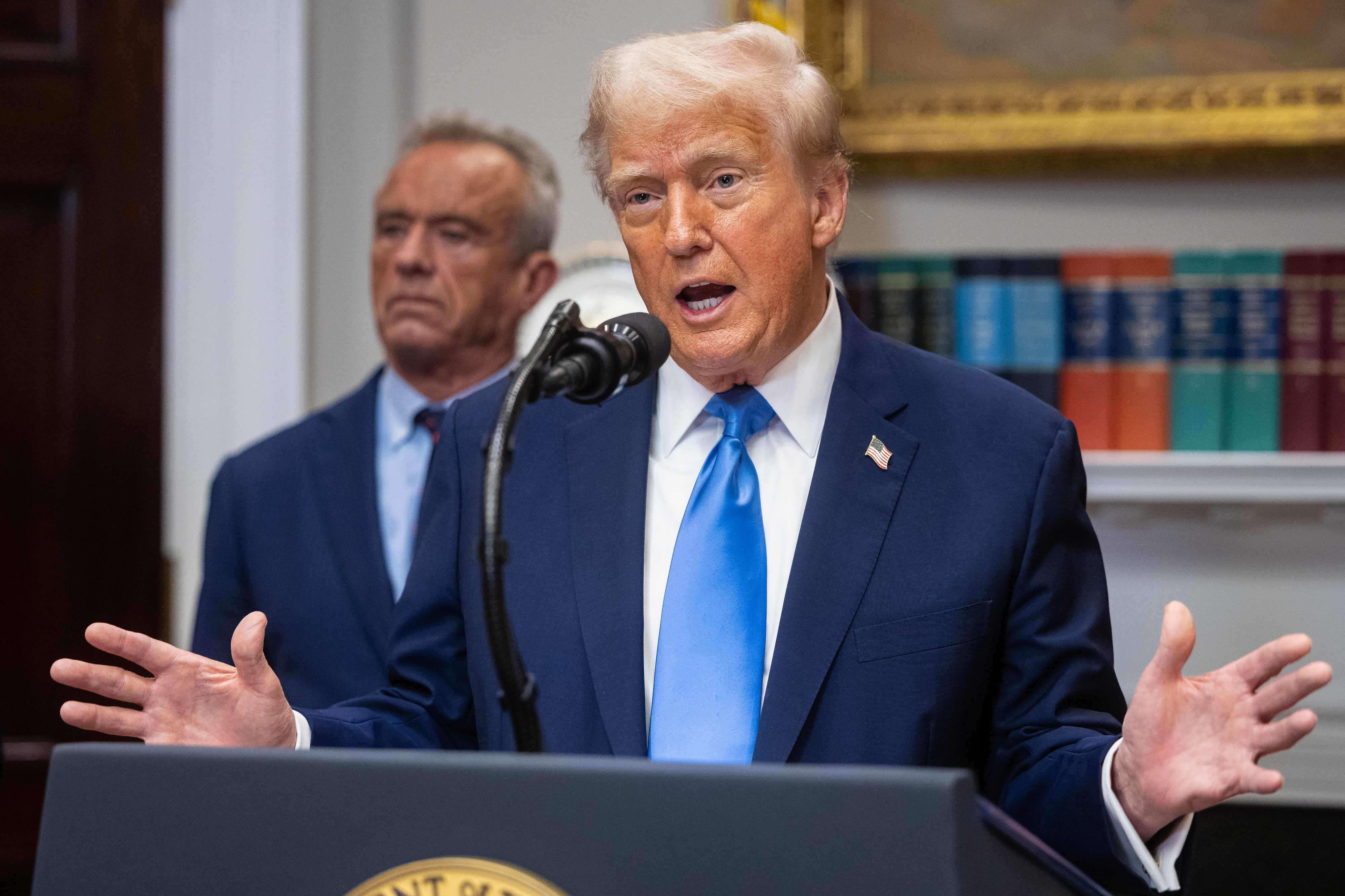
Backlash to Trump’s vaccine order on Monday has been swift and sharp, with various public health and medical organizations and independent experts calling it “dangerous,” “unscientific,” “false and misleading,” “so wrong,” and saying it is “putting children’s health at risk.”
The responses are unsurprising; the medical and health communities have consistently fought against the anti-vaccine, anti-science agendas pushed by Trump and his health secretary, Robert F. Kennedy Jr., who has no background in science, medicine, or public health. The American Academy of Pediatrics—which called the order “not only disheartening but dangerous”—is leading a lawsuit against previous changes to federal childhood vaccine recommendations under Trump and Kennedy. In March, the organization, along with other medical groups, won a temporary injunction reversing most of the changes.
However, less expected among the scorn for Trump’s order is the immediate pushback from the pharmaceutical industry.
Trump’s executive order for his so-called “gold standard” vaccine policy focuses on reducing the number of vaccines children get. But contrary to that goal, it also called for splitting the combination measles, mumps, and rubella (MMR) vaccine into three separate shots. The MMR vaccine is given in two doses, so the change would mean six shots for children instead of two.
More impractical, individual vaccines for measles, mumps, and rubella do not exist in the US. For Trump’s order to be realized, pharmaceutical companies would need to make hefty investments in developing, testing, and bringing to market entirely new vaccines—and they would have to do all of that based on no scientific reasoning whatsoever. The current MMR combination vaccine has proven extremely safe, effective, and convenient based on data from decades of use.
Within hours of Trump signing the order, PhRMA—the leading pharmaceutical industry group representing big players, such as GSK, Sanofi, Pfizer, Merck, Johnson & Johnson, and Novo Nordisk—put out a statement saying the order debases America’s vaccine policy.
Industry pushback
PhRMA’s Chief Medical Officer Michael Ybarra said that previous federal vaccine recommendations were “built on decades of rigorous scientific research and public health expertise,” and any changes should be based on “the same high standard of evidence.”
“Simply imposing a narrower schedule by importing recommendations from foreign countries wouldn’t reflect gold standard science—it would mean accepting a lower bar of protection against diseases that remain serious and, in some cases, life-threatening for children in the United States,” Ybarra said.
Merck and GSK, which make MMR vaccines used in the US, also pushed back on the order, pointing out that it is nonsensical. Merck provided a statement to Stat News saying it supports vaccine policy “rooted in rigorous, evidence-based science” and that “There has been no published scientific evidence that shows any benefit in separating the combination MMR vaccine into three individual shots.”
A GSK spokesperson told Stat that its MMR vaccine is “backed by decades of global use and robust scientific evidence.” The spokesperson similarly noted that “There is no scientific evidence that separate measles, mumps, and rubella shots improve safety or efficacy compared to combined MMR.”
While seemingly tame, the statements reflect the industry’s immediate public resistance to an order from a US president, which is not the norm. Other organizations, meanwhile, were more direct with their criticism.
Robyn Blumner, president and CEO of the nonprofit scientific advocacy organization Center for Inquiry, blasted the order in a statement:
“There are very few people less qualified than Robert F. Kennedy Jr. to be making decisions about vaccine policy. Donald Trump is at the top of that very short list. This new executive order is just the latest example of the administration’s complete disregard [for]—and overt hostility toward—evidence-based science. Public health policy should be based on rigorous science backed by data, not the personal beliefs and suspicions of one highly unqualified individual.”