Canon Has Increased Its Massive Digital Camera Market Share Lead
Thanks to the Camera and Imaging Products Association (CIPA), photographers get a lot of interesting data each month about how many cameras and lenses the Japanese manufacturers are shipping globally. However, for those who want to know who is making each of those cameras, the annual Nikkei Industry Map is the best resource. The latest edition has just arrived.
As reported by Digital Camera Life, the new Nikkei Industry Map 2027 details the market shares of each publicly traded Japanese camera manufacturer in the global digital camera market. Of course, this data doesn’t capture non-Japanese camera companies like Leica or Hasselblad, though they are admittedly relatively small players in the grand scheme of things. It also doesn’t reflect Sigma’s camera sales, since the company is not public. With those caveats out of the way, the actual data itself is fascinating. Overall digital camera unit sales increased from 8.7 million units to 9.5 million units, per Nikkei, which is great news for the broader camera industry.
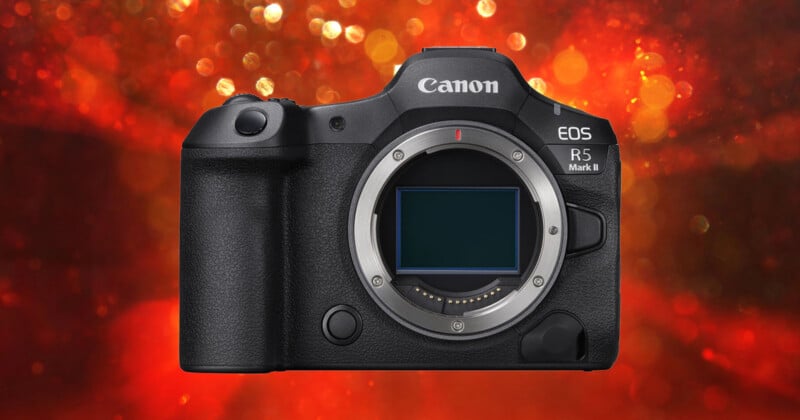
Just like it did last year, Canon holds the top market share with a commanding lead. In fact, Canon even upped its share from 43.2 percent to 45.7 percent. Canon also increased its total annual camera sales from 3.53 million units to 4.5 million units, a massive increase.
Sony, in second place yet again, held a 24.6 percent share with 2.42 million camera sales. This is a slight increase in total unit sales from 2.33 million but a drop in market share from 28.5 percent. It’s worth noting that although Sony doesn’t make Canon’s image sensors, it does make sensors for many other companies in the market, so the company benefits from a growing camera industry in more ways than one.
Perhaps the biggest surprise of all in this year’s Nikkei Industry Map is that Nikon, a very historic photography company, has lost its place in the top three. After increasing its market share to 11.7 percent last year, the company sold about 80,000 fewer units in 2025, and its share dropped to 8.9 percent, a fourth-place finish.
Taking Nikon’s spot on the podium is Fujifilm, which upped its unit sales from 740,000 to 1.16 million and increased its market share from nine percent to 11.8 percent. This is a significant leap in unit sales for Fujifilm, which still, over two years later, struggles to keep its popular X100VI in stock. That’s not the only Fujifilm camera model that can be hard to track down due to excess demand, though, as models like the X-M5 and X-E5 have also had bouts of backorders. Presumably, digital Instax cameras, like the Instax Wide Evo released last year, are also counted by Nikkei.
It’s a long drop to fifth place, which is Panasonic. The company shipped 430,000 units last year, securing a 4.4 percent market share. This is a substantial 150,000-unit increase.
Ricoh Imaging, presumably thanks to the GR IV, moved up from seventh to sixth place and shipped 210,000 units. Ricoh had a 2.1 percent market share, up from just 0.8 percent the year prior. The company tripled its shipped units as well, the largest percentage increase of any company by a huge margin.
OM System dropped from sixth to seventh, finishing in last place among the charted companies. The company sold 150,000 units, a slight dip from 160,000 the year before.
It will be very interesting to see if these new patterns persist in the Nikkei Industry Map 2028.
Image creditsCanon. Header photo created using an asset licensed via Depositphotos.com.
Affiliate Disclosure PetaPixel articles may include affiliate links; we may earn a commission if you buy through one.