Louisiana Purchase
SpaceX intends to invest up to $100 billion in massive Louisiana spaceport
“This will be a project like no other.”
Credit:
SpaceX
Credit:
SpaceX
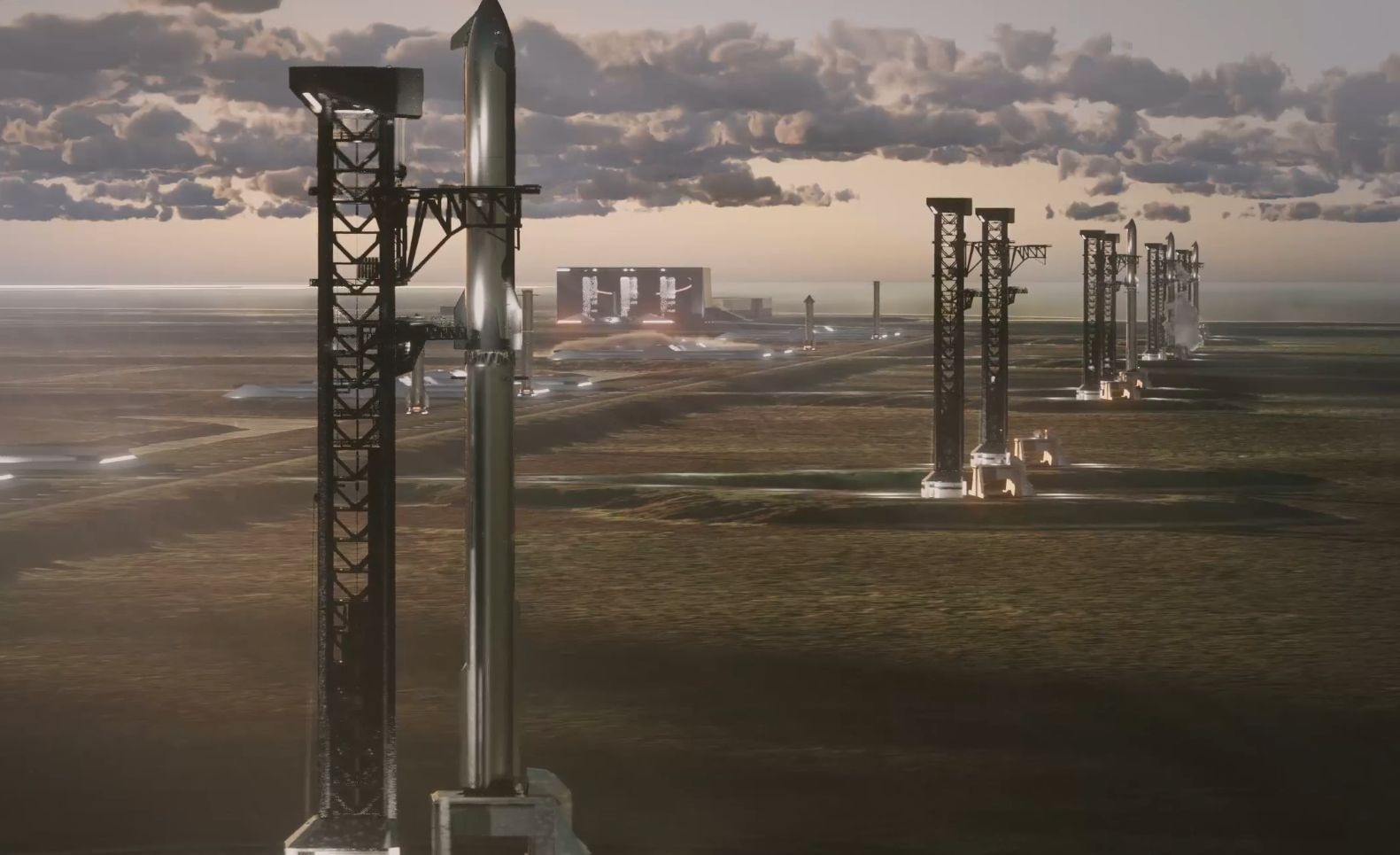
Louisiana Gov. Jeff Landry said Tuesday that SpaceX will commit $100 billion to develop Starship factories and launch pads in the state’s coastal areas. In doing so, the company seeks to replicate the Starbase facility it has built over the last decade in southern Texas on a larger scale.
The announcement capped months of speculation about SpaceX’s interest in a sprawling parcel of land along the Gulf coast of Louisiana, which offers room to build multiple launch towers and offers access to the methane propellant that fuels the Starship rocket.
Gwynne Shotwell, the president and chief operating officer of SpaceX, said the “Starbase Louisiana” facility would become a self-sustaining spaceport with propellant production, power generation, deep-water shipping capabilities, vehicle processing facilities, and an airport on site.
“This will be a project like no other,” she said during a project announcement in Abbeville, a Louisiana town of about 12,000 people that is the closest populated area to the coastal wetlands.
Heading to the boot
Why Louisiana? If SpaceX is to fulfill its ambitions to launch thousands of Starship rockets a year to build a massive constellation of orbital data centers, among other purposes, it needs more launch sites. Currently, the company has one operational Starship launch site at its Starbase Texas facility, and another in development. Three more pads are being built in Florida at Cape Canaveral.
But both the Florida and Texas sites are land-constrained, and SpaceX eventually plans to launch dozens of Starship rockets a day. In Louisiana, the company would have no competition for range access, as in Florida, where a half-dozen other private launch companies operate, and far more space than in Texas.
The Starbase Texas site encompasses only about 350 acres, and SpaceX also must maintain public access to Boca Chica Beach as much as possible along a single roadway.
By contrast, SpaceX is expected to have unfettered access to about 125,000 acres in southern Louisiana, in an area generally referred to as Pecan Island. This project will face environmental challenges in an area that supports a broad range of waterfowl and other wildlife. Shotwell said Tuesday that SpaceX would only use a small portion of the acreage while otherwise seeking to preserve the wetlands for wildlife and the natural beauty of the area for recreational purposes like fishing, hunting, and boating.
The company’s initial efforts at the site will focus on preventing coastal erosion, where the state is losing one to three meters a year. SpaceX intends to partner with state and federal agencies to expand Louisiana’s Coastal Master Plan, including Gulf shoreline protection breakwaters to slow erosion.
SpaceX plans to begin construction of the first launch facilities in 2027 and is targeting an initial launch from Louisiana by 2029.
Advantages of Southern Louisiana
The Louisiana location has other key advantages beyond open land. It lies close to the Intracoastal Waterway, with deep-water access for moving rockets and payloads into the site. It is relatively close, by barge, to SpaceX’s massive Starfactory in South Texas near Boca Chica beach.
Additionally, the southward-facing location offers potential access to polar orbits. In contrast to equatorial orbits that move from west to east, polar orbits go north to south (or vice versa) and generally pass near or over the poles. Most of SpaceX’s orbital data center satellites will likely end up in near-polar orbits. From Louisiana, a Starship could reach a polar orbit with only a short traverse over Mexico nearly 1,000 miles downrange.
Louisiana officials said they first heard from SpaceX about the company’s interest in the location a little more than six months ago. The site became available as part of a legal settlement that resolves dozens of lawsuits that blame ExxonMobil for pollution and coastal land loss. Since then, the project moved quickly toward reaching a deal.
In addition to massive financial investments, SpaceX promised to create at least 3,000 local jobs, and up to 10,000, as the company seeks welders, energy workers, and other trades while building out a small city to support the world’s largest rocket.