A faster solar wind
15,000 years of solar wind in four hours? A Seattle company gives it a go.
“We’re living in this world of scarcity with the Moon.”
Credit:
Interlune
As part of its nuclear fusion processes, the Sun produces a particularly interesting isotope of helium, known as helium-3. Some of this helium-3 escapes the Sun’s gravitational pull as part of the solar wind, a stream of charged particles that emanates out across the Solar System.
Over billions of years, this wind has bombarded every body in the vicinity of the Sun, including Earth’s Moon. Lacking a magnetic field or atmosphere, the Moon’s surface has no barrier to prevent the constant flow of this wind.
This means that helium-3 has been striking the lunar soil, or regolith, for a long time. These helium ions penetrate only a little way into the individual grains of this soil, but periodically meteorites have struck the lunar surface to churn the soil, mixing some of this helium-3 a little below the surface.
The concentrations of helium-3 are not super high, perhaps only 10 to 20 parts per billion in some titanium rich soils, which retain the helium ions better. But they are far higher on the Moon than on Earth, which is largely shielded from the solar wind.
Can the helium-3 actually be mined?
The presence of helium-3 on the Moon has long been an object of fascination for some scientists and engineers on Earth, most notably geologist and Apollo 17 astronaut Harrison “Jack” Schmitt. Long-term, they believe helium-3 could provide energy through a fusion reaction. But in the near term there are more practical uses, such as cooling materials to ultra-low temperatures, medical research, and neutron detection. This makes helium-3 one of the only known materials on the Moon that could plausibly be mined there and returned to Earth for a profit.
For this reason, a handful of companies, including a Seattle-based firm called Interlune, have been interested in potentially mining the helium-3 on the Moon. But before any company can send a full-scale extractor to the Moon to attempt to sift through regolith and collect helium-3, someone should probably attempt to determine whether this is physically practical.
But where to get a few kilograms of lunar rocks for experimentation? The only major repository of lunar regolith on Earth, Johnson Space Center, is unlikely to give commercial companies this much material (the NASA field center houses a little more than 300 kg of pristine material gathered during the Apollo program) to experiment on and ultimately probably destroy. And most simulants of lunar material are faithful in their geological characteristics, to simulate the lunar surface and its dust, rather than the precise chemistry within.
“We’re living in this world of scarcity with the Moon,” said Rob Meyerson, chief executive of Interlune, in an interview. “We have had very little operating time on the Moon. We have very little material to study. We have very little data.”
Creating a better simulant
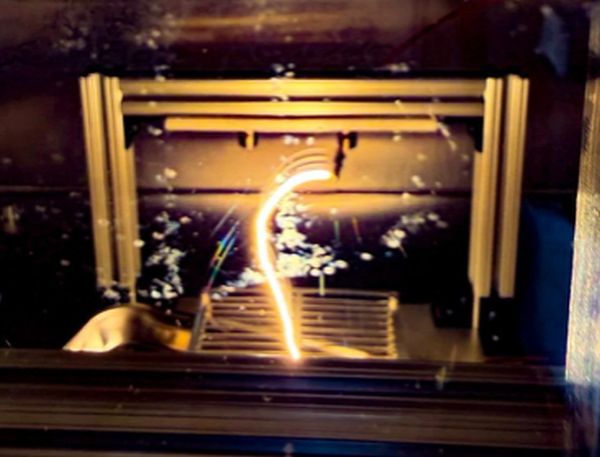
So the scientific team at Interlune, led by planetary scientist Elizabeth Frank, decided to get creative. Inside a vacuum chamber at the company’s offices, ionized helium was accelerated into lunar regolith. This process mimicked the solar wind, delivering the equivalent helium-ion exposure, but at a far higher rate. Over the course of four hours, 15,000 years of solar wind was implanted into the lunar regolith.
The company’s scientists then heated this material and observed the decomposition of minerals through a process known as pyrolysis. The helium implanted into the lunar regolith was released at the same temperatures that scientists have observed helium-3 being released from rocks returned by Apollo astronauts. This gave confidence that the simulant accurately mimicked lunar conditions.
Interlune plans to use its new simulant to test the hardware it is developing to extract and process helium-3 on the Moon and will also offer it for sale to other lunar mining companies. The goal, when the company sends a prototype mission on a lunar lander later this decade, is to have tested everything on Earth in similar conditions to those on the Moon.
“Similitude is a discipline,” Meyerson said. “You simulate the gravity, and in the past we’ve flown in a parabolic airplane to simulate one-sixth gravity, and you want to test in a vacuum because regolith flows differently in a vacuum than it does in an atmosphere. And now we can match the simulant as well.”