A Robot Vacuum Company Is Launching an 8K Action Camera
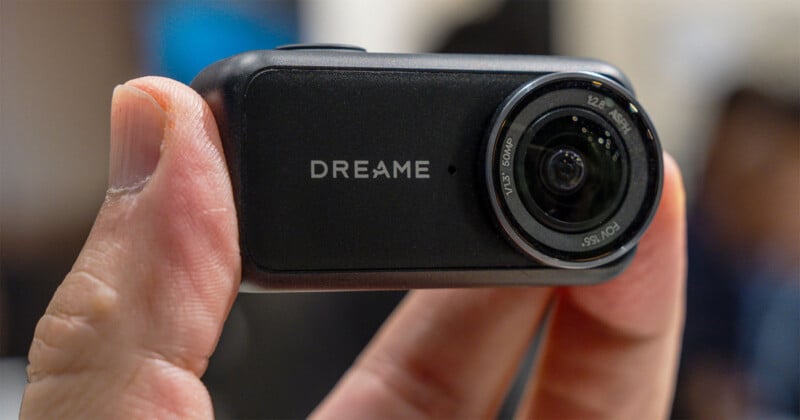
Dreame isn’t exactly known for making cameras, so pivoting from robot vacuums and lawnmowers to action cameras may be a little risky. Originally unveiled at CES 2026, the Leaptic Cube is ready for primetime and will hit shelves in October 2026 after a full showing at IFA in Berlin.
In fairness to Dreame, it’s not the first (and hardly the last) company to attempt entering into new, unfamiliar categories, though it’s also one with some stiff competition. It’s too soon to say whether the Leaptic Cube will become a serious shooter, but there’s every indication the company is serious about giving it a go.
A Camera Built in Pieces
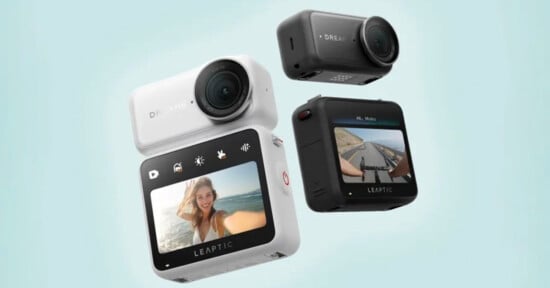
At its core, the Leaptic Cube is built around a system of magnetic modules that can alter or shift how and what the camera sees. The small camera unit weighs about 56 grams, making it easy to clip onto a helmet, backpack strap, surfboard, or even a dog collar for a very different POV. It can capture and store footage independently on its own for a certain degree of autonomy when using it, though snapping it onto the separate base with the 2.27-inch touchscreen makes the setup feel more substantial, courtesy of the live view, on-device controls, and larger battery.
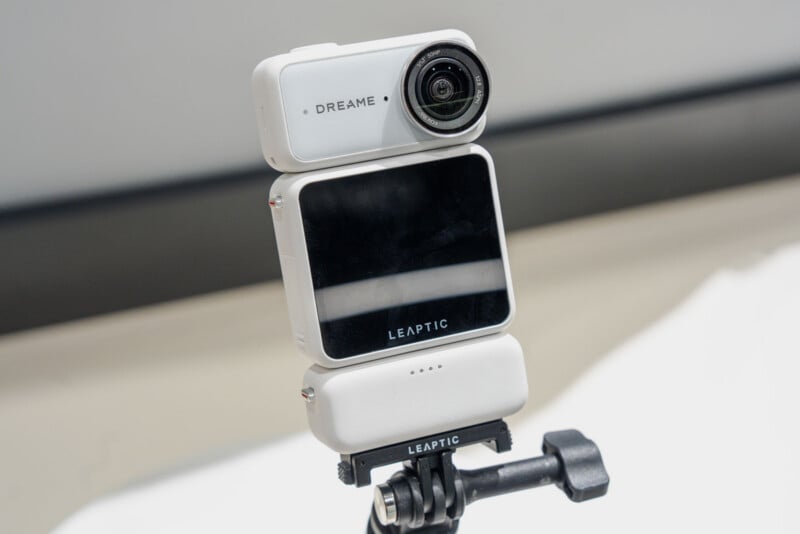
Dreame added a third magnetic battery pack to the lineup at IFA, extending runtime to up to 210 minutes. The camera itself can go for up to 110 minutes, and recharge to 80% in about 19 minutes. The modularity is the camera’s key value proposition because users can stack only the pieces they actually need for a given day.
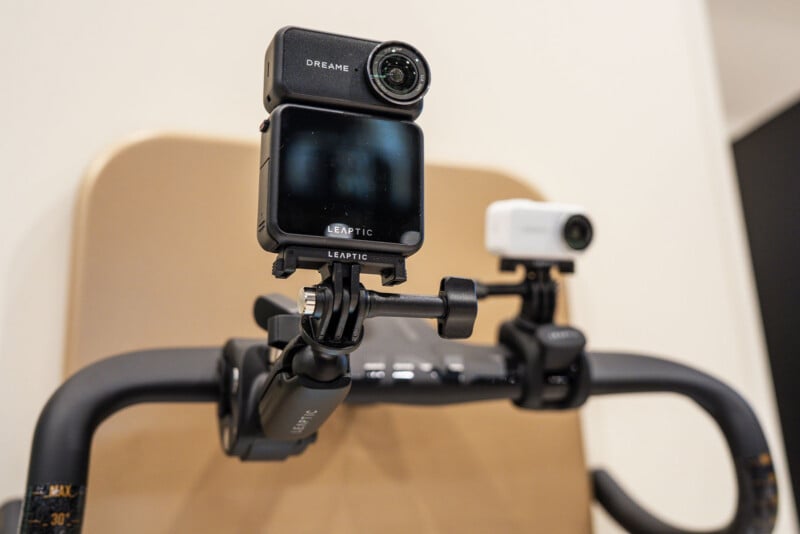
The idea itself is hardly novel, given that DJI and Insta360 have been doing it already, but a detachable battery is new, particularly in its implementation. Since the camera has its own battery, you can stack it on a mount or directly onto the battery pack, removing the main base when size or weight is an issue, or when you need extra runtime.
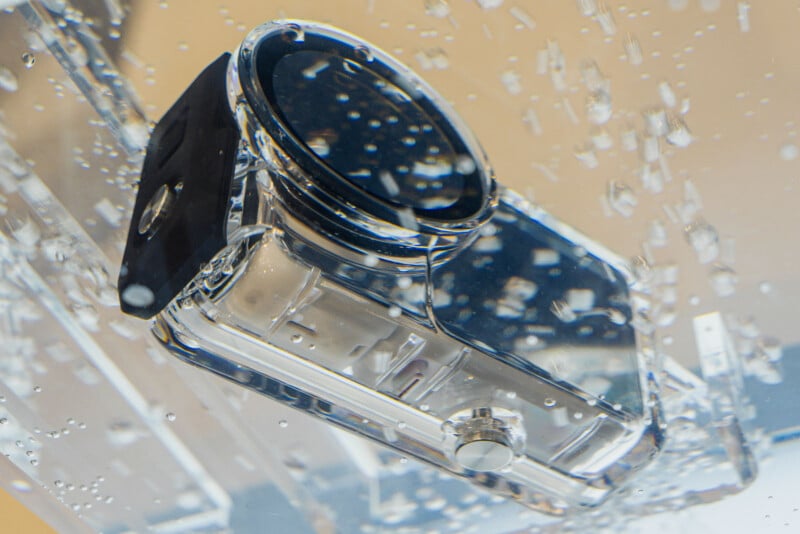
The system also maintains in tougher conditions, including saltwater when encased in a protective dive case. On its own, the Leaptic Cube’s body offers 10 meters of water resistance — in clear water — increasing to 60 meters when using the dive case. The case is only for the camera itself, not for the camera plus the main base and other modules. You would need to detach those first and set up all settings before diving in and shooting underwater. The lens itself uses what Dreame calls a CrystalShield coating, intended to resist scratches and make it easier to wipe away smudges, fingerprints, and water spots between takes.
For storage, the base camera module comes in 64GB and 128GB variants, while the screen module adds a microSD slot supporting cards up to 1TB for longer shoots. Company reps say USB transfer speeds will be fast enough to move large 8K files smoothly.
Punching Above Its Size on Resolution
Dreame is going after competitors through resolution. Most action cams in this category, including the DJI Osmo Nano and Insta360 Go Ultra, top out at 4K, while Dreame touts 8Kp30 capabilities. That may not matter much given the dearth of 8K content available, as it is, but it does make cropping in post for 4K content a little more interesting.
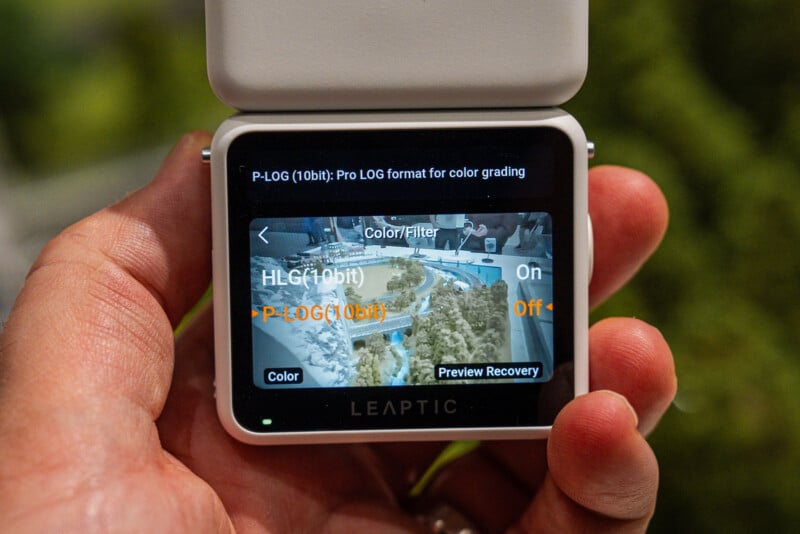
Along with 8K video, the Leaptic Cube has a 1/1.3-inch CMOS sensor with a 155-degree ultra-wide f/2.8 lens capable of 50-megapixel stills and 4K up to 120 frames per second for slow motion. It also offers a 10-bit color mode with its own Log color profile, with reps claiming up to 13.5 stops of dynamic range to attract creators who want more room to grade footage in post.
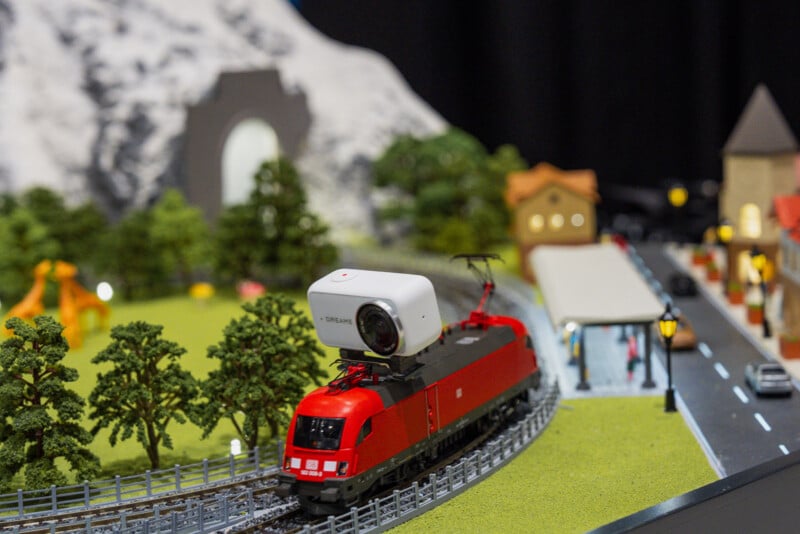
What’s not clear is how a sensor this size, generating 8K footage, manages enormous file sizes and real heat inside a body that’s barely bigger than a thumb. The sample footage looks nice but was also captured under ideal conditions, leaving room for healthy skepticism about low-light performance in particular. I had no way to test whether in-body processing applies aggressive noise reduction. Reps mounted a camera on a toy train set that went under a mountain tunnel but it rolled through it too quickly to assess anything on the tablet providing the live feed.
AI Stepping In
Dreame is leaning into AI as a key differentiator, though that’s what virtually any company says these days. Here, a built-in voice assistant called Moko can take control of certain features on command. Say “Hi Moko,” and you can tell it to start recording, add markers, switch modes, or turn the camera on and off without touching it, maintaining flexibility whenever the device is out of reach.
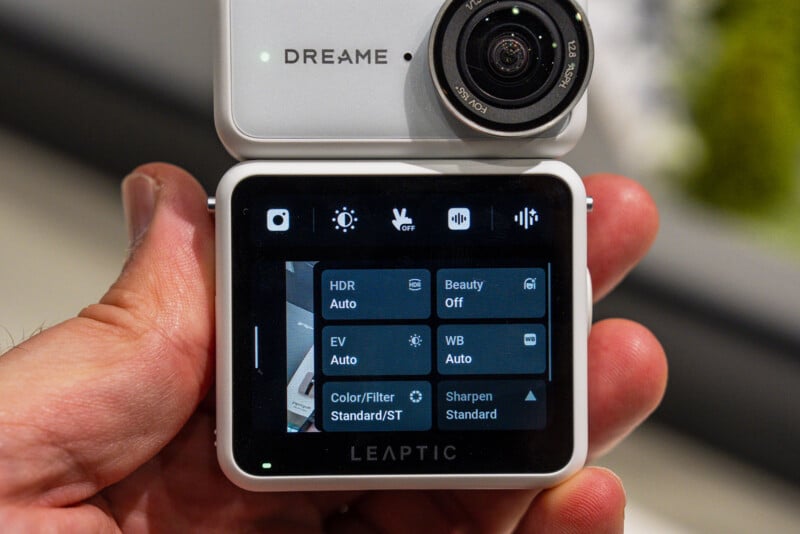
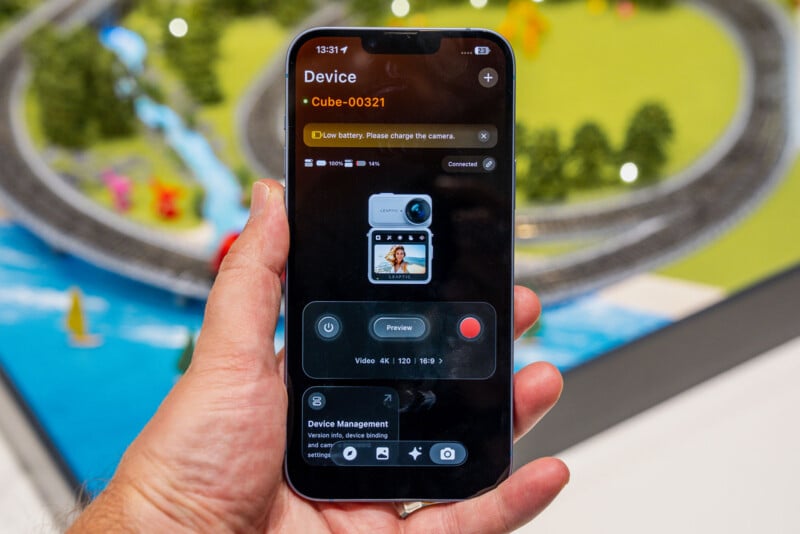
What remains a bit confusing is how this works in certain scenarios. The camera has a microphone to hear commands, but when detached, it’s unclear whether commands are limited to basic controls, while more complex ones require the Leaptic Cube’s mobile app and a cloud connection to run first. Or, does Moko need the phone’s data connection nearby at all times to execute commands? We’ll find out soon enough.
The camera also uses scene recognition for things like fireworks, city nights, or skies and adjusts settings accordingly, along with a subject-tracking mode designed to keep a moving subject centered in the frame automatically. There’s even a portrait mode that processes skin tone and facial detail, though it’s a setting you can also turn off. The microphones also use AI to amplify voices and reduce background noise in busier situations so dialogue isn’t drowned out.
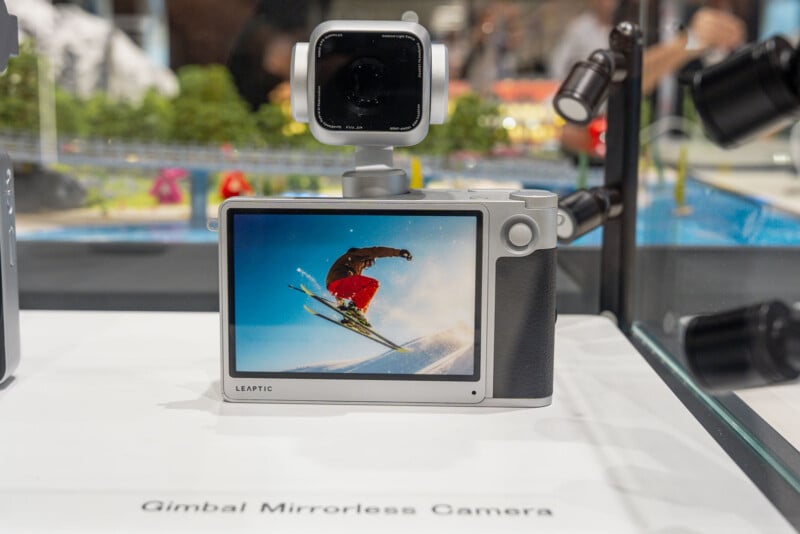
Dreame calls its image stabilization system GyroSteady AI, with several modes including a horizon-lock option meant to keep footage level even if the camera itself tips or rotates during a shot. This appears to be an on-device AI feature that applies anytime you want to use it, ensuring footage doesn’t get flipped or rotated inadvertently.
Pricing and Availability
Dreame confirmed pricing for the Leaptic Cube in the U.K. to start at £349 for the 64GB variant standard package, increasing for bundled sets that include certain accessories. Back at CES, the 64GB camera was estimated to start at about $440, with the 128GB version in the $460 range.