37.9 kWh usable
Volvo increases the batteries for 2028 XC60 and XC90 plug-in refresh
The refreshed Volvos also get new infotainment systems with Gemini onboard.
Credit:
Volvo
Credit:
Volvo
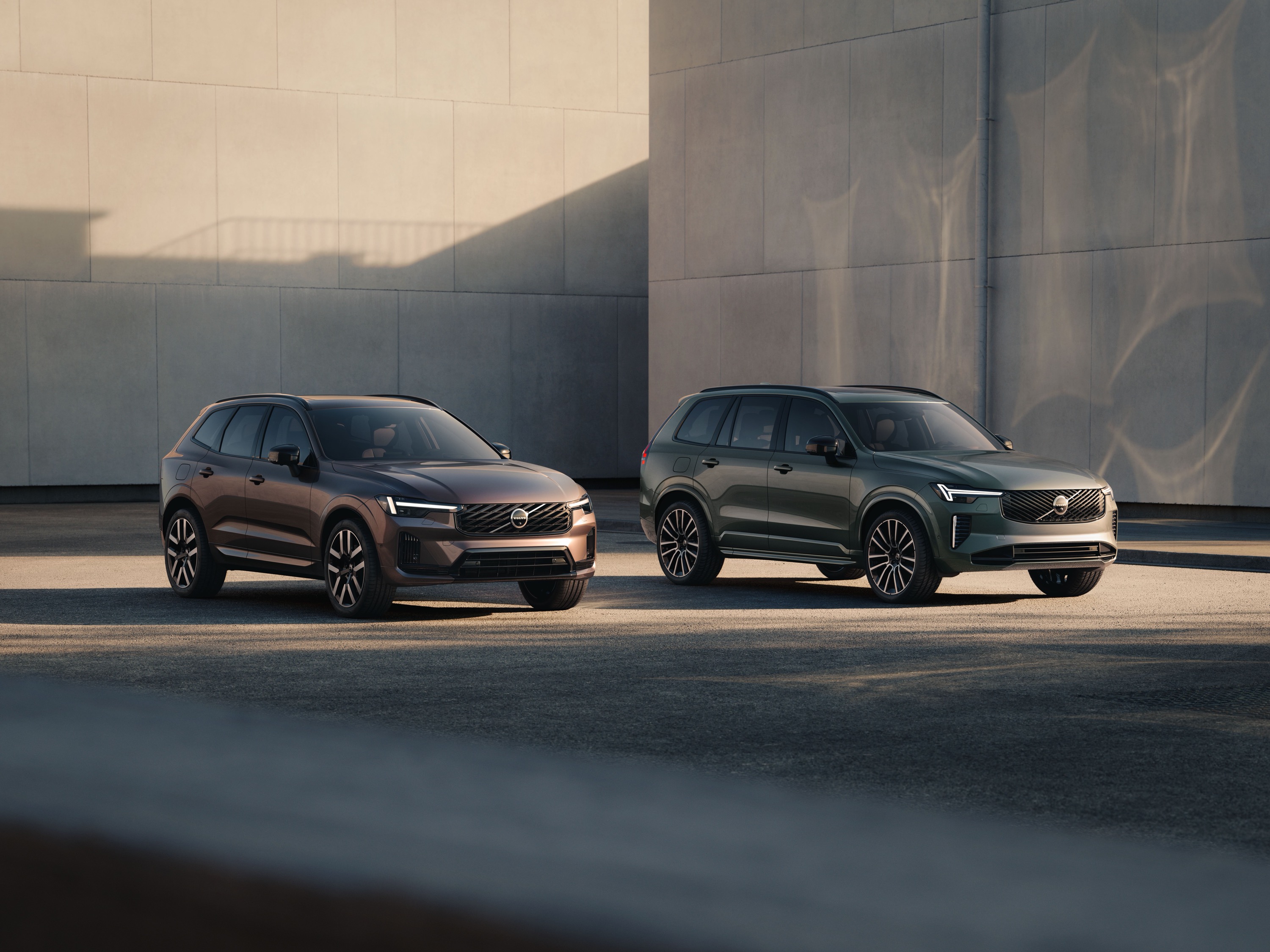
There must be a case of upgrade fever taking hold in Gothenburg. Yesterday, we saw the revised Volvo XC40; today it’s the turn of another pair of Volvo SUVs, the bestselling XC60 and the three-row XC90. While the styling changes are more subtle, the new plug-in hybrid powertrain—which more than doubles its real-world electric range—is most welcome.
Volvo had sold more than 2.7 million XC60s worldwide by the end of last year, so it’s an important car for the brand. Visually, there are changes to the “Thor’s Hammer” headlights: these keep their distinctive daylight running light signature but now hide matrix LED projectors within their depths. There’s a new front grille as well, one that has been slimmed down a little, together with tweaks to the bumpers, wings, and some other body panels.
On the inside, there’s a new ventilated leather interior option, and like the XC40, the new 11.2-inch infotainment system sports a Gemini personal assistant to enable conversational voice control of the android automotive OS-based infotainment system. Based on some brief testing, the new Gemini voice assistant does at least perform a lot better than the previous version, which, if anything, has degraded in ability over the past few years.
The most significant change is invisible, but it’s the much larger-capacity lithium-ion battery that powers the electric motor side of the XC60 T8’s plug-in hybrid powertrain. When Volvo first launched the XC60, the PHEV version we tested in 2018 offered a 10.4 kWh (net) battery pack and 17 miles (27 km) of EV range. This increased to 14.9 kWh (net) for the model’s first refresh (which we drove in 2023), increasing its electric driving range to 35 miles (56 km).
Now the XC60 T8 features a 37.9 kWh (net) battery pack (41.2 kWh gross), which gives the SUV an electric driving range of 78 miles (125 km), according to the Environmental Protection Agency test cycle. According to Volvo, that should be enough for three days’ worth of daily driving—its data shows the median US Volvo driver commute is 22 miles (35 km) round-trip. With a full battery and a full tank of gas, the XC60 T8 should be capable of 590 miles (949 km) between stops, should someone have such a reason to do so.
Perhaps the other big news for the XC60 is that it will enter production at Volvo’s plant in South Carolina in addition to the existing production line in Sweden. The US is a big market for the XC60, and the current tariff regime has heavily incentivized local production.
Don’t forget the XC90
The big three-row Volvo SUV doesn’t benefit from the same degree of styling updates as the smaller XC40 and XC60s, having been recently updated itself, but Volvo hasn’t completely forgotten it. Like the more diminutive models, the big SUV gains a new Gemini-enabled infotainment system running on the 11.2-inch screen that was part of that prior update. And the XC90 T8 plug-in gets the same larger 37.9 kWh usable battery, which gives the larger SUV an all-electric range of 73 miles (117 km).
“The XC60 is our bestselling model of all time, while the XC90 marked the beginning of our premium journey,” says Håkan Samuelsson, president & CEO at Volvo Cars. “Now, as long-range plug-in hybrids, they build on those legacies and, together with the all-electric EX60, give us our strongest-ever electrified offering in the mid-size SUV segment. This means a path to full electrification for every customer.”