Special Feature
Photographing Tigers: Portraits of Big Cats Unlike Any Before
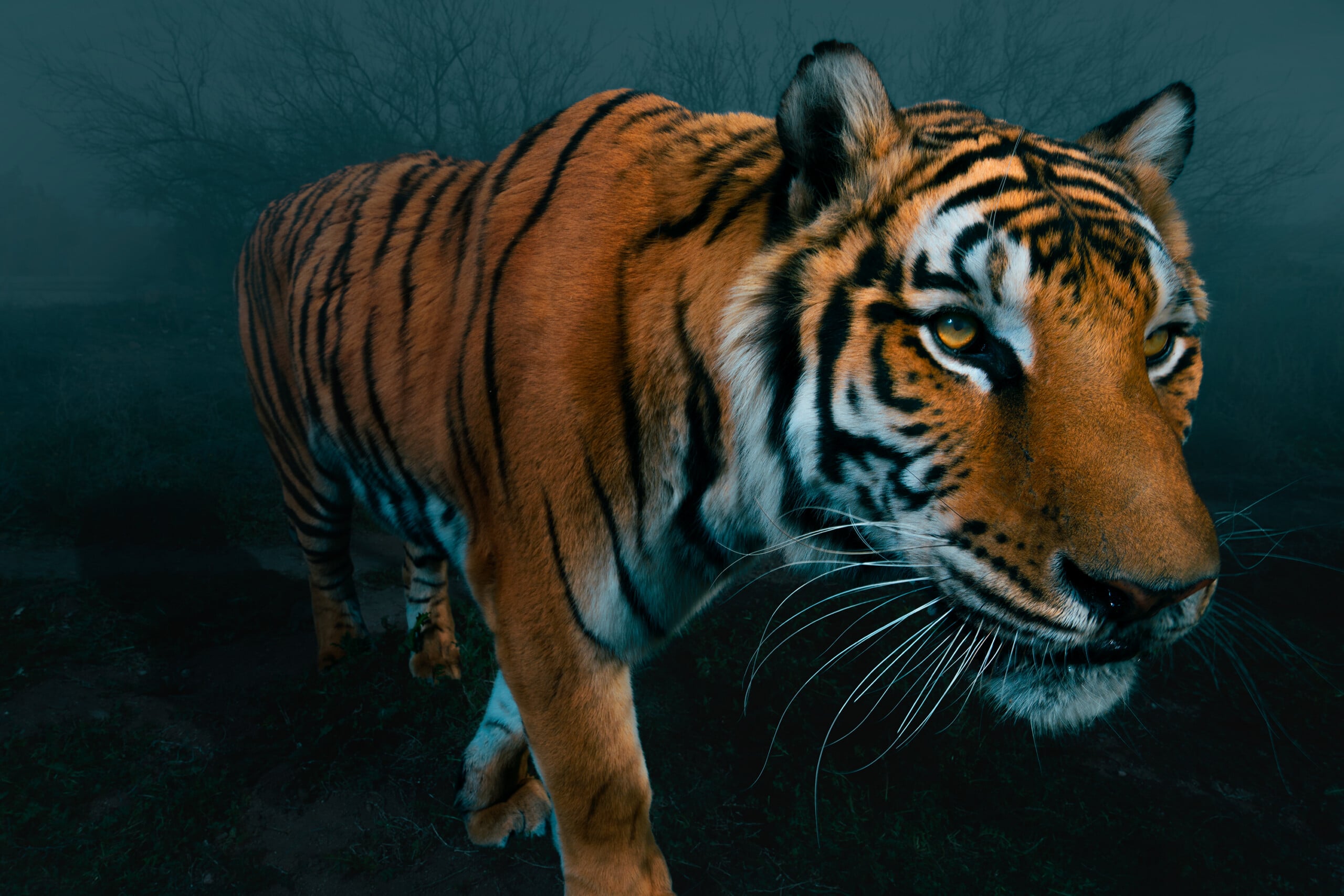
By some strange turn of fate, I found myself sitting on a camera case, face-to-face with a 500-pound tiger from less than a foot away. I could feel his breath on my skin, and more than once, that same breath fogged the front element of my lens as I photographed him.
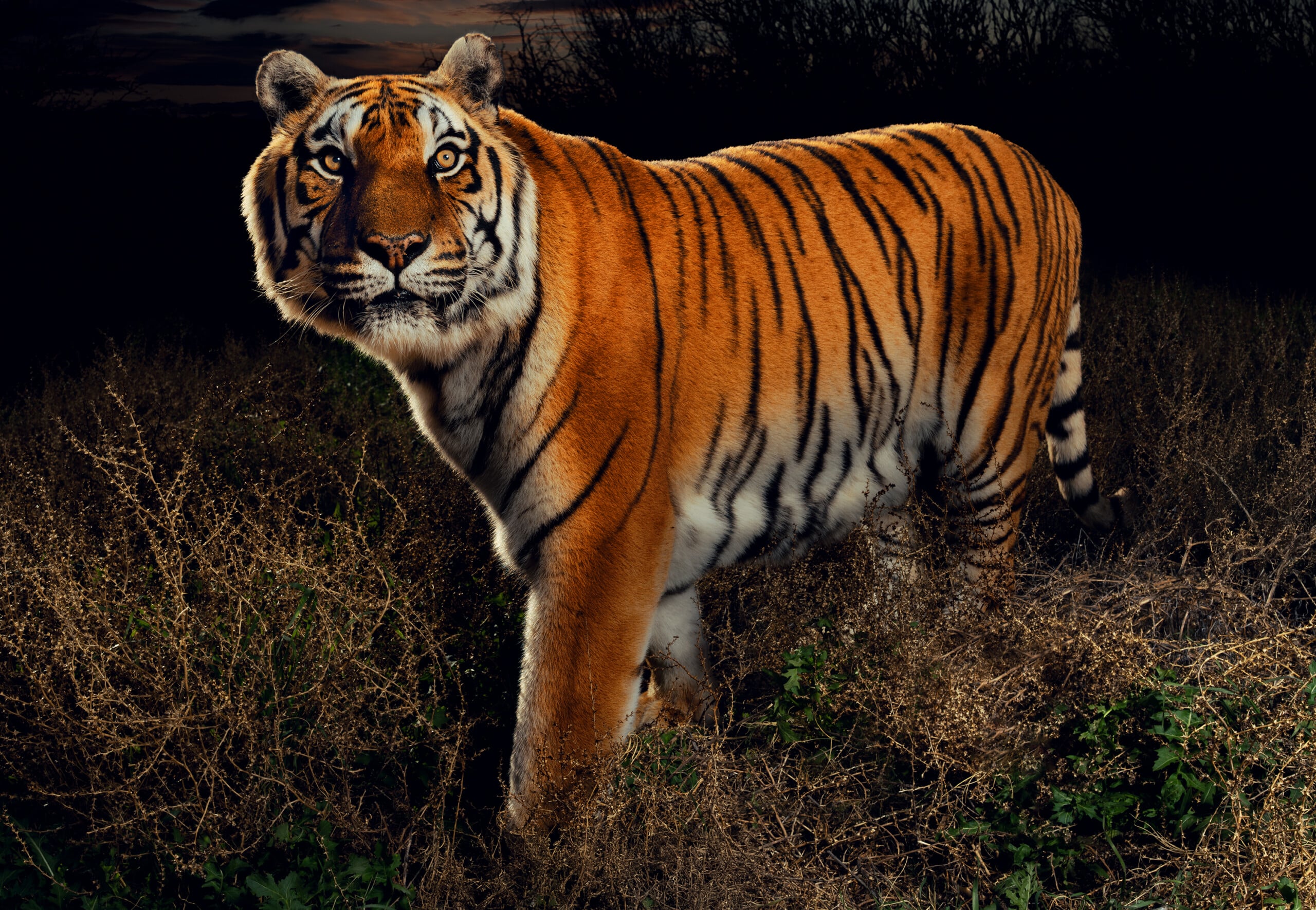
His name was Exodus, a four-year-old Bengal tiger with yellow-gold eyes so piercing they felt less like a gaze and more like an examination. I was equal parts focused, terrified, and completely transfixed. In front of me stood one of the most beautiful animals I had ever seen, calm and stoic in a way that almost made me forget what he was capable of. This project would eventually show me how quickly the act of making art can slide into unpredictability, but in that moment, what stayed with me most was not fear. It was the overwhelming majesty of the animal itself.
The roots of the project stretch back well before that encounter, to a place far removed from any wildlife sanctuary. I was sitting in the cockpit of a U-2 spy plane at the edge of space, more than 70,000 feet above the Earth, looking down at the most beautiful view I had ever seen. There were no cities, no highways, no signs of human noise or ambition. There was only dirt, water, cloud, and vegetation. It was the kind of perspective often associated with the “overview effect,” that disorienting and clarifying sensation of seeing the planet as both vast and fragile. I had expected the flight to leave me dwelling on the blackness of space above me, but instead it deepened my attention to the living world below. Part of me had hoped the distance from Earth might create some sense of closeness to my late German Shepherd, Riley. What it gave me instead was something more actionable: a desire to help living animals through the protection and preservation of their quality of life.
A few months after I landed, I sat down with my best friend Mike and started talking through what an animal project might look like through the lens of an advertising photographer rather than a traditional wildlife shooter. The first idea was sharks, along with all the complexity that would come with photographing them properly. I even reached out to Brian Skerry, a friend and fellow ambassador from my Nikon years, to ask about the realities of producing such a project. The answer was clear enough: it would have to happen far from America, and it would require not just logistics, but new technical fluency, from scuba to the behavior of light underwater.
For the time being, the shark idea was shelved. Work had become intense, and I was spending so much of that year on the road that anything outside of commissioned campaigns would not have received the attention it deserved. Then, while traveling for a shoot that came to define much of that year, I began listening to The Tiger on Audible. I have always been obsessed with learning, and for much of my life dyslexia made that pursuit more difficult than I wanted to admit. Audible changed that for me. Somewhere between highways, airports, rental cars, and airplane seats, I found myself immersed in the story of Siberian tigers, their intelligence, their power, and the quiet precision that makes them one of the most formidable animals on Earth. Before then, my exposure to big cats had mostly been limited to zoos, where confinement can flatten even the most extraordinary animal into something smaller than it truly is. Through that book, I began to understand them differently.
When I finally found a stretch of time for personal work, I reached out to Out of Africa Wildlife Park and Sanctuary, just 45 minutes south of my hometown of Flagstaff. It meant a lot to me that Out of Africa was not only a park, but also a sanctuary. In some ways, it is like jazz, in that it is the notes you don’t hear that matter. One of the things I learned about Out of Africa that made me want to speak with them was that they take in animals who may never be seen by the public. These animals, one mountain lion in particular, had needed rescue but were not comfortable around people, as their families had been killed by hunters. Out of Africa gives them a safe life in a large habitat, feeds them, respects their fear of humans, and allows them to live peacefully and privately. That kind of respect for the animal means so much to me.
I assumed, as I often do with productions, that the process would involve weeks of emails, planning, and logistics before I ever set foot on the property. Instead, within hours of sending my first message, I heard back from Brittney, who oversees the park’s large predators, asking whether I wanted to come out the next day.
I asked for one additional day so I could prepare. I wanted to learn as much as possible about the animals before arriving, partly out of respect for Brittney’s time, but also because I knew this was not the kind of subject one approaches casually. Two mornings later, I met her at the entrance to the park. At one point on our tour, she stopped, lifted a hand, and casually pointed toward a bush beside the path. Lying there in the shade was a 400-pound Bengal tiger, still and silent, watching us.
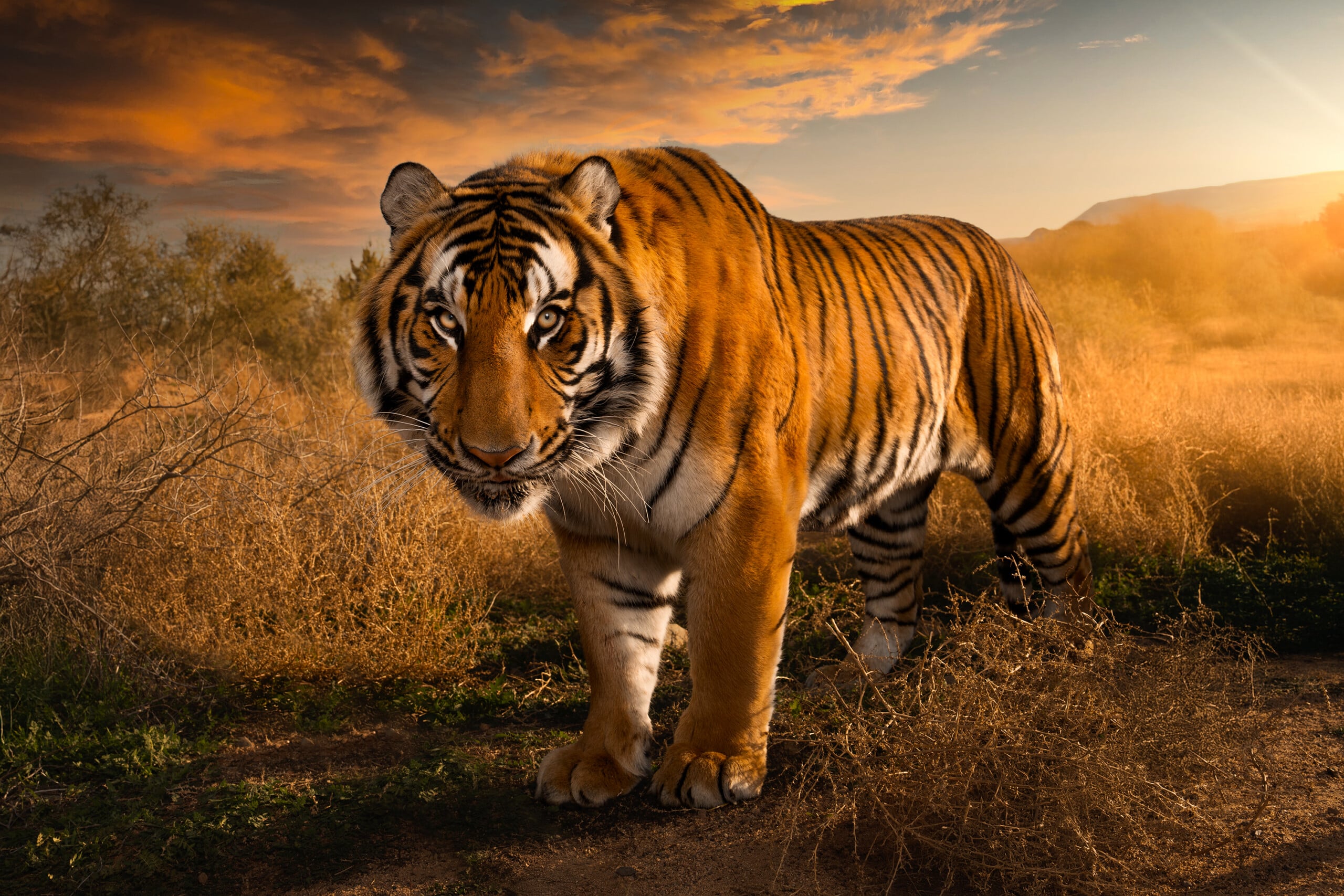
That initial visit was meant to answer a practical question: could a personal series built around these animals even work? Within minutes, the question had shifted. The real realization was that the opportunity was far more extraordinary than I had anticipated. When my eyes met that tiger’s, I was completely captured by the moment. It was not dramatic in the way people often imagine encounters with large predators to be. It was quieter than that, almost still. But it stayed with me. In the weeks that followed, as we prepared for the first days of shooting, I kept returning to that image in my mind.
The series itself was created over the course of six days at the park, with weeks between each visit so the animals could remain on as normal a schedule as possible. Even so, what never changed was the tension I felt the night before each shoot. By then, sitting in front of a tiger had become familiar in a purely practical sense, but it never became casual. I never slept well the night before. There was always some combination of anticipation, anxiety, and curiosity about what the next day might bring.
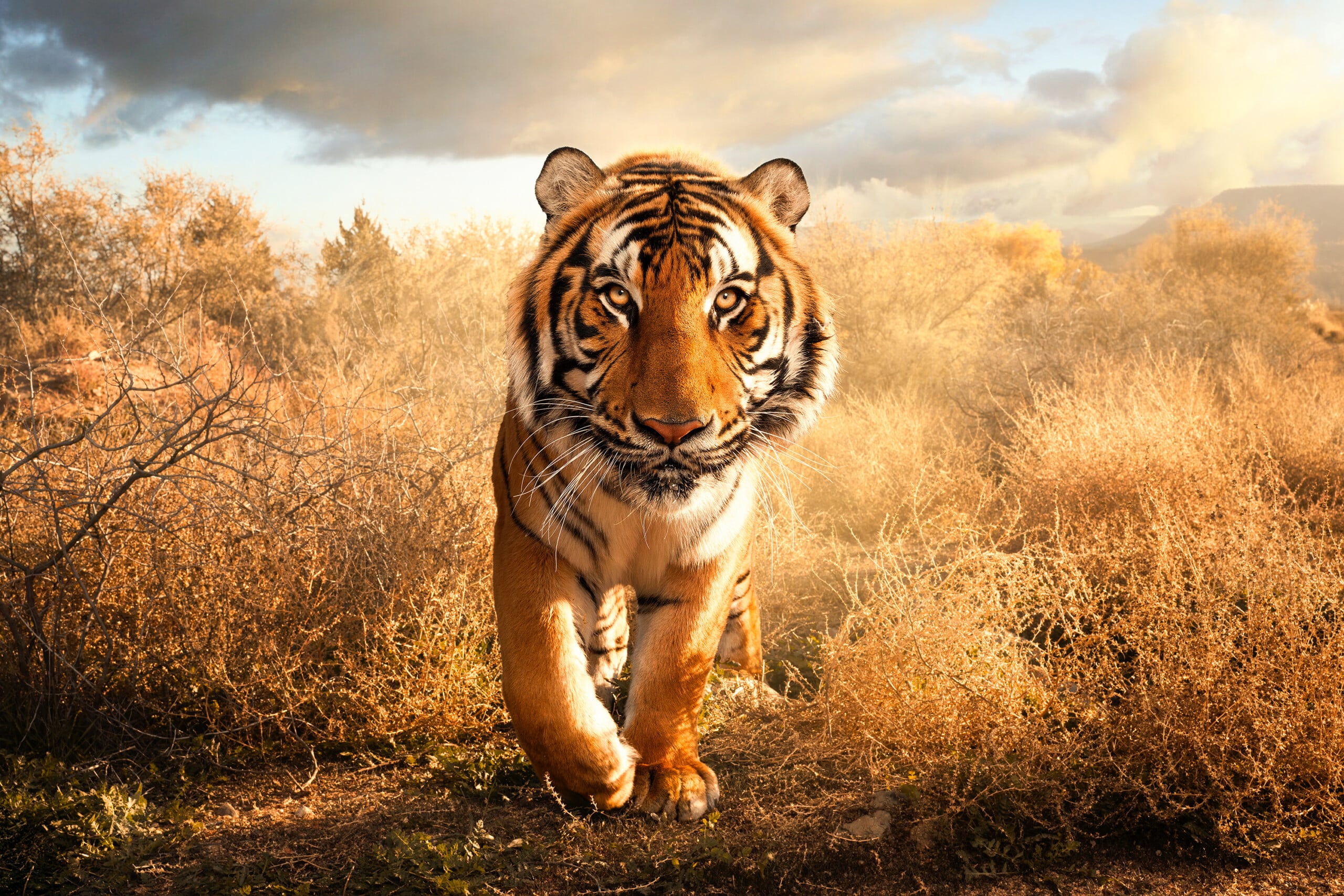
When the time came to begin photographing, Brittney suggested we start with a mountain lion before moving to an animal as large and powerful as a tiger. The reasoning was sound. I had already worked through the mechanics of the setup, including a modified section of chain-link fence that allowed me to work close to the enclosure with the camera. What I did not yet understand was how close the animals themselves would choose to come. Traditional wildlife photography often creates distance, both literally and visually, relying on long lenses and remote vantage points. This series required something entirely different. It needed intimacy. It needed proximity.
It became clear almost immediately that distance would not be the challenge. If anything, the opposite was true. The animals came so close that their breath repeatedly fogged the front element of my lens. They seemed entirely at ease with my presence, perhaps even more comfortable than I was in theirs. With Brittany and the Out of Africa team by my side for the entire project, I could rely on their extensive knowledge of the cats’ behavior and trust that the safety of the animals and myself were the highest priority. Through all of it, we maintained a single non-negotiable rule: never touch the animal. No matter how calm or controlled the environment might feel, crossing that boundary would have been unfair to them, and it would have violated the laws designed to protect animals in human care.
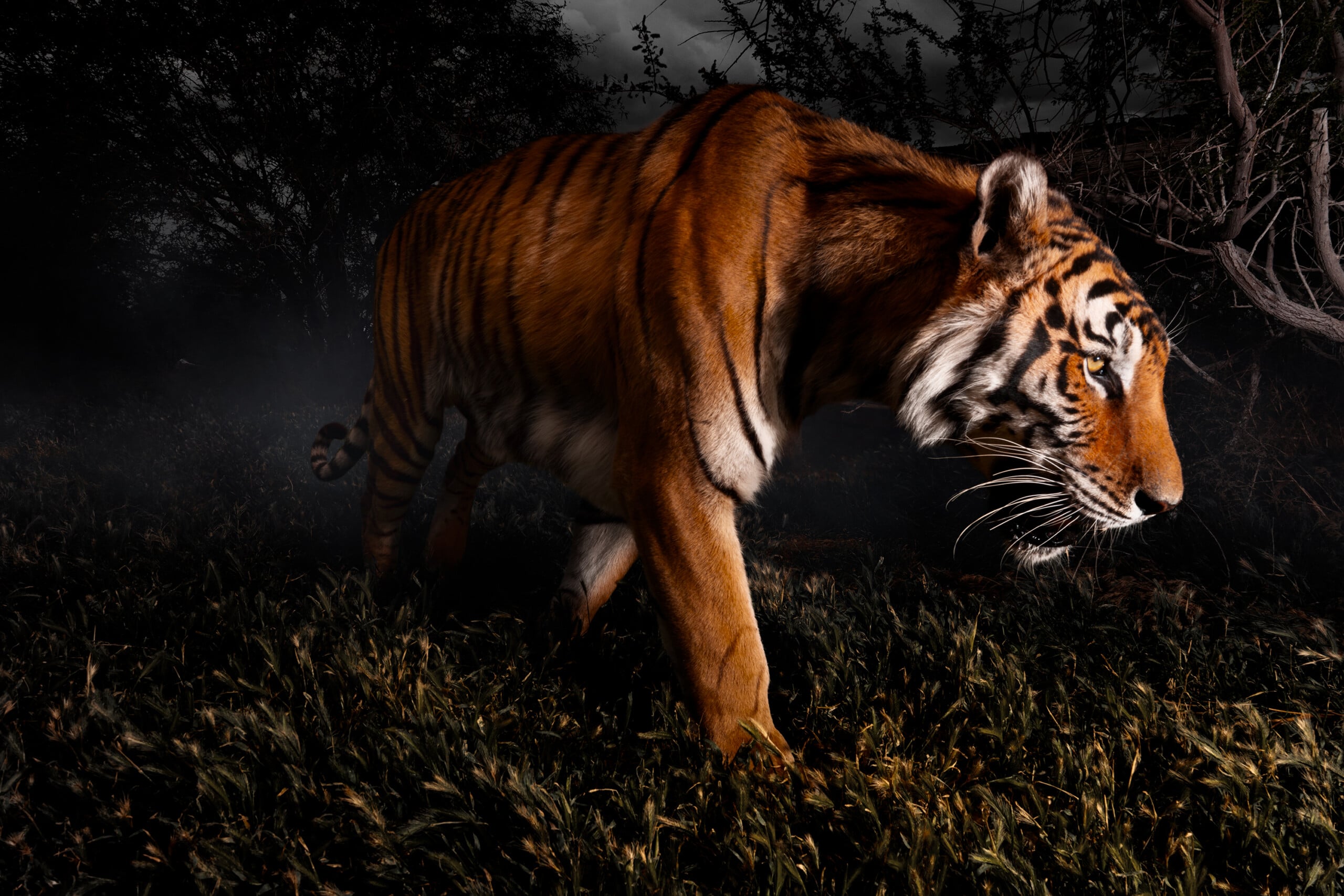
Very quickly, we developed a rhythm that allowed us to work respectfully. I would arrive with my gear prepared, but leave it with my assistant several feet from the enclosure. For the first five to ten minutes, I would simply sit at the fence and talk to the animal. Tigers are remarkably intelligent, and many, if not all, know their names. Those first few minutes mattered. They allowed the animal to study me, to adjust to my presence, and to decide, in its own way, whether the interaction was acceptable. Before we ever photographed a single cat, we had already committed to one principle: if an animal appeared disturbed or agitated, we would not photograph it that day. No image was worth violating that understanding. Some animals required three or four visits before I ever brought the camera into the exchange.
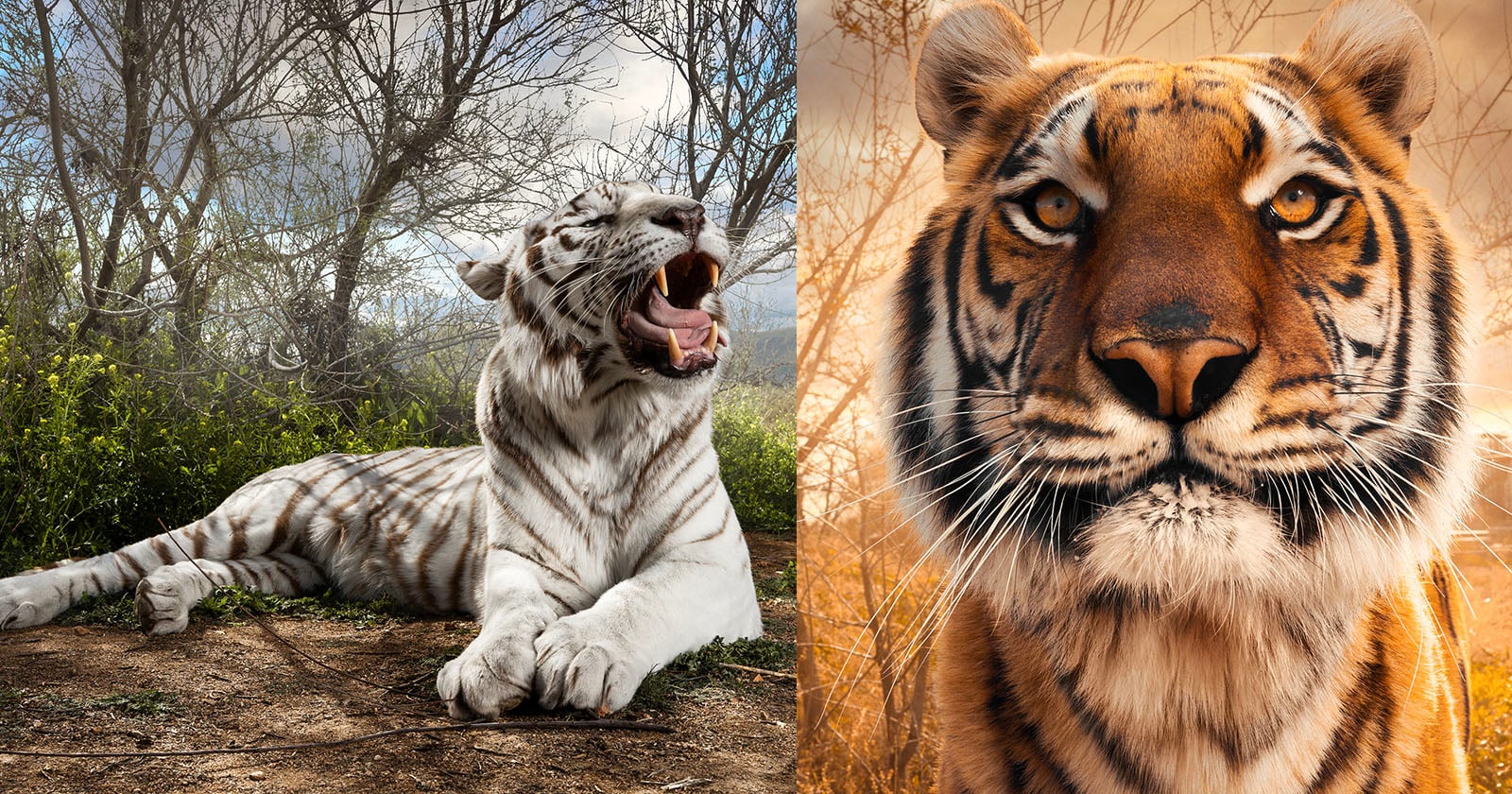
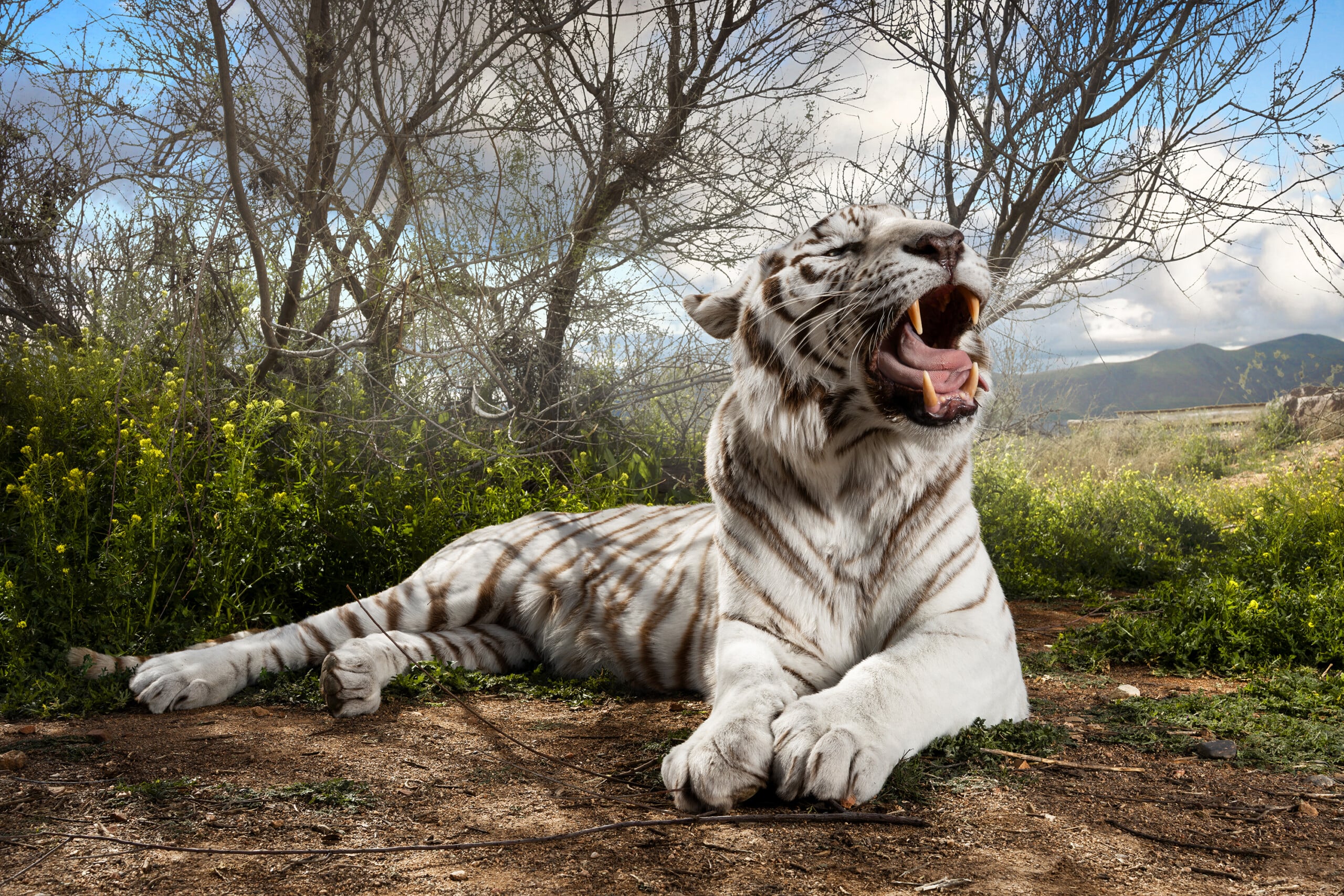
Because Out of Africa is a sanctuary, many of the animals arrived there through difficult circumstances. Some had come from environments where tranquilizer guns were part of their lived experience, and that history could shape how they responded to the sight of a camera. We moved slowly, deliberately, and with as much patience as necessary to earn their trust. One of the clearest creative decisions we made was that we did not want a series built around bared teeth. Not because a tiger’s teeth are not visually extraordinary, but because in close photographs, exposed teeth often signal fear or distress. I had no interest in turning that kind of tension into spectacle. The rare moments when teeth appeared were usually during a yawn, something tigers do often enough. Even then, it was a strangely layered moment: calm on the surface, deeply unnerving underneath, simply because of the sheer scale of their canines.
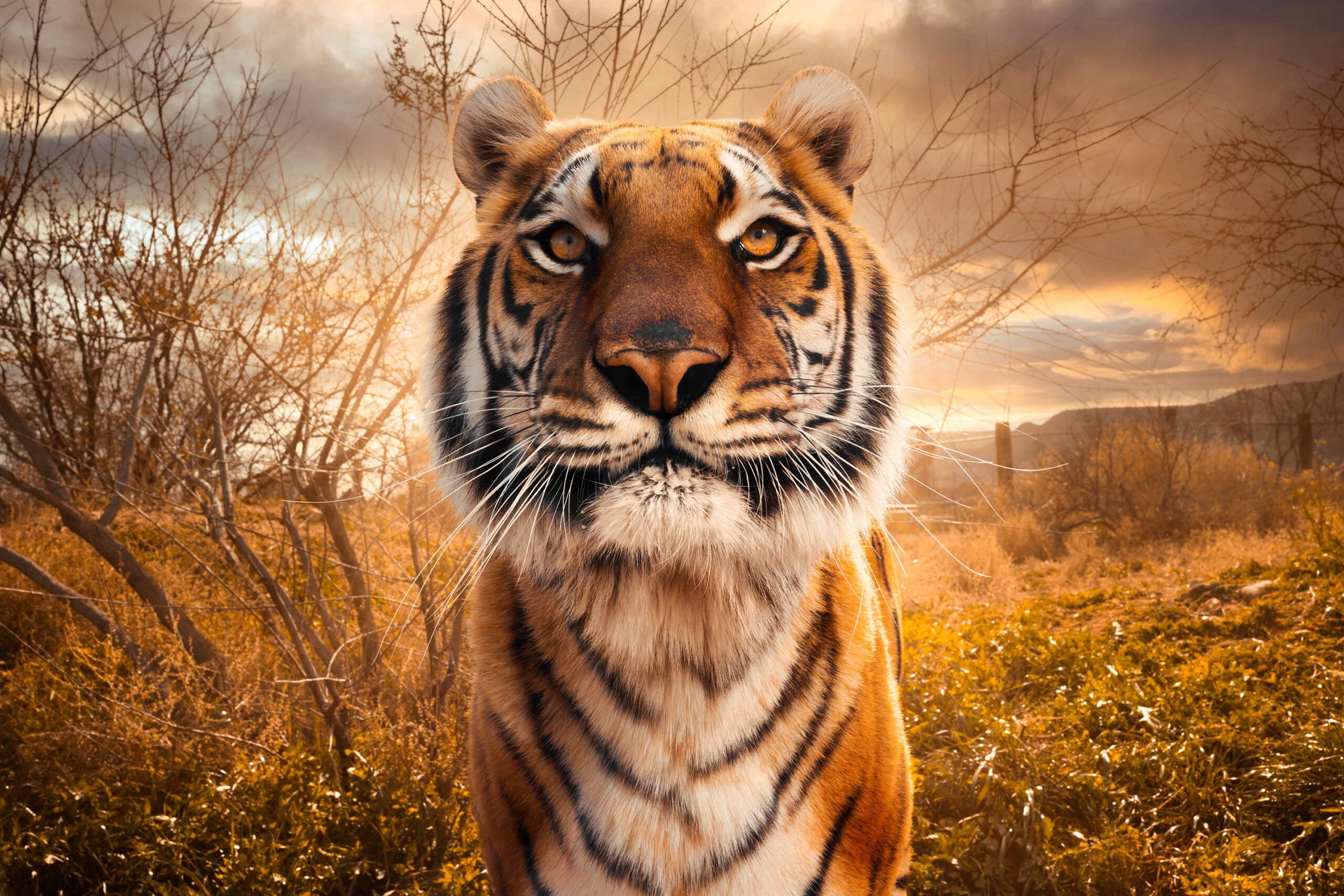
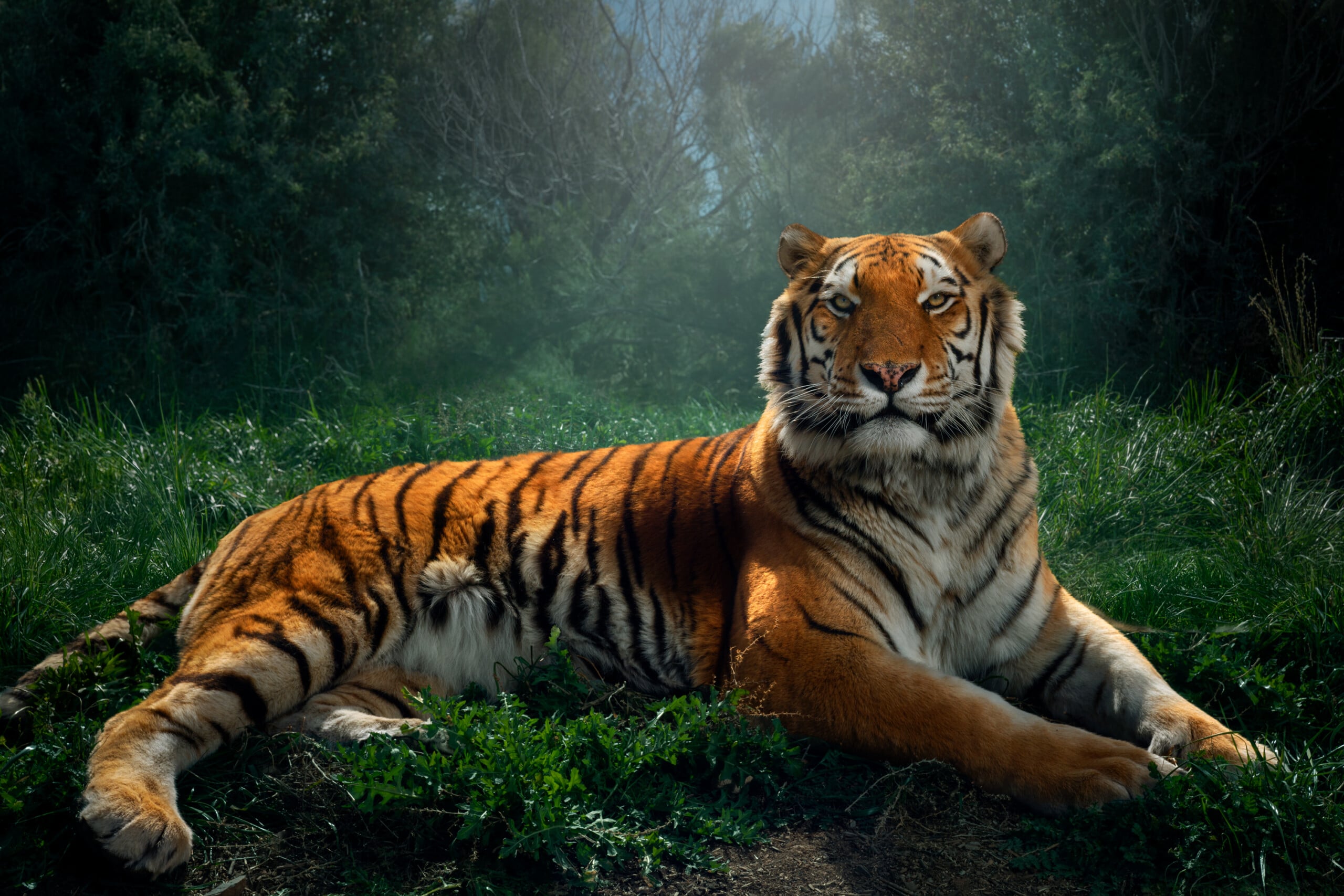
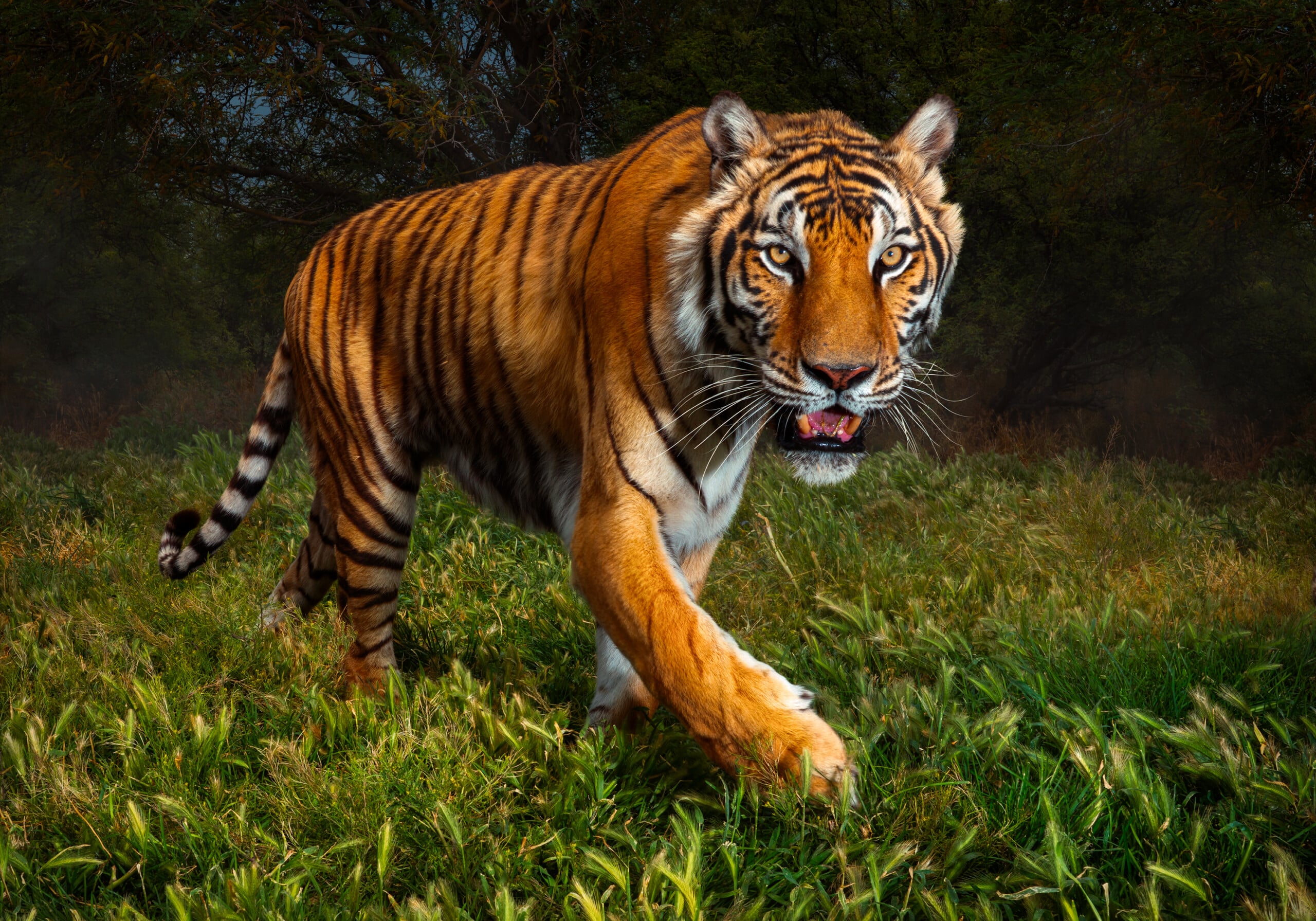
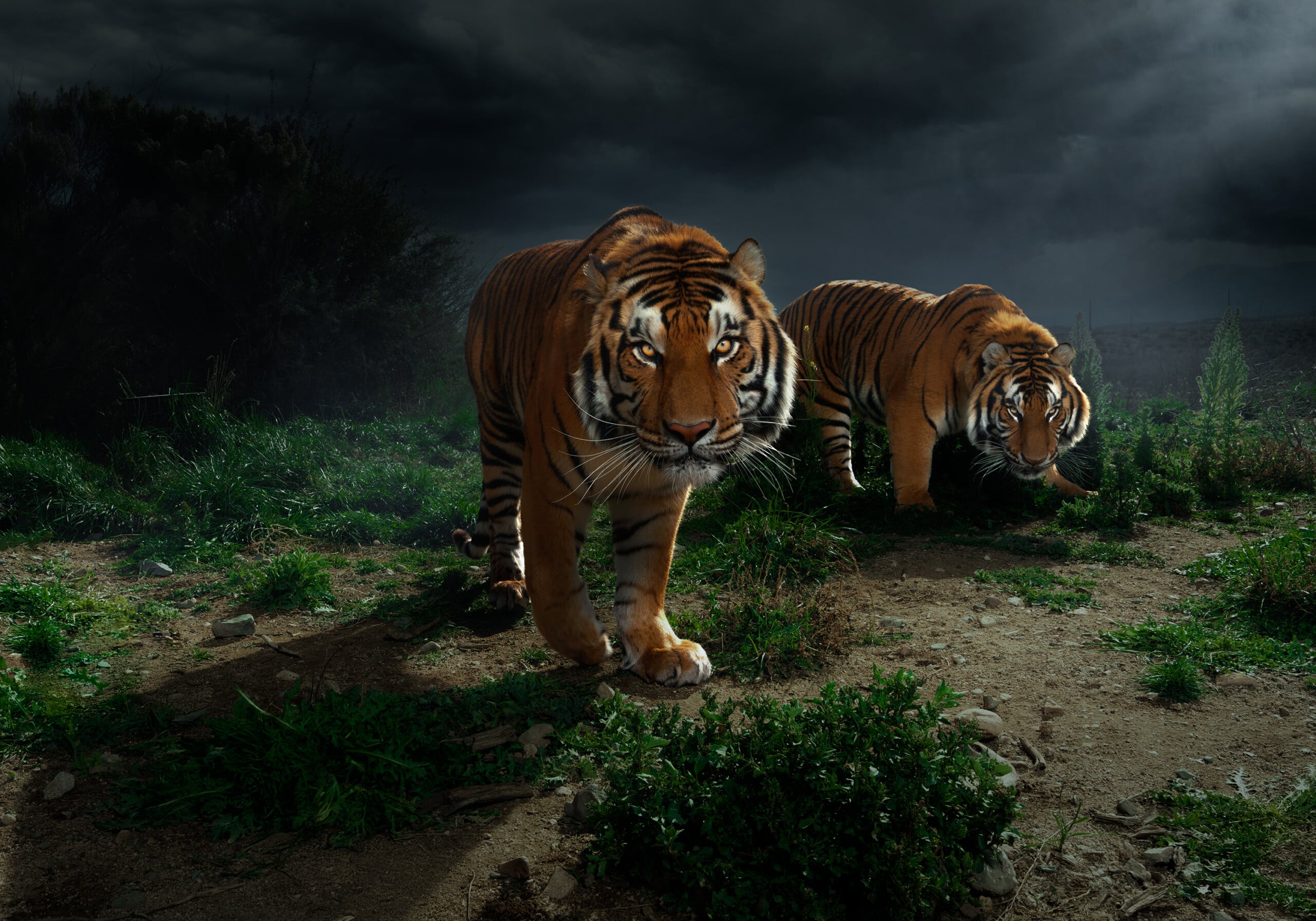
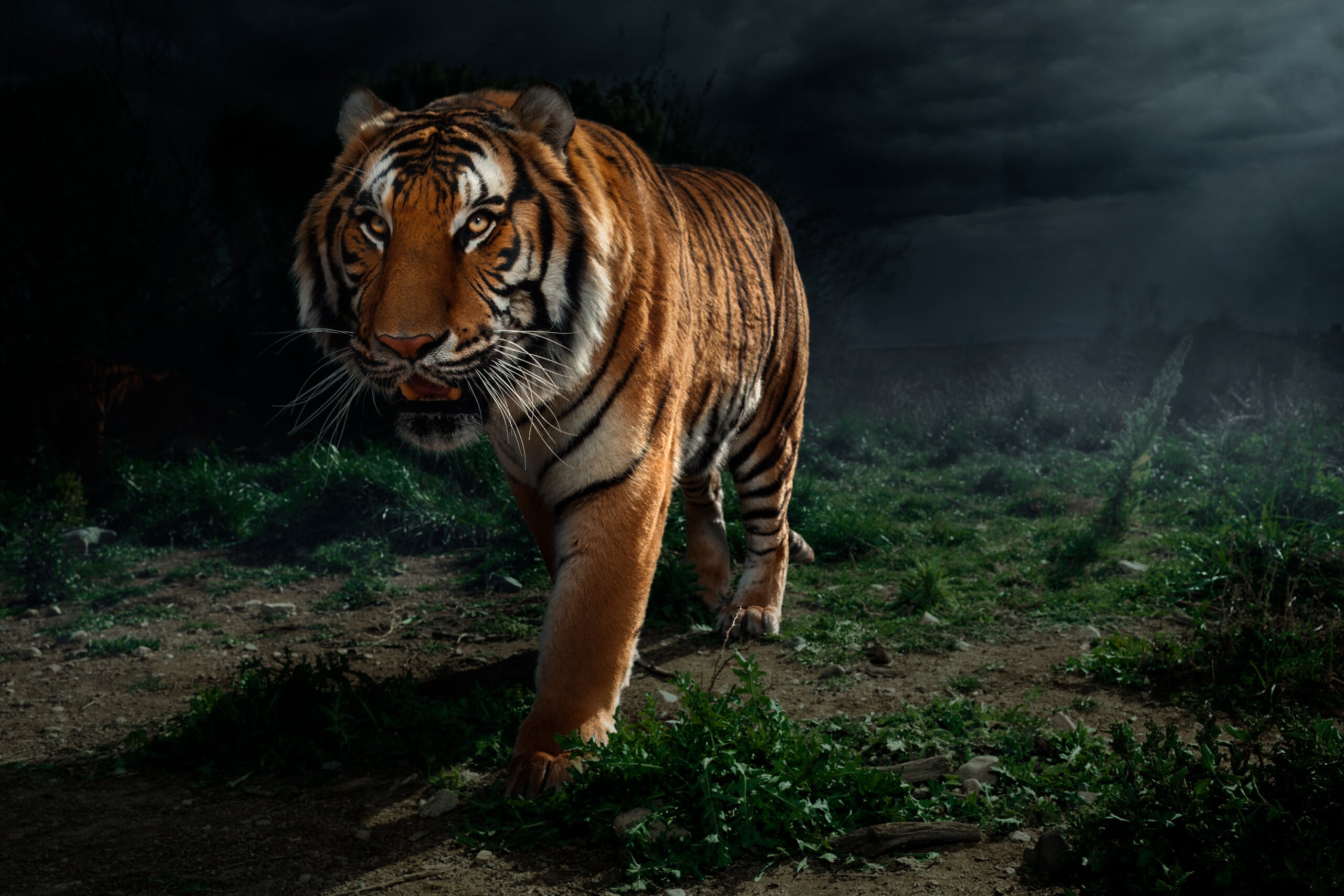
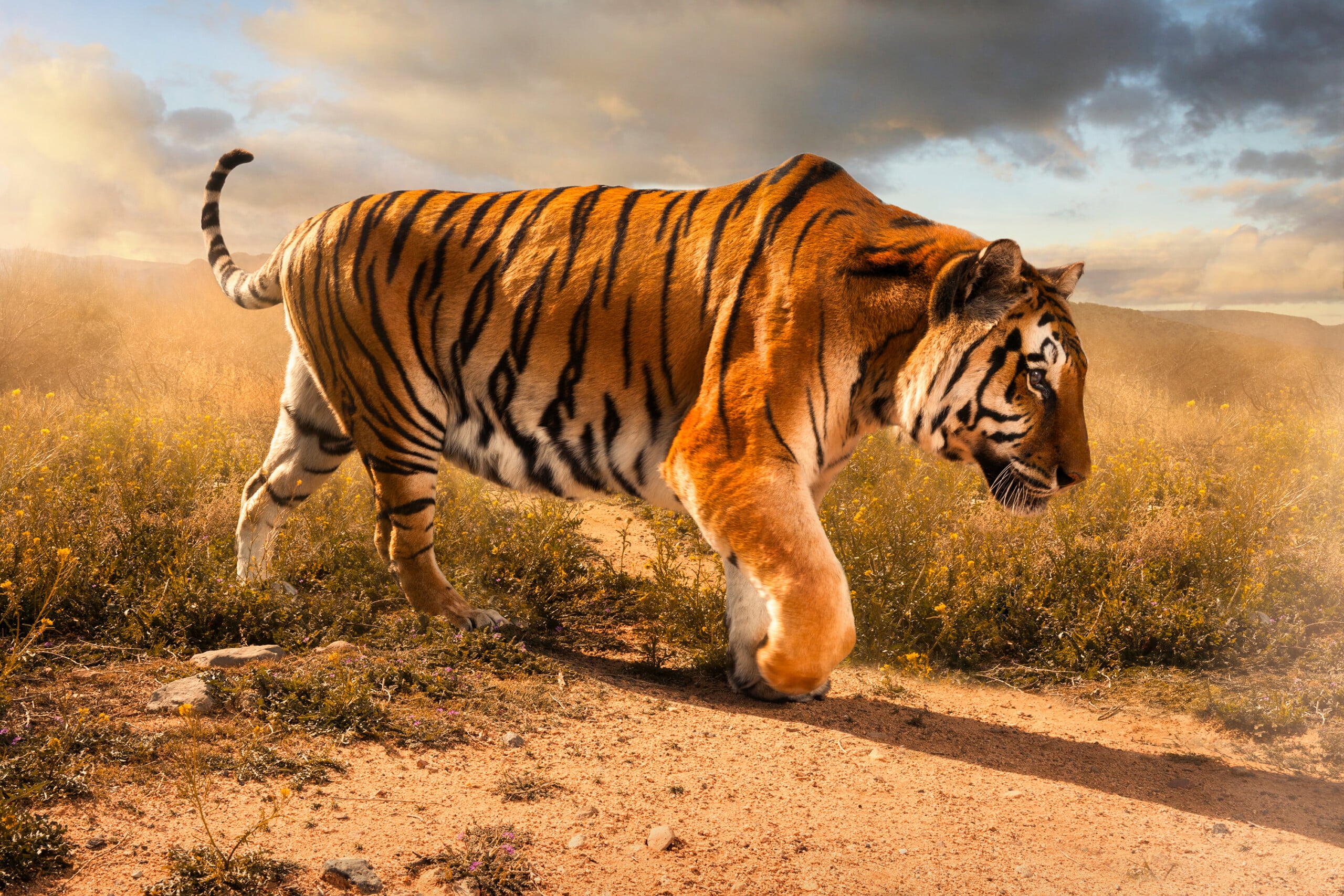
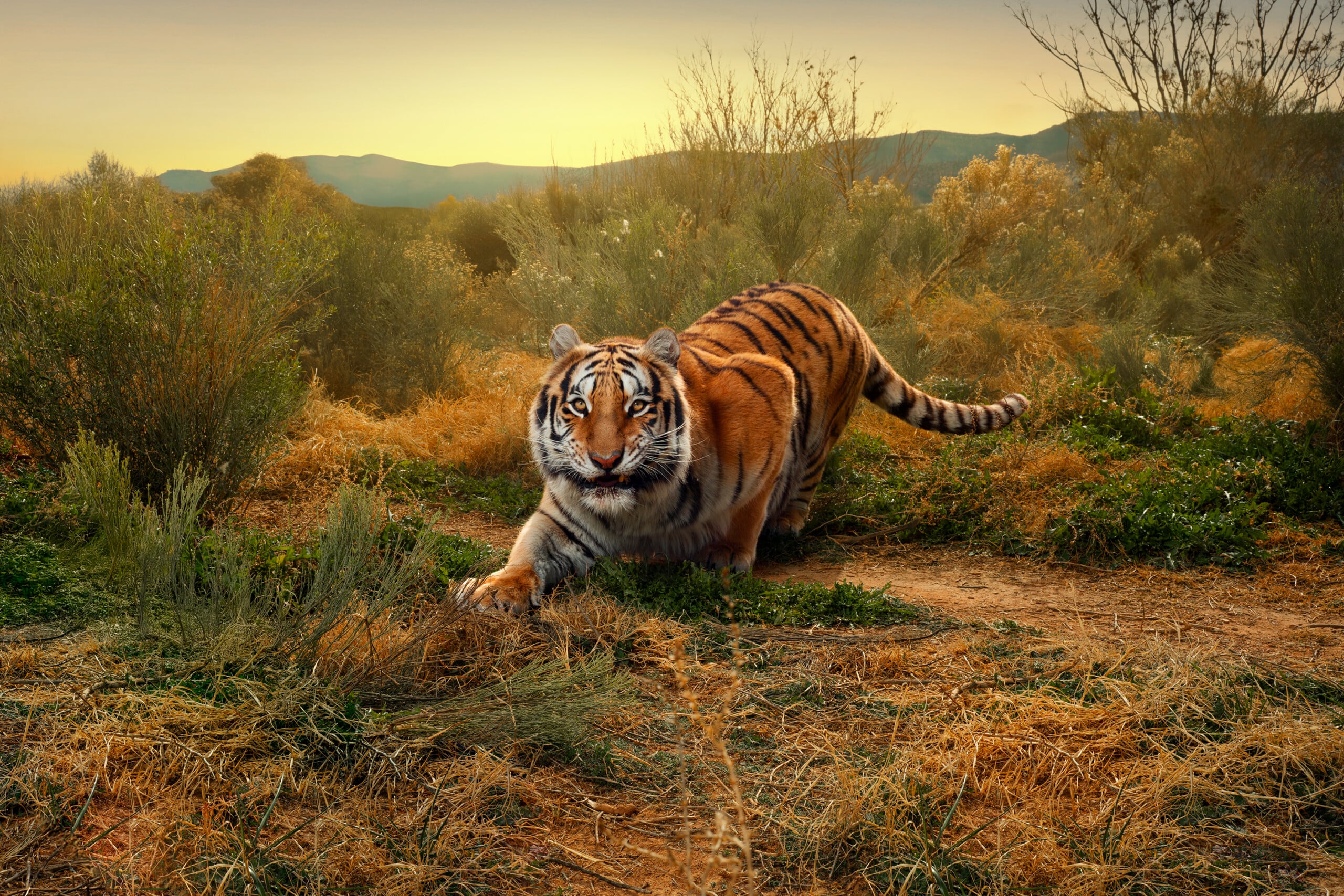
As the days of shooting went on, it became clear that the series was finding its identity. Using Profoto studio lights, we were able to shape form, color, and texture in ways that emphasized the tigers’ orange fur against the greens of their surroundings. We could also push the lighting hard enough to create frames that felt almost nocturnal by inverting the relationship between strobe and ambient light. In some sense, we were building a stage, but the success of the images depended on the animals never appearing staged within it. My goal was to let them remain fully themselves: calm, regal, and often resting in front of the lens with an expression that suggested they were evaluating me as much as I was photographing them. The hope was that viewers would see not just the beauty of the animals, but their presence, their dignity, and the individuality that often disappears when predators are reduced to symbols of violence.
That reduction happens all too often. Tigers are frequently framed through the language of fury, dominance, testosterone, and brute strength. Their power becomes the entire story, and that story has helped justify everything from poaching to the persistence of myths surrounding the supposed value of their body parts. It is a distortion, and like most distortions, it has consequences. Multiple tiger species have declined under the weight of it. Yet they are also animals capable of recovery when met with protection, compassion, and sustained care.
For people reading this from a city, from an office, or from a phone somewhere far removed from the habitat of a tiger, that care can feel abstract. But often it begins with proximity, education, and a shift in perspective. Sanctuaries play an important role in making that possible. Zoos can be wonderful for introducing children to animals they might otherwise never encounter, but sanctuaries often offer something different: a more intimate sense of the animals’ demeanor and a deeper understanding of the histories they carry.
I would like to thank Out of Africa Wildlife Park and Sanctuary for their time, trust, and generosity throughout this project. So many people at the park helped bring it to life, whether by answering questions about the animals or working alongside me at every step. It was a kindness I did not expect and one for which I am deeply grateful. Judging by the remarkable health and quality of life the animals at the park seem to enjoy, I suspect they are grateful too.
If you live in or are visiting Arizona, I encourage you to visit the park and experience these incredible animals for yourself. And if you are lucky, you may even catch a tiger doing the zoomies (yes, they actually do them).
In the meantime, please enjoy the series we created, and as always, have a great day.
Behind the Scenes
The making of The Tiger Project was nearly a year-long process. It was full of research, meetings, practice, learning, adjusting, and then going back and practicing all over again. It was this way for a reason. I knew that working with animals this incredible and this powerful demanded an enormous amount of respect and appreciation. It was an opportunity very few people ever get, and I wanted to make sure we approached it the right way.
Along the way, I talked with friends, family, and clients about the project, and the questions were endless. Eventually, it became clear that we needed to start writing them down. We figured if the people around us had this many questions, chances are some of you did too. So, with the help of my friend Derek Jones, who produced all of the video for the series, I sat down in front of the camera and tried my best to describe what it is actually like to photograph a tiger.
But there was someone on the other side of the camera I wanted you to meet as well. Brittney Olson is the keeper of the tigers and the person who stood beside me throughout this entire project, making sure the safety of the animals, as well as my own, remained the priority while we created the series. And while people had plenty of questions for me, I probably had even more for Brittney. So we turned the camera around and asked her some of them, including one I think everyone has wondered at some point: What does tiger fur actually feel like?
Brittney also gave us a perspective on these animals that I could never provide myself. In one of the few instances where you will ever hear me support Meta glasses, she wears them while working with the tigers. They offer an incredible first-person look at what it is like to have free contact with a tiger, but they also serve a practical purpose. The footage can be reviewed if the team ever needs to pay closer attention to something specific regarding an animal’s health or behavior.
She has generously allowed us to share some of those videos, and I still watch them routinely. Because, really, how often do you get to see what it looks like to stand face-to-face with a nearly 500-pound tiger while feeding it a bottle of milk? And while we’re on the subject of things I didn’t expect to learn during this project: did you know tigers moo?
I’m incredibly grateful for how many of you have enjoyed this series, followed along with the process, and shared in our fascination with these animals. And somehow, we’re already underway creating the next series. I guess you’ll have to wait a little while to find out what it is… Or maybe you can enjoy a quick sneak peek.
Affiliate Disclosure
PetaPixel articles may include affiliate links; we may earn a commission if you buy through one.