Xiaomi’s Gorgeous New 18 Series Phones With Triple Leica Cameras Will Go Global
Xiaomi has officially launched the very first phones powered by Qualcomm’s new Snapdragon 8 Elite Gen 6 Elite Extreme and Snapdragon 8 Elite Gen 6 chips, less than a day after the chips were unveiled. The Xiaomi 18 Pro and 18 Pro Max promise plenty of compelling camera features for photographers.
DisclosurePetaPixel first learned about the Xiaomi 18 Series smartphones at the annual Snapdragon Summit. Qualcomm paid for PetaPixel’s travel and accommodations to attend the event. Qualcomm and Xiaomi had no input or oversight in this reporting.
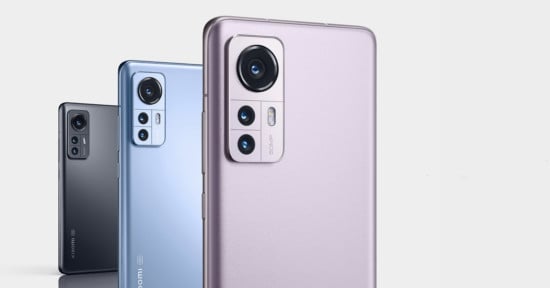
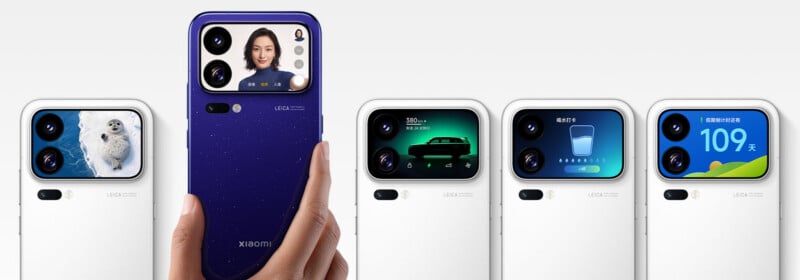
The main difference between the two models is that the Pro has a smaller 6.4-inch screen and the slightly less powerful Snapdragon 8 Gen 6 Elite chip, while the Pro Max gets a larger 6.9-inch panel and the “Extreme” variant of Snapdragon’s latest SoC. In both cases, the screens top out at 4,000 nits of peak brightness and feature Xiaomi’s privacy display design to deter prying eyes. Each phone also has a rear display for relevant notifications and a bit of personalization.
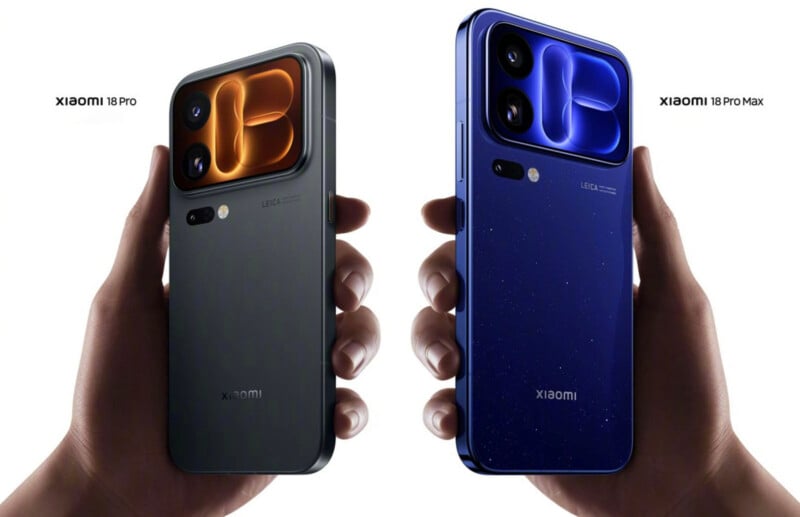
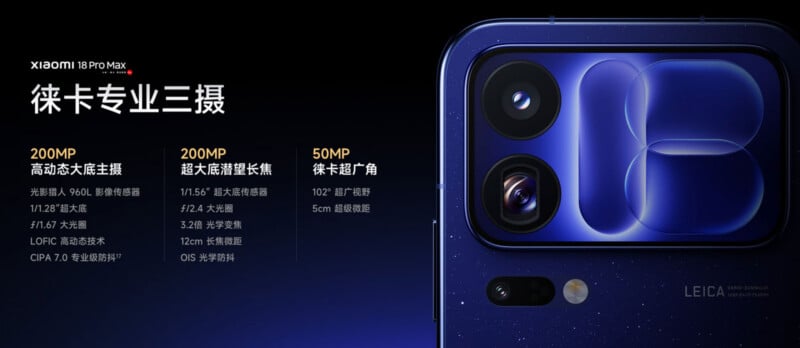
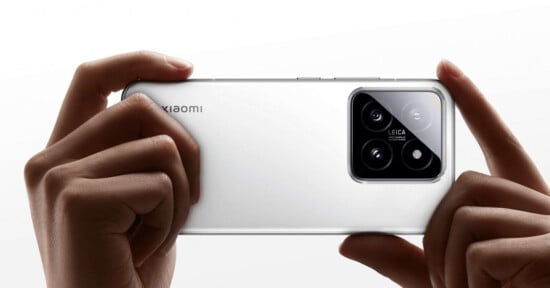
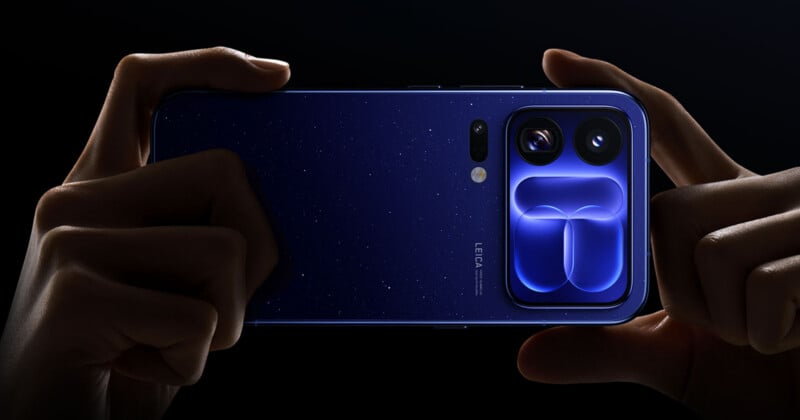
As for the camera systems, both the Xiaomi 18 Pro and Xiaomi 18 Pro Max feature the same upgraded Leica-branded triple camera system.
The 200-megapixel main camera features a Type 1/1.28-inch Light Hunter 960 image sensor and f/1.67 aperture. This is a LOFIC sensor, which should deliver superior dynamic range to a traditional image sensor, all else equal. The camera has optical stabilization with a CIPA-rated seven stops of shake correction. The lens is a Leica Summilux design combining precision glass and plastic elements.
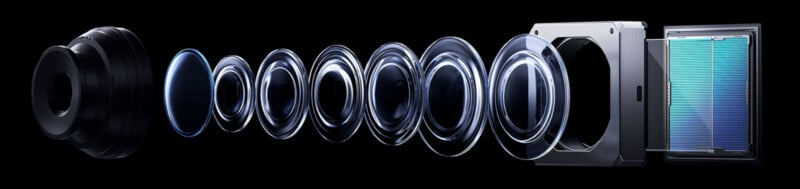
Then there’s the 200-megapixel telephoto camera, which includes a relatively large Type 1/1.56 image sensor, f/2.4 aperture, and 3.2x optical zoom. Rounding out the triple Leica camera system is a 50-megapixel ultra-wide imager with an undisclosed sensor size. Xiaomi says it has a 102° field of view, which is not quite as wide as many other ultra-wides on the market.
The camera system uses Leica color science and a new image-processing system Xiaomi calls “Legendary Moment.” This utilizes AI to recreate the “look” of a traditional professional camera system.
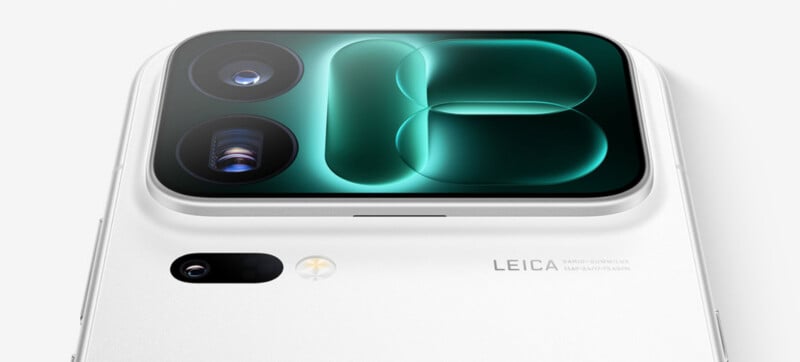
One of these AI-driven photographic styles mimics the look of classic CCD image sensors, which have returned to popularity among some more nostalgic digital photographers.
PetaPixel will learn more about this as soon as possible and, ideally, see how it works and how effective it is.
It also uses cloud-based image processing to perform tasks like reflection removal, noise reduction, and clarity enhancement.
The Xiaomi 18 Pro and Pro Max are now available in China, with a global release for both models scheduled for later this year. This will mark the first time that a Xiaomi Pro series device has launched outside of China. The Xiaomi 18 Pro starts at CNY 5,999, which is just under $900 at current exchange rates. The Xiaomi 18 Pro Max starts at CNY 6,999 (nearly $1,050).
Image creditsXiaomi