Photographer Spent Years Planning Spectacular Solar Eclipse Image
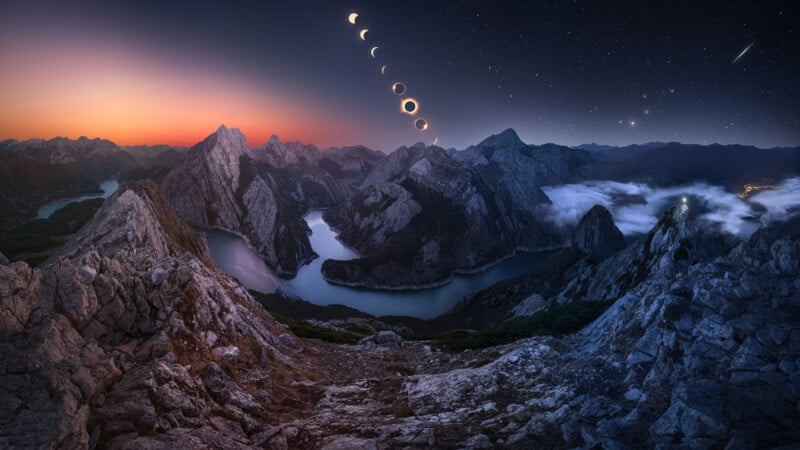
A photographer spent the past two years dreaming of a special image of the total solar eclipse that took place in Spain this summer. She has finally completed her masterful work.
Angel Fux not only spent months preparing technically for the ambitious project, but she also spent an estimated 15 hours in photo-editing software perfecting the image.
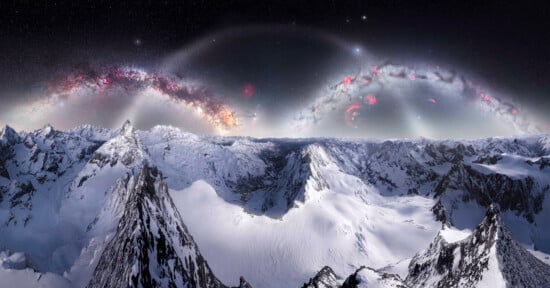
She calls it The Shadow Between. It’s a composite image of multiple panoramas that Fux captured on top of a mountain called Pico Gilbo in Riaño, Spain, on August 12.
“I had never seen nor captured a total solar eclipse, but I’ve been more and more drawn to celestial phenomena and depicting them in a creative way over the years,” Fux tells PetaPixel.
“So this eclipse became very important to me. Around a year prior to the event, I started looking for a landscape that I felt drawn to (mountains) and that was in Spain on the path of totality.”
“When I saw this location and saw it aligned with the eclipse, I was over the moon and knew this would be where the project would take place. So I had the vision of this image for over a year before it came to fruition,” she adds.
The image doesn’t just show the path of the eclipse, but it also captures the passage of time. Day turns into night, sunset turns into twilight, the sky makes way for the stars. But achieving this effect was exceptionally complicated.
Writing on her website, Fux explains that once she had picked her location in the mountains, which involved scrambling to the summit, she embarked on making the ambitious image that she herself calls a “creative interpretation” of the solar eclipse.
Fux used a Nikon Z8 with a 400mm lens attached to capture the close-up sequence of the eclipse, while another setup was capturing the wider environment. “We were also filming the eclipse at 600mm at the same time,” she adds.
The “we” that Fux refers to is filmmaker Prince Berkoh, who was making a short film with her. In collaboration with Nikon, the pair created a deeply evocative piece that touches on exactly what a solar eclipse means and, more widely, what humanity’s place is in the Universe.
“The sky has always been the one thing too large to ignore, and too precise to be accidental,” Fux says in the video above. “Stars that return on schedule, planets that trace the same arc year after year, and a Moon that fits perfectly over a Sun 400 times its size. That alignment has never stopped feeling like a message.”
As well as shooting the solar eclipse, Fux also shot the landscape continuously, creating seven panoramas that became the foundation of the final artwork. The panoramas capture the sweeping vista through the evening, continuing into darkness, and eventually the following morning.
The solar eclipse also happened to coincide with the peak of the Perseid meteor shower; shooting stars and bright galaxies are visible on the right-hand side of the image.
A Mammoth Post-Processing Job
After capturing all of her image data, it was time for Fux to begin the editing process.
“Combining seven panoramas captured under radically different light turned into one of the most complicated post-processing exercises I’ve ever undertaken,” says Fux.
Her first plan was to stack the individual panels into Photoshop, align them, and eventually stitch them together in PTGui. But it was that latter part that tripped her up. “I struggled to get the first panorama to stitch exactly the way I wanted,” she says.
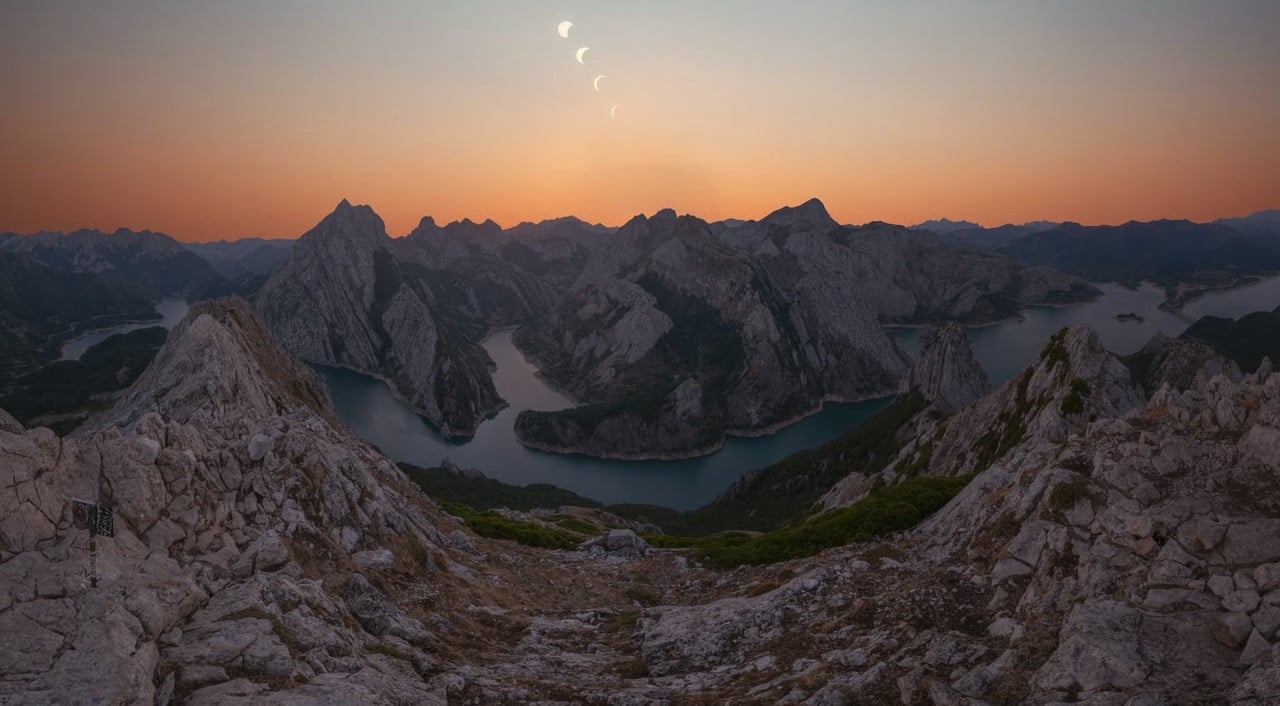
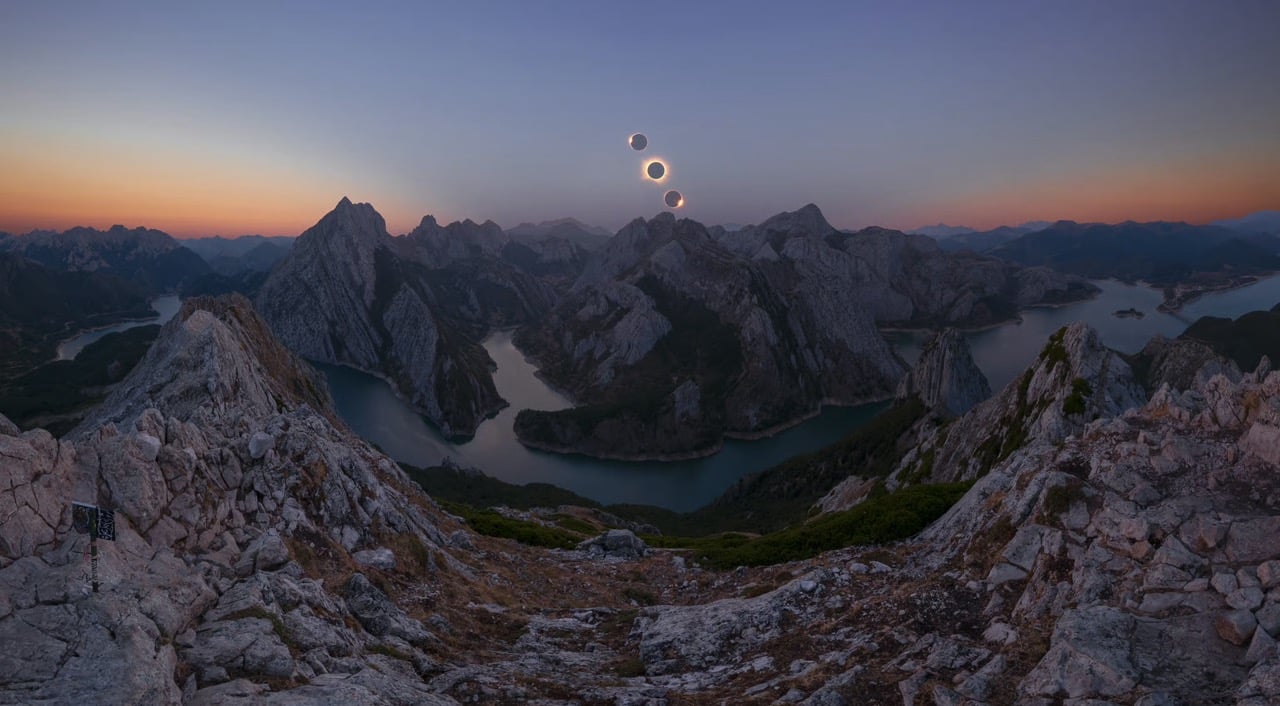
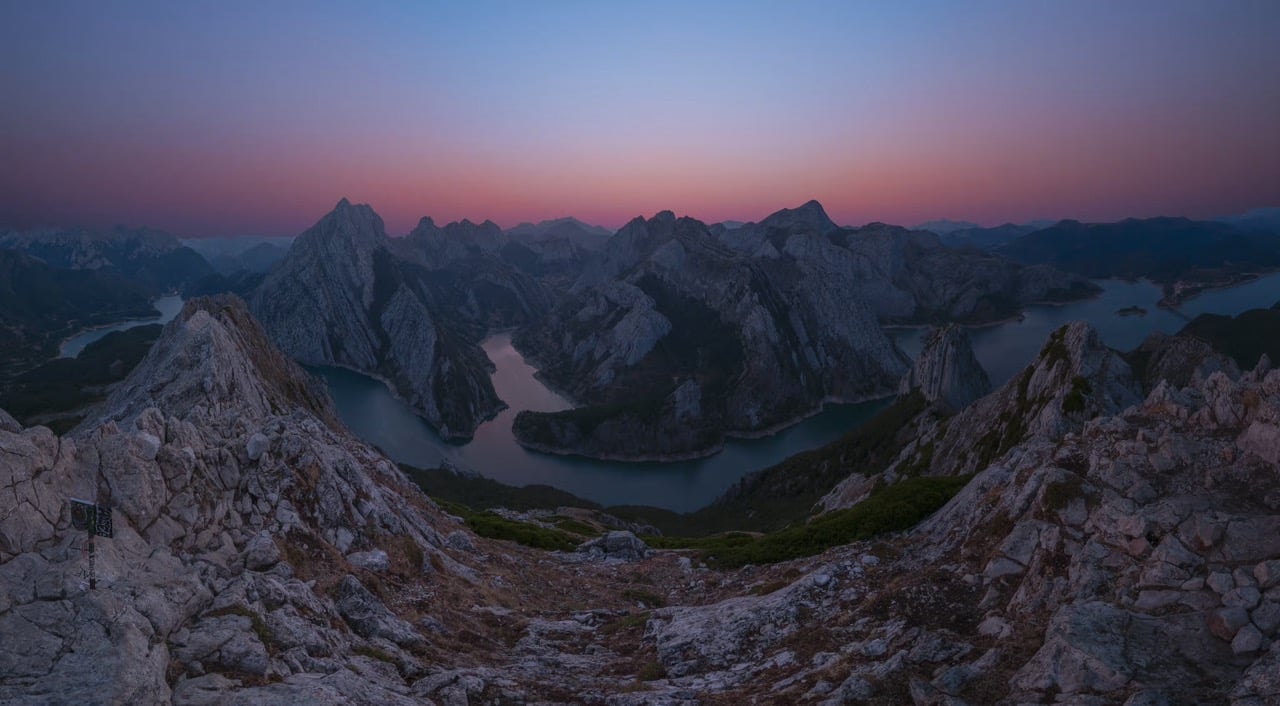
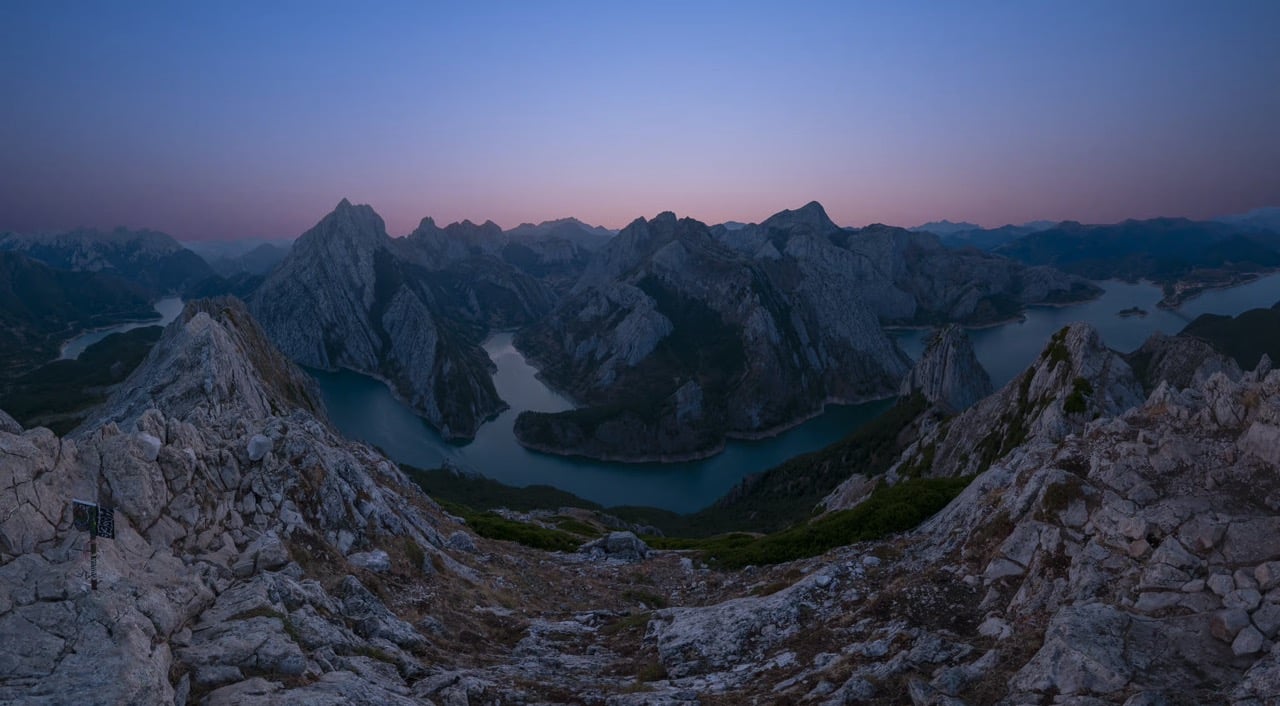
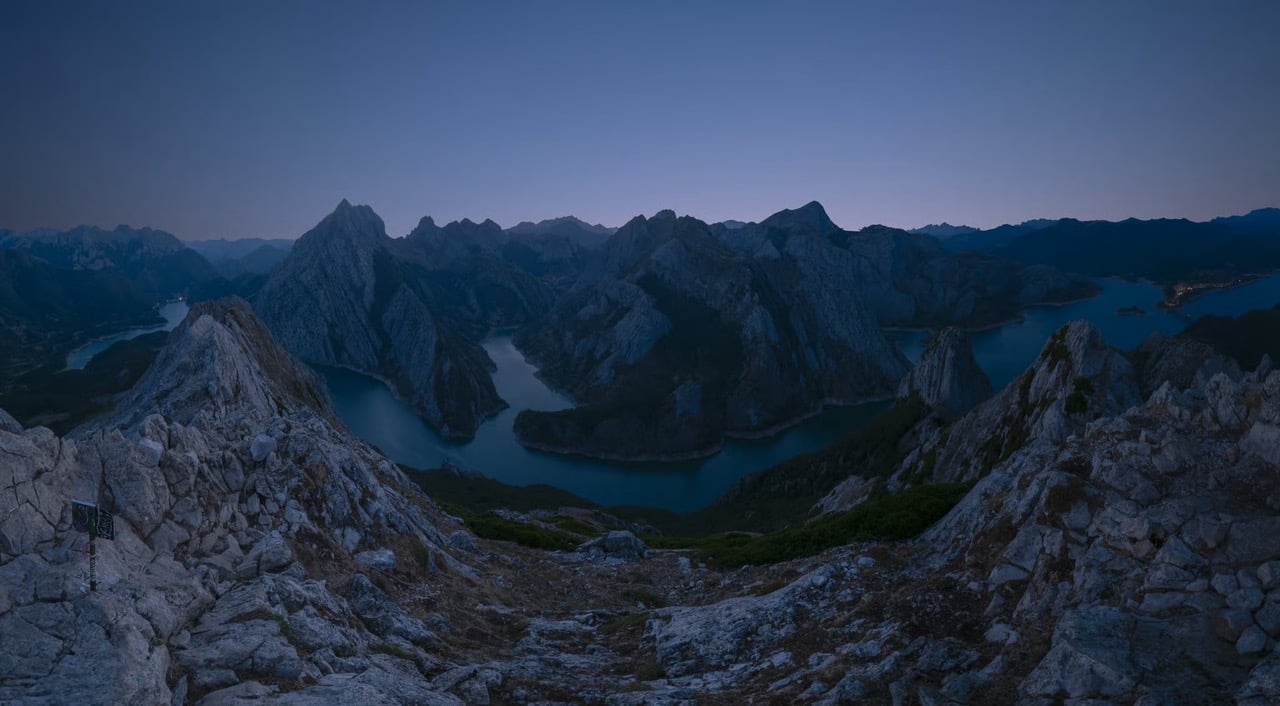
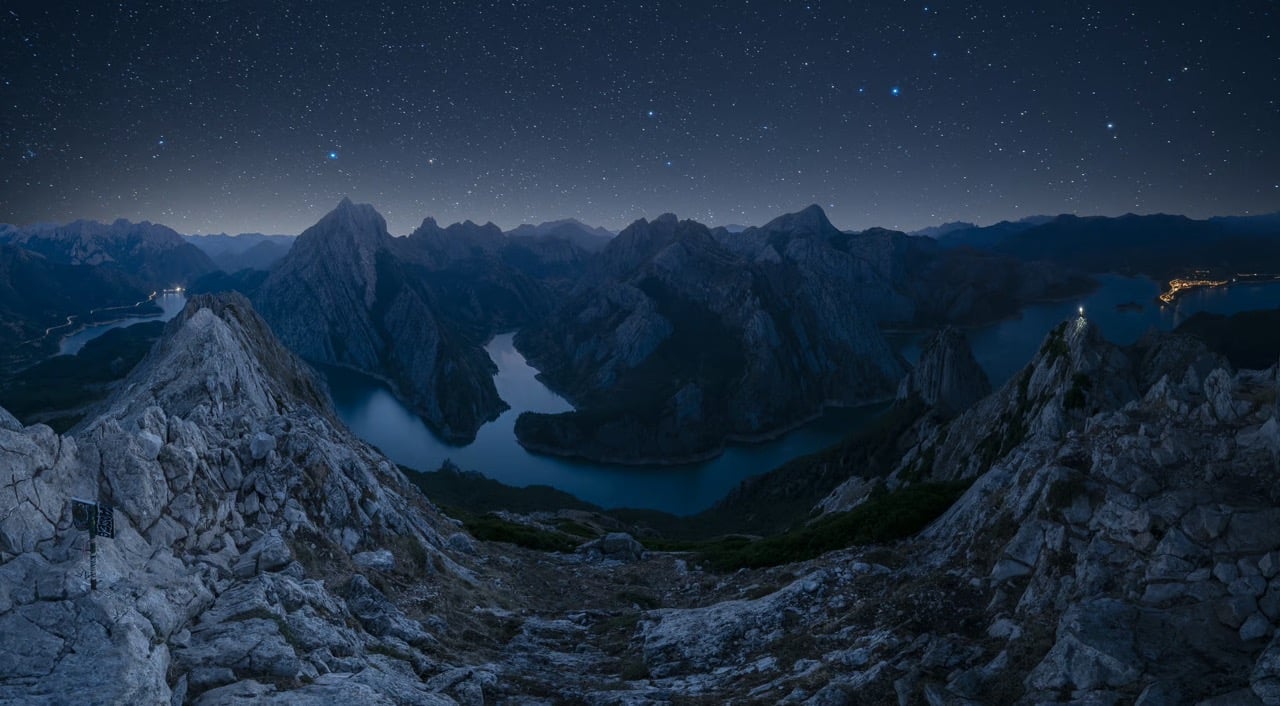
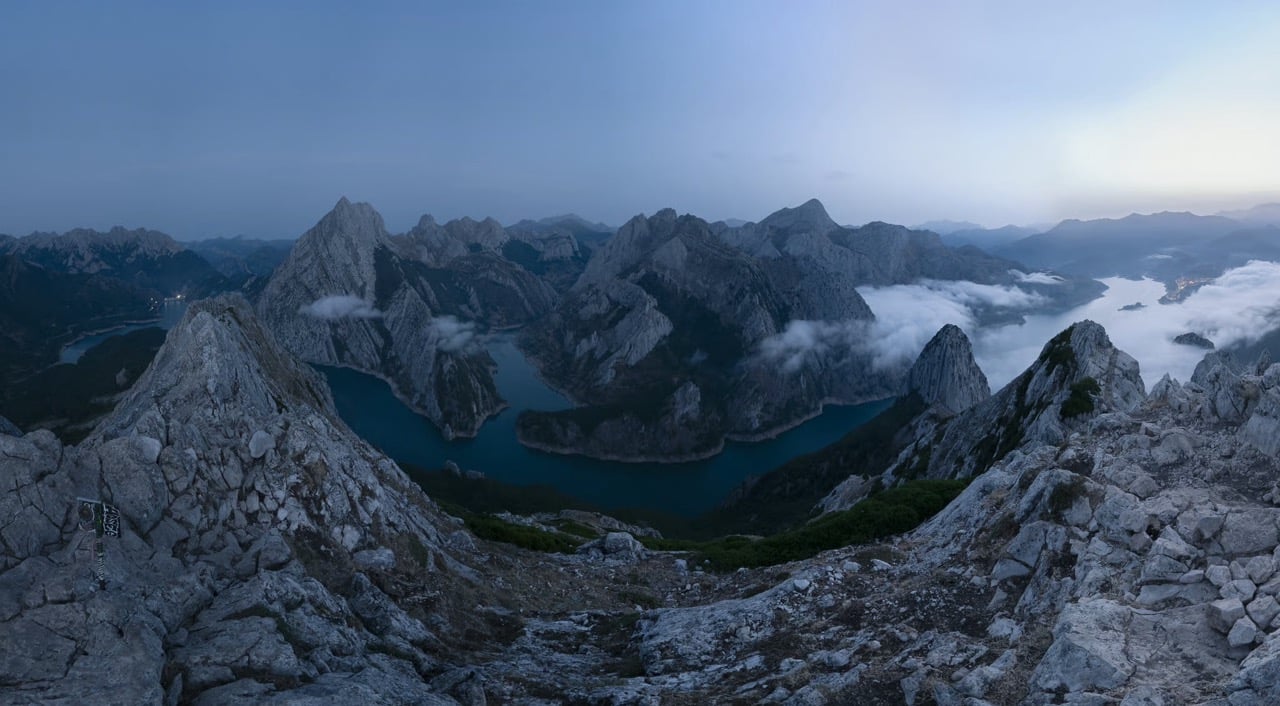
Fux then tried the opposite approach: she stitched each of the seven panoramas independently, then tried to align the seven completed panoramas on top of each other in Photoshop.
But that also didn’t work well enough because each independent panorama stitch introduced slightly different projection, distortion, and positioning.
Breakthrough
So Fux did something outside of the box: instead of making seven individual panoramas and then blending them, she constructed a new panorama using panels from different moments of the day.
“Effectively, I was asking the panorama software to stitch photographs that were progressively moving through completely different colors and illumination,” she explains, noting that she didn’t think it would work.
“Some frames were captured before sunset. Others were moving towards darkness. Others belonged to completely different light altogether.”
Against all odds, it worked. And now Fux had a starting point to start aggressively masking in Photoshop.
“The challenge wasn’t simply to hide seams between photographs,” she says. “I was trying to make radically different states of light and color coexist inside one coherent landscape.”
“I wanted the viewer to be able to move through the image and feel that something was changing — to recognize that the landscape at one side doesn’t belong to quite the same moment as the landscape at the other — without the photograph breaking apart into seven separate sections.”
Masks were refined, transitions were rebuilt, color relationships in neighboring sections were changed, and tweaks had to be made to the alignments to complete the showpiece.
The Shadow Between is available as a limited edition print from Fux’s website. More of Fux’s work can be found on her website and Instagram.
Image creditsPhotographs by Angel Fux
Affiliate Disclosure
PetaPixel articles may include affiliate links; we may earn a commission if you buy through one.