Balaysia? Mahrain?
F1 in Bahrain… in Malaysia: The race needed a software update to start
A software bug waylaid half the field and required a race reboot.
Credit:
Jakub Porzycki/NurPhoto
Credit:
Jakub Porzycki/NurPhoto
Well, it’s safe to say no Bahrain Grand Prix has been affected by torrential rain quite like the 2026 race.
For one thing, it was held several thousand miles from Bahrain itself. The ongoing war with Iran ruled such things out, so the Sepang International Circuit in Malaysia stepped in to fill its spot. One of the best examples of a late-’90s “Tilke track”—named for its designer, Herman Tilke—it’s characterized by a couple of long straights and the always-brutal tropical weather that provides one of the toughest physical challenges on the calendar. And this weekend was no exception.
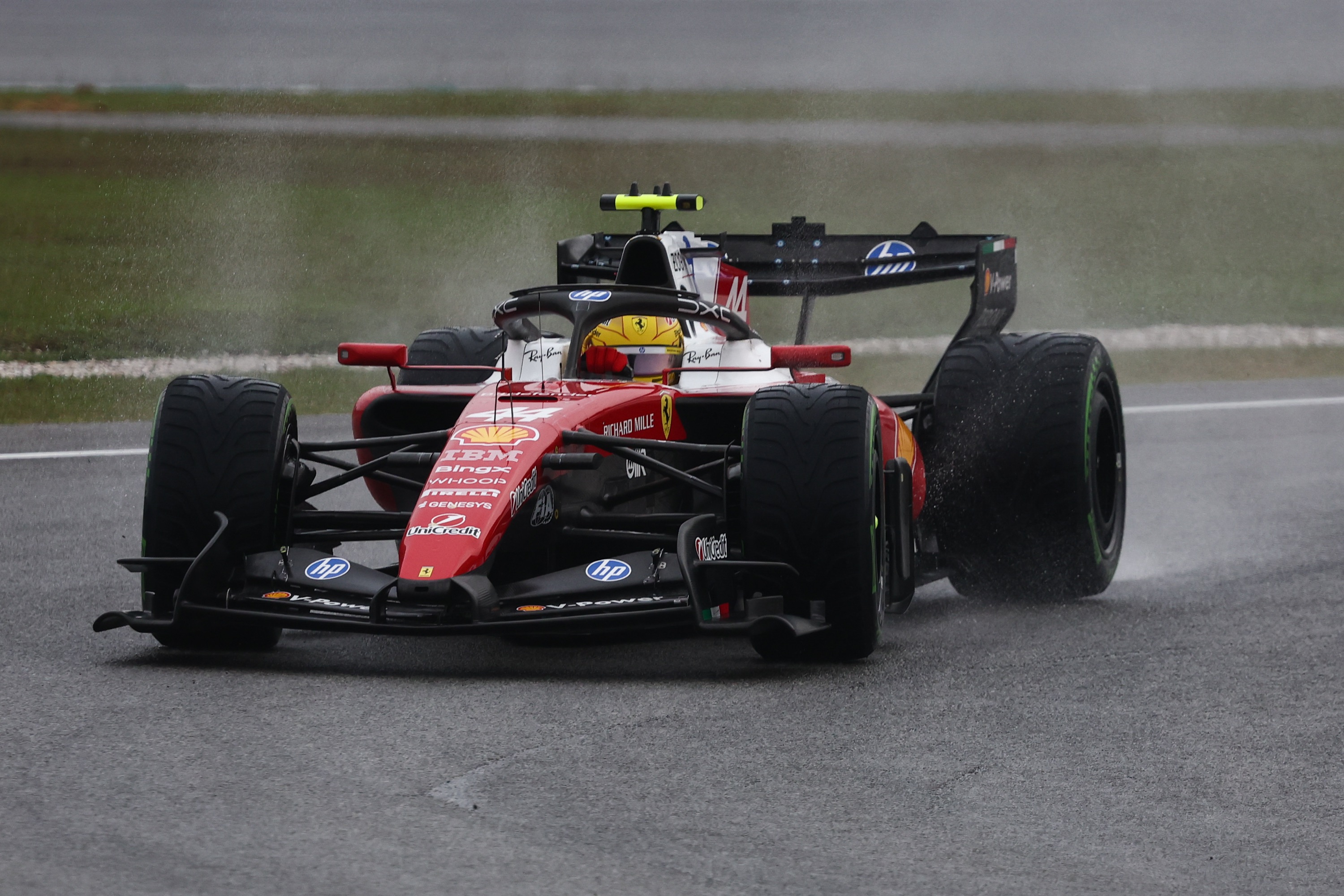
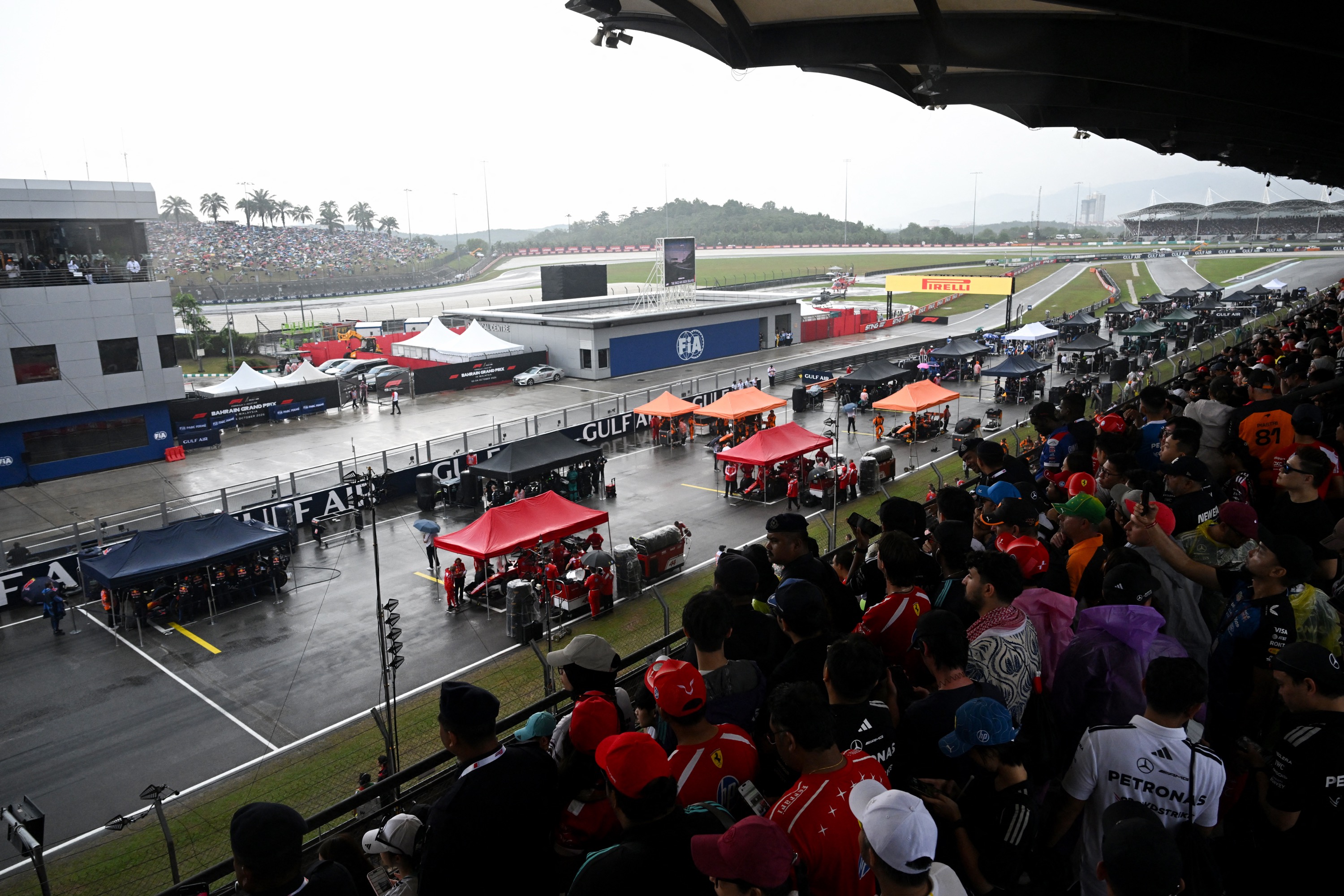
Heavy rain arrived about half an hour before the start time, delaying things significantly. Although the sport has two different kinds of treaded tires for use in the rain, the full wet tire generates so much spray, and such slow lap times, that it’s essentially only useful for circulating behind the safety car. If it’s wet enough to need it, it will be too wet to see where you’re going. The intermediate tire, by contrast, has much shallower grooves and is good for racing on damp but not soaked tracks, although it quickly overheats and degrades as the track dries.
Chaos ensues
The organizers decided on two formation laps behind the safety car; circulating at lower speed would allow the drivers to get an idea of the track conditions and let their intermediate tires pump some water off the track surface, the idea went. But that didn’t take into account a bug lurking in the cars’ software.
Driving slowly behind the safety car with reduced hybrid power in some parts of the track due to the extremely wet conditions convinced several of the cars that they were being tricked into breaking a hard-coded rule meant to prevent cheating, triggering an automatic 60-second shutdown of their electric motors that caused chaos as car after car slowed for the one in front, then took varying lengths of time to reboot their systems.
JADE GAO / AFP
Credit:
JADE GAO / AFP
“It was like the Lego race,” said Max Verstappen of Red Bull, referring back to the human-size Lego cars that F1 used for a driver parade at the 2025 Miami Grand Prix. “At some point, we were five-wide on the straight because we couldn’t understand what was going on. Then we did a lap and then I see eight other cars crawling still… I mean that’s not what you want, right, for the sport.”
The race organizers aborted the entire start. The bug had never come up in testing, and the FIA had to hastily write and distribute a software update to fix it. An hour after the first aborted start, the cars lined up on the grid again, ready to finally race.
“In wet conditions, there are some different software settings for the cars for safety reasons to reduce the power in certain sectors from the maximum to a lower level,” explained Nikolas Tombazis, head of single-seater racing at the FIA. “And this year, we’ve had very little wet weather running or none at all, almost. So it wasn’t maybe adequately checked.”
The software was developed by the FIA with the teams and engine makers. “So it’s common software for all cars,” Tombazis said. “And basically there was a combination of events between those software settings and the fact that some cars went incredibly slow during the formation lap and those entered a sort of a bug into the software which was stopping those cars to reaccelerate and to go to normal speeds.”
“And as a result of that, we had quite a few cars affected by that problem and which caused them to stop,” Tombazis said. “Perhaps I should also add that as soon as the formation lap problems happened, we understood the problem very soon afterward and we issued some an updated software to the teams. It took about sort of 20 minutes for the software to be issued. Some explanations teams had to update the software in the car. They had to ask a couple of questions and we had to make sure they all had done that work. So all of that took maybe about 20 minutes or so and so that was what caused that delay for the second start.”
(Indeed, the delay led Verstappen to joke that his team got their update applied faster thanks to their Oracle-supplied data connection.)
More chaos
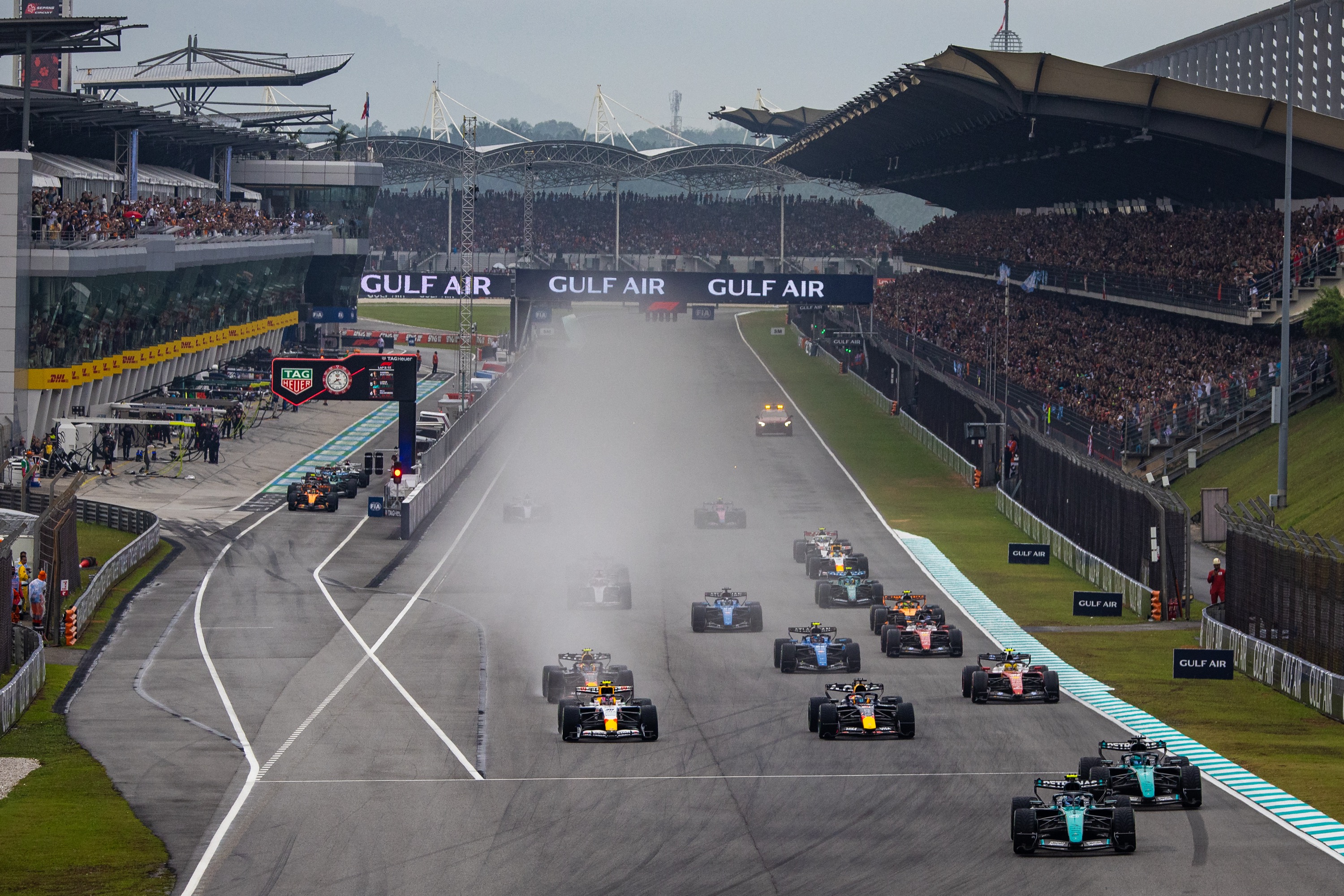
The delay to the start was long enough that the rain had abated and the puddles of standing water had all drained, leading just over half the grid to gamble that it was dry enough to risk starting on either the soft or medium slick. Only nine drivers opted for the intermediate tire, including Verstappen (on pole), championship leader Kimi Antonelli, and his Mercedes teammate George Russell. Lewis Hamilton, starting second, was among those choosing to start on either the soft or medium slick tire; this was a mistake, as the formation lap proved the track was still much wetter than expected—too wet for slicks, certainly.
So it wasn’t a surprise to see the slick-shod cars quickly left behind as they struggled to put down power on the wet tarmac. Despite being on the intermediates, Verstappen got a terrible start and was left in third, behind both Mercedes.
“I was not surprised because my start was horrendous,” Verstappen said. “Again, dropping the clutch and not having power. The engine just completely died on me. But then you just have to settle in, try not to overreact as well, and just slot in, try to keep your position there. The race is long, a lot of things can happen, and step by step, I could close the gap.”
And he did, passing Russell on lap six and then closing up behind Antonelli quickly thereafter.
Jayce Illman/Getty Images
Credit:
Jayce Illman/Getty Images
Meanwhile, at the back of the pack, some of the drivers who started on slicks made stops to change to the intermediates. McLaren’s Oscar Piastri was among the first who quickly began scything through the field; within a lap, he’d caught up and passed everyone who went by as he stopped. Others followed suit, though Hamilton was not among them, telling his race engineer on lap 5 that he’d gamble on the conditions coming back to suit him. It was a decision that would show the depth of experience that the seven-time world champion brings to the sport.
The race restarted on lap 13, and Verstappen pounced on Antonelli, taking the lead, with Russell following into second. Hamilton, meanwhile, was in 15th, although not for long. Within a lap, he was up to 11th. Within 10 laps of the restart, he was in 5th.
Slightly further back, another legend of the sport was also having a good day.
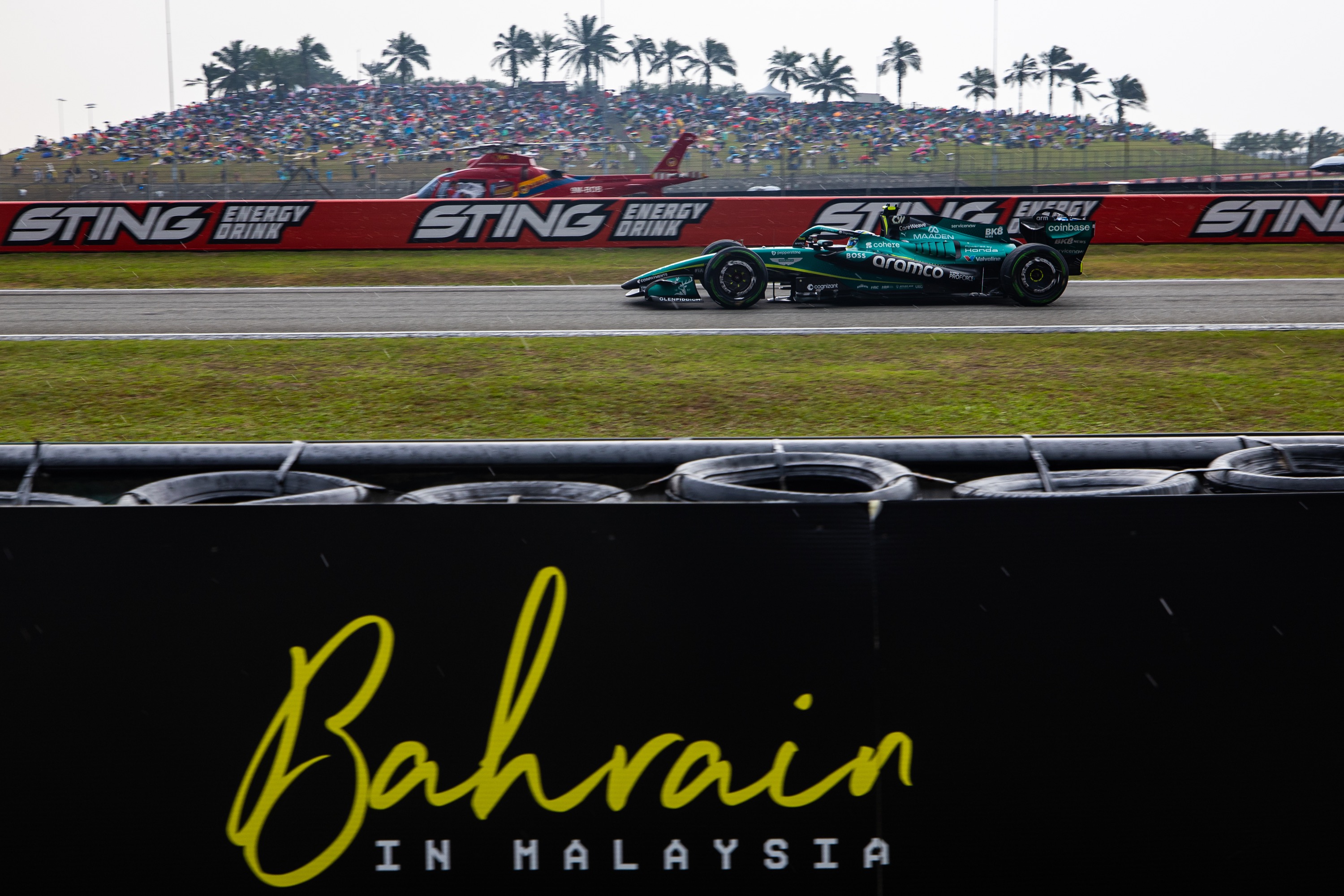
Fernando Alonso’s Aston Martin might have been a laughingstock at the start of the season, as it was multiple seconds slower than the cars of the frontrunners, but the Adrian Newey-designed aerodynamic update that arrived in Hungary closed some of the gap to the rest of the field. And Honda has now introduced a second power unit upgrade that has helped drivability even while at a power deficit to the others. It’s not quite as effective a package as Hamilton’s Ferrari, but Alonso began moving forward, and by lap 40, he was in 10th place, the final points-paying position.
Jayce Illman/Getty Images
Credit:
Jayce Illman/Getty Images
Up front, Verstappen was building a commanding lead, and Antonelli had overtaken Russell for second, having first asked the team unsuccessfully if they’d simply tell Russell to let him by.
Extra chaos
Then Alex Albon’s Williams suffered a gearbox failure on lap 43, triggering a virtual safety car. Verstappen and Hamilton stopped for tires, followed a lap later by Antonelli, Russell, and the other Red Bull of Isack Hadjar. The broken transmission of the Williams prevented it from being easily moved, so a full safety car was declared, bunching the pack up.
The race would restart on lap 52 (of 55), but not before Russell came to a stop by the side of the track just past the pit exit on lap 50. “Another [power unit] failure, when we were on course for a pretty certain podium. It’s a tough one to take. It’s unfortunately happened too many times this season, and, yeah, this is just where we are,” Russell said after the race as he acknowledged his title chances for 2026 were over.
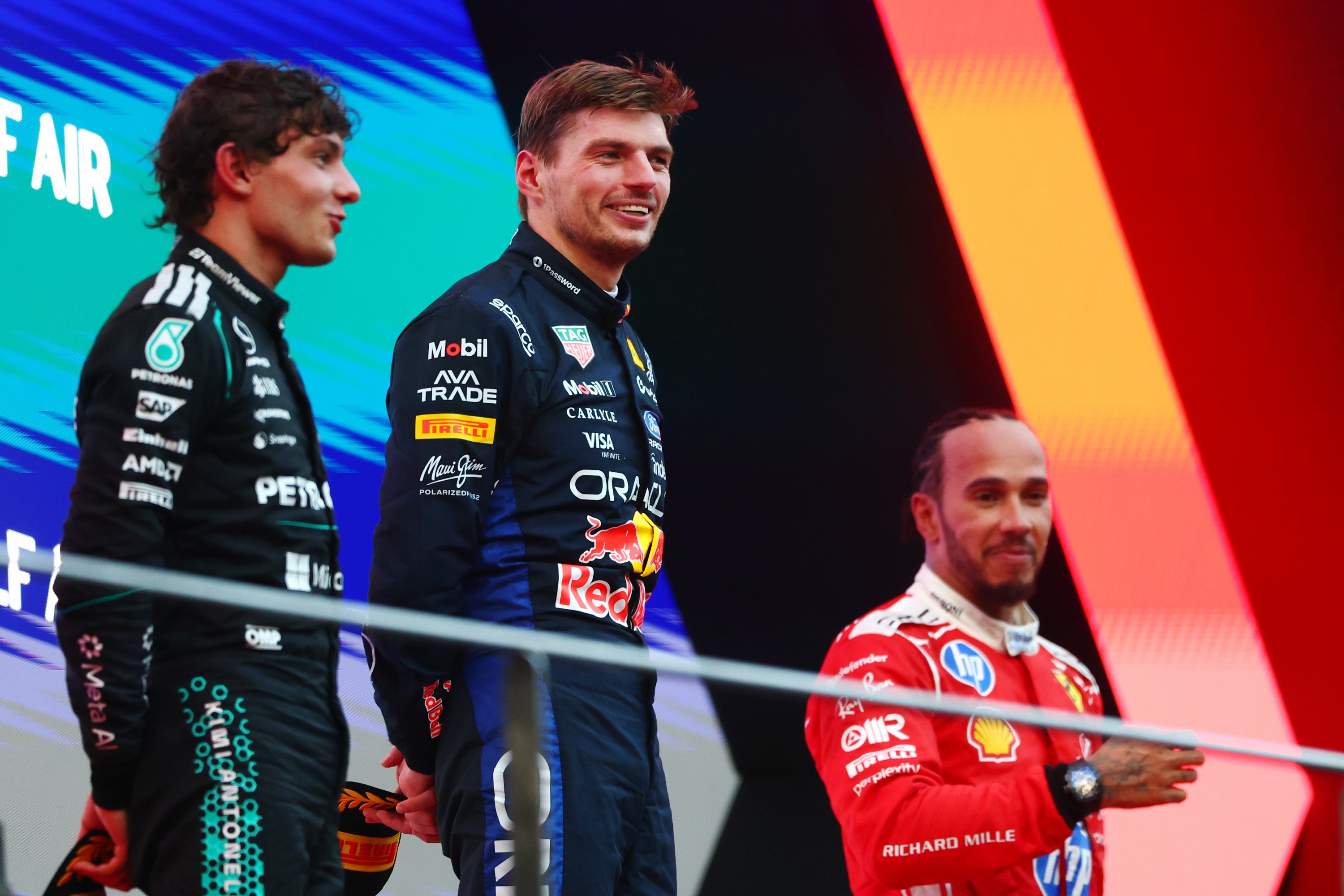
The final three laps were frenetic. Hamilton passed Hadjar for third, a wonderful recovery drive back to the podium after being more than a minute off the lead at one point during the race. His Ferrari teammate Charles Leclerc trailed behind, also passing the second Red Bull and fully salvaging Ferrari’s day. Ahead of the red cars, Antonelli was closing down on Verstappen but without being close enough to attempt an overtake. And Alonso was making moves, too, ending his day in eighth place, Aston’s best finish of the year.
Everyone knows this looks bad
Clive Mason/Getty Images
Credit:
Clive Mason/Getty Images
On a chaotic day, F1’s biggest talents shone their brightest. Between them, Hamilton, Verstappen, and Alonso have 13 world championships, and this year, Antonelli has given every indication his name belongs alongside theirs, even if he does need to do something about his weakness for exceeding track limits. And the racing we got was actually rather thrilling. But some of that was still overshadowed by all the chaos that had to happen first. And everyone knows where to point the finger.
“The power units are exceptionally complicated. The more complicated you make things, the more there is to go wrong. So that is obviously something we need to bear in mind for the future,” said Russell. “It just proves that we shouldn’t have any of that stuff on the electronic side,” said McLaren’s Lando Norris.
“It is clear the regs are extremely complicated for the drivers, for the teams, for the PUs, for the manufacturers. It is too complicated,” said Williams’ Carlos Sainz. “Again, my only question mark is who, five years ago, decided that this was the direction to go? We are doing the best with what we are given as a sport and as regulations. The FIA and F1 are doing the best they can with what was decided four or five years ago, but clearly what was decided four or five years ago is wrong.”
Next year, the power units will be rebalanced with more power from the V6 and less from the electric motor, with another change coming in 2028. Then it’s all change in 2031 (or perhaps 2030), when F1 will likely go back to V8s and much smaller hybrid systems.