Information warfare
Russian drones strike Ukraine’s data centers by exploiting air defense gaps
Russian attacks on Internet, phone services threaten Ukraine’s wartime economy.
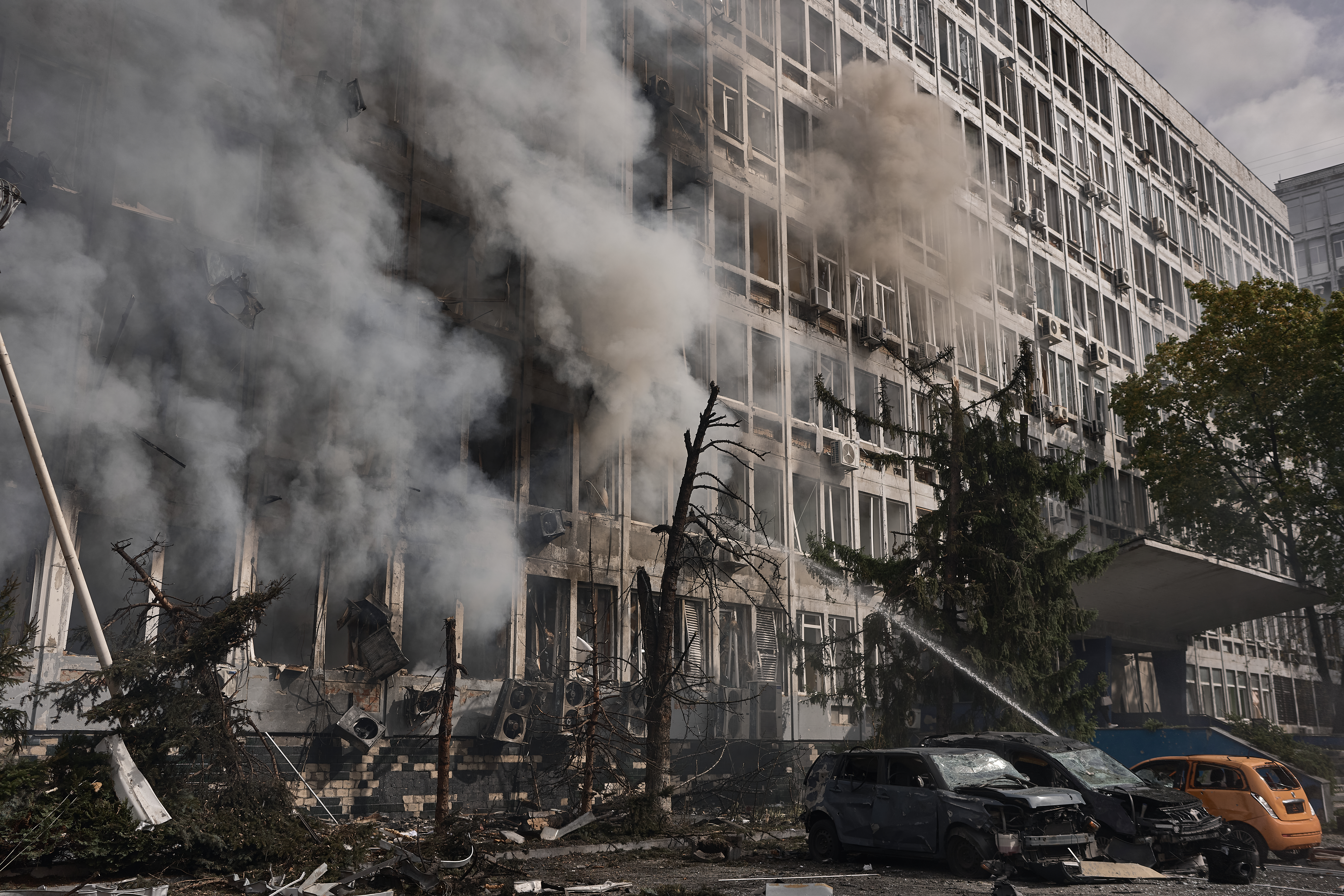
A surge in Russian jet-powered drone strikes on Ukrainian data centers has increasingly disrupted mobile phone and Internet services for thousands of people. Now Ukraine President Volodymyr Zelenskyy and other government officials are warning of the need for more air defense capabilities, as such telecommunication outages could threaten Ukraine’s digital economy and undermine the country’s ongoing resistance to Russia’s invasion.
The Russian attacks on Ukrainian telecommunication infrastructure have focused on Ukraine’s capital of Kyiv since September 23, according to the nonprofit Reporters Without Borders. Ukraine’s digital transformation ministry reported that 100,000 households in the Kyiv region were temporarily experiencing Internet outages from those initial strikes—and Russia has only intensified its strike campaign against major Ukrainian data centers and mobile phone networks in recent weeks.
“Russian attacks on Ukraine’s telecommunication infrastructure are not new, with strikes and shelling previously damaging fiber optic lines, cell towers, and facilities belonging to mobile network companies,” said Tetiana Gaviuk, analyst for Europe at ACLED, in a post on October 1. “However, the recent concentrated attacks on Kyiv’s data centers and telecom networks stand out because multiple providers and facilities were hit within days, indicating Russia’s increased pressure on Ukraine’s digital infrastructure.”
Such repeated attacks could undermine the telecommunication networks that support Ukraine’s banks, payment systems, and public services, according to warnings from officials and industry figures, as reported by The Guardian.
Russia’s strike campaign
Russia has launched mass missile and drone attacks on Ukraine’s power grid infrastructure, railroad stations, shipping ports, and even residential apartment buildings since the first year of its full-scale invasion in 2022. But such long-range strikes have become even more damaging this year, as they have exhausted Ukraine’s supply of missile interceptors—and Russia has also upgraded many of its one-way attack drones to become faster jet-powered drones that are more difficult to shoot down.
For example, Zelenskyy stated on October 4 that Ukrainian air defenses currently intercept more than 85 percent of conventional Shahed-type drones originally developed by Iran and supplied to Russia. But such interception rates fall to just 50 or 60 percent when dealing with newer and faster jet-powered Shahed drones.
Russia’s targeting of data centers is part of a broader long-range strike campaign against energy and commercial infrastructure that “aims to make civilian life in Ukraine unbearable such that Ukraine will capitulate to Russia’s demands,” according to the DC think tank Institute for the Study of War. The Russian strategy seeks to exploit Ukraine’s current air defense gaps and damage or destroy Ukrainian infrastructure during the colder fall and winter seasons.
However, Russia’s intensified strike campaign also coincides with Russian battlefield setbacks, especially with the Ukrainian military’s Operation Vivaldi having retaken dozens of square miles of territory near the vital fortress belt cities guarding eastern Ukraine. So the strike campaign arguably represents the main avenue open for Russian President Vladimir Putin to try claiming some semblance of victory nearly five years after the start of his so-called special military operation in Ukraine.
Telecommunication resiliency and alternatives
Ukraine has already moved some data centers outside the country and invested in building more underground telecommunication networks to boost resiliency, said Kateryna Chernohorenko, Ukraine’s former deputy minister of defense for digital transformation, in an interview with Breaking Defense. But she also cautioned that “you cannot move everything underground” and emphasized the need for allies to help boost Ukraine’s air defenses against Russia’s ballistic missiles and drones.
The telecommunication outages could force more local media outlets and ordinary civilians to turn to satellite-based solutions, like Starlink. Former Ukrainian government advisor Serhii Sternenko recommended that residents of Kyiv purchase Starlink terminals or similar alternatives ahead of winter.
“These repeated Russian strikes on Ukraine’s telecommunications infrastructure not only affect the work of the media, but also the Ukrainian population’s right to information,” said Pauline Maufrais and Vincent Berthier, regional officer for Ukraine and head of the technology and journalism desk at Reporters Without Borders, in a statement. “These are war crimes and their gravity is undeniable.”
This is not the only instance of data centers becoming wartime targets in the past year. When the United States and Israel first attacked Iran in February 2026, Iran’s retaliatory strikes on the Gulf region included targeting multiple Amazon data centers in Bahrain and the United Arab Emirates. Amazon has since acknowledged the permanent loss of some Amazon Web Services customer data because of the data center destruction.