humans like going fast
Polestar tries to quantify what it’s like to drive a performance car
Drivers had electrodes strapped to their heads as they tested EVs on track.
Credit:
Polestar
Credit:
Polestar
The human desire to go fast is old, dating back at least as far as the first time some adventurous Yamnaya saw a horse on the Pontic-Caspian steppe and thought, “I bet if I jumped on that thing’s back, it would be faster than walking.”
A thousand years later, someone else invented the wheel—and the chariot—and humanity was ready to roll. Now, about five millennia since that first horseback ride, equestrianism is mostly a leisure activity, and we drive cars, propelled by motors with more power than an entire herd of beasts could muster.
Acceleration, top speed, and lap times are the usual ways we quantify that performance, and performance electric vehicles are currently in an arms race to see which one can hit 60 mph in the least amount of time. But measuring a car’s performance is easy—all you need is a stopwatch and a track. How about measuring the effect of car performance on the driver? That’s a question Polestar is trying to answer with researchers at the University of Oxford.
“As electric cars redefine what performance can be, we wanted to understand something that can’t be captured by a specification sheet alone: the human experience behind the wheel,” said Christian Samson, Polestar’s head of product attributes. “Working with University of Oxford allows us to look at performance through a different lens—connecting the engineering of the car with the experience of the person driving it.”
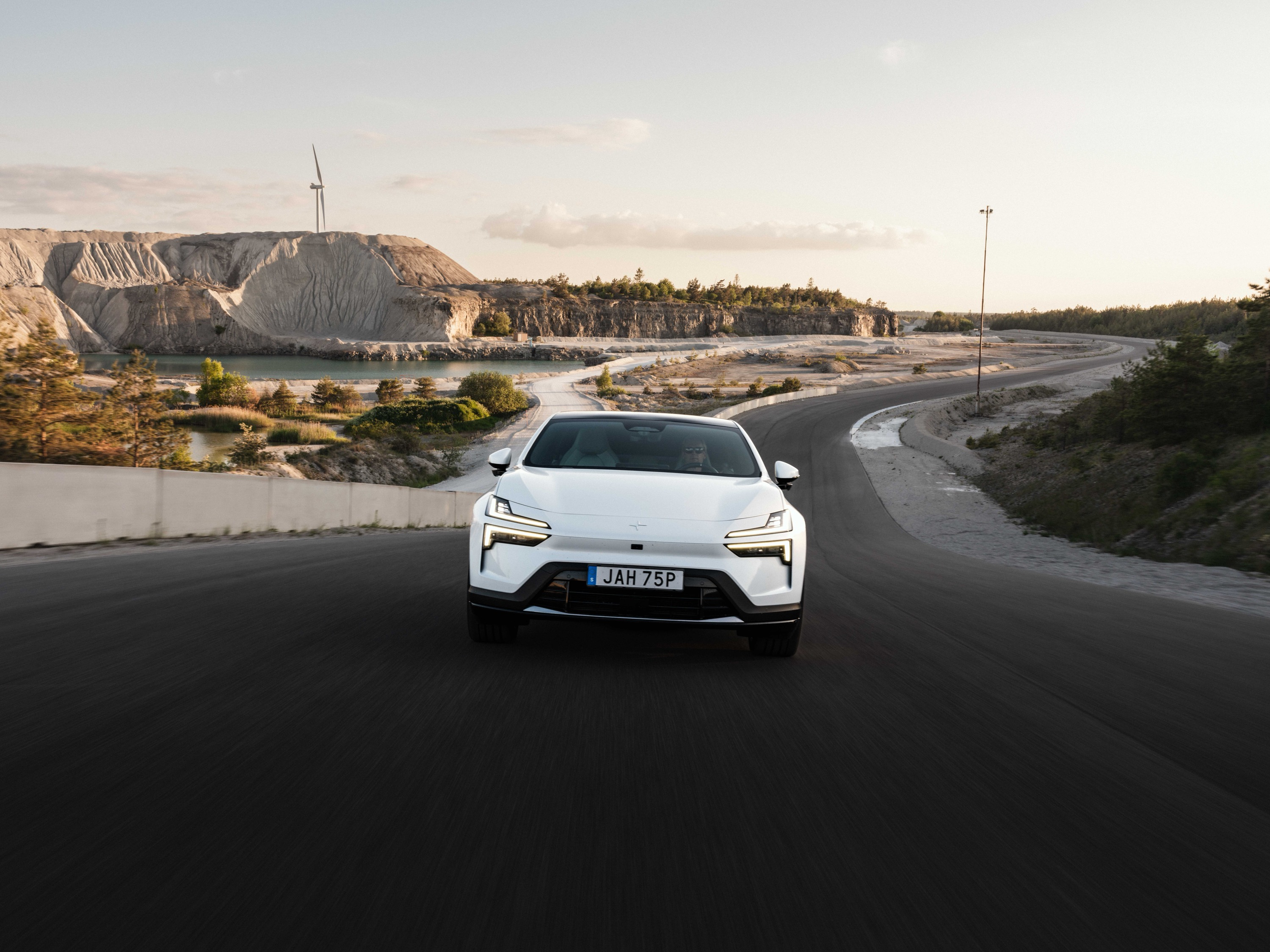
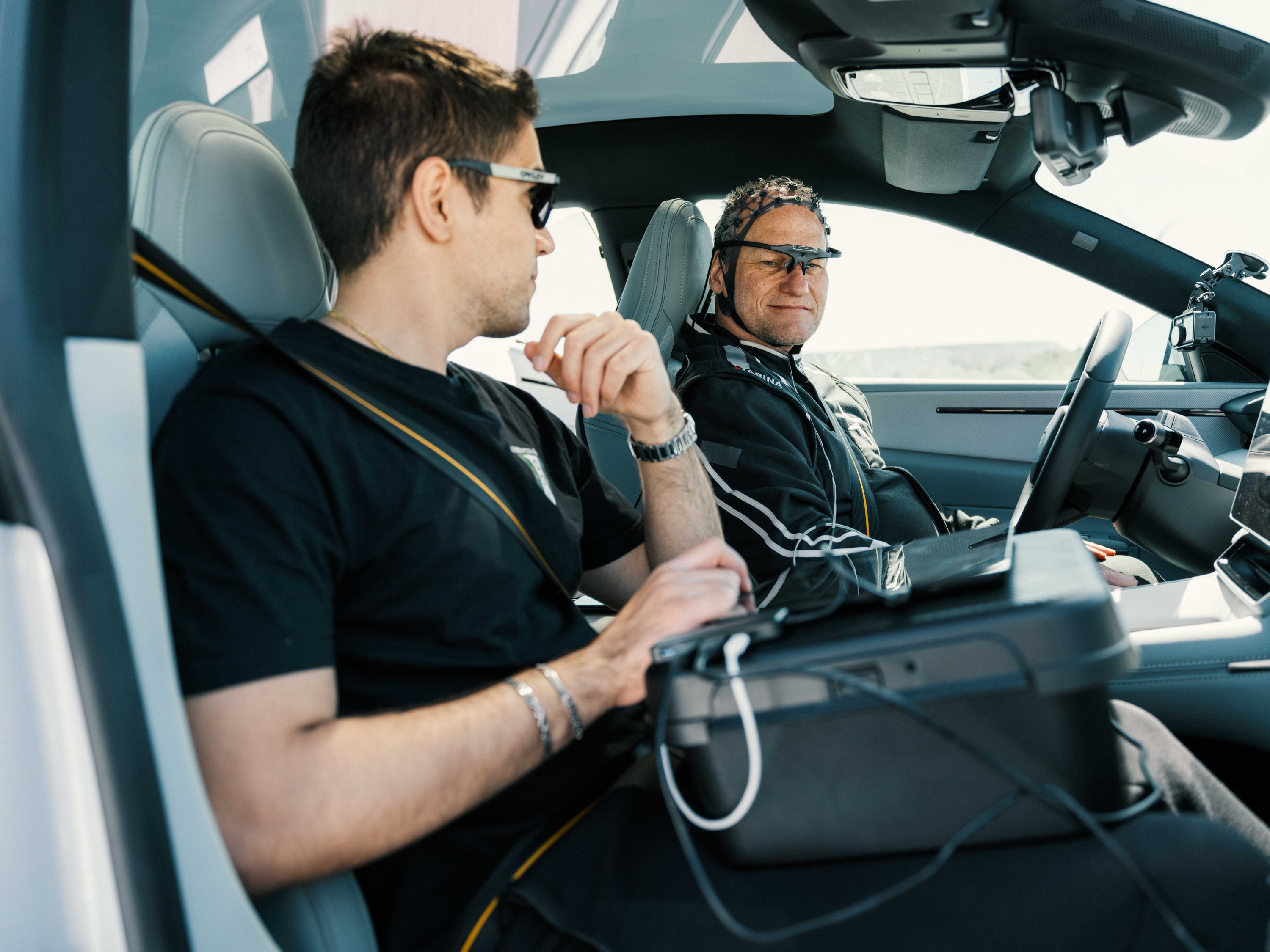
The pilot study involved 12 drivers who track-tested both rear- and all-wheel-drive versions of the Polestar 4 at a track in Sweden. The Polestar 4 is the OEM’s midsize crossover, a compelling Porsche Macan alternative that you can sadly no longer buy here in the US. The drivers were instrumented with heart rate monitors and skullcaps studded with electrodes, plus the cars’ gaze-tracking driver monitoring system to gather physiological data, which was combined with telemetry from the cars and subjective interview assessments after the fact. While being measured, drivers lapped the Gotland Ring circuit gently, then dynamically.
You won’t be surprised to learn that the AWD performance Polestar 4 was able to generate higher G loads under cornering and acceleration, thanks to having double the power output (536 hp/400 kW) of the single-motor version. Peak acceleration was 32 percent higher, and drivers needed 15 percent less steering effort compared to a matched fast lap with the single-motor car.
Interviews also revealed the drivers’ preference for the more performant Polestar: On a scale of 0 to 100, the AWD version was rated 89.2 for performance and 93 for the overall experience, versus 67.7 for performance and 77.9 overall for the rear-drive version. But their subjective descriptions were a little more informative. The more performant car engendered feelings of trust in the vehicle and a sense of control and kept drivers’ attention deeply engaged in the task at hand (driving). More than one compared the experience to a “controlled roller coaster.”
“Performance is not simply about going faster. It is about giving the driver a sense of confidence and control through predictable vehicle responses,” said Max Klapow, a researcher at Oxford. “Our research takes a step toward measuring that human experience, by connecting what the car does with what happens to the driver.”
Polestar
Credit:
Polestar
Polestar acknowledges that a study of 12 participants is only a pilot, but its findings support a simple idea: Even if people don’t think handling matters, they still prefer a car that handles well to one that doesn’t. The late Richard Parry-Jones, who rose to become CTO at Ford, was in charge of signing off vehicle handling and was a stickler for it. In the foreword to a book written shortly before his untimely death, Parry-Jones explained why:
Some in the company would say, “Richard why are you doing that? Spending all the money on chassis and steering? Customers never ask about things like that.” But they were wrong. People got into a Focus and said, “I really like driving it.” You’d ask why and they’d say, “I don’t know; I just do.” Understanding why they like it is our job. I tracked customer satisfaction against attributes like steering, brakes, spaciousness, and so on. To people’s amazement, I was able to prove that steering was the most strongly correlated, because bad steering is tiring… That’s what I learned about vehicle dynamics and linear responses: it’s tiring if it’s bad but rewarding if it’s good.
I heard a similar take from General Motors’ Ken Morris, whose expansive job portfolio includes all the automaker’s product programs as well as motorsport.
“There are people that think no one can tell the difference [with handling], you know, and I’ve always said they absolutely can tell the difference,” Morris told me last year. “They don’t know what it is. And the structural feel of the car going down the road, you know, people might explain, ‘It feels like a vault.’ Well, I can tell you exactly what’s going on, physically, from the parts and the tuning, and it’s an outcome that we strive for.”