Shaking things up
NASA’s new Moon plans have a problem: Orion wasn’t designed to fly this way
“We also have a responsibility to not go too fast and cut too many corners.”
Credit:
NASA
Credit:
NASA
NASA recently announced a significant shakeup to the Artemis program that will land humans on the Moon.
The moves were designed to give the agency’s lunar lander providers—SpaceX with its Starship vehicle, and Blue Origin with Blue Moon—more flexibility in reaching the Moon. For Starship, this means docking with Orion in Earth orbit, and then traveling to the Moon in tandem. For Blue Moon, it shifts the rendezvous with Orion all the way to low-lunar orbit.
These changes benefit the lunar landers, but in turn impose more of a burden on the Orion spacecraft, which is built for NASA by Lockheed Martin. To understand the implications for the spacecraft, Ars spoke with Kirk Shireman, Human Spaceflight Exploration and Orion program manager at Lockheed.
Starship challenges
For Starship, the evolved plan has SpaceX fueling a Starship lunar lander in low-Earth orbit before docking with Orion in high-Earth orbit. The crew will fly to the Moon on board Orion before two of the four astronauts transfer into Starship for a landing on the Moon.
Due to the docking configuration with Starship, Orion must now fly backward to the Moon, with its Service Module at the top of the stack. This is a fundamentally different flying posture than Orion was designed for, Shireman said, and creates issues for Orion’s propulsion system.
As a result, the Service Module, which is provided by the European Space Agency, will require modifications to its propellant tanks. This is because liquid propellant would move toward the gas inlet side of the tanks, rather than settling in the direction expected during normal operation.
“When you push it the other way, the liquid goes to the gas end of the tank, and you don’t want the liquid in the gas part,” Shireman said. “Bad things can happen to you.” To address this, he said, the European Space Agency and its main contractor, Airbus, are modifying the vehicle’s tanks for Starship lunar missions.
NASA and Lockheed engineers have also been studying the impact of increased acceleration on Orion when the vehicle is attached to Starship. Under Orion’s original mission architecture, the spacecraft would experience accelerations of about 0.1 to 0.15 g during the translunar injection burn, Shireman said. But with Starship providing the thrust, the acceleration would increase to approximately 0.8 to 1 g, acting in the opposite direction from the one originally planned.
Orion’s structure must be certified to handle a substantially higher acceleration in the opposite direction, Shireman said.
Artemis III concerns
Before astronauts land on the Moon, NASA is also planning a mission in low-Earth orbit to test Orion’s interactions with the lunar landers. Shireman said this change in plans for Artemis III, announced earlier this year, has created new hazards, as Orion was not designed to spend more than a short period of time in low-Earth orbit.
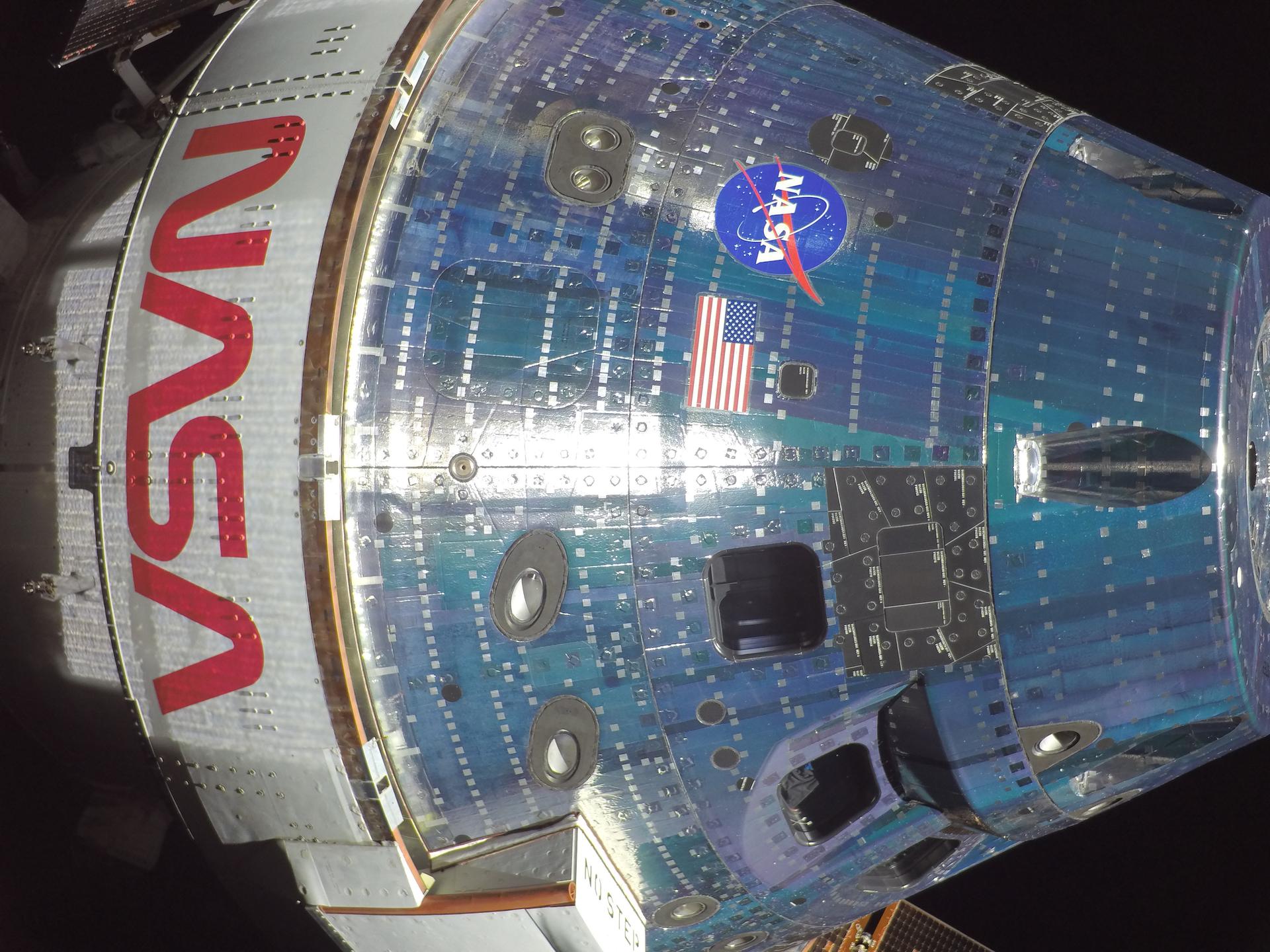
Heating is a concern, he said, because Orion was designed for deep space, which is colder than the thermal environment closer to Earth. For example, he said, Orion has passive thermal features designed to prevent the spacecraft from getting too cold in deep space. One of these is a silver-looking exterior tape that dissipates electrical charge and limits the radiation of heat into space. As a result, some of this tape will be removed for the Artemis III mission.
Engineers are also analyzing how to manage electrical loads to reduce heating and protect the avionics and crew cabin.
Another big change that stems from spending approximately two weeks in low-Earth orbit is the orbital debris environment, which is more congested than in deep space. Shireman said NASA and Lockheed have not completed their assessment of the orbital-debris risk associated with the new mission profile. This should be done by January, and, if the risks are too high, it might lead to modifications of Orion’s orbit for the mission.
“There’s going to be a higher risk from an MMOD standpoint,” Shireman said of orbital debris near Earth. “It’ll be higher risk than flying out to the Moon.”
Challenges of a low-Earth-orbit rendezvous
Earlier this year, NASA removed the lunar landing from Artemis III, turning the mission into a demonstration of rendezvous and docking operations in low-Earth orbit. The agency is now targeting 2027 for the mission, leaving Orion and the lunar landing companies with a compressed schedule to complete substantial technical integration work.
This may seem like a fairly straightforward process, but docking is rather complex. It involves mechanical capabilities like hooks, connectors, and pins; there are thruster-plume interactions with the landers, including possible damage from hot or abrasive exhaust; concerns about whether Orion’s laser system might incorrectly interpret reflections from surfaces on Starship or Blue Moon; and more.
“We were going to do that work, but not on Artemis III, and not for both of the landers,” Shireman said of docking with Starship and Blue Moon. “It was going to be spaced out, so all that work gets crunched into this time frame.”
Lockheed is working closely with NASA to prepare Orion to maintain an Artemis III schedule for a launch in summer or fall of 2027.
“We’re working three shifts,” Shireman said. “We had a zero margin schedule already, so we’re, I call it hand-to-hand combat. Literally every day we’re clawing to see, ‘Hey, can we save a shift here? Can we save half a shift there?’”
Shireman said he supports the urgency of Isaacman and NASA in their contest with China over the Moon. But it is important to keep an eye on mission safety, said Shireman, who worked at NASA during both the Challenger and Columbia accidents.
“We also have a responsibility to not go too fast and cut too many corners and make sure that we are not taking undue risks,” he said.