Personal trainer and fitness expert Luke Worthington introduces his favourite kettlebell exercises for beginners…
Ever since the fitness industry boom of the 80s, it has been awash with new gadgets and gimmicks promising the highest level of results from the lowest level of input. Most of these disappear just as soon as they arrive. However, since kettlebells made their way to Western gyms in the ’90s – courtesy of the former Soviet Special Forces operative Pavel Tstatsouline – they have become a staple of ‘functional’ training. Why? Because they work!
Kettlebells may at first glance appear to be just another way of lifting an external load (just like a barbell, dumbbell or even a sandbag), and they certainly can be that. But what has really given these fairly rudimentary looking pieces of equipment a state of permanence in the strength, conditioning, and even rehab worlds is their versatility.
The shape and structure of a kettlebell makes it a relatively unstable load to carry and support, so simple pushes and pulls start to involve perturbations in all three planes of motion. These perturbations make linear movements all of a sudden genuine three-dimensional challenges, which not only has tremendous benefits for those interested in rehabilitation or functional training, but from a practicality point of view means that we can generate a training effect with a lower weight.
Kettlebells also allow us to train speed and power with the same implements as we’re using to training strength and stability. Their structure allows for performing ballistic movements such as swings, snatches and cleans with far less risk and technical demand than their barbell counterparts.
If all you have is a single kettlebell, you can put together a workout to hit most needs.
PT Luke Worthington’s favourite kettlebell exercises for beginners
These kettlebell exercises for beginners can performed separately, as part of other workouts, or you can combine all six exercises for an effective full-body kettlebell workout.
If you perform all the exercises in one workout, aim for 3 sets of 8-12 reps per exercise. Rest 60 secs between sets, and 90 secs between moves.
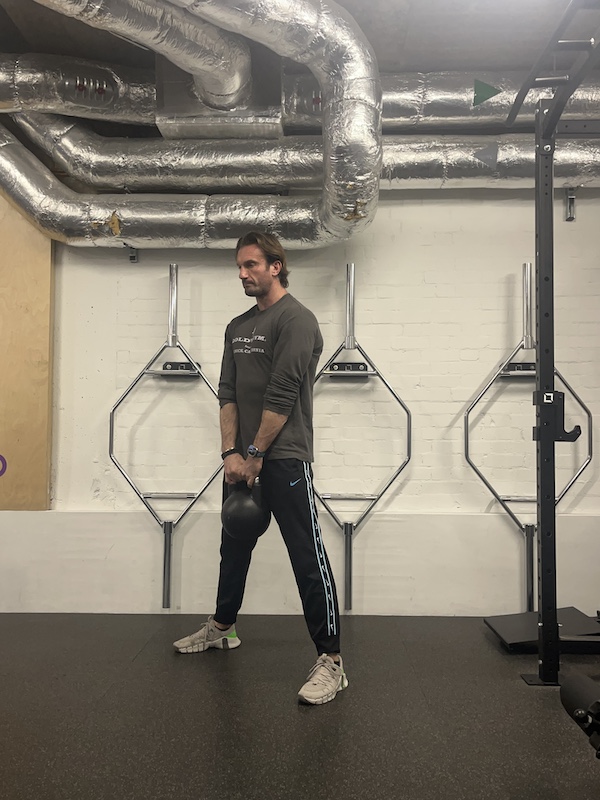
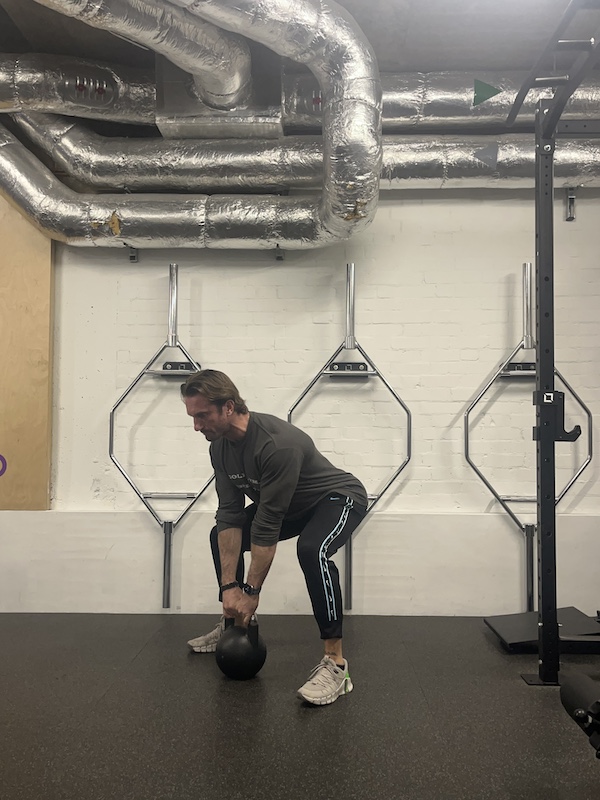
1. Kettlebell deadlift
PT tip: “Maximise tension and stability by squeezing your armpits throughout the movement,” advises Worthington.
- Stand with the feet apart in a ‘sumo’ stance, and the bell on the floor directly below the middle of the hips.
- Reach the arms out in front at 90 degrees to the body.
- Engaging the core and push the hips directly back to form a hinge.
- The knees should flex, but the shins remain in a vertical position.
- As the torso leans forward, maintain the 90 degrees of arm elevation until both hands reach the kettlebell handle.
- Squeezing the hands tight, drive the hips forwards to lift the weight from the floor.
- Finish with the buttocks squeezed, abs engaged, and lifting the crown of the head to the ceiling.


2. Kettlebell goblet squat
PT tip: “Think about squatting ‘between’ your feet rather than ‘behind’ them. There should be a difference between squats and hinges.”
- Stand with the feet slightly wider than hip-width and grasp the bell by the ‘horns’ of its handle.
- Engaging the core, initiate the squat simultaneously at the hip, knee and ankle by ‘pulling’ the hips down towards the floor.
- The knees should push forwards in line with the middle toe and the weight should be distributed evenly between the forefoot and heel.
- Reverse the action by driving the feet into the floor, extending at the hips, knees and ankles simultaneously.
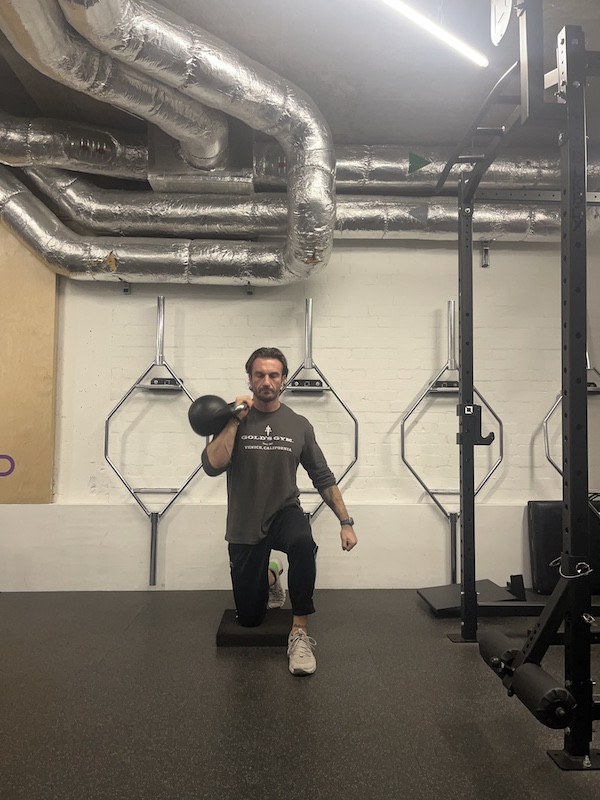
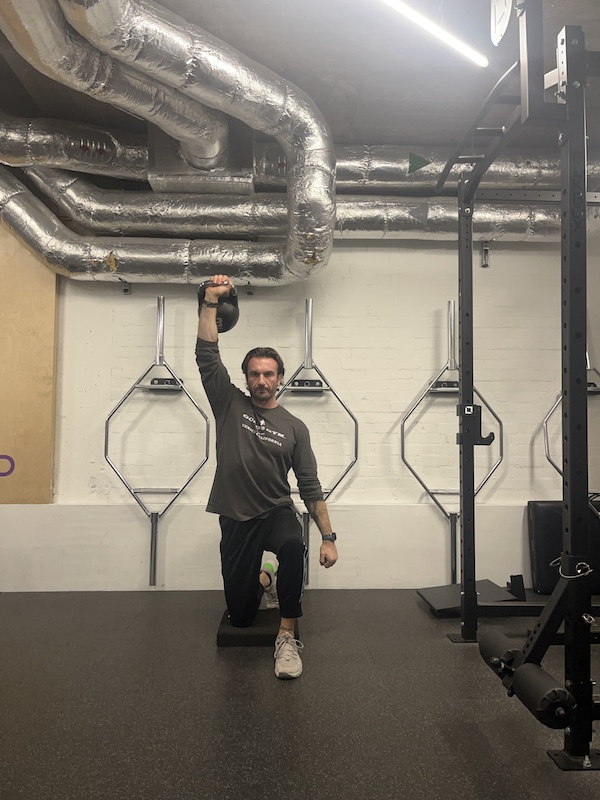
3. Half-kneeling kettlebell press
PT tip: “Exhaling at the top of the movement will help prevent ‘rib flare’ and keep the lower back neutral.”
- Position yourself with one knee on a mat or pad, and the other foot in front – aim for 90 degrees in the front hip and both knees.
- Grasp a kettlebell in the ‘half rack’ position on the same side as the ‘down’ knee.
- Maintain a neutral lumbar spine by attempting to tuck the pelvis beneath you – you should feel a strong contraction in the gluteal of the ‘down’ knee.
- Drive the bell straight overhead, maintaining a flat wrist and with the knuckles facing the ceiling.
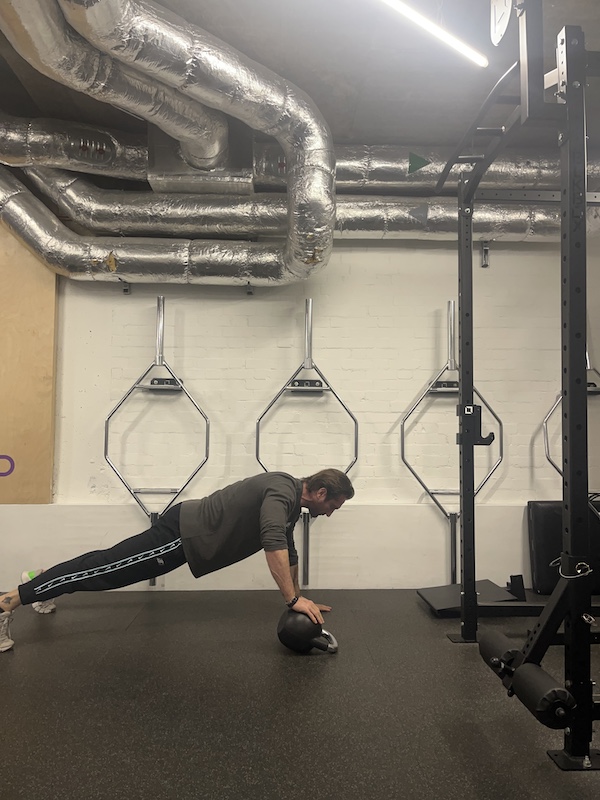
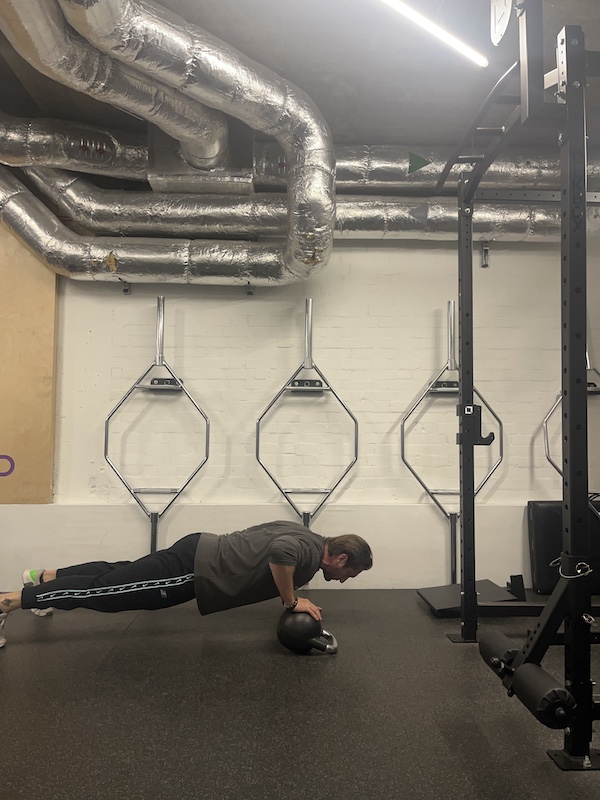
4. Kettlebell offset push-up
PT tip: “Considering push-ups as ‘moving planks’ solves most technique issues.”
- Set up in a high-plank position as you would for a regular push-up, but with one hand on the dome of a kettlebell.
- Maintaining a strong core, lower your body towards the floor in a straight line.
- The arm that is elevated on the kettlebell will move through a greater range of motion than the one on the floor, thus performing more mechanical work.
- Push yourself away from the floor using both hands.
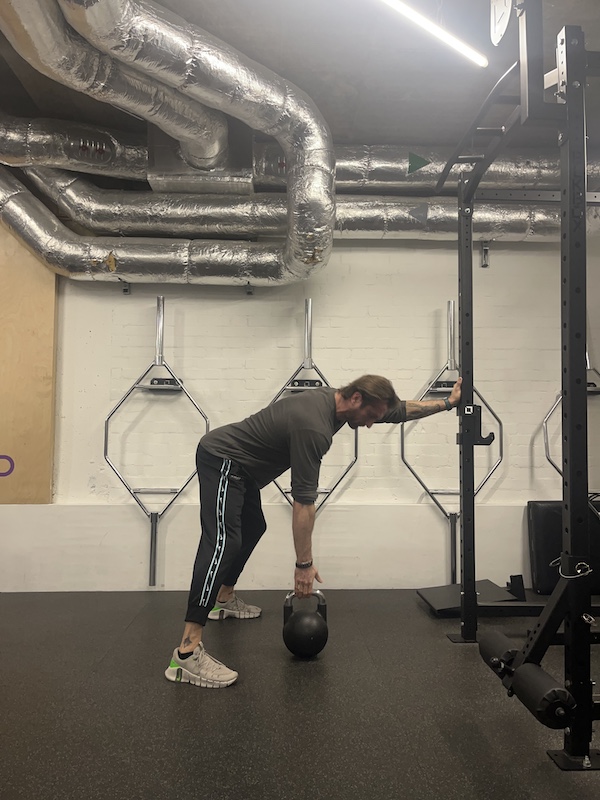
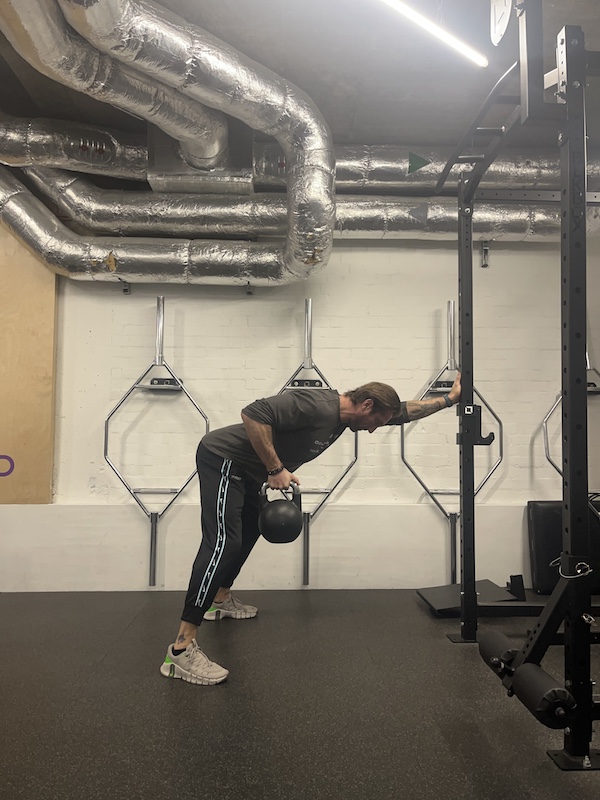
5. Kettlebell three-point row
PT tip: “During all rowing exercises, think of the load moving in an arc both up and back to improve contraction of the lats.”
- Set up in a ‘tripod’ stance, with feet slightly wider than hip-width, and one arm outstretched to a rack or bench.
- The shoulders should be slightly higher than the hips, and with a flat back.
- Grasp a kettlebell in the spare hand and pull upwards towards the waist. You should feel the latissimus muscles in the upper back performing the work.
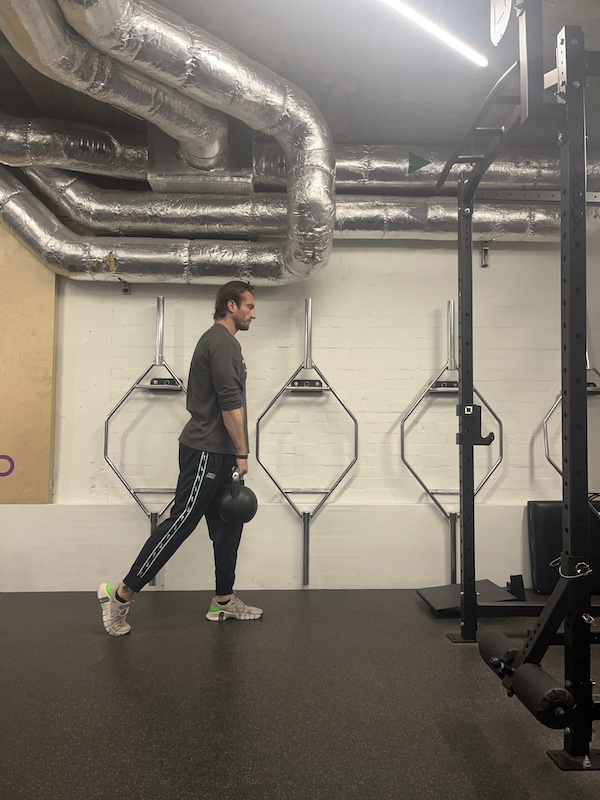
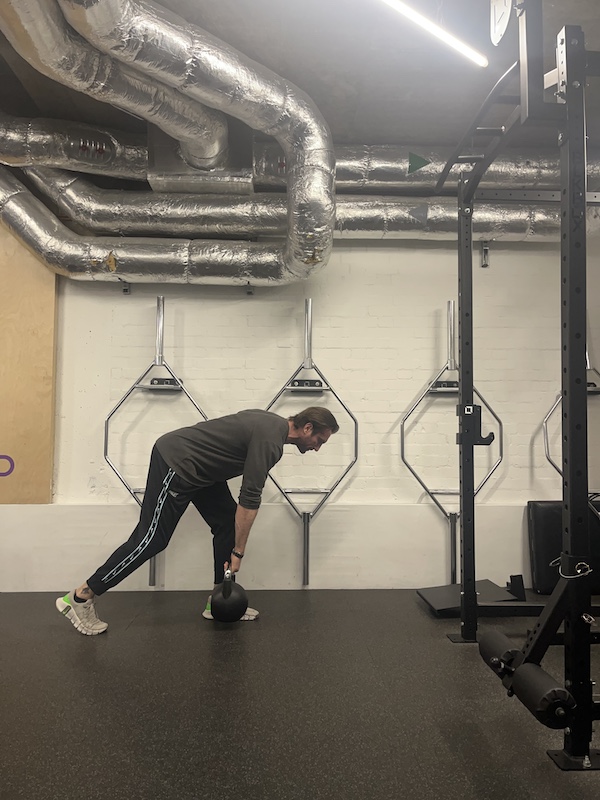
6. Kettlebell ‘B stance’ Romanian deadlift
PT tip: “Clenching the fist of the free hand helps to create tension and stability, therefore improving balance in unilateral exercises.”
- Stand tall with the bell in one hand.
- Step the same leg back as the hand in which the load is held (i.e. if the weight is in your right hand, step right foot back).
- Rest the toes of the back foot on the floor, helping to keep the pelvis oriented forward.
- Hinge forward and down, pushing both hips directly back, ensuring both feet stay in contact with the ground.
- The weight should travel in a vertical line straight down.
- Reverse the action by driving the hips forward and re-orienting the torso on top of the pelvis.
Don’t miss this kettlebell deal!

Related content
- Dumbbell and kettlebell workout for full-body muscle
- These are the best gym shoes we’ve tested
- 7-inch shorts fit for any workout
The post Kettlebell Exercises For Beginners – Recommended By Leading PT appeared first on MensFitness.