Researchers Used Two Telescopes to Discover a Planet Hidden In Plain Sight
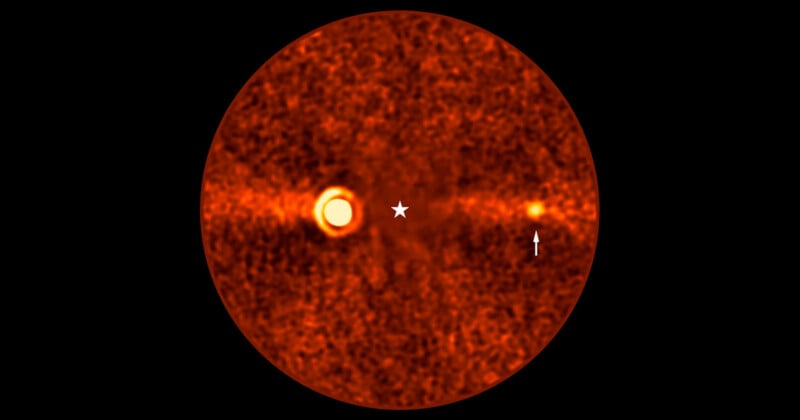
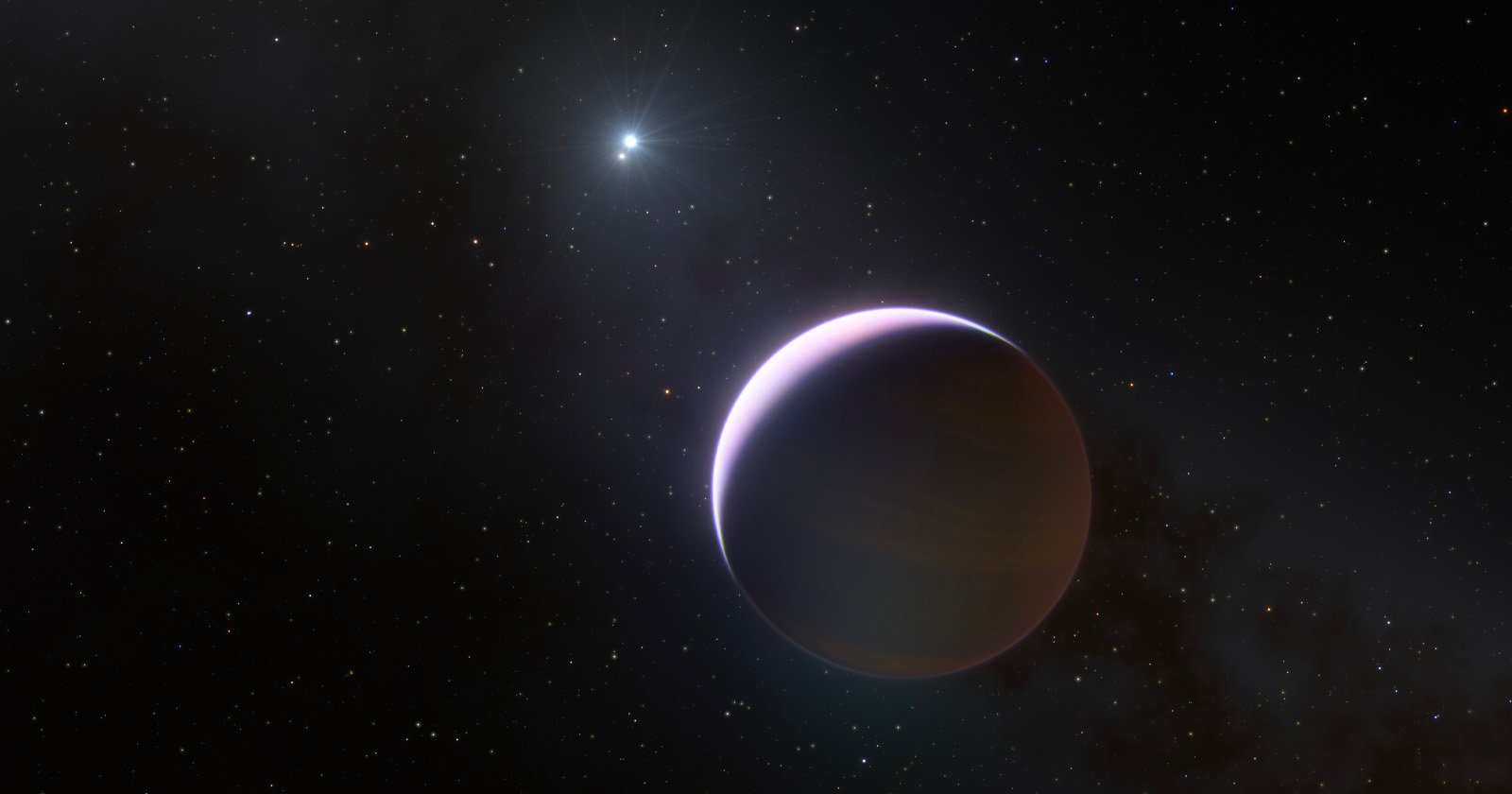
Astronomers using the NASA/ESA/CSA James Webb Space Telescope (JWST) discovered a giant planet, hiding in plain sight just outside the solar system.
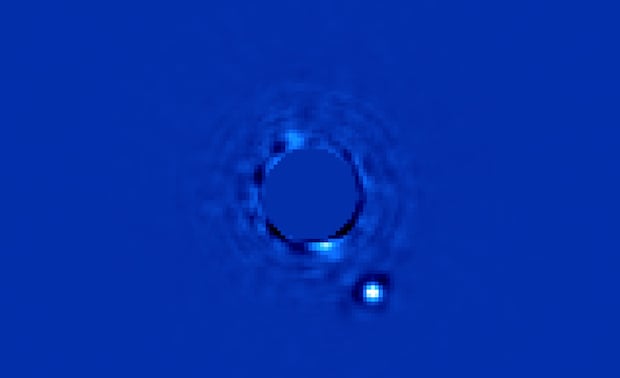
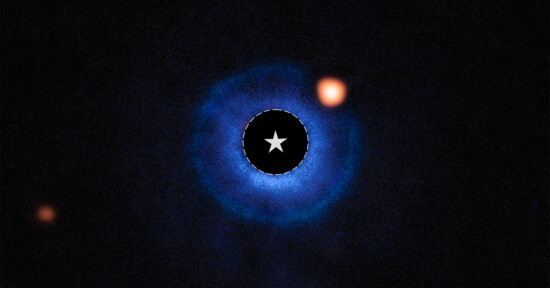
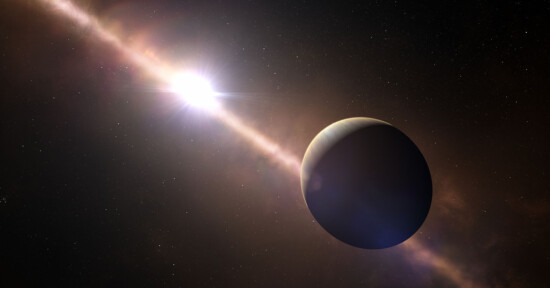
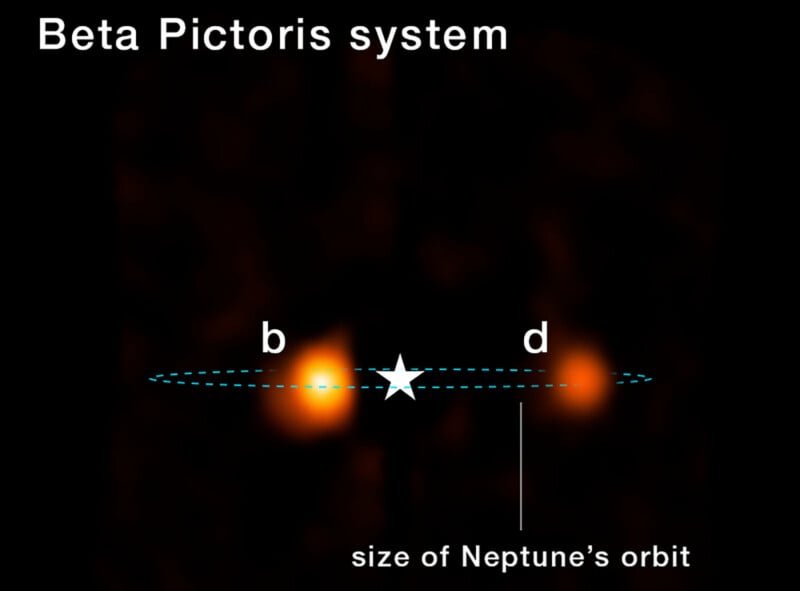
This newly discovered exoplanet is orbiting the nearby star Beta Pictoris, which was already known to be home to two giant exoplanets, Beta Pictoris b, one of the first exoplanets ever directly imaged, and Beta Pictoris c. The new one, Beta Pictoris d, is located in one of the most widely studied systems in the Milky Way galaxy.
“The newly identified Beta Pictoris d makes it only the second planetary system known to contain at least three imaged planets,” NASA explains. “Unlike Beta Pictoris b and c, however, Beta Pictoris d was discovered not by identifying a bright point of light, but by detecting the unique chemical fingerprint of its atmosphere, a technique that could transform the search for worlds around other stars.”
While the James Webb Space Telescope is well-known for its stunning photos, much of the space telescope’s most robust science is not quite so glamorous to look at. The discovery of Beta Pictoris d is a perfect example of this.
Webb itself located the planet by accident thanks to its Near-Infrared Spectrograph (NIRSpec). Researchers were using NIRSpec to study the atmosphere of the already-known Beta Pictoris b when they noticed an unexpected signal in the data.
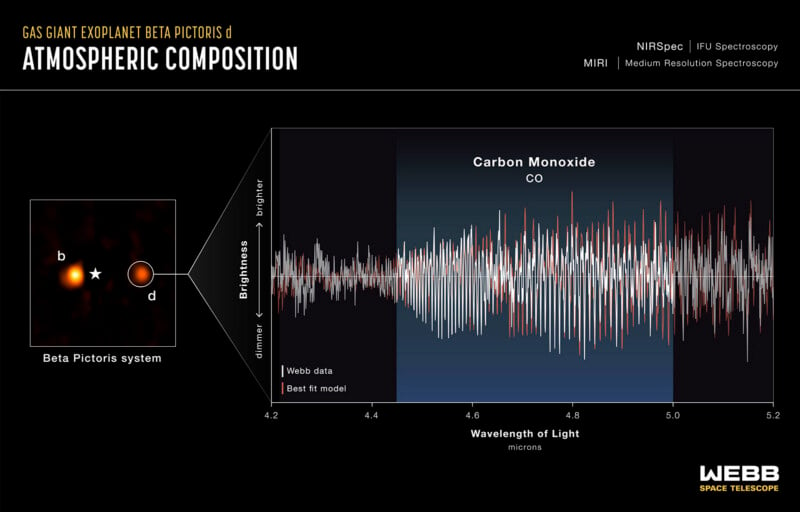
“There was an unexpected bright source of light within the Integral Field Unit imaging, but we’ve learned not to trust bright blobs in images,” says Jean-Baptiste Ruffio, a research scientist at the University of California, San Diego, and the principal investigator of the first Webb observations at the discovery site. “They can be instrumental artifacts or other structures in the debris disk. By obtaining a spectrum at the same time as the image, we were able to quickly confirm our suspicions.”
Webb’s spectrographic instruments can tell scientists a lot about an object, including its chemical composition and motion. What the scientists expected to see in the NIRSpec data was a smooth spectrum, indicative of light bouncing off of cosmic dust.
What they found instead were absorption lines indicative of the presence of carbon monoxide, an “expected feature in giant planet atmospheres.”
Follow-up observations using Webb’s Mid-Infrared Instrument (MIRI) through a Director’s Discretionary Time request located water vapor and methane, further confirming the presence of a newly discovered exoplanet.
“A spectrum contains an incredible amount of information,” Ruffio said. “You don’t just learn that something is a planet; you immediately begin learning about its temperature, chemistry, and motion,” Ruffio continues.
Ben Suttlieff of the University of Edinburgh and Markus Bonse of the European Southern Observatory (ESO) promptly started a study using the ESO’s Very Large Telescope, which worked alongside Webb’s Near-Infrared Camera (NIRCam) to confirm the existence of Beta Pictoris d independently.
As for why Beta Pictoris d remained hidden for all this time, even when scientists extensively studied its home, NASA says that the planet lives inside “one of the brightest debris disks known.”
This “dusty disk” is basically cosmic fog, scattering light from the star Beta Pictoris and making it very difficult for conventional imaging techniques to separate a planet from the surrounding visual noise.
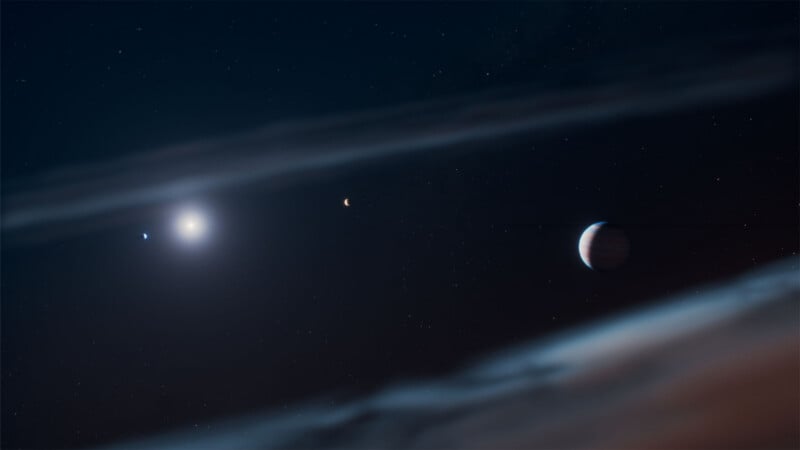
Fortunately, Webb’s spectroscopic instruments can see through the dust, leading to the discovery.
This is the first directly imaged planet ever discovered through this type of spectroscopy, and it demonstrates to scientists that they may very well have an effective new tool at their disposal to find exoplanets.
CreditsThe relevant research paper, ‘Discovery of an Exterior Third Planet Orbiting β Pictoris,’ has been published in The Astrophysical Journals, by Aidan Gibbs, Jean-Baptiste Ruffio, Alexis Bidot, Travis S. Barman, Clarissa R. Do Ó, Quinn M. Konopacky, Marshall D. Perrin, Aneesh Baburaj, Beck Dacus, Bruce Macintosh, Alex Madurowicz, and Jerry W. Xuan.