A difficult problem to solve
Experts warn current Starship heat shield tech is a “dead end” for rapid reuse
NASA has not made substantial investments in thermal protection research for decades.
Credit:
SpaceX
Credit:
SpaceX
SpaceX successfully launched its Starship vehicle on Friday and appeared to demonstrate important and credible steps toward fulfilling the massive rocket’s immense promise. As soon as the vehicle’s next flight, Starship could go orbital, begin delivering satellites into space, and potentially return to the launch site to be ‘caught’ by the tower.
All of this is impressive engineering on a gigantic scale. But despite the marked progress with the 13th test flight of Starship, one key issue—probably the key issue when it comes to Starship’s future—remains unresolved.
This concerns Starship’s heat shield, the roughly 18,000 ceramic tiles that protect the vehicle’s underbelly during its fiery return through Earth’s atmosphere. And some experts say SpaceX’s current approach may not get Starship to its ultimate goal of flying frequently, at low cost.
A dead end?
“Starship’s current thermal protection system is a dead-end for all missions that require full and rapid reusability,” Dan Rasky, a former NASA engineer who studied heat shield materials for nearly four decades at NASA Ames Research Center, told Ars. Rasky is credible: He co-invented PICA, the material used for Crew Dragon’s heat shield.
NASA confronted this same issue half a century ago during development of the Space Shuttle, which used thousands of lightweight ceramic tiles to insulate the vehicle’s aluminum structure. Although the tiles worked fairly well, the US space agency was never able to crack the code on “rapid” reuse. Each tile required post-flight inspections, so reuse of Space Shuttle orbiters remained expensive and time-consuming.
SpaceX has some advantages over the shuttle. Starship’s steel structure is far more tolerant of heating, capable of withstanding temperatures up to 800° Celsius where there are tile failures. So some burn-through is probably acceptable.
However, according to a new analysis by Rasky and two other space industry officials, former NASA astronaut Charles Camarda and the head of the NASA transition team for the Trump-Vance White House, Charles Miller, significant challenges remain for rapidly reusing Starship.
A need for rapid reuse
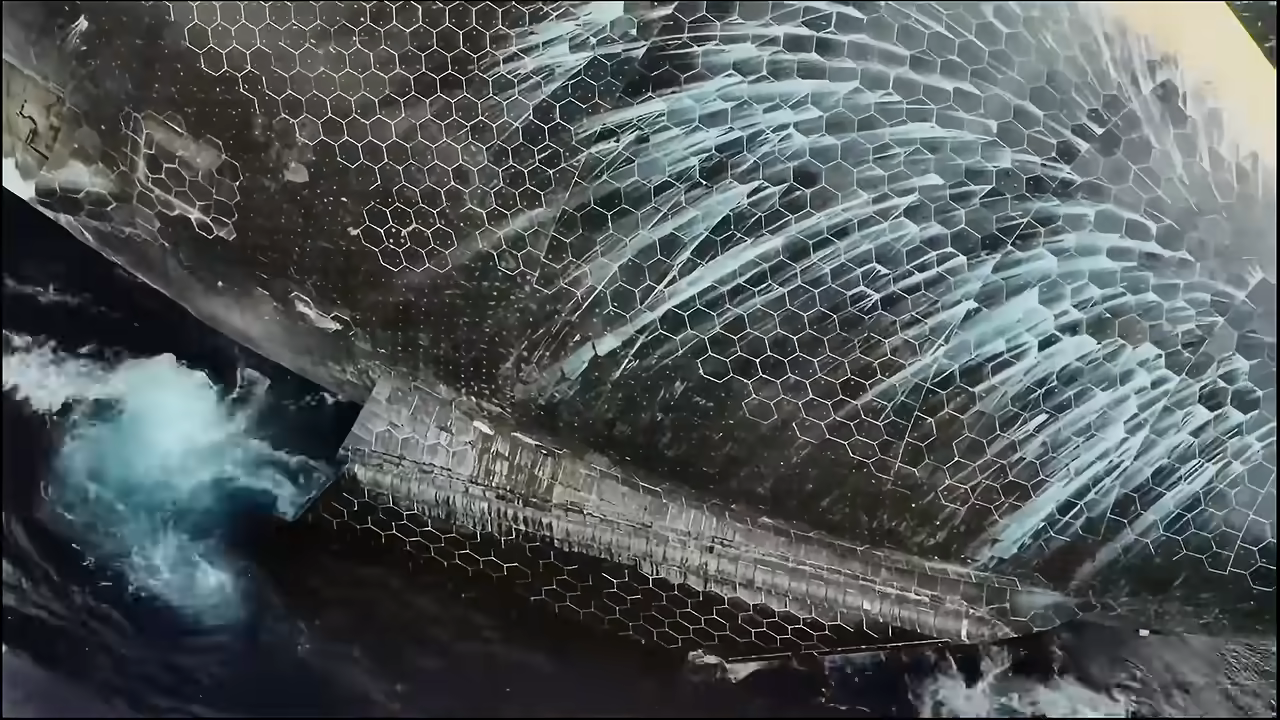
Following Flight 13 last week, the experts noted that only a few of Starship’s ceramic tiles were lost during the flight, obviously a good thing. And the heat shield protected Starship during the reentry process such that it made a controlled descent and landing.
However in SpaceX’s drone footage of the landed Starship in the Indian Ocean, there were notable white streaks across the heat shield. All of these appeared to originate at boundaries between tiles, suggesting hot gas may have penetrated these boundaries. There were also indications of cracked tiles and broken edges.
SpaceX Starship Heat Shield Comparison Between Flights 10-13.
It’s getting better every time. This is what progress looks like. 🦾 pic.twitter.com/2BzANY9BoL
— Nic Cruz Patane (@niccruzpatane) July 25, 2026
Clearly, Starship’s heat shield was good enough for this vehicle to reenter Earth’s atmosphere.
The problem is that, with the signs of damage, such a heat shield would appear to require a fair amount of inspection and refurbishment before another launch. In other words, SpaceX has a ways to go to reach “full and rapid” reuse of Starship. “Full” means reusing both the booster and the Starship upper stage, and “rapid” reuse means turning each Starship around in days or weeks, instead of months, at considerable expense.
SpaceX is aware of the challenges
We should stop here to point out that SpaceX is not oblivious to the magnitude of this heat shield challenge, nor blithely whistling past the graveyard.
On various podcasts and X social media postings, SpaceX founder Elon Musk has repeatedly stated that solving the reusable heat shield problem is one of the toughest problems the company faces. Back in February on a podcast with Dwarkesh Patel, Musk expounded on this, saying a reusable heat shield is “the biggest problem that remains” for Starship. “If you want to be able to land it, refill propellant, and fly again, you can’t do this laborious inspection of 40,000 tiles type of thing,” he said.
To address this challenge, the company has made substantial investments in new formulations for tile materials, standardizing shapes, and more. And it has been rigorously testing various approaches during Starship’s experimental flight campaign.
The independent industry experts said they believe that SpaceX’s approach to a modern thermal protection systems represents a good “incremental” step forward from the space shuttle’s tiles but relies on the same fundamental solution.
As such, SpaceX’s heat shield will likely be good enough to deploy a next-generation Starlink constellation. But the experts are concerned that it will be unable to hit the high flight rate needed—several hundred to thousands of low-cost launches annually—for large settlements on the Moon and Mars, orbital data centers, or large-scale space-based solar power.
No help from NASA, at least not yet
This is an area where NASA could probably help.
The experts noted that NASA has not made substantial investments in thermal protection research for vehicles entering from low-Earth orbit (speeds of Mach 25) for three decades. The underlying technologies on Starship, they note, are all based on work done for the space shuttle, National Aerospace Plane, or X-33 programs. No one today, they said, is seriously investing in new, advanced thermal materials for orbital reentry.
Miller, who interviewed a number of senior NASA officials as part of the transition team work in late 2024, said he was told nothing was in the basic research development pipeline. However, he said current and former NASA researchers in this area felt like there were some promising solutions to pursue.
“Based on all this we recommended that NASA create a new initiative to invest in Mach 25 thermal protection system research, development and demonstrations,” he said. So far that has not happened.