Thanks to Nikon, Canon’s Closed RF Mount Could Be Forced Open
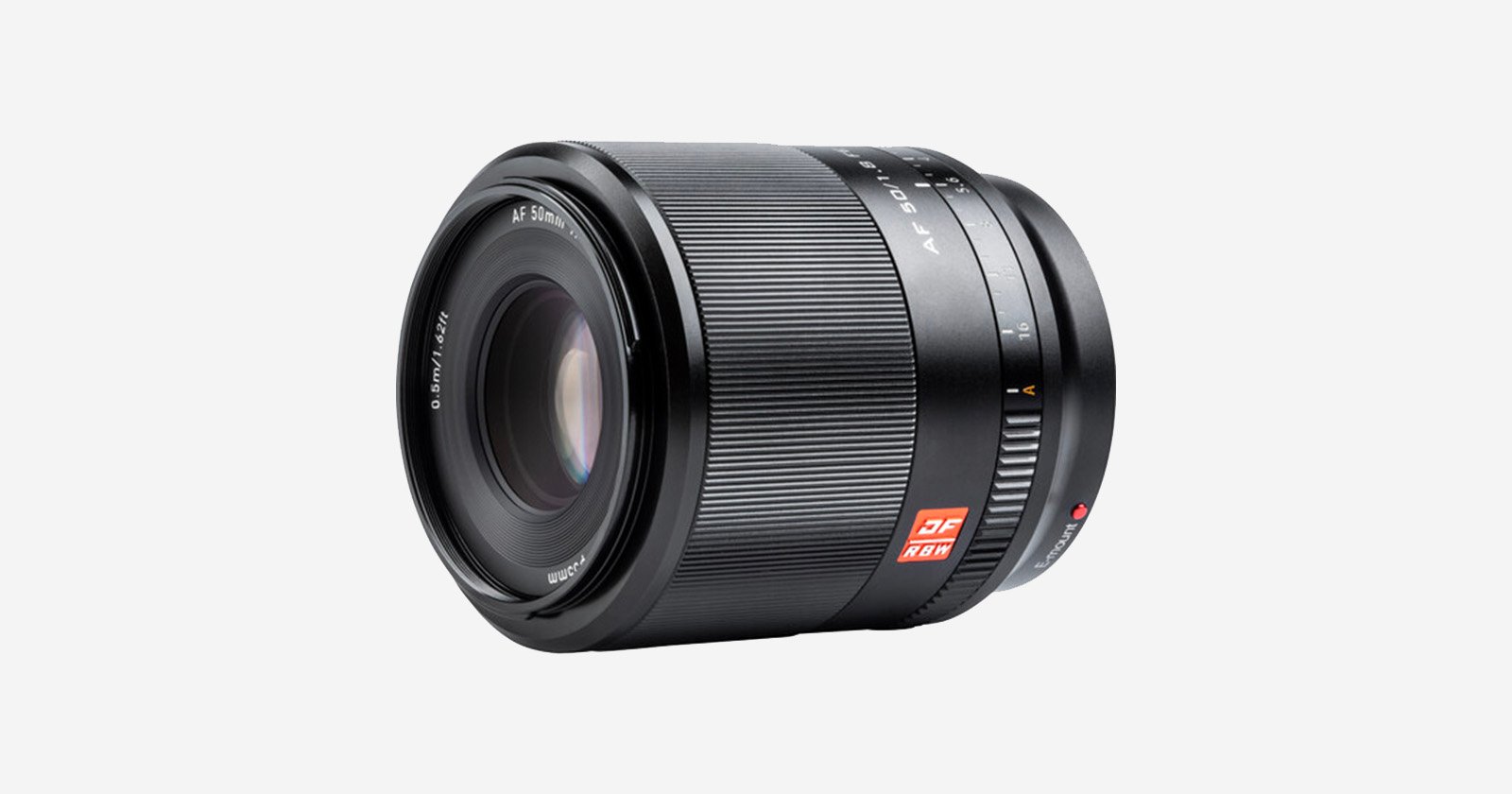
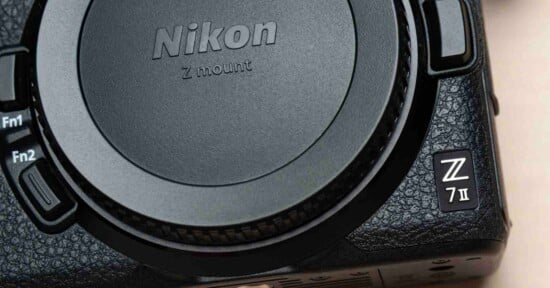
In January, Nikon sued Viltrox in China, claiming the lens maker had violated its intellectual property for the Z-mount and sought royalties and damages. But this past summer, that court disagreed and ruled in favor of Viltrox. This sets a major precedent that could easily impact Canon, the owner of the only truly closed mirrorless camera mount.
The question then becomes, if Nikon’s Z-mount patent is invalid, what makes Canon’s RF-mount any different? To answer that question, we have to first look at why Nikon lost to Viltrox.
Author’s note: The legal information and the opinions drawn from them were informed by a conversation with an established patent lawyer who asked to remain anonymous.
Nikon’s Loss
The China National Intellectual Property Administration (CNIPA) saw Nikon’s argument and not only disagreed that Viltrox owed it anything, but it also invalidated one of Nikon’s core Z-mount design patents. That patent covered specific aspects of the Z-mount’s physical bayonet tabs, terminal pins, and electronic layout.
The CNIPA ruled that Nikon’s patent lacked an “inventive step” (which is the Chinese legal equivalent to the U.S. phrasing of “non-obviousness”) and, further, determined that making minor adjustments to the length, angle, and arrangement of bayonet lugs or terminal pins over existing camera mounts was a routine engineering choice rather than a patentable breakthrough.
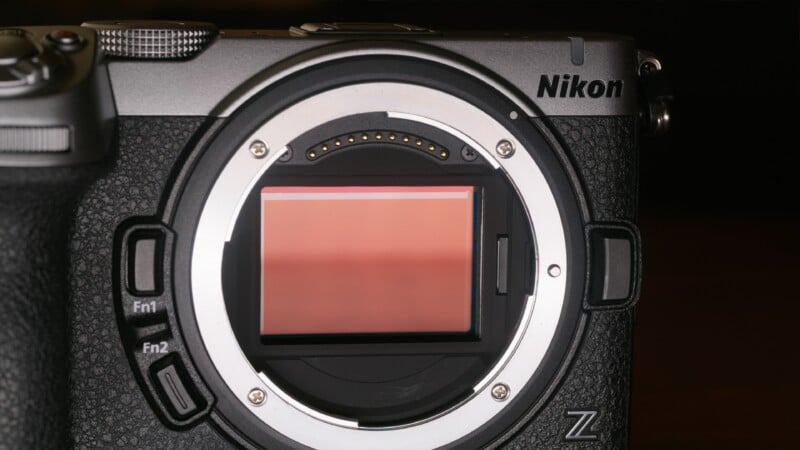
Even though the physical dimensions and locations of electronics in the Z-mount are different than Nikon’s F-mount, the court determined that these changes (like the size of the bayonet or the number or location of pins) aren’t unique, special, or inventive and, therefore, can’t be patented.
Because the lawsuit’s core claim depended entirely on the validity of Nikon’s patent, Viltrox’s court win effectively stripped Nikon of the legal basis required to pursue damages. Nikon cannot, legally, stop Viltrox or any third-party lens manufacturer in China from making autofocus-equipped lenses for the Z-mount and selling them.
“Out of respect for the judicial system, we will refrain from providing further details at this time,” Nikon tells PetaPixel.
For what it’s worth, Viltrox isn’t keen to gloat on this victory and has opted to hold its tongue.
“We truly appreciate your attention and support. However, at this moment, we don’t have any official information or updates that we are able to share regarding this topic. Regarding the questions about potential future implications or other mounts, we unfortunately don’t have any comments or information available at this time. If there are any official updates in the future that can be shared publicly, we will be sure to keep you informed.” -Viltrox
What About Other Regions?
Nikon only lost this lawsuit in China, which means in any other regions where it holds a Z-mount patent — such as in the United States or Europe — it could sue to block the distribution and sale of offending Viltrox lenses.
But it probably won’t.
Nikon is likely spooked by this loss, so they might feel like suing in other regions carries too much risk now. What if they were to lose in Europe or the United States? The problems it now faces would compound.
Granted, the Chinese legal system is extremely political and there is a sense that it can be difficult to get a fair ruling there, especially between a foreign company and a domestic one, which is what happened here. It is, therefore, not a great example for an even-handed analysis of patent. So, it’s reasonable to say that Viltrox’s win in China doesn’t have much of a bearing on how another court would rule on the same topic.
Still, Viltrox would likely use the legal arguments that were victorious in China in those foreign courts. While China’s courts are quite protective of their domestic companies, that doesn’t mean that the conclusions the court drew wouldn’t also be drawn by other international courts.
The reliance of Nikon’s patent on previous mount design is the problem. A “new mount” has to be truly new in order to be patentable. Cameras and how they mount lenses have changed very little in the last 60 years. Just because the mount is a slightly wider circle is unlikely to be enough if challenged in court. Iteration is probably no longer protectable and just because Nikon was granted the patent doesn’t mean it would stand up to the scrutiny of a court case, even outside of China.
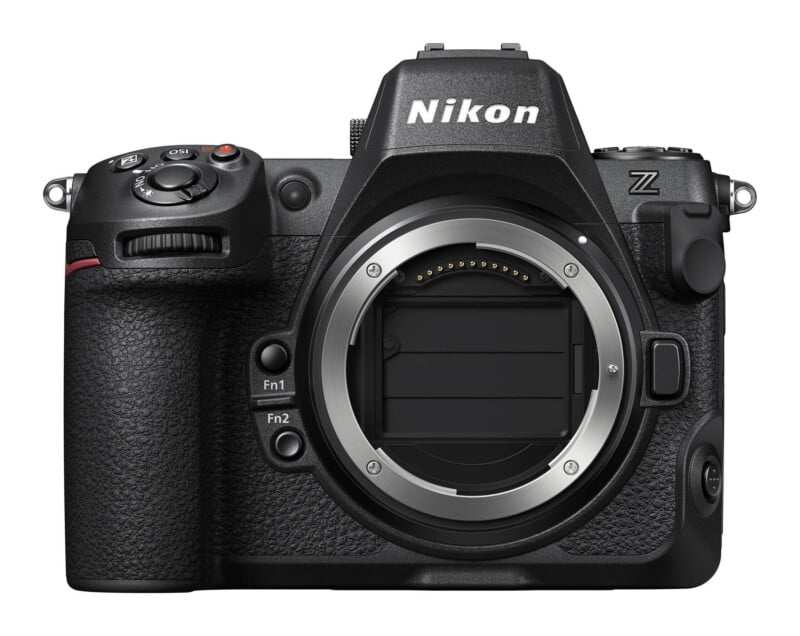
Basically, suing Viltrox internationally has a reasonably high risk of invalidating Nikon’s Z-mount patent globally. I just don’t think this is a risk Nikon is willing to take.
On top of that, winning that patent battle in the U.S. or Europe wouldn’t even necessarily mean Nikon would successfully prevent the sale of Viltrox lenses. China has already ruled that Viltrox can keep making the lenses, which are manufactured in China, so Nikon would theoretically only be able to block direct shipments to official retail channels in other markets. But there are multiple other ways to bypass these traditional import controls — just look at the DJI Pocket 4P. It is officially banned in the United States, but it’s relatively easy to acquire one.
Plus, in China, the second largest camera market in the world, there would continue to be no legal restrictions.
All of this brings us back to the original question: if Nikon’s Z-mount patent is invalid, what makes Canon’s RF-mount any different?
Canon’s Conundrum
Nikon is not the first camera brand to challenge a China-based lens manufacturer for violating its intellectual property, but it was the first company to actually do something about it. Prior to this, Canon was the 300-pound gorilla in the room, and it used that weight to simply threaten lens makers.
Back in 2022, Viltrox said that it stopped making and selling autofocus-equipped, RF-mount lenses because it was threatened with legal action by Canon. A couple of weeks later, Canon confirmed that it was doing this.
“SHENZHEN JUEYING TECHNOLOGY CO.LTD, manufactures auto focus lenses for Canon RF mount under the brand name “Viltrox”. Canon believes that these products infringe their patent and design rights and has therefore requested the company to stop all activities that infringe Canon’s intellectual property rights.”
Four years ago, Viltrox was smaller, weaker, and poorer. That, and Canon didn’t actually file a lawsuit; it only threatened to. A lot has changed since then. Viltrox has really come into its own as a lens manufacturer and garnered substantial respect among photographers. But, more importantly, it is a far more established, wealthier, and smarter company. Viltrox’s victory proves that domestic lens makers now have the financial and legal resources to proactively invalidate camera manufacturers’ patents. This dramatically changes the power dynamic in the industry.
While we will never know, I find it unlikely that Nikon ran straight to court with its lawsuit. More likely, it sent a similar cease-and-desist request to Viltrox that Canon did, but this time Viltrox told Nikon to go kick rocks, a decision that ultimately paid off.
So what happens now if Viltrox were to resume making RF-mount lenses? Would Canon make good on its threat from 2022 and actually sue this time?
Canon’s Legal Protections Are Now Shaky
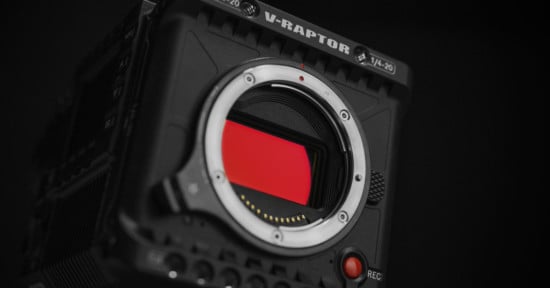
First, let’s look at what Canon specifically patented in China. Linking directly to them isn’t possible, but they are listed on the CNIPA Patent Search System. Canon’s design and utility patents patent reads quite similarly to Nikon’s and cover two main areas: the three-tab bayonet mount (and its exact dimensions) as well as the physical interface, which are 12 electronic contacts. It’s utility patents further cover the algorithms and signals that are transmitted between the lens and camera body and the company’s intellectual property over how the camera control autofocus, optical image stabilization, and input from Canon’s Control ring.
In summary, Canon’s legal RF mount protection relies heavily on patents covering the physical electronic connection and bayonet structure. The possible problem for Canon is that the CNIPA’s reasoning in the Nikon case sets a clear administrative precedent in China: physical flange geometries and pin arrangements derived from prior mount technologies (in Canon’s case, EF or EF-M) are not novel and, therefore, not patentable.
If Canon were to sue and Viltrox were to take that challenge to Chinese court, it is highly likely that the CNIPA would apply the exact same reasoning to the RF-mount that it did to the Z-mount.
What Can Canon and Nikon Do?
While the CNIPA’s ruling only directly invalidates Nikon’s specific Chinese patent, it exposed a major legal weakness in how camera manufacturers protect their closed (or partially closed) lens mounts. There is now a tested, legal roadmap to challenging the nature of any and all lens mounts, including Canon RF, Leica L, and Micro Four Thirds. There are now drastically fewer risks to manufacturing and selling unlicensed third-party lenses for any mirrorless system in China.
In Nikon’s case, it could consider firmware blocks on its cameras that would prevent the use of certain lenses through encrypted software protocols to require a handshake between the lens and the camera body. This would be substantially less expensive and carry with it way less risk than attempting patent protection in other courts, but it’s far from foolproof.
Firstly, software blocks typically go very poorly with consumers. Even when there was no block in place, Sony took huge online heat when Viltrox lenses didn’t appear to work correctly during the a7 V launch window, with some going so far as to accuse Sony of intentionally blocking Viltrox even though Sony didn’t do that.
Secondly, and related, there is no guarantee that third-party lens makers couldn’t just bypass any software blocks a camera brand puts in place via its own firmware updates. It only took Viltrox about a week to fix the issue with the a7 V, for example.
Earlier I posed the question: Would Canon make good on its threat from 2022 and actually sue this time? I think the answer is yes, but it would be far more aggressive. I think Canon would simultaneously sue Viltrox in China, Japan, the United States, and anywhere else that Viltrox was shipping its offending lenses with the goal of overwhelming Viltrox with an international legal battle.
Canon would do this knowing that it would very likely lose in China, but that may prompt Viltrox to come to the table and discuss a settlement outside of court. If you add enough pressure in multiple countries simultaneously, it tends to promote a reasonable business deal, where Viltrox would pay some kind of royalty or fee to produce RF-mount lenses.
Honestly, that sounds pretty great. That’s the outcome everyone wanted all along.
All of this only happens if Viltrox, or any other Chinese third-party lens manufacturer, decides to take that first step and resume RF-mount lens production. But if any of them decide this fight is worth it, Canon might have to come to terms with the inevitable: its mount cannot remain closed.
In this possible future, Canon would likely institute a program and system similar to the one Sony has for E-mount: become an official partner of the mount, gain access to Canon engineers, and maybe take a hit to maximum frame rate in photos (Sony caps third-party lens performance to 15 frames per second). The only difference would be Canon would likely demand a licensing fee.
While they are competitors, Canon would unlikely want to see its fellow Japan-based brands Sigma and Tamron lose out to manufacturers in China. They all sit on the same CIPA board and all of them would choose to work in the best interest of maintaining the success of Japanese-owned businesses when faced with this international threat. So, if Chinese brands force Canon’s hand, it seems unlikely that the mount wouldn’t open in some capacity across the board.
We asked Canon about all this, and the response was expected.
“Canon does not comment on legal proceedings or the business activities of other companies. We remain focused on delivering innovative solutions to our customers while respecting intellectual property rights in every market where we operate,” it tells PetaPixel.
I find it very hard to believe the company isn’t thinking about all this, though. It must be a top-of-mind internal discussion. All it would take is for any one of the Chinese lens manufacturers to resume RF-mount lens production and start making those lenses available. At that point, the proverbial boulder would be rolling down the hill.
All of this is without even considering the massive and extremely powerful sales region that is China. Even if all of these third party lens makers only sold their lenses in China, that would mean camera brands losing control over the second largest sales region in the world. They cannot ignore that.
For the first time in this generation, the power lies in the hands of third-party lens makers — for better or for worse.
Affiliate Disclosure PetaPixel articles may include affiliate links; we may earn a commission if you buy through one.