Ring drone redux
Ring cameras go mobile as Amazon debuts AI-powered security drone and robot
Amazon’s roaming Ring Robotics devices will debut in late 2026 and early 2027.
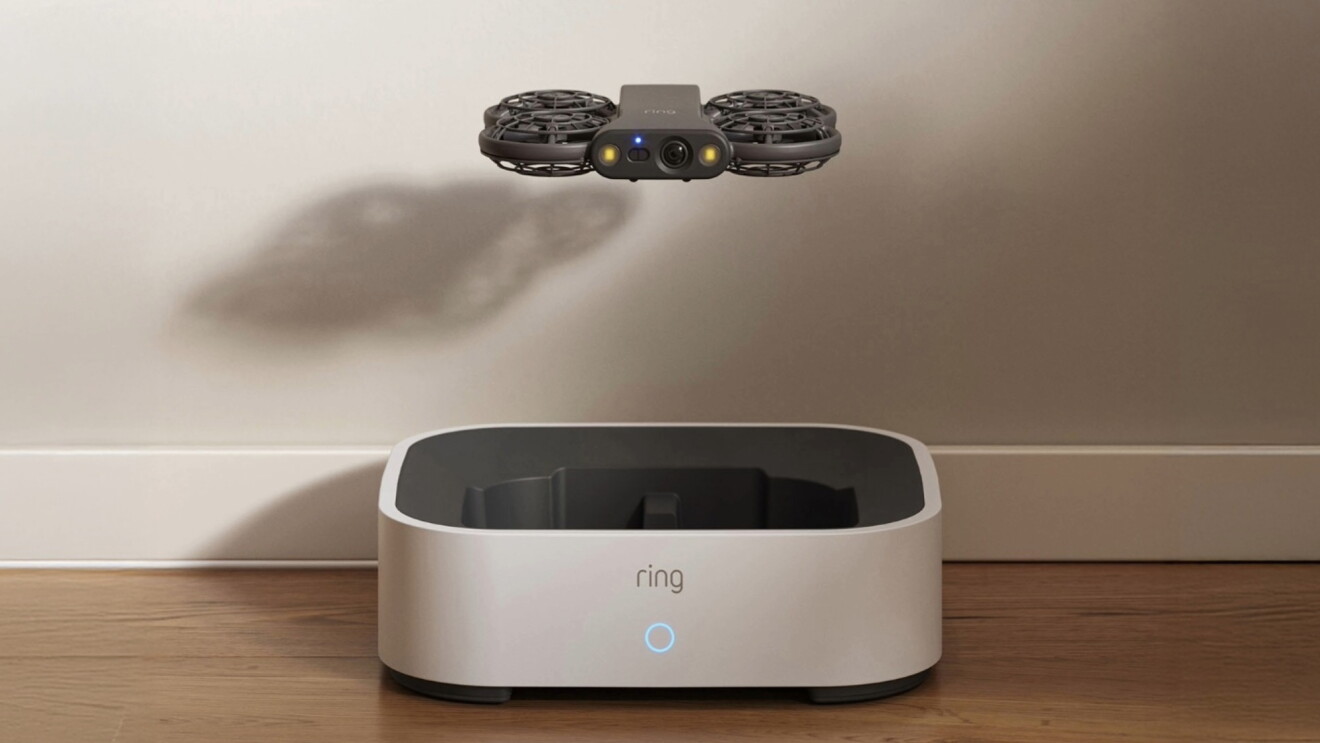
Amazon is betting that many Ring customers will also want an AI-powered security drone and robot patrolling their homes or offices. But the company’s upcoming Ring Robotic products are also certain to intensify privacy concerns previously raised around a prior Amazon attempt to popularize a flying security camera.
The Ring Rover Cam and Ring Drone Cam are expected to reach customers starting at the end of 2026 and in early 2027, respectively, according to an Amazon announcement posted on November 10. Amazon describes the devices as relying on an AI Pilot system that uses each device’s cameras along with “specialized vision models, on-device sensors and cloud processing” to plan patrol routes while autonomously navigating around obstacles such as furniture.
Both devices also use that AI Pilot system to digitally map the floor plan of the customer’s home or business. This setup process occurs after the customer carries the Ring drone through their indoor spaces or allows the Ring Rover to do some autonomous exploration.
The AI Pilot can supposedly use that guided- or self-tour information to identify specific rooms and suggest patrol points near side doors, windows, or even sensitive locations such as a cash register in the case of a business.
However, flying and roving cameras with AI-enabled features could introduce new privacy risks for homes and businesses, on top of existing concerns involving fixed Ring cameras installed in room corners or as doorbell cameras.
Return of the Ring drone
Amazon’s Ring Drone appears to be a direct successor to the company’s Ring Always Home Cam that was only temporarily available for purchase by invitation as a “Day 1 Edition” product in September 2021—even having the same starting price of $250.
But the Ring Drone still requires authorization from the Federal Communications Commission before going on sale. Assuming that comes through, Amazon aims to make the drone available on January 27, 2027, with customers able to register for email updates through the product page.
The drone can supposedly follow a set route and schedule for customers who subscribe to the Amazon Ring Protect plan. It can automatically fly along those set routes when responding to a notification from a Ring camera, sensor, or alarm.
Onboard camera capability includes a 148-degree field of view and 360-degree rotation with a 2K video resolution. Two LED lights also activate in low-light conditions to help illuminate the scene for the drone video camera.
However, the drone is limited to just 8 minutes of flight time when operating on a “new, fully-charged battery under controlled conditions” according to the product description. It comes with a docking station for charging.
Another caveat in the product description is that the Ring Drone Cam may experience degraded performance when navigating in environments with reflective surfaces such as “polished marble or wet tile,” blank matte walls without any features, or transparent surfaces like frameless glass and mirrors.
Still, Amazon touts the drone as providing an “autonomous way to check on your home that has never existed before,” whether the customer is away or at home. The Ring Drone can be controlled directly from the Alexa Home Map interactive map that shows all of a customer’s Amazon-linked devices.
Roaming robot
Meanwhile, Amazon has pitched the Ring Rover Cam priced at $1,000 as “an autonomous security robot designed for business.” This product is already available for preorder for those so inclined and scheduled to start shipping to customers on December 16, 2026.
The company described the Ring Rover as being inspired by customer feedback involving another invite-only beta product, the Amazon Astro robot designed for home monitoring.
The Ring Rover can livestream and record in up to 4K video resolution when patrolling or while doing a 360-degree scan at a designated location. Videos triggered by doorbell rings, motion events and “Live View” events are stored in the cloud for sharing and replaying for up to 180 days.
Like the Ring Drone, the Ring Rover can automatically respond to alerts from connected Ring devices by following its preprogrammed patrol points. But the wheeled robot is only designed to operate within a single-floor, indoor environment because it lacks stair-climbing capability.
Amazon’s product description also warns that the Rover is not compatible with “curved edges, sunken areas, flooring transitions greater than 1.375 inches (3.5 centimeters), and black glossy floors.”
To help compensate for its ground-based view, the Ring Rover comes with an automatically adjustable mast to peer over counters, shelving and other obstacles. It can supposedly cover up to 5,000 square feet (465 square meters), according to Amazon’s product description.
The Ring Rover also comes with additional security-related features such as a siren and light tower to loudly announce its presence, along with a microphone for two-way audio communication if the customer wants to address someone near the robot.
Privacy concerns rising
Amazon touts the new Ring Robotics products as offering “privacy and security without compromise,” with features such as LED indicators and screen notifications informing customers when video and audio recordings are active. But Ring, as an Amazon subsidiary, has been previously implicated in multiple privacy and security scandals.
Ring was previously charged in a 2023 Federal Trade Commission investigation with allowing employees and contractors to watch Ring video recordings of customers’ private spaces. The FTC also described Ring as having lackluster safeguards that allowed hackers to access 55,000 US customers’ accounts.
Videos taken by the new Ring Drone and Ring Rover will be protected with Ring’s Throw Away the Key Encryption that was introduced in September 2026, according to Amazon’s announcement. The digital rights nonprofit Electronic Frontier Foundation (EFF) has described this as an improvement over Ring’s former default settings, but still well short of end-to-end encryption.
The EFF has also called out what it describes as Ring founder Jamie Siminoff’s “surveillance-first-privacy-last” approach to Ring devices, including Ring reintroducing features that allow law enforcement to request footage or live-stream access from Ring users’ home security devices.
Amazon’s previous attempt to launch its Ring Always Home Cam drone also led to expanded privacy concerns. Ryan Calo, a law and technology researcher at the University of Washington, previously described such a flying security camera as providing new ways to surveil others indoors, along with giving companies much greater access to potentially sensitive or identifying details of homes and businesses.
There is currently no mention of the new Ring Robotics products implementing facial recognition or similar AI-powered technologies for identifying people. But starting in December 2025, Ring has allowed owners of fixed Ring doorbell cameras to turn on a “Familiar Faces” feature that uses facial recognition technology on visitors—and that is already the subject of a class action lawsuit.