Deja vu, da svidaniya
Fighter jets help destroy Russian drone boat near European offshore gas platform
Romania blew up drone boat to protect lives of several hundred rig workers.
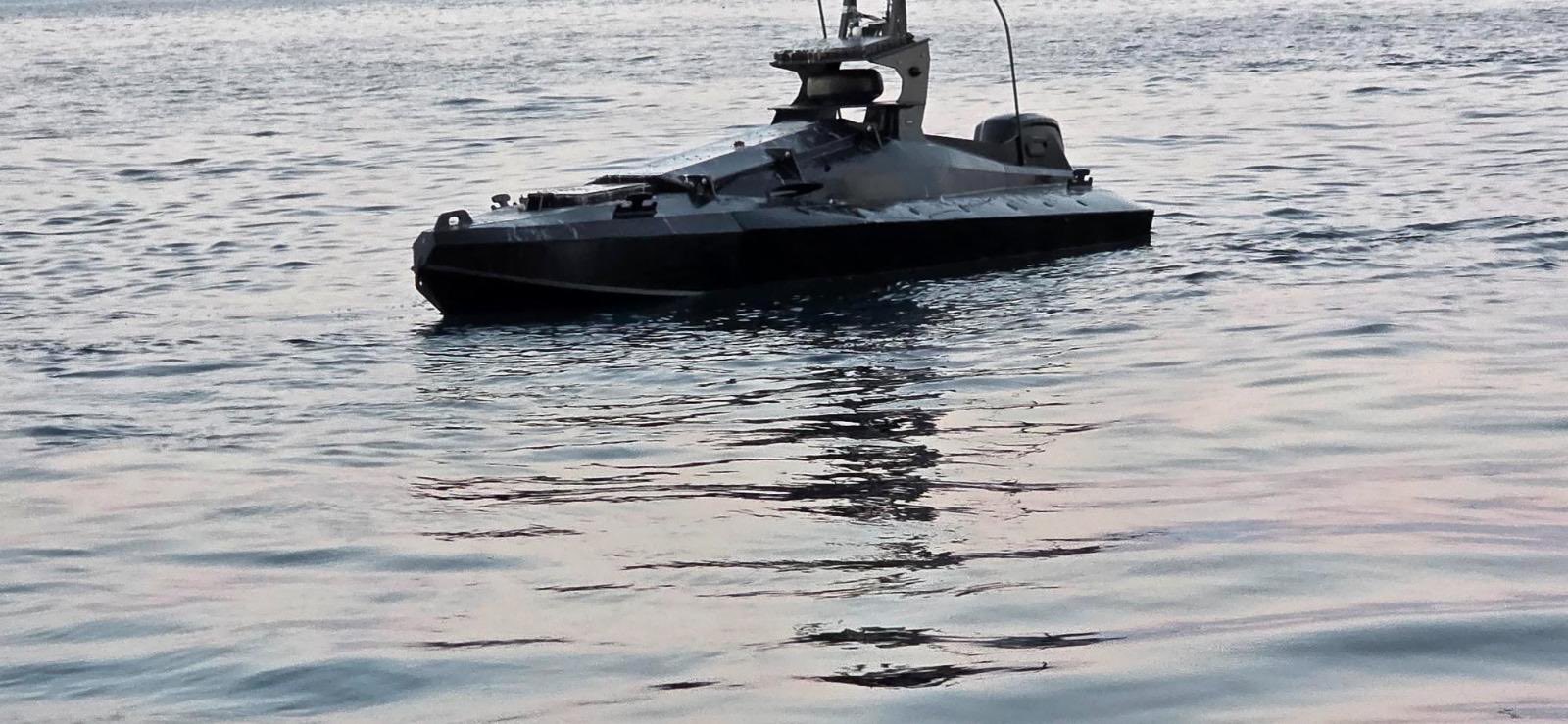
This week, Romania accused Russia of sending a drone boat loaded with explosives to a vital European natural gas platform in the Black Sea. A Romanian F-16 fighter jet used its cannons to disable the surface drone so that explosive ordnance experts could blow it up safely.
On August 20, the Romanian Coast Guard first spotted the maritime drone a few hundred meters away from the Neptun Deep project’s main drilling platform, where several hundred workers were busy with the platform’s ongoing installation, Defense Minister Radu Miruță said in a Facebook post. The offshore gas project would make Romania the largest gas producer in the European Union once it starts full production in 2027.
To protect the lives of the workers and the offshore gas infrastructure, the Romanian military scrambled two F-16 fighter jets to stop the drone with cannon fire, Miruță said. Army specialists later carried out a controlled detonation, as seen in a Facebook video shared by the defense minister.
The drone boat itself supposedly carried explosives, according to Miruță’s comments, as reported by Reuters. Romania’s president blamed Russia directly for the incident.
“I strongly condemn the intensification of these types of irresponsible incidents on the part of the Russian Federation,” wrote Nicușor Dan, president of Romania, in a post on the social media platform X. “We remain vigilant alongside NATO allies to defend ourselves and repel such challenges.”
This marks the second incident involving suspected Russian drones near the Neptun Deep offshore gas site this month. On August 11, the Romanian military destroyed two Russian-made flying drones found floating in the Black Sea near the Neptun Deep site.
In both cases, Romania confirmed with Ukrainian partners that the drones did not belong to the Ukrainian military.
The drone boat found near the Neptun Deep platform is an unknown type that is different from surface drones previously deployed by Russia, according to H.I. Sutton, an independent naval expert who runs the website Covert Shores.
Sutton highlighted features such as a “large hinged hangar in the forward hull” that may have allowed the drone boat to carry missiles or aerial drones. He also pointed to two flat antennas that may have enabled satellite communications with services such as Starlink, along with radar and other sensors.
The escalation spiral
The Neptun Deep project may be a tempting target for Russia because it represents a crucial energy site for the European Union. Once fully operational, the platform would double Romania’s gas production and help supply gas to other European countries such as Germany and Moldova, according to Reuters.
The broader Black Sea has become a hotly contested battleground since Russia launched its full-scale invasion of Ukraine in 2022. Despite lacking many traditional naval ships, Ukraine has used flying drones, missiles, and drone boats to damage and destroy Russian warships both at sea and in port.
Ukrainian drone strikes have also choked off Russian energy and grain shipping in the Sea of Azov and Black Sea, while simultaneously targeting “shadow fleet” vessels flagged to other countries that carry sanctioned Russian oil and gas.
But Russia has struck back by targeting ships and the ports that support most of Ukraine’s grain exports. Such constraints could lead to a global food crisis if European countries don’t help Ukraine find alternative ways to export its large grain harvest, said Cristian Vlas, Eastern Europe assistant research manager at the nonprofit conflict monitor ACLED, in a post on August 19.
Both Russian and Ukrainian drones have also sometimes strayed into the airspace of European countries such as Romania. Some of the incidents have been attributed to electronic warfare jamming sending drones off course, but others have been described as deliberate Russian provocations.
On August 16, two Spanish F-18 fighter jets deployed in Romania for a NATO mission intercepted and destroyed a drone that a NATO spokesperson described as being of Russian origin, CBS News reported.
Meanwhile, US intelligence experts have described Russia as likely being responsible for an attempted drone attack on Ukrainian cargo aircraft parked at Leipzig airport in Germany. The German government has yet to formally accuse Russia of being responsible.