Can’t stop the signal
A 12TB Steam “teraleak” spills more than a decade of lost PC gaming history
Cut content from Portal 2, hints of Half Life 2: Episode 3, and so much more.
Here at Ars, we’re intimately familiar with data leaks surrounding Valve’s games, hardware, and the workings of Steam itself. But nothing could have prepared us for this weekend’s “terarelease” encompassing more than 12TB of content related to seemingly every title available on Steam between 2003 to 2013.
What’s being sold as an “as-complete-as-possible … content server dump” of Steam’s defunct “Steam2” server architecture from that time period is now circulating around via a BitTorrent tracker that Valve seems unlikely to ever completely purge from the Internet. The massive collection includes thousands of “depots” representing what seems to be every version of every game uploaded to those old Steam2 servers. That includes public release builds, of course, but in many cases also covers previously unseen pre-release, prototype, and playtest versions of popular titles published by Valve and third-party Steam publishers.
Steam2: Electric Boogaloo
The reason this weekend’s leaked content cuts off abruptly in 2013 is because that’s when Valve updated its content distribution system from “Steam2” to the current SteamPipe system. In moving from a proprietary file distribution format to standard HTTP file trees, the new system removed various update approval bottlenecks on Valve’s end and streamlined update and patch downloads so they only reflected file differentials.
Publicly accessible early versions of some games released before this SteamPipe transition had been considered lost content by archivists, no longer accessible from Valve itself and living on only as local downloads on aging machines. Apparently all that content wasn’t as lost as many thought, though. Longtime Valve watcher and data miner Gabe Follower (previously) wrote on social media this weekend that he had “verified that everything in Steam2 Teraleak was obtained via a publicly accessible [API] endpoint. It’s Valve’s fault…”
Spanish-language Valve streamer and analyst Scolcer also said on social media (via machine translation) that the teraleak was “obtained from a site that was 100% accessible to the public. It was there for everyone to download. No passwords. Nothing. Hidden in plain sight, but with no protection whatsoever.”
What’s unclear right now if that API and publicly available Steam2 server content were accessed recently or if this weekend’s leak represents content that was privately archived before the 2013 server transition and is just now being made public. “It could more-so be a collection of different people that knew about it and accumulated whatever people had downloaded back then into this massive archive,” said The One Epicplayer, a moderator on the Valve Cut Content (VCC) Discord, which has long followed Valve betas and leaks.
“I haven’t been filled in on the full details but my suspicion is that these depot [files] were downloaded a long time ago and sat in a private collection,” CrazyBubba, another VCC Discord moderator, told Ars. “There were a lot of leaks a few years back and many folks hoarded files for years. … historically there have been issues with people lording content over other members.”
A readme file included with the leak offers “warm n good wishes to all hoarders who had stuff from this collection <3″ and encourages users to mirror and share it as widely as possible. On the VVC Discord, a user purporting to be the original uploader of the teraleak (who offered screenshots of a 22TB server upload log among their evidence) wrote that “getting this out really took a significant amount of effort from me and I would like it if it didn’t go to waste.”
Now you’re thinking with old Portals
Regardless of the hows and whys of the leak, eager gaming communities have wasted no time in digging through the “teraleak” in search of cut content and playable early versions of many now-classic PC games.
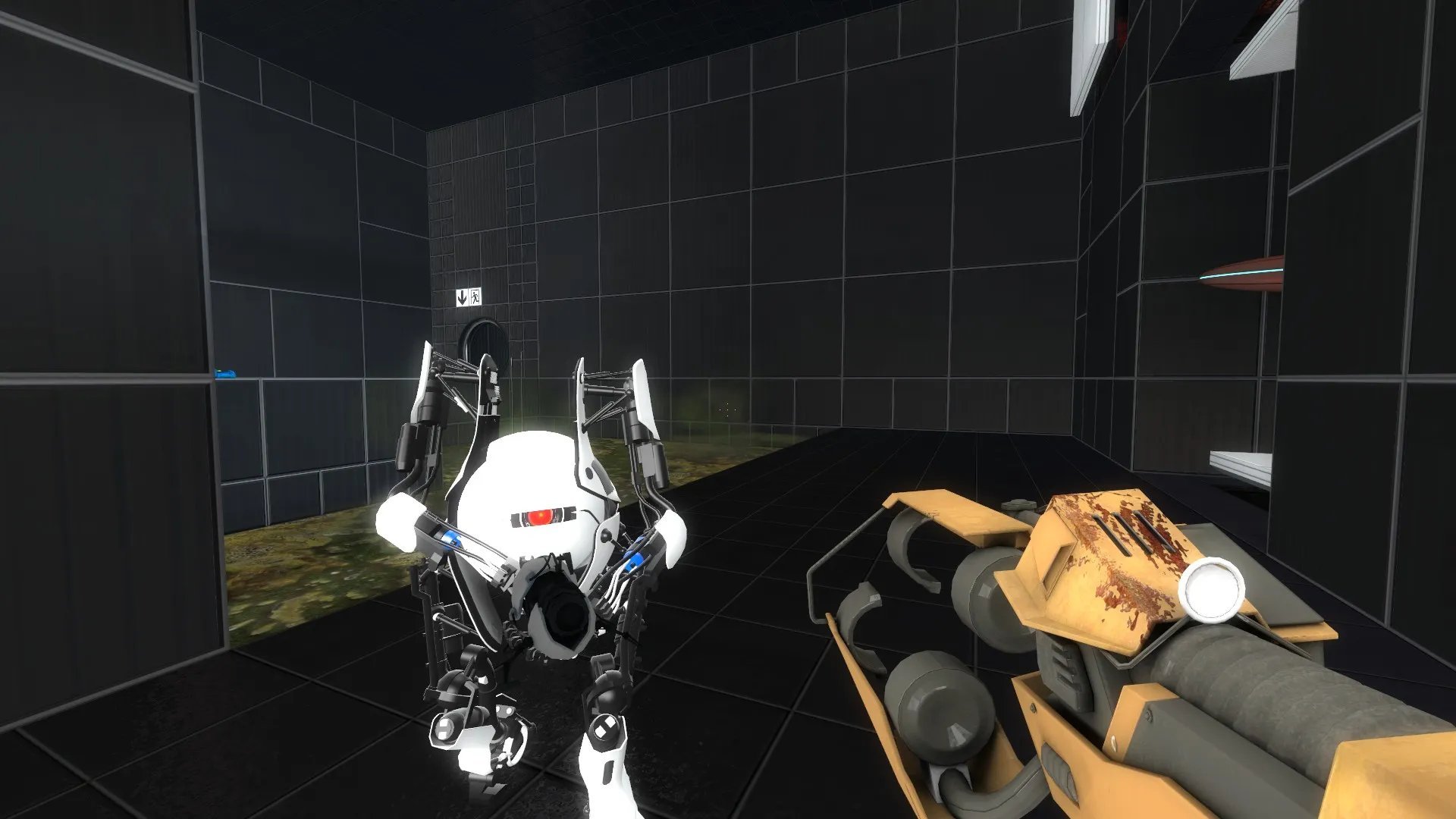
Multiple playable pre-release versions of Portal 2 contain some of the most intriguing cut content discovered so far. Already, teraleak diggers are finding deleted sequences including new dialogue from GLaDOS and Aperture CEO Cave Johnson’s consciousness trapped in a cube (“My life is torture, please kill me,” a scratch track version of Johnson says in cut dialogue that was previously seen in a text file included with the game). The early development version also apparently includes fun features like perfectly circular portals, an adhesive gel and slow-motion guns, and an interesting looking weapon model that was previously seen in official Valve documentary footage of the unreleased Half-Life 2: Episode 3.
While there are no playable “Half-Life 3 confirmed” depots included in the leak, data trawlers have reportedly found some “ep3” data files seemingly related to the perpetually delayed expansion. Valve fans are also digging in to early betas of Left 4 Dead 2 and CS: GO featuring never-before-seen cut content, and some intriguing models and graphics related to F-Stop, the cancelled, camera-based game originally planned as a sequel to Portal.
Aside from Valve’s own published games, the teraleak also includes myriad early versions of titles from the many third-party publishers that were on Steam before 2013. Betas and prototypes for games ranging from Spore and Dragon Age: Origins to Batman: Arkham Asylum, Sonic the Hedgehog 4, and Spec Ops: The Line are among those that data miners have already identified for further study. And while that list won’t contain the early versions of those games that stayed on developers’ local computers and office networks, the playtest versions that were often uploaded to Valve’s servers near release often still contain some interesting content.
Habilidades eliminadas de la beta de Portal 2:
-Gel adhesivo
-Cámara lenta
-El weaponizer de Half-Life 2: Episodio 3 probablemente se usaba de placeholder para el arma de pintura pic.twitter.com/qQgfS76EXs— Scolcer (@scolcer_) August 30, 2026
Even though this weekend’s leak doesn’t contain any games released in the last 13 years, the major publishers affected likely still won’t be too happy that Valve’s lax security apparently led to their previously unreleased early work product leaking out to the public (not to mention the piracy implications of releasing such a complete, if outdated, collection of Steam content). The teraleak highlights how Valve’s own servers now serve as an extremely high-profile single point of failure for the security of a massive chunk of PC game development history.
Some are worried about the legal implications of handling such large quantities of previously private game builds as well. “That archive contains a significant amount of 3rd party content, meaning we are dealing with a dramatically more dangerous situation than if it were just some Valve builds,” longtime Valve watcher Tyler McVicker wrote on social media. “Don’t touch it, it’s HOT. Take it from someone who got in trouble for beta stuff in the past.”
Six years ago, a highly publicized “gigaleak” of Nintendo’s internal development files cast a spotlight on countless previously unknown corners of the company’s history. This weekend’s leak seems poised to do the same for huge portions of PC gaming history.